Harmful Foods to Avoid When Feeding Birds
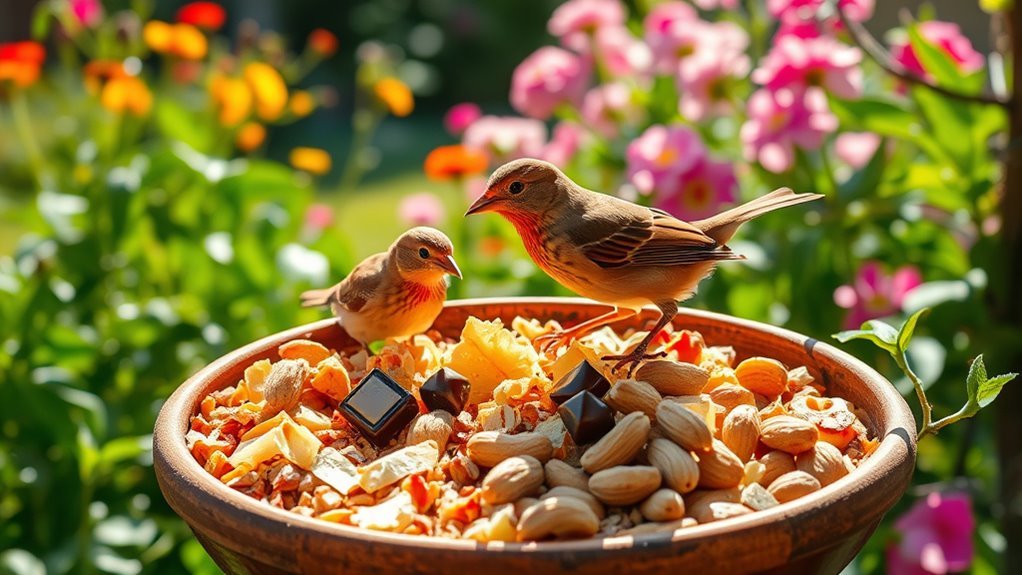
When feeding birds, it is important to know which foods can harm them. Chocolate and avocado are dangerous because they contain toxic compounds. Caffeine, found in coffee, can also be harmful. Even foods like bread and salty snacks can disrupt a bird's nutrition. Knowing these risks helps keep birds healthy and improves your feeding practices. What is the best way to safely nourish our feathered friends?
Key Takeaways
- Chocolate contains theobromine, which is toxic to birds and can cause severe health issues even in small amounts.
- Avocado contains persin, harmful to birds, potentially causing respiratory problems and heart damage.
- Caffeine, present in coffee and tea, is toxic to birds and can lead to seizures and hyperactivity.
- Bread provides empty calories and can lead to malnutrition, while moldy bread can introduce harmful toxins.
- Salty snacks are high in sodium, which disrupts nutrition and can cause dehydration and kidney issues in birds.
Chocolate
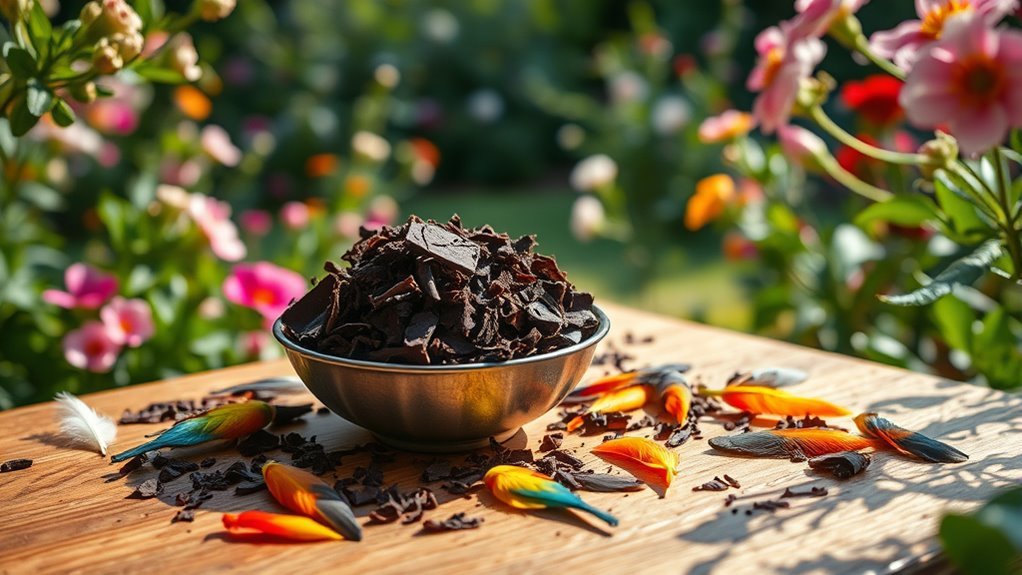
Chocolate is a popular treat for many humans, but it's dangerous for birds.
Chocolate contains theobromine, which can be toxic to birds. Birds process this compound slowly, making even small amounts harmful. Symptoms of chocolate toxicity in birds include a fast heart rate, restlessness, and problems with digestion.
If you think a bird has eaten chocolate, contact a veterinarian right away. To protect birds, avoid giving them chocolate and choose safe food instead.
Caring for birds is important, and we can all do our part to keep them healthy.
Avocado
Many people feed fruits to their birds, but not all fruits are safe. Avocado is harmful to birds due to a compound called persin. This toxin can cause respiratory issues, heart damage, and even death in many bird species.
It's crucial to know the effects of avocado on bird health to be a responsible pet owner. Even small amounts are dangerous, so don't give your birds avocado in any form.
Instead, choose safe fruits like apples or berries. This way, you'll promote better health for your feathered friends.
Stay informed and make choices that support the well-being of your birds.
Caffeine
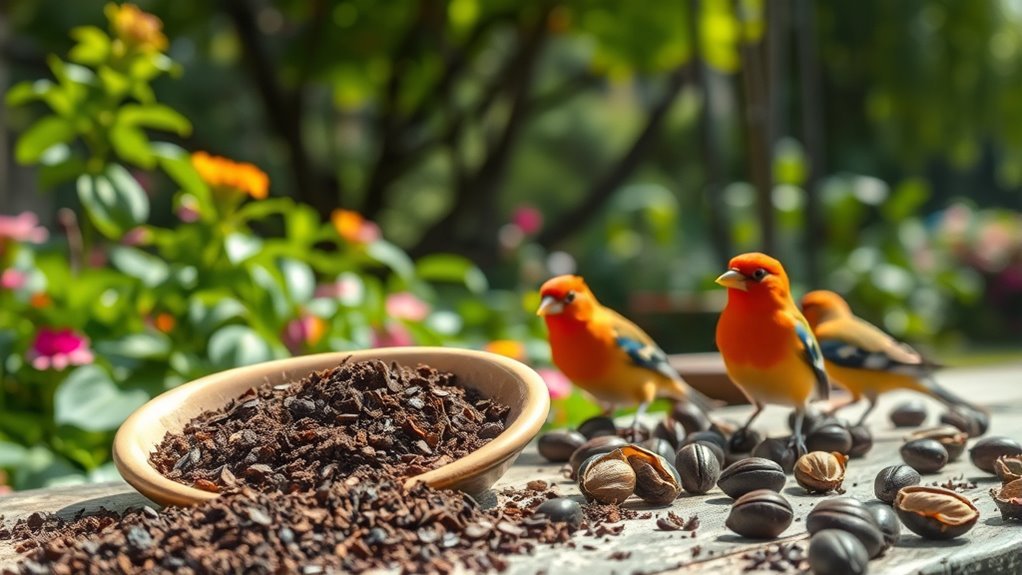
Caffeine is a common stimulant found in many human drinks, but it can be very harmful to birds. Sources like coffee, tea, and energy drinks can change how birds act. They may experience faster heart rates, become restless, or even have seizures. Birds are very sensitive to caffeine, and just a little can be toxic for them.
If you drink coffee outside, make sure you don't spill any. The smell may attract birds, putting them at risk.
Protect your feathered friends by keeping the area clean and safe from caffeine. Being mindful of this helps keep birds healthy and maintains their natural behavior. Caring for these wonderful creatures strengthens your bond with nature.
Bread
Bread may seem harmless for birds, but it can harm their health. Varieties like white, whole wheat, and multigrain don't provide essential nutrients. Instead, bread fills birds' stomachs with empty calories, leading to malnutrition.
Moldy or stale bread can also introduce harmful toxins that may cause serious illness.
To care for birds properly, offer them healthier options like seeds, fruits, or specialized bird food. This helps ensure their well-being and supports the community of bird lovers who care for them.
Salty Snacks
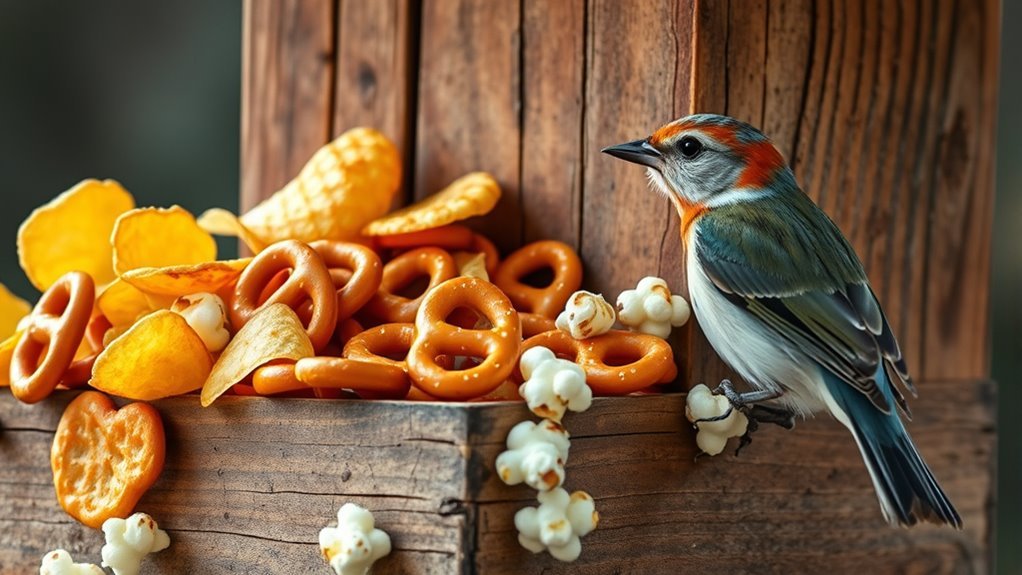
Salty snacks can be harmful to birds. Birds are sensitive to sodium, and too much salt can disrupt their nutrition. Feeding them salty snacks may prevent them from getting essential nutrients, which can harm their health.
A long-term high-sodium diet may lead to dehydration, kidney problems, and a higher risk of death.
To help your feathered friends, offer them a balanced diet. This should include seeds, fruits, and vegetables.
Dairy Products
Many bird owners may not know that dairy products can harm their birds. Birds lack the enzymes needed to digest lactose, which can lead to dairy intolerance.
Feeding birds dairy can cause digestive issues such as diarrhea and dehydration. It's best to avoid giving them milk, cheese, or yogurt.
Consider using dairy alternatives like coconut milk or small amounts of mashed fruits, such as bananas or avocados, which offer necessary nutrients without the risks of dairy.
Choosing the right bird feed is important for their health and happiness. Always pick safe and nutritious options for your pets.
Raw Beans
Raw beans may appear healthy, but they're toxic to birds. This toxicity comes from lectins, which disrupt bird digestion. Consuming raw beans can cause birds gastrointestinal problems and could lead to serious health issues.
Birds have different digestive systems than humans. Even small amounts of raw beans can make them vomit or feel lethargic. Therefore, it's best to avoid feeding raw beans to birds.
Choose safer food options that give birds the nutrients they need without harming their health. By making safe choices, you support the well-being of your feathered friends.
Processed Foods
Many bird owners may unknowingly feed their pets processed foods that can harm their health.
Here's what to look out for:
- Processed grains often lack important nutrients and can have harmful additives.
- Artificial sweeteners, like xylitol, are toxic and can cause serious health problems.
- Salty snacks can lead to dehydration and kidney issues in birds.
Always check labels to avoid these unhealthy options.
Instead, feed your birds fresh fruits, vegetables, and seeds.
These foods provide the nutrients they need to stay healthy and energetic. A good diet leads to happier and more active companions in your home.
Frequently Asked Questions
Can Birds Eat Fruits Like Apples or Bananas?
Birds can eat bananas. Bananas are safe and nutritious for them. You should remove the peel and feed the soft fruit only.
Be careful with apples. Always remove the seeds and core before giving apples to your birds. Apple seeds contain a substance that is toxic to birds. Provide your birds with safe and healthy treats to keep them happy and healthy.
What Are Safe Alternatives to Bread for Birds?
Instead of bread, offer healthy seed mixes and organic bird pellets. These foods contain essential nutrients for birds and support their health. Using these options fosters connection and care in your bird-feeding community. Enjoy watching your birds thrive!
Are There Any Commercial Bird Foods I Should Avoid?
When choosing bird food, avoid options with harmful ingredients. Look out for fillers, artificial preservatives, and high sugar content. Read labels carefully to ensure your birds receive a healthy and safe diet. This will help keep them happy and thriving.
How Do I Know if a Food Is Safe for Birds?
To ensure bird food is safe, check for harmful ingredients like additives and artificial colors. Research trusted brands and consult experts for advice. This will help you choose safe and nutritious options for your birds. Your feathered friends deserve the best, so take the time to make informed decisions about their food.
Can Wild Birds Eat Human Food at All?
Wild birds can eat some human food, but you should be careful. Many human foods have high salt or sugar levels, which can be harmful to birds. Always check what is safe before sharing food with them.

Hello, I’m Emily Price, the founder of Birds Affection. As a passionate bird enthusiast and spiritual seeker, I’ve always been fascinated by the symbolic meanings and mystical connections between birds and our lives. On this website, I share my knowledge and insights on the spiritual significance of various bird species, exploring their roles as messengers, guides, and teachers. Through my writing, I aim to inspire and educate others on the profound wisdom and beauty that birds bring to our world. Join me on this journey as we delve into the enchanting realm of bird symbolism and discover the hidden meanings behind these magnificent creatures.