
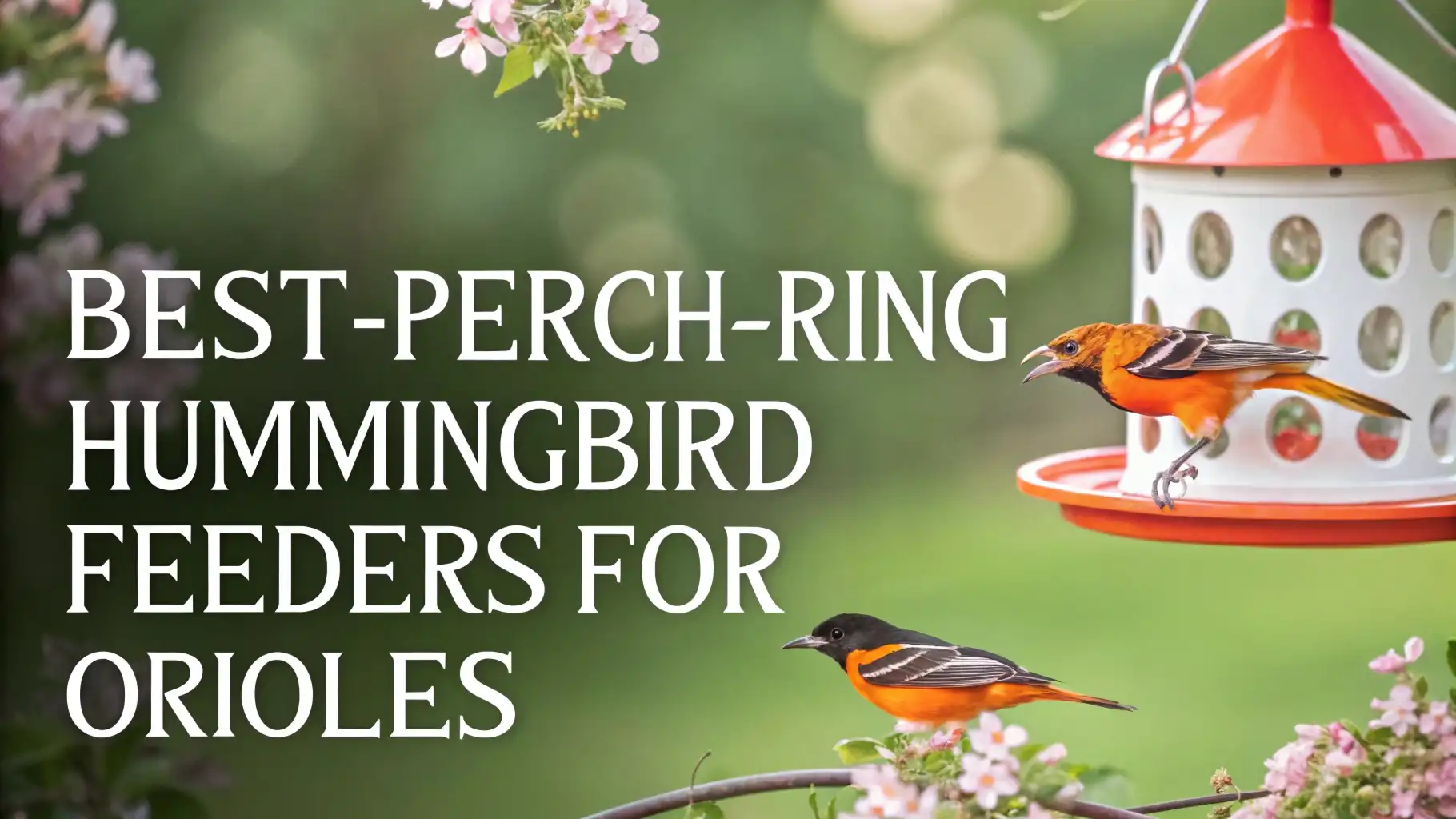
8 Best Perch-Ring Hummingbird Feeders for Orioles in 2026
You want to attract beautiful orioles to your backyard. These vibrant orange and black birds bring joy to any outdoor space. The right feeder makes all the difference.
Perch-ring hummingbird feeders work perfectly for orioles because these birds need a comfortable place to rest while feeding. Unlike hummingbirds that hover, orioles prefer to perch and take their time.
Finding the perfect feeder can feel overwhelming with so many options available. Some feeders leak, others attract too many bees, and many are difficult to clean.

Key Takeaways
- Choose the Right Perch Design: Orioles need solid, comfortable perches because they cannot hover like hummingbirds. Look for feeders with sturdy circular perches or extended branches that support their weight easily.
- Capacity Matters for Less Refilling: Select feeders with 16 to 32-ounce capacity to reduce the frequency of refills. Larger reservoirs work better during migration seasons when multiple orioles visit daily.
- Easy Cleaning Prevents Health Issues: Feeders with wide-mouth openings and detachable parts save time and ensure proper hygiene. Clean feeders every three to five days to prevent mold and bacteria growth.
- Bee and Ant Protection Saves Nectar: Built-in ant moats and bee guards keep insects away from your nectar supply. This feature ensures orioles get the nutrition they need without competition.
- Dual-Purpose Feeders Offer More Value: Many top feeders accommodate both hummingbirds and orioles, giving you flexibility. These designs typically include perches that hummingbirds can use optionally while providing necessary support for larger birds.
Nature’s Way All-in-One Oriole Buffet Bird Feeder


This feeder gives you three feeding options in one design. You can offer nectar, grape jelly, and orange halves all at the same time. The bright orange color naturally attracts orioles from a distance. The design includes multiple perching areas that accommodate several birds feeding together.
The 12-ounce nectar capacity works well for small to medium-sized yards. The jelly tray sits conveniently in the center, making it easy for orioles to access their favorite treat. Orange pegs extend from the sides, giving you the option to spike fresh orange halves for additional attraction. This versatility means you never limit your feeding options.
Pros:
Multiple feeding options in one unit
Easy to clean and refill
Bright color attracts birds quickly
Affordable price point
Durable plastic construction
Cons:
Smaller nectar capacity than some alternatives
May need more frequent cleaning with jelly
Perches could be slightly larger for bigger orioles
Hummingbird Ring Feeder for Hand Feeding

This unique feeder creates an incredible bonding experience with your backyard birds. The ring design slips comfortably onto your finger, allowing hummingbirds and small orioles to feed directly from your hand. Made in the USA, this product uses high-quality materials that withstand outdoor conditions.
The pink color appeals to many bird species. You fill the tiny reservoir with nectar and simply hold still. Birds quickly learn to trust this feeding method. The experience brings you face-to-face with nature in ways traditional feeders cannot match. Young orioles and juvenile birds especially enjoy this feeding style.
Pros:
Creates unique wildlife interaction
Lightweight and portable
Easy to clean and refill
Affordable for trying hand-feeding
Comfortable ring design
Cons:
Very small capacity
Requires patience and stillness
Not suitable for multiple bird feeding
Weather dependent activity
Limited to smaller bird species
Birds Choice Flower-Shaped Oriole Feeder

This feeder combines beauty and function in one elegant design. The flower shape with heart ornament makes it a decorative addition to any garden. The 3-ounce jelly cup sits in the center, while two sturdy fruit pegs extend for orange halves. The orange color catches the attention of passing orioles during migration.
The removable cup makes cleaning simple and fast. You can wash it thoroughly without struggling with hard-to-reach areas. The sturdy construction means this feeder lasts for many seasons. The metal frame resists rust and weather damage. This feeder works best for yards with consistent oriole traffic.
Pros:
Beautiful decorative design
Easy-to-remove jelly cup
Rust-resistant metal construction
Two orange pegs included
Compact size fits anywhere
Cons:
Small jelly capacity
No nectar reservoir option
Limited perching space
May need daily refilling
Best suited for single bird feeding
Monarch Abode Hanging Oriole Bird Feeder

This premium feeder features a large clear glass bowl that holds generous amounts of nectar or jelly. The design includes an open mesh tray that allows excellent drainage and keeps food fresh longer. The sturdy metal perch circles the entire feeder, giving multiple orioles room to feed simultaneously.
The orange prongs provide spots for fresh fruit offerings. The clear glass lets you monitor nectar levels at a glance without getting close. This feeder resists rust and weather damage, making it perfect for year-round use. The construction quality justifies the higher price point.
Pros:
Large capacity glass bowl
Complete circular perch
Excellent drainage system
Weather-resistant construction
Easy level monitoring
Cons:
Higher price point
Glass requires careful handling
Heavier than plastic alternatives
May need stronger hanging hook
Larger size takes more storage space
Perky-Pet Vine Oriole Feeder

This feeder holds an impressive 27 fluid ounces of nectar. The vine-inspired design includes decorative elements that blend naturally with garden settings. Four feeding ports provide multiple access points for orioles. The built-in perches at each port give birds comfortable resting spots.
The transparent reservoir lets you see exactly when refills are needed. The wide opening makes cleaning thorough and quick. This feeder works excellently for high-traffic areas where multiple orioles visit throughout the day. The durable construction handles daily use without problems.
Pros:
Large 27-ounce capacity
Four feeding ports
Built-in perches
Easy to clean design
Attractive vine pattern
Cons:
May leak if not assembled properly
Bees can access some ports
Requires regular monitoring
Plastic may fade over time
Perches smaller than some alternatives
First Nature 32-Ounce Oriole Feeder

This two-pack gives you excellent value for attracting orioles. Each feeder holds 32 ounces of nectar, providing extended feeding times between refills. The bright orange base works like a beacon for migrating orioles. Ten feeding ports accommodate busy feeding times when multiple birds arrive together.
The circular perch design gives orioles comfortable feeding positions at any port. The wide-mouth reservoir makes filling and cleaning effortless. You never struggle with narrow openings or hard-to-reach corners. This feeder represents reliable performance at an affordable price.
Pros:
Two feeders included
Large 32-ounce capacity
Ten feeding ports
Wide-mouth design
Budget-friendly pricing
Cons:
Basic design without extras
No jelly or fruit options
May need separate ant protection
Plastic construction
Simple perch design
Nature’s Way Hanging Glass Oriole Feeder

This glass feeder brings elegant styling to your oriole feeding station. The 30-ounce capacity reduces refill frequency. The design includes jelly dishes and orange fruit holders for varied feeding options. Four flexible feeding ports with bee guards protect your nectar investment.
The built-in ant moat stops crawling insects before they reach the nectar. The glass construction cleans easier than plastic and resists staining. The orange accents attract orioles while complementing most outdoor decor styles. This feeder serves as both functional equipment and garden art.
Pros:
Beautiful glass construction
Built-in ant moat
Bee guards included
Multiple feeding options
30-ounce capacity
Cons:
Mixed customer reviews
Glass fragility concerns
Higher maintenance needs
Some assembly complexity
May attract unwanted birds
Aspects Oriole Feeder with Built-In Ant Moat

This 16-ounce feeder includes professional-grade features that serious bird enthusiasts appreciate. The built-in ant moat provides reliable insect protection without extra purchases. Four feeding ports with comfortable perches give orioles excellent access. The design also attracts hummingbirds, making it a versatile addition.
The top and base interchange with other Aspects products, giving you customization options. The quality construction means this feeder lasts for many years. The UV-resistant materials prevent fading and degradation from sun exposure. This feeder represents quality craftsmanship at a fair price.
Pros:
Built-in ant moat
Interchangeable parts
UV-resistant materials
Attracts multiple species
Quality construction
Cons:
Medium capacity size
Premium pricing
Limited color options
Requires proper maintenance
Not suitable for jelly feeding
Understanding Oriole Feeding Behavior
Orioles have different feeding habits than hummingbirds. They need to perch while eating because their wings are not designed for hovering. This makes perch-ring feeders essential for attracting them. Orioles prefer sweeter nectar concentrations than hummingbirds, typically enjoying a 1:6 ratio of sugar to water.
These birds arrive during spring migration, usually between late April and mid-May. They stay through summer and depart in late August or early September. During peak season, orioles visit feeders multiple times daily. They especially love grape jelly and fresh orange halves alongside nectar.
Choosing the Right Feeder Location
Place your feeder 6 to 10 feet high in a location with partial shade. Orioles prefer feeding areas near trees or bushes where they can rest between meals. Avoid placing feeders in full direct sunlight because nectar spoils faster in heat.
Keep feeders visible from your windows for easy monitoring. Position them away from high-traffic areas to give birds a sense of security. If you have multiple feeders, space them at least 10 feet apart to reduce territorial disputes.
Maintaining Your Oriole Feeder
Clean your feeder every three to five days in moderate weather. In hot conditions, clean it every two days. Use hot water and a bottle brush to remove residue. Avoid harsh soaps that leave chemical traces.
Rinse thoroughly and dry completely before refilling. Check perches and ports for wear or damage. Replace worn parts immediately to keep birds safe. Regular maintenance prevents mold growth and keeps orioles healthy.
Making Your Own Oriole Nectar
Mix one part white granulated sugar with six parts water for orioles. Boil the water first, then add sugar and stir until dissolved. Let the mixture cool completely before filling feeders.
Never use honey, artificial sweeteners, or food coloring. These additives harm birds and cause illness. Store extra nectar in the refrigerator for up to two weeks. Fresh nectar attracts more birds and keeps them healthy.
Dealing with Bees and Ants
Bees compete with orioles for nectar access. Choose feeders with bee guards that prevent insects from reaching the nectar. Ant moats filled with water create barriers that ants cannot cross.
Apply petroleum jelly to hanging wires as an additional ant deterrent. Keep the area around feeders clean to reduce insect attraction. If bees become overwhelming, temporarily remove feeders for a few days.
Attracting More Orioles to Your Yard
Plant native flowering trees that orioles love. Fruit trees, especially those producing berries, naturally attract these birds. Add a water feature like a fountain or birdbath for drinking and bathing.
Avoid pesticide use in your yard. Orioles eat insects as part of their diet, and chemical treatments reduce food sources. Create natural habitat with brush piles and native plantings. These elements make your yard more appealing year after year.
What Time of Year Do Orioles Visit?
Orioles follow predictable migration patterns. Spring arrival happens in late April through mid-May in most regions. They spend summer raising their young and feeding regularly at established food sources.
Fall migration begins in August, with most birds departing by mid-September. Some individuals linger into October in southern regions. Put feeders out by mid-April to catch early arrivals. Keep them up through September to support late migrants.
How Often Should You Refill Feeders?
Check nectar levels daily during peak season. Refill when the reservoir drops to one-quarter full. Larger capacity feeders need less frequent attention but still require regular monitoring.
Hot weather accelerates nectar spoilage. Never let old nectar sit for more than five days. Fresh nectar attracts more birds and keeps them returning. Consistent availability creates reliable feeding stations that orioles remember and revisit.
Can Hummingbirds Use Oriole Feeders?
Yes, hummingbirds often visit oriole feeders. The perches give them optional resting spots while feeding. Some hummingbirds prefer perching despite their hovering ability. The larger ports on oriole feeders accommodate both species easily.
The nectar concentration difference matters less than you might think. Both species thrive on slightly different ratios, but both accept standard mixtures. Having separate feeders reduces competition, but shared feeders work when space is limited.
Frequently Asked Questions
Do orioles prefer certain colors in feeders?
Yes, orioles strongly prefer orange-colored feeders. This bright color mimics the natural fruit they eat in the wild. Orange feeders catch their attention from greater distances during migration. Many successful feeders incorporate orange bases, ports, or decorative elements. While other colors work, orange consistently performs best for attracting orioles quickly.
How long does nectar last in hot weather?
Nectar lasts only two to three days in temperatures above 85 degrees Fahrenheit. Hot conditions accelerate fermentation and bacterial growth. Cloudy nectar indicates spoilage and needs immediate replacement. In extreme heat, check feeders twice daily and refresh nectar as needed. Positioning feeders in shade extends nectar freshness significantly.
Can I put grape jelly in nectar feeders?
No, keep jelly separate from nectar reservoirs. Jelly has a thicker consistency that clogs feeding ports designed for liquid nectar. Use designated jelly cups or separate jelly feeders instead. Mixing the two creates cleaning difficulties and may discourage birds. Most combination feeders include separate compartments for each food type.
Will orioles eat oranges year-round?
Orioles eat oranges primarily during migration and breeding seasons. They need high-energy foods during these demanding periods. Outside migration times, they focus more on insects and natural berries. Offer fresh orange halves from April through August for best results. Remove old fruit daily to prevent mold and pest attraction.
How many orioles can feed at once?
This depends on your feeder design and available perch space. Feeders with circular perches accommodate three to six orioles simultaneously. Individual birds may display territorial behavior and chase others away. Multiple feeders spaced apart reduce competition and allow more birds to feed comfortably. During peak migration, expect groups of five to ten orioles in your yard.
Should I take down feeders in fall?
Keep feeders up through September to support late-migrating orioles. Some stragglers travel later than the main population. Removing feeders too early may leave these birds without resources. After late September, you can safely store feeders until next spring. Clean and dry them thoroughly before winter storage to prevent damage.
Do oriole feeders need special cleaning products?
No, hot water and mild dish soap work perfectly for cleaning oriole feeders. Avoid harsh chemicals, bleach, or strongly scented cleaners. These products leave residues that harm birds. A bottle brush helps reach inside reservoirs and ports. Rinse extremely thoroughly to remove all soap traces before refilling.
Can I use red nectar for orioles?
Never use dyed nectar for any bird species. Food coloring provides no nutritional value and may harm birds with chemical additives. Clear or naturally colored nectar works perfectly. The feeder color attracts birds, not the nectar color. Always use plain white sugar and water without any additives or dyes.

Hello, I’m Emily Price, the founder of Birds Affection. As a passionate bird enthusiast and spiritual seeker, I’ve always been fascinated by the symbolic meanings and mystical connections between birds and our lives. On this website, I share my knowledge and insights on the spiritual significance of various bird species, exploring their roles as messengers, guides, and teachers. Through my writing, I aim to inspire and educate others on the profound wisdom and beauty that birds bring to our world. Join me on this journey as we delve into the enchanting realm of bird symbolism and discover the hidden meanings behind these magnificent creatures.