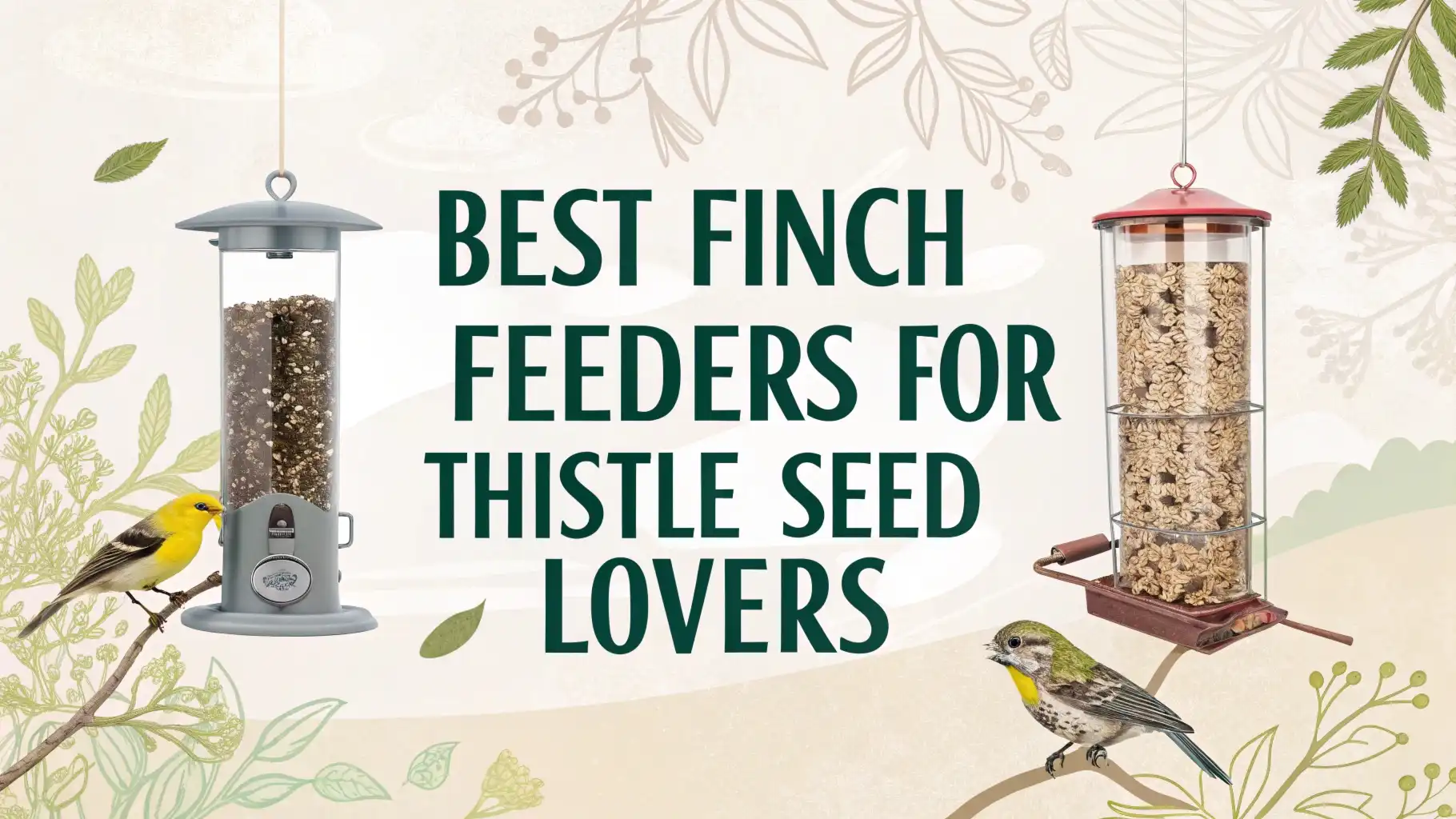
8 Best Finch Feeders for Thistle Seed Lovers in 2026
Watching bright yellow goldfinches dance around your backyard brings pure joy to any bird lover. These beautiful little birds have specific feeding preferences that make choosing the right feeder important.
Thistle seed, also called nyjer seed, attracts finches better than any other bird food. The tiny black seeds need special feeders with small ports that prevent waste while giving finches easy access to their favorite meal.
This guide shares the best finch feeders available on Amazon right now, each tested and loved by countless bird enthusiasts across the country.

Key Takeaways
- Thistle feeders come in three main styles – tube feeders with small ports work best for most yards, mesh feeders allow 360-degree feeding access, and sock feeders provide budget-friendly options for beginners.
- Port size matters tremendously for thistle seed feeders because nyjer seeds measure tiny compared to regular bird seed. Feeders need ports between 3mm to 5mm to prevent seed spillage while letting finches extract seeds comfortably.
- Metal construction beats plastic in durability and squirrel resistance. Steel or aluminum feeders last for years outdoors, withstand weather extremes, and resist damage from chewing squirrels or larger birds.
- Capacity affects refill frequency as larger feeders hold more seed but take longer for birds to empty. A 2 to 2.5 pound capacity strikes the perfect balance between convenience and seed freshness for most backyards.
- Easy cleaning prevents mold growth that makes finches sick. Quick-clean bases, removable parts, and dishwasher-safe components help you maintain healthy feeding stations without hassle.
- Squirrel-proof features save money on expensive nyjer seed. Caged designs, weight-activated perches, or metal mesh construction keeps persistent squirrels away from finch food.
Kingsyard Metal Mesh Finch Feeder

Last update on 2026-08-28 / Affiliate links / Images from Amazon Product Advertising API Some of the links on this website are affiliate links, which means that at no additional cost to you, I earn a commission if you click through and make a purchase. I only recommend products and services that I believe will add value to my readers. Thank you for your support!
The Kingsyard Metal Mesh Finch Feeder stands out with its beautiful antique copper finish that adds elegance to any backyard. This feeder holds an impressive 2.5 pounds of thistle seed, which means fewer refills for busy bird lovers.
The all-metal mesh construction creates a 360-degree feeding station where multiple finches can eat at once without competing for space.
Durable steel mesh resists rust and weather damage throughout all seasons. The tiny mesh openings keep thistle seeds secure while allowing finches to cling naturally and extract seeds with their sharp beaks.
A convenient twist-off top makes refilling quick and mess-free, even when you’re in a hurry. The wide base catches fallen seeds and gives finches a stable landing platform.
Pros:
Large 2.5 lb capacity reduces refill frequency
360-degree mesh allows multiple birds to feed simultaneously
Weather-resistant metal construction lasts for years
Attractive antique copper color complements garden decor
Easy twist-off top for simple refilling
Cons:
Mesh openings may allow some seed spillage in windy conditions
Requires more frequent cleaning than tube feeders
Price point slightly higher than basic tube models
iBorn Tube Finch Feeder with 12 Ports

Last update on 2026-08-28 / Affiliate links / Images from Amazon Product Advertising API Some of the links on this website are affiliate links, which means that at no additional cost to you, I earn a commission if you click through and make a purchase. I only recommend products and services that I believe will add value to my readers. Thank you for your support!
The iBorn Tube Finch Feeder brings excellent value with its 12 feeding ports and 8 metal perches. This bright yellow feeder catches finch attention from across the yard while holding enough seed to keep birds happy for days. The 14-inch tube design provides ample space for several finches to feed without crowding.
Small port openings measure perfect for nyjer seeds and prevent waste. Metal perches resist weather damage better than plastic alternatives found on cheaper feeders.
The clear tube lets you monitor seed levels at a glance, so you know exactly when refills become necessary. A secure hanging loop keeps the feeder stable even during storms.
This feeder excels at attracting goldfinches, house finches, and purple finches to backyards. The combination of multiple ports and sturdy construction creates a reliable feeding station that birds return to daily. Easy disassembly makes cleaning straightforward, which helps prevent mold growth that can harm your feathered visitors.
Pros:
12 feeding ports accommodate many birds at once
Bright yellow color attracts finches effectively
Metal perches provide durability and longevity
Clear tube allows easy seed level monitoring
Budget-friendly price point for quality construction
Cons:
Plastic tube may crack in extreme cold temperatures
Perches could be slightly longer for larger finches
Some customers report difficulty with initial assembly
Gtongoko Squirrel Proof Finch Feeder


Last update on 2026-10-13 / Affiliate links / Images from Amazon Product Advertising API Some of the links on this website are affiliate links, which means that at no additional cost to you, I earn a commission if you click through and make a purchase. I only recommend products and services that I believe will add value to my readers. Thank you for your support!
The Gtongoko Squirrel Proof Finch Feeder solves the frustrating problem of squirrels raiding your thistle seed supply. This all-metal tube feeder features reinforced construction that squirrels cannot chew through or damage. The 2.5 pound capacity means extended time between refills while keeping seed fresh.
Chew-proof metal ports eliminate the common problem of squirrels destroying plastic feeders. The green powder-coated finish resists rust and looks attractive hanging among trees or garden plants. Multiple feeding stations along the tube allow several finches to dine comfortably without territorial disputes.
This feeder hangs securely from a sturdy metal loop designed to support the full weight of seed plus visiting birds. The tube design protects seed from rain better than mesh or sock feeders, which helps maintain seed quality. Smooth surfaces inside the tube prevent seed from sticking and make cleaning easier when maintenance time arrives.
Pros:
Metal construction provides excellent squirrel resistance
2.5 lb capacity reduces refilling frequency
Weather-resistant powder coating ensures longevity
Multiple feeding ports support several birds
Protects seed from rain and moisture
Cons:
Heavier than plastic alternatives when full
Green color may not appeal to all decorating preferences
Initial cost higher than basic plastic tube feeders
Squirrel Buster Finch Premium Feeder

Last update on 2026-08-28 / Affiliate links / Images from Amazon Product Advertising API Some of the links on this website are affiliate links, which means that at no additional cost to you, I earn a commission if you click through and make a purchase. I only recommend products and services that I believe will add value to my readers. Thank you for your support!
The Squirrel Buster Finch represents the premium choice for serious bird enthusiasts tired of squirrel problems. This innovative feeder uses weight-activated technology that closes feeding ports when squirrels climb aboard. Finches weigh too little to trigger the mechanism, so they feed freely while squirrels get nothing.
Professional-grade construction justifies the higher investment for many backyard birders. The 2.4 pound seed capacity strikes an ideal balance between size and manageability. Four sturdy metal perches provide comfortable feeding positions, while eight ports ensure plenty of access points for hungry finches.
This feeder includes a lifetime warranty against squirrel damage, which demonstrates the manufacturer’s confidence in their design. Chew-proof components throughout the feeder mean years of reliable service without replacement parts. The clear seed tube makes monitoring levels easy, and the top removes quickly for refilling.
Pros:
Weight-activated mechanism effectively blocks squirrels
Lifetime warranty against squirrel damage included
Premium construction ensures many years of use
4 metal perches and 8 ports accommodate multiple birds
Clear tube for easy seed level checking
Cons:
Higher price point than standard feeders
Heavier overall design requires sturdy hanging support
Mechanism needs occasional cleaning for smooth operation
Happy Wings Refillable Thistle Sock Feeder

Last update on 2026-07-01 / Affiliate links / Images from Amazon Product Advertising API Some of the links on this website are affiliate links, which means that at no additional cost to you, I earn a commission if you click through and make a purchase. I only recommend products and services that I believe will add value to my readers. Thank you for your support!
The Happy Wings Refillable Thistle Sock Feeder offers an economical entry point for people new to finch feeding. This pack includes three durable sock feeders that you can refill repeatedly instead of throwing away. The mesh material allows finches to cling naturally while extracting thistle seeds through the tiny openings.
Easy-fill design features a wide opening at the top that makes pouring seed simple without spills. The drawstring closure keeps seed secure during windy weather. These lightweight feeders hang easily from tree branches, shepherd hooks, or existing feeder poles. Finches appreciate the natural clinging position that sock feeders provide.
Sock feeders work wonderfully as secondary feeding stations or for testing different yard locations. The fabric mesh dries quickly after rain, which helps prevent mold growth that ruins seed. When cleaning time arrives, you can wash these socks in a sink with warm soapy water, rinse thoroughly, and let them air dry before refilling.
Pros:
Very affordable price for three refillable socks
Lightweight and easy to hang anywhere
Natural clinging position appeals to finches
Quick drying prevents mold problems
Simple to clean and maintain
Cons:
Less durable than metal or hard plastic feeders
May need replacement after one or two seasons
Squirrels can damage fabric mesh
Limited seed capacity requires frequent refills
Can be messy during strong winds
Kingsyard Caged Squirrel Proof Finch Feeder

Last update on 2026-10-13 / Affiliate links / Images from Amazon Product Advertising API Some of the links on this website are affiliate links, which means that at no additional cost to you, I earn a commission if you click through and make a purchase. I only recommend products and services that I believe will add value to my readers. Thank you for your support!
The Kingsyard Caged Squirrel Proof Finch Feeder combines protective wire caging with a quality mesh tube feeder inside.
The outer cage allows small birds like goldfinches and chickadees to enter freely while blocking squirrels and larger pest birds. This dual-protection design keeps your expensive thistle seed available only for intended guests.
Four feeding ports provide adequate access without overcrowding the protected space. The green powder-coated metal resists rust and blends naturally with outdoor settings. The cage opens easily for removing the inner feeder tube when refilling or cleaning becomes necessary.
This feeder hangs from a sturdy metal chain that supports substantial weight. The weatherproof construction withstands rain, snow, and sun exposure year after year. Finches quickly learn to navigate through the cage bars to reach the food inside, usually within a day or two of installation.
Pros:
Wire cage effectively blocks squirrels and large birds
Allows small finches easy access to seed
Durable powder-coated metal construction
Easy access to inner feeder for maintenance
Blends well with natural garden settings
Cons:
Cage adds bulk and weight to the overall design
Some finches need time to adapt to enclosed feeding
More expensive than uncaged tube feeders
Cage bars may collect debris requiring cleaning
Kingsyard Finch Feeder with Rain Dome

Last update on 2026-07-01 / Affiliate links / Images from Amazon Product Advertising API Some of the links on this website are affiliate links, which means that at no additional cost to you, I earn a commission if you click through and make a purchase. I only recommend products and services that I believe will add value to my readers. Thank you for your support!
The Kingsyard Finch Feeder with Rain Dome adds superior weather protection to the standard tube feeder design. The large dome top shields seed from rain and snow, which keeps food dry and prevents spoilage. A removable seed tray at the bottom catches dropped seeds and gives ground-feeding birds a bonus dining area.
Metal mesh tube construction provides 360-degree feeding access while maintaining durability. The 2.5 pound capacity means this feeder holds plenty of thistle seed for busy feeding stations. Black powder coating creates an elegant look that complements modern outdoor decor styles.
The dome lifts off completely for easy refilling, and the mesh tube cleans quickly under running water. Hanging hardware comes included, so you can install this feeder right out of the box. The combination of weather protection, large capacity, and quality construction makes this feeder ideal for year-round use in any climate.
Pros:
Rain dome keeps seed dry during wet weather
Large removable tray catches fallen seeds
2.5 lb capacity reduces refill frequency
Metal mesh allows 360-degree feeding access
Elegant black finish suits contemporary yards
Cons:
Dome may obstruct viewing birds from certain angles
Larger overall size requires more storage space
Higher price reflects premium features
Tray needs regular cleaning to prevent mold
Kaytee Nyjer Twin Pack Instant Sock Feeder

Last update on 2026-07-01 / Affiliate links / Images from Amazon Product Advertising API Some of the links on this website are affiliate links, which means that at no additional cost to you, I earn a commission if you click through and make a purchase. I only recommend products and services that I believe will add value to my readers. Thank you for your support!
The Kaytee Nyjer Twin Pack Instant Sock Feeder delivers immediate gratification for bird lovers who want to start feeding finches today. These feeders come pre-filled with 13 ounces of quality nyjer seed each, totaling 26 ounces of food ready to hang. No assembly, no filling, just open the package and hang them up.
Durable nylon mesh allows finches to cling and feed naturally while keeping seeds contained. The built-in hanging loop makes installation simple on any branch, hook, or pole. These disposable feeders work perfectly for people who want to try finch feeding without investing in expensive equipment first.
Many bird enthusiasts use these instant feeders as supplemental feeding stations during peak migration seasons when finch numbers surge. The twin pack lets you hang feeders in different yard locations to see where finches prefer feeding. Once empty, you can refill them a few times or recycle them and start fresh.
Pros:
Pre-filled and ready to hang immediately
Twin pack provides two feeding locations
No assembly or equipment needed
Perfect for testing finch feeding interest
Affordable introduction to finch feeding
Cons:
Disposable design not eco-friendly long-term
Limited durability compared to permanent feeders
Cannot adjust seed type or quality
May need replacement after several uses
Less attractive than decorative metal feeders
Understanding Thistle Seed and Nyjer
Thistle seed and nyjer seed refer to the same product despite different names. The small black seeds come from the African yellow daisy plant, not from thistle plants.
Bird feeding organizations started using the spelling “nyjer” to avoid confusion with invasive thistle weeds. These heat-treated seeds will not germinate, which prevents unwanted plant growth beneath your feeders.
Finches prefer nyjer seed over most other bird foods because the high oil content provides excellent nutrition. The tiny seeds require special feeders with small ports that prevent waste.
Fresh nyjer seed smells slightly sweet, while old or spoiled seed develops a musty odor that finches reject. Store your thistle seed in a cool, dry location and buy quantities you can use within a month for best results.
Choosing Between Tube, Mesh, and Sock Feeders
Each finch feeder style offers distinct advantages for different situations. Tube feeders with small ports work best for most backyards because they protect seed from weather while offering multiple feeding stations. The clear tubes let you monitor seed levels easily, and quality tube feeders last for many years with proper care.
Mesh feeders allow birds to feed from any angle, which attracts larger flocks. The open design means more birds can feed simultaneously without waiting for perch space. However, mesh feeders expose seed to weather more than tube designs, and wind can blow seeds out more easily.
Sock feeders cost less initially and let you place multiple feeding stations around your yard inexpensively. Finches enjoy the natural clinging position that fabric mesh provides. The main drawbacks include limited durability and less protection from weather and squirrels. Many bird lovers use a combination of feeder types to maximize finch attraction.
Maintaining Your Finch Feeders
Regular cleaning keeps your finch feeders safe and attractive to birds. Disassemble and wash feeders at least once a month using hot soapy water. A bottle brush helps clean inside tubes where seed residue accumulates. Rinse thoroughly and allow complete drying before refilling to prevent mold growth.
Check feeders weekly for signs of damage, especially after storms or during active squirrel seasons. Replace worn parts promptly to maintain feeder integrity.
Old seed at the bottom of feeders should be removed and discarded rather than topped up with fresh seed. This practice prevents finches from eating spoiled food that could make them sick.
Position feeders where you can reach them easily for maintenance. Hanging feeders near windows lets you enjoy watching birds while making access for cleaning more convenient. Keep feeders away from heavy tree cover where falling debris accumulates quickly, and ensure adequate clearance from bushes where cats might hide.
Attracting More Finches to Your Yard
Location plays a crucial role in finch feeder success. Place feeders where you can see them from windows for maximum enjoyment.
Finches prefer feeding stations with nearby trees or shrubs for quick escape if predators appear. Avoid placing feeders directly against solid surfaces where birds cannot watch for danger while eating.
Multiple feeders attract larger flocks than single stations. Space feeders at least 10 feet apart to reduce competition and territorial behavior. Consider adding a birdbath near your finch feeders because birds need fresh water as much as food.
Patience matters when starting finch feeding because these birds take time to discover new food sources. Keep feeders consistently filled with fresh seed, and finches will eventually find them. Once a few birds start visiting regularly, others follow quickly because finches feed in social flocks.
Frequently Asked Questions
How long does thistle seed stay fresh in feeders?
Thistle seed stays fresh for about two to four weeks in feeders depending on weather conditions. Hot humid weather causes seed to spoil faster, while cool dry conditions help maintain freshness longer. Check your seed regularly by smelling it, and discard any seed with musty or moldy odors. Finches refuse to eat spoiled seed, so keeping food fresh ensures consistent bird activity at your feeders.
Why are finches not coming to my new thistle feeder?
Finches may take several weeks to discover new feeders in your yard. These cautious birds need time to recognize unfamiliar feeding stations as safe food sources. Keep the feeder consistently filled with fresh seed and position it where finches can see it from nearby trees. Patience pays off because once a few finches find your feeder, they attract other finches through social feeding behavior.
Can I put other seeds in finch feeders?
Finch feeders designed for thistle seed work best when you use only nyjer seed. The small ports match thistle seed size perfectly, and mixing other seeds causes clogging problems. If you want to offer different foods, set up separate feeders with appropriate port sizes for sunflower chips or finch blend mixes. This approach lets you attract various bird species without compromising feeder performance.
How do I keep squirrels away from my finch feeders?
Several strategies help protect finch feeders from squirrels. Choose all-metal construction that squirrels cannot chew through, or select feeders with protective cages. Weight-activated feeders close ports when heavy animals climb on them. Hanging feeders on thin wires or poles with squirrel baffles provides additional protection. Pure thistle seed attracts squirrels less than mixed bird seed, which helps reduce pest problems.
What time of year do finches eat the most thistle seed?
Finches eat thistle seed year-round, but consumption peaks during spring breeding season and fall migration. Goldfinches molt in late summer, and their seed consumption increases during feather regrowth. Winter brings different finch species like pine siskins and redpolls that love thistle seed. Keeping feeders filled throughout the year ensures you enjoy finch activity during all seasons.
How often should I clean my finch feeders?
Clean finch feeders thoroughly at least once every month to prevent disease and mold growth. Hot weather or heavy use may require more frequent cleaning every two weeks. Disassemble feeders completely and wash with hot soapy water using a bottle brush for tubes. Rinse well and dry completely before refilling. Regular cleaning keeps birds healthy and helps feeders last longer.

Hello, I’m Emily Price, the founder of Birds Affection. As a passionate bird enthusiast and spiritual seeker, I’ve always been fascinated by the symbolic meanings and mystical connections between birds and our lives. On this website, I share my knowledge and insights on the spiritual significance of various bird species, exploring their roles as messengers, guides, and teachers. Through my writing, I aim to inspire and educate others on the profound wisdom and beauty that birds bring to our world. Join me on this journey as we delve into the enchanting realm of bird symbolism and discover the hidden meanings behind these magnificent creatures.