
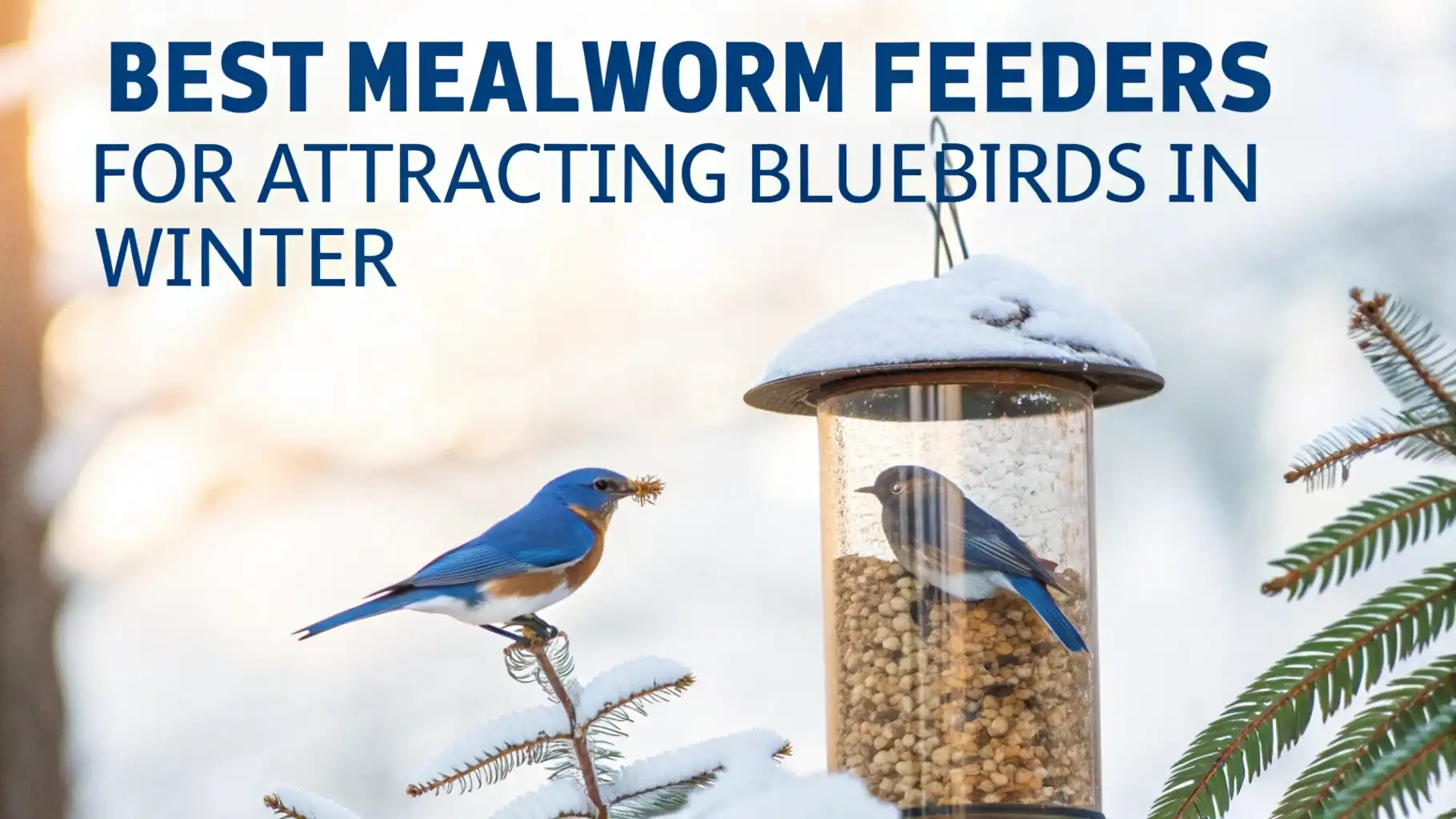
9 Best Mealworm Feeders for Attracting Bluebirds in Winter 2026
Winter can be a challenging time for bluebirds to find food. These beautiful birds need high-protein meals to survive cold temperatures.
Mealworm feeders offer the perfect solution to help bluebirds thrive during winter months. This guide will show you the best mealworm feeders available in 2026 that will bring these stunning birds to your backyard.
Bluebirds are insectivores by nature. During warm months, they feast on beetles, caterpillars, and grasshoppers. When winter arrives, these natural food sources disappear.

Key Takeaways
- Starling-proof designs are critical because European Starlings and grackles will quickly empty feeders meant for bluebirds. Look for feeders with entrance holes sized at 1.5 inches or smaller, or cage barriers that exclude larger birds while allowing bluebirds easy access.
- Weather protection extends mealworm freshness and prevents waste. Feeders with roofs, drainage systems, and enclosed designs keep mealworms dry during rain and snow. Wet mealworms spoil quickly and can make birds sick.
- Easy cleaning features save time and promote bird health. Removable trays, dishwasher-safe components, and accessible interiors make regular maintenance simple. Clean feeders prevent disease spread among your backyard bird population.
- Multiple feeder styles suit different situations. Hanging feeders work well in open yards, window-mount feeders provide close-up views, platform feeders accommodate multiple birds, and enclosed feeders offer maximum protection from both weather and bullies.
- Quality construction materials ensure longevity. Cedar wood, powder-coated metal, and recycled poly lumber withstand years of outdoor exposure without rotting, rusting, or fading. These materials justify their initial cost through decades of reliable use.
Kingsyard All Metal Cage Mealworm Bird Feeder


The Kingsyard All Metal Cage Feeder stands out as a top choice for bluebird enthusiasts. This feeder combines durability with practical design features that make winter feeding simple and effective. The all-metal construction resists squirrel damage and weather exposure.
The cage design serves multiple purposes. It keeps squirrels and large birds away from the mealworms while allowing bluebirds, wrens, and other small songbirds easy access. The 1.5-inch openings are perfectly sized for bluebirds to enter comfortably. The included tray catches any dropped mealworms, preventing waste.
This feeder hangs securely from trees, hooks, or poles. The blue color attracts bluebirds visually. The metal construction means no warping, cracking, or chewing damage over time. The top opens easily for refilling, and the entire unit disassembles for thorough cleaning.
Pros:
- Squirrel-proof cage design blocks large birds and animals
- All-metal construction ensures years of outdoor use
- Easy top-opening mechanism for quick refills
- Effective drainage system keeps mealworms dry
- Attractive blue finish appeals to bluebirds
Cons:
- Metal can become hot in direct summer sun
- Requires regular cleaning to prevent mealworm debris buildup
- Initial cost higher than plastic alternatives
Kettle Moraine Cedar Hanging Bluebird Mealworm Feeder

The Kettle Moraine Cedar Feeder brings natural beauty and functionality together. This handcrafted wooden feeder uses aromatic red cedar that naturally resists rot, insects, and decay. The craftsmanship quality shows in every detail.
Cedar wood provides excellent insulation properties. The mealworms inside stay protected from temperature extremes during winter cold snaps. The 1.5-inch entrance holes positioned on opposite ends allow bluebirds to enter while excluding starlings and grackles. The clear viewing panels let you monitor mealworm levels without opening the feeder.
The hinged roof design makes refilling incredibly easy. Just lift the top, pour in mealworms, and close it again. The roof overhang sheds rain and snow effectively. The natural cedar appearance blends beautifully with outdoor surroundings while standing out enough for birds to notice.
Pros:
- Beautiful natural cedar construction looks attractive
- Rot-resistant wood lasts for many years outdoors
- Clear viewing panels show mealworm supply levels
- Easy-access hinged roof simplifies refilling
- Entrance holes sized perfectly for bluebirds
Cons:
- Wood requires occasional maintenance and sealing
- Higher price point than basic plastic feeders
- Cedar color fades over time with sun exposure
Kingsyard Upgraded Metal Mealworm Tube Feeder

The Kingsyard Metal Tube Feeder offers an affordable entry point for bluebird feeding. This vertical design maximizes mealworm capacity while maintaining a compact footprint. The tube shape prevents mealworms from blowing away in wind.
The widened perch accommodates bluebirds comfortably. Birds can land, grab mealworms, and eat while perched. The chew-proof metal construction defeats squirrels who might damage plastic feeders. The blue powder coating resists fading and corrosion.
This tube design dispenses mealworms gradually through small openings. Bluebirds quickly learn to retrieve mealworms through these ports. The controlled access reduces waste and keeps mealworms fresh longer. The twist-off bottom cap makes cleaning straightforward.
Pros:
- Budget-friendly price makes starting easy
- Squirrel-proof metal tube construction
- Widened perches provide comfortable landing space
- Compact size works in smaller yards
- Simple design means less maintenance
Cons:
- Smaller capacity requires more frequent refills
- Vertical design may take time for birds to discover
- Limited weather protection compared to enclosed models
Kingsyard Platform Mealworm Bird Feeder

The Kingsyard Platform Feeder provides a different approach to bluebird feeding. This open tray design accommodates multiple birds simultaneously. The large 3.5-pound capacity means less frequent refilling during busy feeding periods.
Platform feeders appeal to bluebirds’ natural feeding behavior. In the wild, bluebirds often feed from flat surfaces. This feeder replicates that natural experience, making birds comfortable immediately. The recycled plastic construction combines environmental responsibility with practical durability.
The drainage holes throughout the mesh bottom prevent water accumulation. Rain passes through quickly, keeping mealworms dry. The raised edges contain mealworms while allowing easy bird access. The blue color creates visual appeal that attracts bluebirds from a distance.
Pros:
- Large capacity holds 3.5 pounds of mealworms
- Open platform accommodates multiple birds
- Excellent drainage prevents water pooling
- Recycled plastic construction helps environment
- Easy to clean and refill
Cons:
- Open design exposes mealworms to all bird species
- Squirrels and larger birds can access food easily
- No weather protection in heavy rain or snow
Erva Starling-Proof Barrier Guard Bluebird Feeder

The Erva Barrier Guard Feeder represents the premium solution for serious bluebird enthusiasts. This American-made feeder uses innovative barrier guard technology that keeps starlings out while welcoming bluebirds. The effectiveness rate exceeds 90 percent for excluding aggressive birds.
The powder-coated finish provides exceptional weather resistance. Rain, snow, and sun cannot damage this feeder’s appearance or function. The glass mealworm cup removes easily for dishwasher cleaning. This convenient feature maintains hygiene standards effortlessly.
The barrier guard design uses strategic spacing that starlings cannot navigate. Their body shape and size prevent access, while bluebirds slip through comfortably. This selective access ensures mealworms go to intended recipients. You avoid wasting money feeding invasive species.
Pros:
- Highly effective starling exclusion design
- Premium American-made quality construction
- Dishwasher-safe glass cup simplifies cleaning
- Durable powder coating resists all weather
- Multiple mounting options provide flexibility
Cons:
- Higher price point than basic feeders
- Glass cup requires careful handling
- Barrier design needs occasional cleaning for best function
Kingsyard Adjustable Platform Bird Feeder with Dome

The Kingsyard Adjustable Dome Feeder offers versatile protection features. The adjustable dome top provides customizable weather coverage and access control. You can raise or lower the dome to accommodate different bird sizes or exclude unwanted visitors.
The metal tray construction ensures durability through harsh winters. The mesh bottom promotes excellent drainage. Mealworms stay dry even during extended rainy periods. The dome adjustment mechanism operates smoothly and locks securely at any height.
This feeder attracts not just bluebirds but also cardinals, finches, and other desirable species. The platform style welcomes birds that prefer open feeding spaces. The green color blends naturally with foliage while remaining visible to flying birds.
Pros:
- Adjustable dome provides customizable protection
- Durable metal construction withstands weather
- Accommodates multiple bird species and sizes
- Excellent drainage keeps food dry
- Generous capacity reduces refill frequency
Cons:
- Dome adjustment requires occasional maintenance
- Open sides still allow some weather exposure
- Larger birds may access food depending on dome height
JCS Wildlife Ultimate Enclosed Bluebird Feeder

The JCS Wildlife Ultimate Enclosed Feeder provides maximum protection for both mealworms and feeding birds. This fully enclosed design keeps out starlings, grackles, and other bully birds completely. The 2-cup capacity holds substantial mealworm quantities.
The cage construction uses carefully calculated spacing. Bluebirds, chickadees, and wrens enter easily while larger aggressive birds cannot fit through. The enclosed design also provides weather protection superior to open platforms. Mealworms stay dry in the worst conditions.
The recycled poly lumber construction offers incredible durability. This material never rots, cracks, or fades. It withstands temperature extremes from below freezing to summer heat. The maintenance requirements are virtually zero beyond regular cleaning.
The top-opening design allows easy refilling. The interior compartments organize mealworms neatly. The clear viewing windows let you monitor food levels without disturbing feeding birds. The feeder mounts to poles or posts for stable installation.
Pros:
- Complete exclusion of starlings and large birds
- Holds 2 cups of dried mealworms
- Recycled poly lumber never rots or fades
- Superior weather protection for food
- Easy top-opening refill access
Cons:
- Premium price reflects advanced features
- Enclosed design may take longer for birds to discover
- Heavier construction requires sturdy mounting
Kettle Moraine Recycled Poly Bluebird Feeder

The Kettle Moraine Recycled Poly Feeder combines environmental consciousness with practical functionality. The recycled plastic lumber looks like natural cedar but offers superior durability. This material never requires painting, staining, or weatherproofing treatments.
The dual-entrance design allows birds to enter from either end. The 1.5-inch holes accommodate bluebirds while excluding larger species. The clear viewing panels on both sides provide excellent visibility. You can check food levels and watch feeding activity clearly.
The hinged roof opens wide for convenient access. Filling and cleaning become quick, simple tasks. The interior tray removes completely for thorough washing. The drainage system prevents moisture accumulation that could spoil mealworms.
This feeder offers both hanging and mounting options. The included hardware supports either installation method. The blue and cedar color combination creates visual appeal that attracts bluebirds while looking attractive in your yard.
Pros:
- Eco-friendly recycled plastic lumber construction
- Dual entrance holes increase bird access
- Clear viewing panels on both sides
- Versatile hanging or mounting installation
- Zero maintenance requirements for materials
Cons:
- Plastic appearance less natural than wood
- Higher cost than basic plastic feeders
- Heavier weight than standard feeders
JCS Wildlife Window Bluebird Mealworm Feeder

The JCS Wildlife Window Feeder brings bluebirds up close for amazing viewing opportunities. This window-mount design attaches securely to glass with strong suction cups. You can watch bluebirds feed from just inches away inside your home.
The enclosed cage design keeps larger birds out while allowing bluebirds full access. The removable jar holds mealworms and lifts out easily for refilling and cleaning. The transparent sides provide unobstructed views of feeding activity.
Window feeders offer unique advantages for bird photography and education. Children and adults alike enjoy watching birds at eye level. The close proximity reveals details invisible from distant feeders. The entertainment value exceeds typical feeders dramatically.
The weatherproof construction handles rain, snow, and temperature changes. The roof overhang protects the feeding area. The suction cups maintain secure attachment through varying weather conditions. Installation takes just minutes without tools.
Pros:
- Window mounting provides close-up bird viewing
- Enclosed design excludes larger aggressive birds
- Removable jar simplifies cleaning and refilling
- No yard space required for installation
- Great for photography and education
Cons:
- Limited capacity requires frequent refilling
- Window location may not attract as many birds
- Suction cups need periodic checking and cleaning
Songbird Essentials Copper Bluebird Window Feeder

The Songbird Essentials Copper Feeder adds elegant style to window bird feeding. The copper finish creates a distinctive appearance that ages beautifully over time. This feeder combines aesthetics with practical bluebird feeding features.
The window-mount design uses reliable suction cup attachment. The mealworm tray sits at an angle that allows comfortable bird access. The copper construction resists weather damage while developing an attractive patina. The natural aging process enhances rather than diminishes appearance.
The compact size works well for smaller windows or limited spaces. The tray holds enough mealworms for daily feeding without excessive waste. The open design allows easy monitoring and cleaning. Birds discover this feeder quickly due to its visibility.
This feeder appeals to bird lovers who appreciate both function and form. The copper finish stands out against most home exteriors. The craftsmanship quality shows attention to detail. The simple design proves reliable and long-lasting.
Pros:
- Attractive copper finish develops beautiful patina
- Window mounting for close-up viewing
- Compact size fits smaller windows
- Weather-resistant metal construction
- Simple design proves reliable
Cons:
- Open design allows larger birds access
- Smaller capacity than enclosed feeders
- Copper appearance may not suit all homes
Why Mealworm Feeders Matter for Winter Bluebirds
Winter survival challenges bluebirds significantly. Natural insect populations disappear when temperatures drop. Bluebirds cannot switch to seed-based diets like many other species. They need high-protein insects or suitable alternatives like mealworms to maintain body temperature and energy levels.
Mealworms provide the perfect nutritional profile. They contain proteins, fats, and nutrients that match natural insect prey. Dried mealworms last longer in feeders than live ones. They store easily and cost less per feeding. The convenience factor makes regular feeding sustainable for busy homeowners.
Choosing the Right Feeder Location
Location determines feeder success significantly. Bluebirds prefer open areas with nearby perching spots. Position feeders 15 to 25 feet from trees or shrubs. This distance provides safety from predators while giving birds comfortable observation points.
Height matters too. Install feeders 5 to 6 feet above ground. This elevation deters ground predators while remaining accessible for maintenance. Avoid placing feeders near busy windows where birds might collide.
Consider sun exposure when selecting locations. Morning sun helps birds warm up after cold nights. Afternoon shade prevents mealworms from drying out or cooking in summer heat. Balance these factors based on your climate and seasonal conditions.
Maintaining Your Mealworm Feeder
Regular cleaning prevents disease transmission between birds. Wash feeders weekly with hot soapy water. Rinse thoroughly and dry completely before refilling. Monthly deep cleaning with diluted bleach solution eliminates stubborn bacteria and mold.
Inspect feeders regularly for damage. Check hanging wires, mounting hardware, and structural integrity. Replace worn components promptly to prevent accidents. Squirrels and weather cause most feeder damage. Address problems early before they worsen.
How Many Mealworms Should You Offer
Start with small quantities to gauge interest. Offer one quarter cup of dried mealworms initially. Monitor consumption rates over several days. Increase amounts gradually as birds discover and regularly visit the feeder.
Most backyard situations require half to one cup daily during peak winter feeding. Adjust based on bird numbers and weather conditions. During severe cold snaps, increase offerings. Birds need extra calories to maintain body heat in extreme temperatures.
Avoid overfilling feeders. Mealworms exposed too long lose nutritional value. They also attract pests like mice and raccoons. Keep amounts reasonable for one to two days of consumption. Fresh mealworms appeal more to birds.
Frequently Asked Questions
What time of day do bluebirds prefer to eat mealworms?
Bluebirds typically feed most actively during early morning hours. They need energy after overnight fasting. Mid-morning and late afternoon also see good feeding activity. Consistent food availability throughout daylight hours serves birds best. Refill feeders in the morning to ensure adequate supplies all day.
Can I use live mealworms instead of dried ones?
Yes, live mealworms work excellently in feeders. Many bird lovers believe bluebirds prefer live mealworms over dried varieties. However, live mealworms require refrigeration and have shorter storage life. They cost significantly more than dried alternatives. Start with dried mealworms for convenience, then try live ones if desired.
How long does it take for bluebirds to find a new feeder?
Discovery time varies widely based on location and existing bluebird populations. Some yards attract birds within days. Others require several weeks. Patience proves essential with new feeders. Placing feeders near known bluebird territories speeds discovery. Adding native berry bushes nearby also attracts birds naturally.
Do I need different feeders for different seasons?
Most quality mealworm feeders work year-round effectively. Winter requires weatherproof designs that protect food from snow and ice. Summer feeding benefits from shaded locations that prevent mealworm spoilage. The same feeder can serve both purposes with proper placement adjustments. Investing in versatile, durable feeders eliminates seasonal equipment changes.
Will mealworm feeders attract other bird species?
Yes, many species enjoy mealworms besides bluebirds. Wrens, chickadees, nuthatches, and woodpeckers all eat mealworms readily. Some bird lovers appreciate this diversity. Others prefer bluebird-exclusive designs with appropriate entry hole sizing. Choose feeder styles based on your preferences for single-species or mixed-species feeding.
How do I keep starlings away from my bluebird feeder?
Starling exclusion requires strategic feeder design. Entrance holes of 1.5 inches or smaller prevent starling access while accommodating bluebirds. Cage feeders with appropriate bar spacing also work well. Avoid platform feeders if starlings dominate your area. The barrier guard style feeders offer the most reliable exclusion.
Should I stop feeding when spring arrives?
Continue offering mealworms into spring and early summer. Breeding bluebirds need extra protein for egg production and feeding nestlings. Parent birds greatly appreciate readily available mealworms when feeding hungry chicks. Gradually reduce amounts as natural insects become abundant. Many bird lovers maintain some level of feeding year-round.

Hello, I’m Emily Price, the founder of Birds Affection. As a passionate bird enthusiast and spiritual seeker, I’ve always been fascinated by the symbolic meanings and mystical connections between birds and our lives. On this website, I share my knowledge and insights on the spiritual significance of various bird species, exploring their roles as messengers, guides, and teachers. Through my writing, I aim to inspire and educate others on the profound wisdom and beauty that birds bring to our world. Join me on this journey as we delve into the enchanting realm of bird symbolism and discover the hidden meanings behind these magnificent creatures.