How Do Owls See in Low Light Conditions?
Owls have special features that help them see well in low light. Their large, tube-shaped eyes capture more light. They have many rod cells in their retinas that improve their night vision. Since their eyes are fixed in their sockets, owls turn their heads to look around. These traits are key to their success as hunters at night. There is much to learn about how they use these adaptations to find food and survive in the dark.
Key Takeaways
- Owls have large, tubular eyes that gather more light, enhancing their ability to see in low light conditions.
- A high concentration of rod cells in their retinas significantly improves night vision and movement detection.
- Owls' flat corneas contribute to increased light collection, further aiding vision during the night.
- Their ability to turn their heads up to 270 degrees compensates for fixed eye sockets, allowing for better peripheral vision.
- Unique adaptations, including silent flight, improve their hunting success in dim environments by reducing detection from prey.
The Anatomy of an Owl's Eye
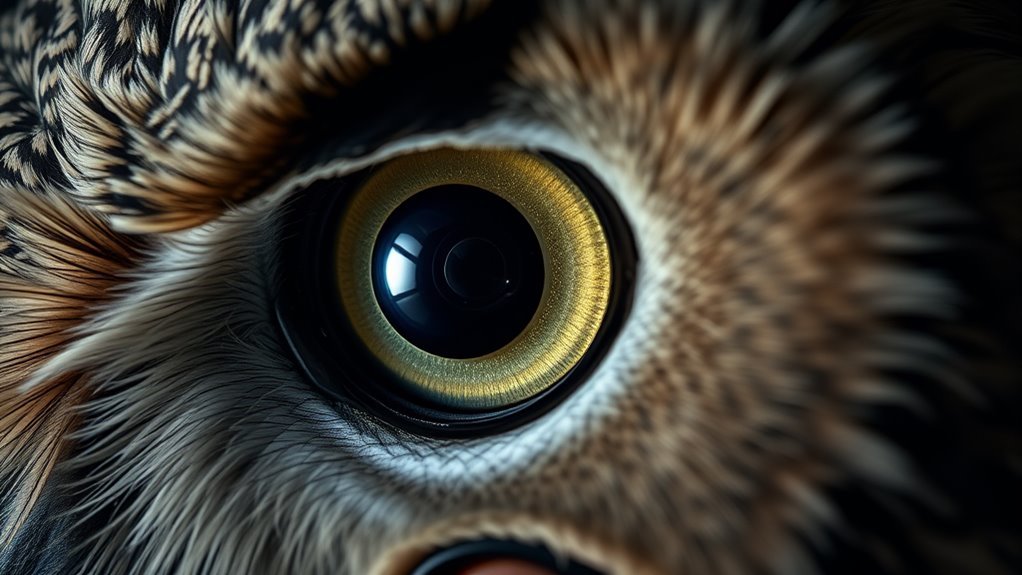
Owls have unique eyes that help them see well in the dark. Their large, tubular eyes collect more light, making them great for low-light conditions. This shape makes it hard for their eyes to move, so they can turn their heads up to 270 degrees instead.
Their flat corneas also help gather more light. Owls have many rod cells in their eyes that work well in dim light.
These features show how owls have adapted to be successful hunters at night. Understanding their eye structure reveals how they thrive in darkness.
The Role of Retinal Cells in Night Vision
Retinal cells are crucial for owls' impressive night vision. Their retina has a high number of rod cells.
These cells detect light in low-light conditions. Unlike cone cells, which work best in bright light, rod cells make owls more sensitive to darkness. This setup lets them notice movement and changes in light easily.
Additionally, owls have large eyes that allow more light to enter. Together, these features give owls an edge when hunting in dim environments. Their ability to see well at night is a key advantage.
Enhancements in Light Sensitivity

Owls have special features that improve their ability to see in the dark. Their large eyes capture more light, helping them see better in low-light situations.
Their retinas are packed with rod cells, which are great for sensing faint light. This helps them notice even small movements from prey at night, allowing them to strike accurately.
Furthermore, the positioning of their eyes enhances depth perception, boosting their hunting skills. These adaptations make owls successful nighttime hunters, showcasing their impressive visual abilities.
The Importance of Head Movement and Eye Position
Owls have unique abilities that enhance their vision. They can't move their eyes like humans because their eye sockets are fixed. Instead, they rely on their head movement to see clearly. Owls can turn their heads up to 270 degrees. This helps them look around without moving their bodies. By staying still, they avoid being noticed by their prey.
Their head tilting also helps them judge distances and see more around them. This is important for finding movement when it's dark.
These features make owls excellent hunters at night. The way they move their heads is essential to their sharp vision and hunting skills.
How Adaptations Contribute to Predatory Success

Owls are skilled hunters, thanks to their unique adaptations. Their night vision is exceptional, as they've many rod cells in their eyes. This allows them to see well in dark conditions and find prey easily.
Owls also have a special facial disc that helps direct sound to their ears. This improves their ability to hear and locate hidden prey.
Additionally, owls have specially designed wings that enable silent flight. This lets them approach their targets without being heard. Together, these features enhance their hunting skills and make them effective predators in low light.
Understanding these traits helps us appreciate owls and their role in nature. They're truly fascinating creatures.
Frequently Asked Questions
Do All Owl Species Have the Same Night Vision Capabilities?
Not all owl species have the same night vision abilities. Different owl species have unique adaptations that help them see well in low light. These adaptations are suited to their habitats and hunting methods. As a result, some owls can see better at night than others, making them skilled hunters in the dark.
Can Owls See Color in Low Light Conditions?
Owls have limited ability to see colors in low light. They have a high number of rod cells in their eyes, which help them see well in darkness. However, this focus on low-light vision means they do not distinguish colors effectively. Owls can detect movement and shapes, making them skilled hunters at night, but their color perception is weak.
How Does Moonlight Affect an Owl's Vision?
Moonlight affects an owl's vision significantly. The brightness of the moon enhances contrasts in their environment. This extra light helps owls see better at night. As a result, they can hunt more effectively. This improvement in vision is crucial for their activities during darkness.
Are There Any Environmental Factors That Impact Owl Visibility?
Environmental factors significantly affect owl visibility. Habitat loss and light pollution can hinder their hunting abilities. These issues impact how well owls find prey in the dark and move through their environment.
Owls rely on darkness to hunt, so bright lights can confuse them. This makes it harder for them to spot movement and catch food. When their habitats are disturbed, owls may struggle to locate safe places to hunt or nest.
Do Owls Rely Solely on Vision for Hunting at Night?
Owls hunt at night mainly using their vision. They have advanced eyesight that helps them see in low light. In addition to sight, owls have excellent hearing. This ability allows them to locate prey, even in the dark. They are also sensitive to vibrations, which aids in finding animals hidden under leaves or snow. These adaptations ensure owls can be effective hunters in various nocturnal settings. Their skills highlight how adaptable and efficient they are in their environment.

Hello, I’m Emily Price, the founder of Birds Affection. As a passionate bird enthusiast and spiritual seeker, I’ve always been fascinated by the symbolic meanings and mystical connections between birds and our lives. On this website, I share my knowledge and insights on the spiritual significance of various bird species, exploring their roles as messengers, guides, and teachers. Through my writing, I aim to inspire and educate others on the profound wisdom and beauty that birds bring to our world. Join me on this journey as we delve into the enchanting realm of bird symbolism and discover the hidden meanings behind these magnificent creatures.