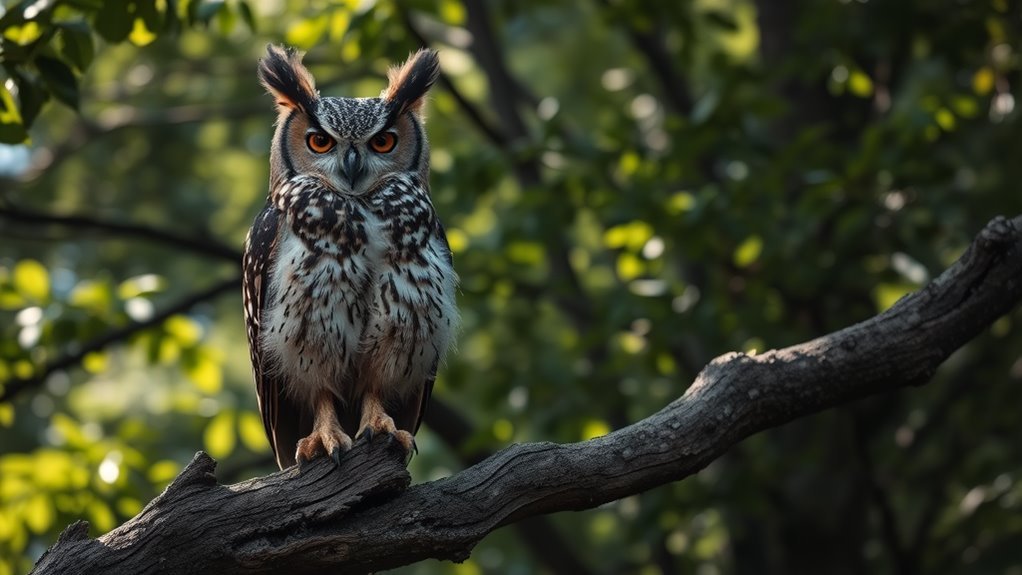
Owls: The Mystery of Their Long Legs
Owls are intriguing birds. Their long legs are important for their survival. These legs help them hunt and move across different surfaces. Owls maintain balance and stability better than many other birds due to their leg structure. Understanding how these features support their hunting skills can reveal more about their success in nature. What additional insights can we gain about these remarkable predators?
Key Takeaways
- Owls possess long legs and toes with sharp talons that enhance their ability to grasp and capture prey effectively.
- Their leg length adaptations vary by habitat, with longer legs aiding hunting in open fields and wetlands, while shorter ones suit dense forests.
- Long legs improve visibility, allowing owls to spot food from a distance in thick underbrush, contributing to their hunting efficiency.
- The unique muscle structure of their legs supports silent movements, enabling owls to swoop down quietly on prey.
- Feathered legs offer insulation, helping owls maintain body temperature in diverse climates while enhancing their survival capabilities.
The Anatomy of an Owl: Understanding Their Unique Physique
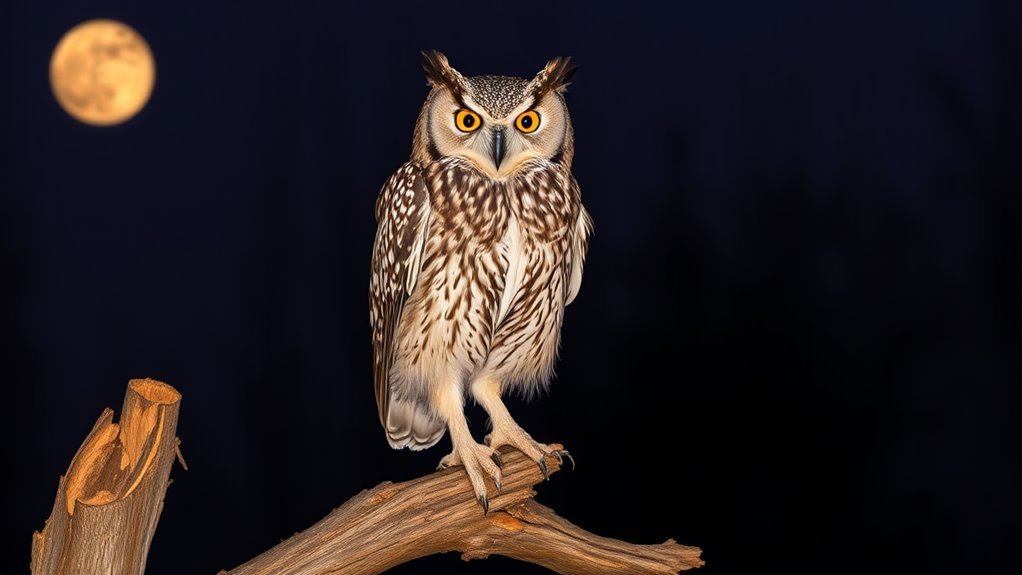
Owls are captivating birds that intrigue many due to their unique shape and presence. Their anatomy features several important adaptations, especially in their legs.
Owls have strong legs that allow them to move precisely. Their long toes end with sharp talons, which help them grasp prey effectively. The muscle structure in their legs also enables them to swoop silently when hunting.
A notable feature of owls is their feathered legs, which provide insulation to keep them warm during cold nights.
Learning about these aspects of owl anatomy enhances our understanding and appreciation of these remarkable birds, showcasing their effective design and survival traits in nature.
Evolutionary Adaptations: Why Do Owls Have Long Legs?
Owls have long legs that serve important purposes for their survival. These features help them handle various environments.
The longer legs improve their balance and movement as they move through different terrains. They also help owls maintain their body temperature in various climates.
Being taller allows owls to see prey from farther away, which helps them hunt effectively. These adaptations highlight how nature shapes animals to thrive in their surroundings.
The Role of Long Legs in Hunting Strategies

Long legs are crucial for owls when hunting. These long limbs help them reach farther, allowing them to close distances quickly on their prey.
The height of their legs gives them a better view, making it easier to spot food even in thick brush. These adaptations lead to more effective hunting, enabling swift motions and accurate strikes.
The flexibility of long legs also aids in moving through different terrains, such as rocky areas or wet fields. Overall, these physical traits serve as important tools for owls, ensuring they can hunt successfully and survive in various environments.
How Long Legs Enhance Balance and Stability
Owls have long legs that help them balance and stay stable. These legs play a key role in how they maintain their balance.
When perched on branches, owls extend their legs outward, which helps them evenly distribute their weight. This distribution makes them more stable and allows them to sit quietly while looking for prey, without being noticed.
Their long legs also allow for quick and precise movements when landing or taking off. This ability is important for their hunting techniques.
Knowing how these long legs support balance gives us a better understanding of how owls adapt to their environments.
The Impact of Habitat on Owl Leg Length
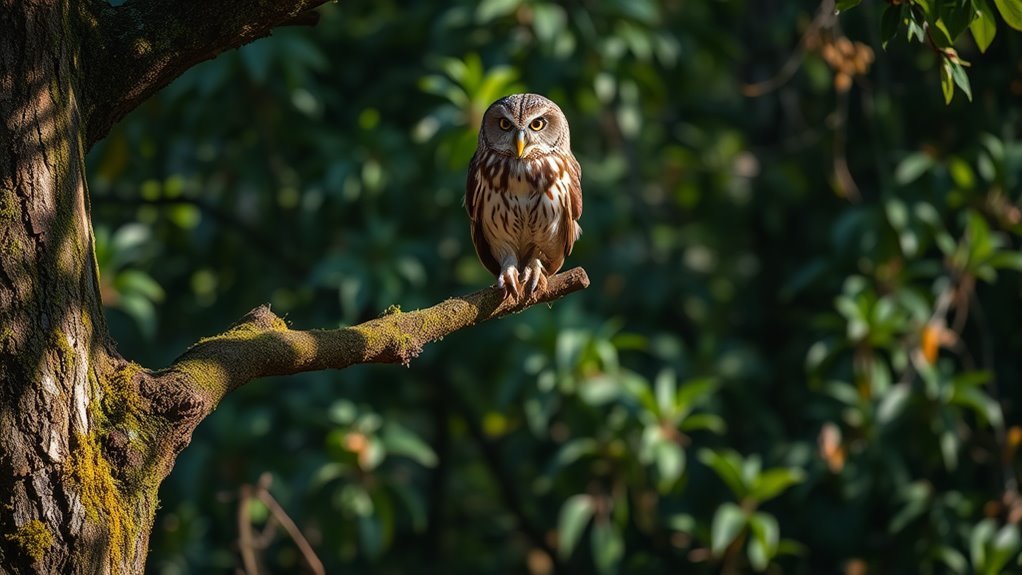
Habitat diversity affects owl leg length in interesting ways. In dense forests, shorter legs help owls move through thick brush.
In open fields, longer legs assist owls in catching prey on the ground. These leg lengths aren't random; they help owls meet the specific challenges of their habitats.
In wetlands, longer legs enable owls to wade through shallow water. Observing these differences enhances our understanding of owls and their ability to adapt.
Ultimately, owl leg length highlights the connection between their habitats and the roles they play in the ecosystem.
Long Legs and Flight: A Balancing Act
Certain owl species have long legs that help them fly well. These legs improve their aerodynamics and allow for precise flight.
While observing owls, notice how their long legs assist them in several ways:
- Stability: They help owls balance on branches and during takeoff.
- Agility: Owls can make quick moves in the air when they hunt.
- Lift: Long legs support their body weight while flying.
- Hunting Precision: They enable swift landings on prey from above.
Understanding these traits enhances our appreciation of owls in their natural habitats.
The Influence of Diet on Leg Development
The diet of an owl is important for the growth of their long legs. Nutrition, especially protein intake, affects muscle and bone growth.
When owls eat small mammals and insects, they get nutrients that help their legs grow stronger and longer. A poor diet can stop their leg growth, making it harder for them to survive in different environments.
This connection is clear in young owls, called nestlings, who depend on their parents for food. Observing these links helps us appreciate owls more.
A balanced diet supports their leg development and overall health, making them more adaptable in the wild.
How Long Legs Facilitate Better Perching
Long legs improve an owl's ability to perch. These legs provide stability, allowing owls to grip branches effectively.
Here are the key benefits of long legs for perching:
- They offer better balance on narrow branches.
- They help owls adjust their position for optimum stability.
- They strengthen grip, preventing slips during strong winds.
- They increase visibility from high perches.
These adaptations keep owls steady and ready for hunting.
Observing these birds can help you appreciate the traits that make them skilled at perching in their natural surroundings.
Comparative Analysis: Owls vs. Other Birds of Prey
Owls are unique among birds of prey for their hunting skills and special body features. They excel in hunting at night, using stealth to catch their prey. Their wing design allows them to fly silently. This trait helps them sneak up on small animals in the dark.
On the other hand, eagles hunt during the day and often rely on their sharp eyesight. Hawks also hunt in daylight, focusing on spotting their food from a distance.
Owls have specific adaptations, such as long legs. These help them perch securely on branches.
Each type of owl shows how birds of prey adapt differently to their environments. This difference adds to our understanding of their remarkable abilities.
Insights From Owl Behavior: the Importance of Leg Length
While observing owls, their leg length is key to their hunting and perching. These leg features help them move effectively in different environments.
For example:
- Longer legs help them land smoothly on branches.
- They help catch prey during night hunts.
- Leg length influences their balance while perched.
- Owls use their legs for quiet, powerful movements.
These traits show how important leg length is for owls.
Understanding these behaviors connects us to nature, highlighting the beauty of these incredible birds.
Case Studies of Long-Legged Owl Species
As you learn about owls, you'll notice some species have long legs that help them survive. For example, the Great Horned Owl has long legs that make it a strong hunter in various environments. These legs allow it to strike quickly and secure prey.
On the other hand, the Spotted Owl has legs that help it move easily through thick forests. This design improves its agility and helps it hunt with precision.
Both of these owl species show how leg length relates to the environment they live in and their hunting methods. These traits support their survival and highlight their roles in the ecosystem.
Cultural Significance of Owls and Their Distinct Features
The long legs of certain owl species serve important functions and add to their cultural value in many societies. Owls have distinct features that make them stand out. They hold a special place in folklore, representing various aspects of life and wisdom. Their symbolism reflects our values and understanding of nature.
Here are some cultural meanings associated with owls:
- Wisdom: Owls are often seen as wise, symbolizing intellect and insight.
- Mystery: Their activity at night creates an air of mystery and sparks curiosity.
- Transition: Many cultures see owls as messengers that link different worlds.
- Protection: In some beliefs, owls act as protectors against negative influences.
These qualities make owls important figures in cultural stories. Their unique attributes and roles enrich our understanding of the natural world and our place in it.
Conservation Considerations: Protecting Owls and Their Habitats
Owls play a vital role in ecosystems and have deep cultural value. Protecting them and their habitats is crucial for biodiversity. Many owl species face threats from habitat loss caused by urban development and deforestation.
You can help by supporting protected areas and laws that keep these environments safe.
Raise awareness about the issues owls encounter. When people understand these threats, they're more likely to take action. You can engage in local conservation efforts or share information with others.
Simple actions, such as planting trees or participating in community clean-ups, can make a difference. Together, we can ensure a future where owls live freely, inspiring admiration and respect in our communities.
Frequently Asked Questions
Do All Owl Species Have Long Legs?
Not all owl species have long legs. Owl legs vary based on their needs. Some species have longer legs for hunting and perching, while others have shorter legs for different lifestyles. This variety shows how diverse owl anatomy can be.
How Does Leg Length Vary Among Owl Species?
Leg length among owl species varies based on their hunting needs and habitats. Different leg lengths help owls move effectively in their environments. These adaptations allow them to hunt efficiently and thrive in various settings. This showcases nature's ability to create specialized traits that enhance survival.
Can Owls Retract Their Legs While Flying?
Owls have a graceful flight. They cannot fully retract their legs like some other birds. However, their leg anatomy helps them move smoothly through the air. This design allows them to fly efficiently while also being effective hunters. Owls combine speed and stealth, making them skilled at capturing prey.
How Do Owls Communicate Using Their Legs?
Owls use their legs to communicate with each other. They position their legs in specific ways to show confidence or alertness. These leg movements help owls signal their intentions to others nearby without making noise. This form of silent communication is essential for their interactions in the wild. Watching how owls use their legs can reveal a lot about their feelings and social behaviors.
Are There Myths About Owls Related to Their Legs?
Owls often inspire myths about their leg length. These stories usually connect to ideas about wisdom and mystery. They show how culture intertwines with nature and fascinates people. Owls, with their unique characteristics, are a source of wonder in many cultures.

Hello, I’m Emily Price, the founder of Birds Affection. As a passionate bird enthusiast and spiritual seeker, I’ve always been fascinated by the symbolic meanings and mystical connections between birds and our lives. On this website, I share my knowledge and insights on the spiritual significance of various bird species, exploring their roles as messengers, guides, and teachers. Through my writing, I aim to inspire and educate others on the profound wisdom and beauty that birds bring to our world. Join me on this journey as we delve into the enchanting realm of bird symbolism and discover the hidden meanings behind these magnificent creatures.