Birds Choice Classic Squirrel Proof Bird Feeder Review 2026
Squirrels can empty a bird feeder in minutes. The Birds Choice Classic Squirrel Proof Bird Feeder promises to stop them with a baffle and pole setup.
I tested this feeder for several weeks in my backyard. This review covers everything you need to know before buying it in 2026.
This feeder has a long history with bird lovers. It uses a simple physical barrier instead of weight activated ports. I will share the build quality, bird response, squirrel resistance, and real drawbacks. You will also find three solid alternatives if this one does not fit your yard.
In a Nutshell:
- Strong squirrel defense: The wide baffle and tall pole stop ground squirrels from climbing up to the seed tube.
- Generous seed capacity: The tube holds up to 5 pounds of seed, so refills happen less often.
- Solid build quality: Cast aluminum ports, stainless steel perches, and a UV resistant polycarbonate tube hold up in sun and rain.
- Easy assembly: The three section pole and screw on baffle take about ten minutes to set up in soft soil.
- Some weak points exist: Moisture can sneak into the tube during heavy rain, and the pole may lean in loose soil without extra support.
- Best for open yards: Place it at least ten feet from trees, fences, or rooftops so flying squirrels cannot leap onto it.
What Is the Birds Choice Classic Squirrel Proof Bird Feeder?

Last update on 2026-09-13 / Affiliate links / Images from Amazon Product Advertising API Some of the links on this website are affiliate links, which means that at no additional cost to you, I earn a commission if you click through and make a purchase. I only recommend products and services that I believe will add value to my readers. Thank you for your support!
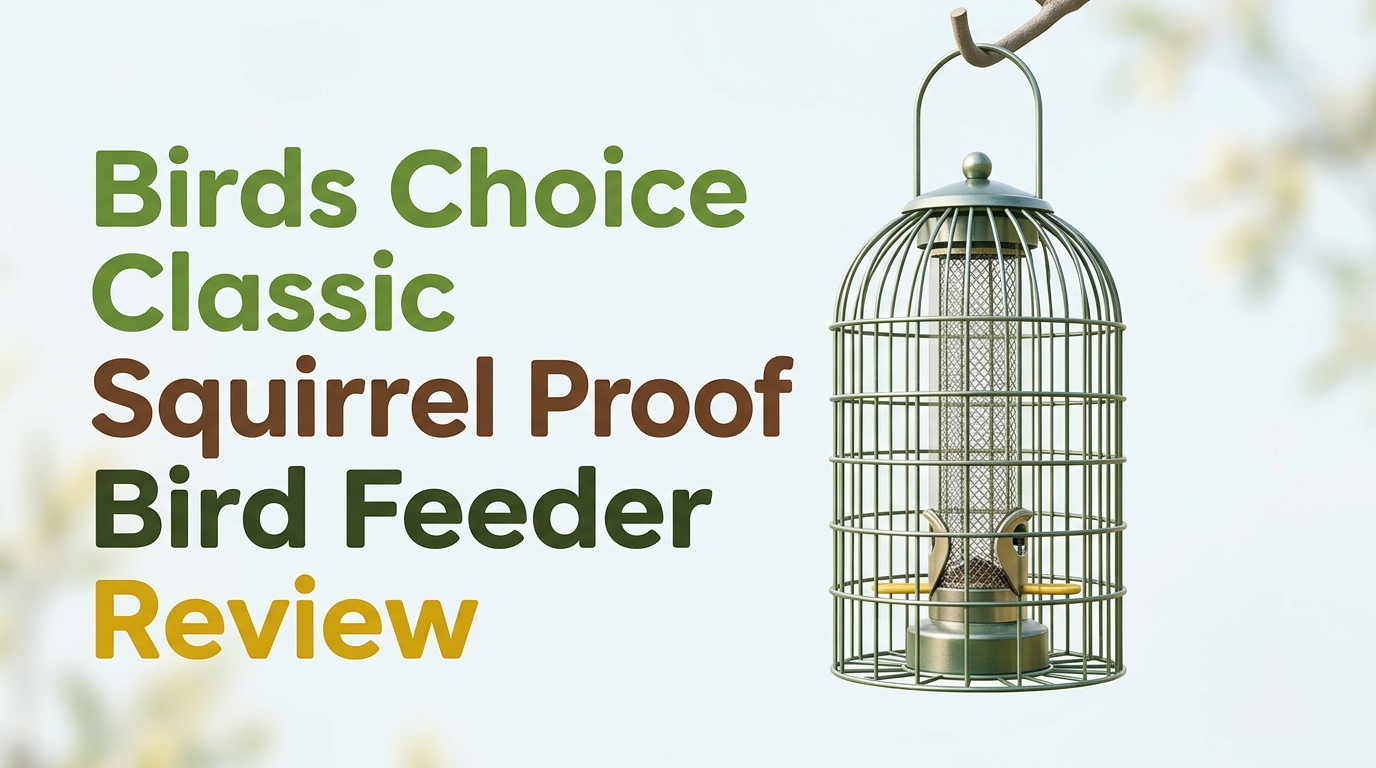
The Birds Choice Classic is a tube style bird feeder sold as a complete kit. It comes with the seed tube, a metal squirrel baffle, and a three section ground pole. The model number is NP431, and it is made by Birds Choice, a known American bird product brand.
The feeder design is simple. A clear plastic tube holds the seed. Four feeding ports near the base let small birds perch and eat. Below the tube sits a wide dome shaped baffle. This dome blocks squirrels that try to climb the pole from the ground.
The feeder targets common backyard birds. Cardinals, chickadees, finches, nuthatches, and woodpeckers all use it without trouble. The perches are short, which keeps larger pest birds like grackles from settling in for long meals.
The total height with the pole is about 5 feet 8 inches. The tube itself measures roughly 12 inches tall and 6 inches wide. The green baked enamel finish gives it a clean, traditional look that fits most gardens.
Unboxing Experience
The package arrived in a long brown box. Inside, the parts were wrapped in foam sleeves and bubble wrap. Nothing was scratched or bent on arrival. The box included the seed tube, removable top, baffle, four port assembly, and three pole sections.
A small instruction card showed the assembly order. The card was clear, but it used pictures more than words. I appreciated that approach because it made setup feel less stressful.
The first thing I noticed was the weight of the metal parts. The baffle and top feel solid, not flimsy. The pole sections have threaded ends that screw together tight. The polycarbonate tube felt thick and clear, with no cloudy spots.
I assembled the whole feeder in about twelve minutes on my kitchen counter. The hardest part was pushing the pole into my yard soil. I had to use a rubber mallet to drive it deep enough. Once installed, the feeder stood straight and felt stable.
Build Quality and Materials
The build quality is one of the strongest points of this feeder. The seed tube uses UV resistant polycarbonate, which means it will not turn yellow or brittle in the sun. After weeks outside, my tube still looked clear.
The feeding ports are cast aluminum, not plastic. This matters because squirrels chew through plastic ports on cheaper feeders. Aluminum stops their teeth cold. The perches are stainless steel, so they will not rust even after rain or snow.
The metal top and the baffle skirt have a baked enamel green finish. This finish resists chipping better than spray paint. I rubbed the baffle hard with my thumbnail, and no paint came off.
The pole is steel with the same green coating. It is split into three sections for easy shipping and storage. Each section threads firmly into the next. The base of the pole has a pointed tip to push into the ground.
One small concern is the plastic seed retainer ring near the base of the tube. It feels less heavy than the rest of the feeder. Over many years, this part may need replacing if it cracks.
Top 3 Alternatives for Birds Choice Classic Squirrel Proof Bird Feeder
If the Birds Choice Classic does not match your needs, these three options are worth considering.
Brome Squirrel Buster Plus


Last update on 2026-07-01 / Affiliate links / Images from Amazon Product Advertising API Some of the links on this website are affiliate links, which means that at no additional cost to you, I earn a commission if you click through and make a purchase. I only recommend products and services that I believe will add value to my readers. Thank you for your support!
Droll Yankees Yankee Flipper

Last update on 2026-08-28 / Affiliate links / Images from Amazon Product Advertising API Some of the links on this website are affiliate links, which means that at no additional cost to you, I earn a commission if you click through and make a purchase. I only recommend products and services that I believe will add value to my readers. Thank you for your support!
Perky Pet Squirrel Be Gone Max

Last update on 2026-08-28 / Affiliate links / Images from Amazon Product Advertising API Some of the links on this website are affiliate links, which means that at no additional cost to you, I earn a commission if you click through and make a purchase. I only recommend products and services that I believe will add value to my readers. Thank you for your support!
How the Squirrel Baffle Works
The squirrel baffle is the heart of this feeder. It is a wide dome made of green coated metal that wraps around the pole below the seed tube. The dome flares out to about 16 inches across.
When a squirrel climbs the pole from the ground, it hits the underside of the dome. The dome is too wide for the squirrel to reach around. The smooth metal surface gives no grip for tiny claws. The squirrel slides back down the pole.
The baffle also tilts slightly when pushed. This tilting motion adds another layer of defense. A squirrel that grabs the edge of the baffle finds the surface moving under its weight. Most squirrels give up after two or three tries.
I watched a fat gray squirrel try this feeder for an entire afternoon. He climbed the pole at least twenty times. Each time, the baffle stopped him. By sunset, he gave up and went after the seeds dropped on the ground instead.
The baffle does not work against flying squirrels or jumping squirrels from trees. If your feeder sits within ten feet of a branch, fence, or roof, a squirrel can leap straight onto the seed tube. Placement matters more than the baffle alone.
Bird Variety Attracted
This feeder pulls in a wide range of small and medium songbirds. In my yard, I saw cardinals, black capped chickadees, tufted titmice, house finches, and white breasted nuthatches within the first week. Downy woodpeckers visited too, clinging to the perches sideways.
The four feeding ports allow up to four birds at once. The short perches favor smaller birds. Larger pests like starlings and grackles can land but find the perches uncomfortable. They tend to leave faster than friendly visitors.
The seed type also affects which birds show up. I started with black oil sunflower seed, which is the most popular choice. Within days, I added a second tube with safflower seed to attract more cardinals. Both seeds flowed well through the metering ring.
The clear tube helps birds spot the seed from a distance. I noticed birds visiting from across the yard within an hour of refilling. The bright green baffle also catches the eye, which seems to draw birds in for a closer look.
Setup and Installation
Setup is simple but takes some muscle. The pole comes in three sections that screw together. The total length is about 5 feet 8 inches once assembled. You push the pointed end into the ground.
For best results, pick a spot in open ground. The pole needs at least 12 inches buried in firm soil to stay upright. If your soil is soft or sandy, you may need to add a ground anchor or pour a small concrete base.
Distance from trees and structures is critical. Place the feeder at least 10 feet from any branch, fence top, or roof edge. Squirrels can jump that distance, so closer placement defeats the baffle.
The seed tube slides onto the pole top. The baffle clamps below the tube. Tighten the baffle screw firmly so it does not slide down the pole. The whole feeder should sit about 5 feet above the ground.
Filling is easy. Lift the green metal top, pour seed into the tube, and replace the top. The tube holds 5 pounds of seed, which lasts about a week with regular bird traffic.
Seed Capacity and Refill Frequency
The 5 pound capacity is generous for a tube feeder of this size. Most small tube feeders hold only 1 to 2 pounds. With this larger reserve, you can leave for a weekend trip without worry.
The metering ring at the base of the tube controls how fast seed flows. This ring stops the ports from flooding with seed every time a bird lands. Less waste means longer time between refills.
In my yard with about 15 daily bird visitors, the tube lasted six to seven days before needing a refill. Heavy bird traffic might cut that to four or five days. Light traffic stretches it to nearly two weeks.
Refilling is quick. I keep a scoop in my seed bin and pour directly into the tube. The wide opening at the top means I rarely spill. The clear tube also lets me check seed levels from across the yard.
One tip: do not overfill the tube. Leave about an inch at the top so the seed does not press against the lid. This stops seeds from sticking and clogging when humidity rises.
What This Feeder Does Not Do Well
No feeder is perfect, and this one has real weak points. Honest reviews should mention them. Here is what I noticed during my testing.
First, the seed tube can collect moisture during heavy rain. The top fits well but is not fully sealed. After a strong storm, I found damp seed near the bottom ports. Damp seed can mold within days, so I had to empty and clean the tube.
Second, the pole can lean in soft soil. My yard has clay soil that holds the pole well. A friend with sandy soil reported his pole tilting after two weeks. Adding a ground anchor or a heavier base solves this.
Third, this feeder does not stop large birds completely. While the perches discourage grackles, a determined starling can still feed. Weight activated feeders block large birds better than this design.
Fourth, the baffle does not protect from above. Flying squirrels and squirrels jumping from trees can land directly on the tube. Placement is your only defense.
Finally, the plastic parts feel cheaper than the metal parts. The seed retainer ring and the base cap are plastic. After years of sun, these may crack and need replacement.
Maintenance and Cleaning Tips
Regular cleaning keeps your birds healthy. I clean this feeder every two to three weeks during heavy use. The simple design makes cleaning easier than fancy weight activated feeders.
To clean, lift the top and dump out any old seed. Unscrew the base cap to fully open the tube. Soak all parts in a mix of nine parts water and one part white vinegar for 15 minutes. This kills mold and bacteria without harsh chemicals.
Use a long bottle brush to scrub the inside of the tube. Rinse everything well with clean water and let it dry fully in the sun before refilling. Wet tubes invite mold to grow back fast.
Wipe the metal baffle with a damp cloth. Check the pole for rust spots, especially at the threaded joints. A dab of mineral oil on the threads keeps them moving smoothly for years.
Inspect the perches and ports for wear. Stainless steel perches should look shiny. Aluminum ports may dull but should never crack. Replace any cracked plastic parts right away to keep the feeder working well.
Price and Value Comparison
This feeder sits in the mid price range for squirrel proof feeders. It costs more than basic tube feeders but less than premium weight activated models like the Yankee Flipper.
For the price, you get a complete kit. The pole, baffle, and feeder all come in one box. Buying these parts separately for a hanging feeder usually costs more. That bundle adds real value for new bird watchers.
The build quality also justifies the price. Cast aluminum ports and stainless steel perches will outlast cheap all plastic feeders by years. I expect this feeder to work for at least five years with normal care.
Compare it to weight activated feeders. Those models cost 30 to 50 percent more and have more parts that can fail. This classic baffle design has no moving parts that can wear out. Simpler is sometimes better.
If you only need a small feeder for a balcony, this might be too big. But for a real backyard, the size and value match well. Most owners report happy results for the money spent.
Who Should Buy This Feeder
This feeder fits people who want a no fuss squirrel proof setup. If you have an open yard with space away from trees, the baffle works great. If you want a complete kit without buying poles separately, this saves time.
It also suits beginners. The classic design is easy to understand and easy to clean. There are no springs, batteries, or sliding shrouds to break. New bird watchers can start feeding right away.
Older users will like the simple maintenance. You do not need to pull apart complex parts. A quick scrub and rinse handles cleaning. The 5 pound capacity also reduces how often you need to refill.
This feeder may not suit people with small yards or balconies. The pole needs ground space and clearance from structures. Hanging feeders or window feeders may work better in tight spaces.
It also may not suit people who want to attract very large birds. The short perches and small ports favor songbirds. If you want to feed jays and woodpeckers as a main goal, look for platform feeders instead.
Frequently Asked Questions
Is the Birds Choice Classic really squirrel proof?
Yes, when placed correctly. The wide baffle stops ground squirrels from climbing the pole. You must place it at least 10 feet from trees, fences, and rooftops. Squirrels that jump from above can still reach the tube.
What size seed works best in this feeder?
Black oil sunflower seed is the top choice. Safflower, sunflower hearts, and standard wild bird mix also flow well. Avoid very small seeds like nyjer thistle, which fall through the ports too fast.
How often should I refill the feeder?
With normal bird traffic, expect to refill every 6 to 7 days. Heavy traffic may cut this to 4 days. The clear tube lets you check seed levels at a glance.
Can I hang this feeder instead of using the pole?
The kit is designed for pole mounting. The baffle works only on a pole. You can buy a separate Birds Choice hanging feeder if you prefer to hang it from a hook or branch.
Does the feeder come fully assembled?
No, but assembly is simple. The pole comes in three sections, and the baffle screws on. Most users finish setup in 10 to 15 minutes without special tools.
How do I stop water from getting in the tube?
Make sure the top is pressed down firmly after each refill. In very heavy rain, a small amount of moisture may still enter. Empty and dry the tube right away if you find damp seed.
What is the warranty on this feeder?
Birds Choice offers a limited manufacturer warranty on their products. Check the included paperwork or the brand website for current terms. Most reports show the brand handles defects fairly.
Will it work in winter?
Yes. The metal parts and UV resistant tube handle cold weather well. Just clear snow off the baffle so squirrels cannot use the snow as a step. Refill more often since birds eat more in winter.

Hello, I’m Emily Price, the founder of Birds Affection. As a passionate bird enthusiast and spiritual seeker, I’ve always been fascinated by the symbolic meanings and mystical connections between birds and our lives. On this website, I share my knowledge and insights on the spiritual significance of various bird species, exploring their roles as messengers, guides, and teachers. Through my writing, I aim to inspire and educate others on the profound wisdom and beauty that birds bring to our world. Join me on this journey as we delve into the enchanting realm of bird symbolism and discover the hidden meanings behind these magnificent creatures.