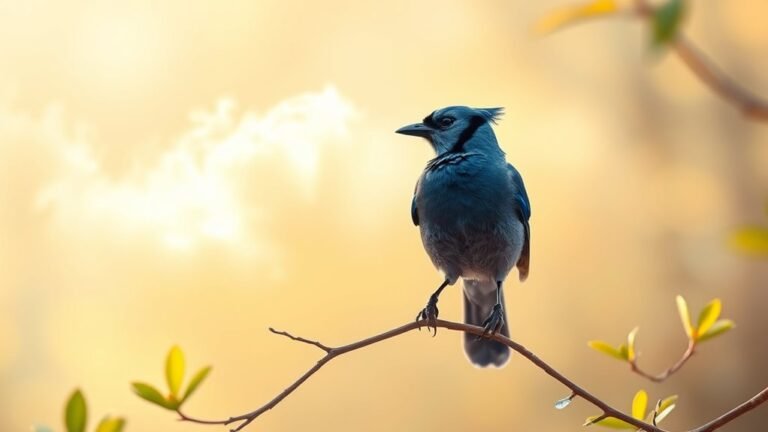
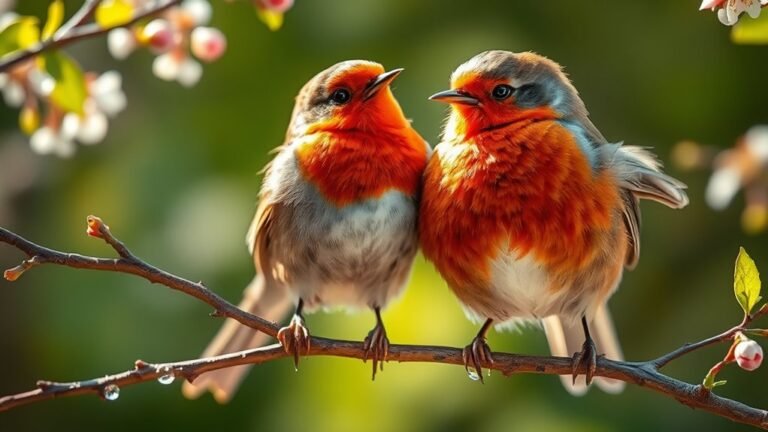
An Insight Into British Tits: Species and Behavior
When looking at British Tits, you see small, colorful birds with unique traits. Each species, such as the Blue Tit and Great Tit, has specific characteristics that affect their feeding habits and social behaviors. These traits help them thrive in different environments. Let's examine their behaviors and understand how they impact their surroundings.
What adaptations allow them to live successfully in various habitats? By exploring these details, we can learn more about the important role these birds play in their ecosystems.
Key Takeaways
- British Tits are small, sociable birds with diverse species, including the Blue Tit, Great Tit, Coal Tit, and Willow Tit.
- Each species exhibits distinct physical traits and behaviors, such as the Blue Tit's agility and the Great Tit's bold coloration.
- British Tits play crucial roles in ecosystems by aiding seed dispersal, controlling insect populations, and indicating ecological health.
- Their foraging behaviors involve social interactions and complex vocalizations, showcasing their adaptability and intelligence in various environments.
- Conservation efforts are vital for British Tits, as habitat loss threatens their populations and overall ecosystem balance.
Overview of British Tits

British tits are small, lively birds found in various habitats across the UK. They live in gardens, woodlands, and parks, making them a favorite among birdwatchers.
To identify these birds, pay attention to their colors and size. Each species has a distinct call, helping with identification.
In winter, you can often see them in groups. This is a great opportunity to spot different species at once.
The Blue Tit: Characteristics and Behavior
The Blue Tit has bright colors and an active personality. It's agile and moves quickly in different environments. Its social behavior is interesting, as the blue tit interacts with others in effective ways.
Here are four main traits of the blue tit:
- Social Interaction: Blue tits use varied calls to communicate and build relationships in groups.
- Foraging Techniques: They search in cracks for insects, showing their cleverness.
- Nesting Habits: Blue tits often nest in tree holes or human-made birdhouses.
- Territorial Behavior: Males become aggressive during breeding to protect their territory.
These traits help you appreciate the blue tit. They also connect you to the environment where they live.
The Great Tit: Identification and Habitat
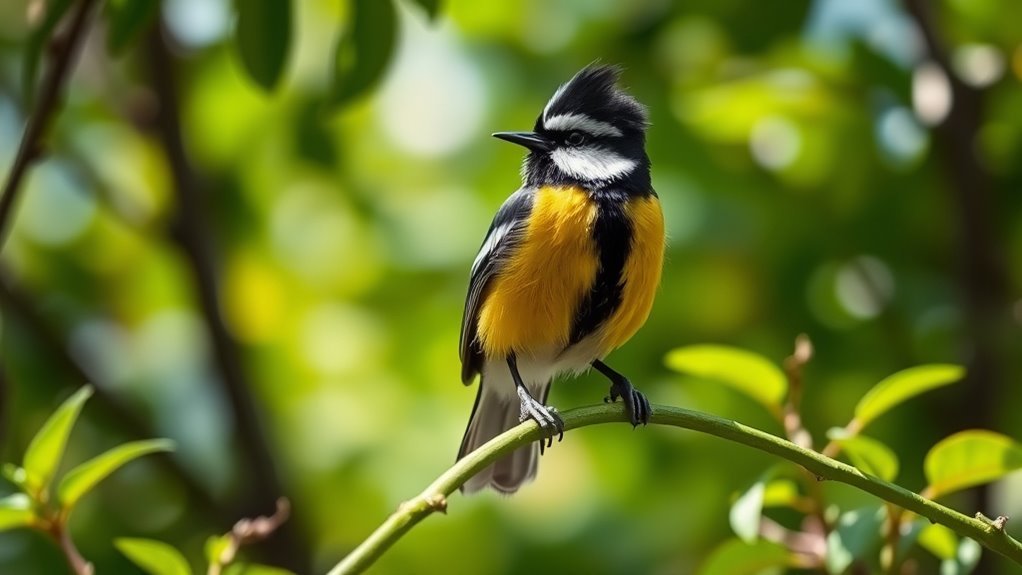
The Great Tit (Parus major) displays bold black and yellow feathers, making it easy to spot in Europe and Asia.
Look for its black cap and bright yellow belly, which stands out against the olive-green wings and black throat stripe. This bird flourishes in woodlands, parks, and gardens. It commonly nests in tree holes and man-made bird boxes.
Knowing the Great Tit's appearance and preferred habitats can enrich your birdwatching experience.
Observing this bird in different settings helps you appreciate its role in nature and connect with other bird lovers.
The Coal Tit: Adaptations and Feeding Habits
The Coal Tit (Periparus ater) is a bird that has unique adaptations enabling it to survive in different environments. It's a skilled forager with specific feeding methods that suit various habitats. The Coal Tit lives well in coniferous woodlands but also adapts easily to urban parks and gardens.
Here are its main feeding habits:
- It searches through tree bark to find insects.
- It uses its strong bill to get seeds from cones.
- It hoards food for later, which helps it survive tough conditions.
- It forages both in trees and on the ground, allowing it to find more resources.
These habits and preferences make the Coal Tit a resilient bird that thrives in different landscapes while playing an important role in its ecosystem.
This adaptability ensures that it continues to flourish in diverse environments, providing joy to birdwatchers and nature enthusiasts alike.
The Marsh Tit: Differences and Similarities With Other Tits
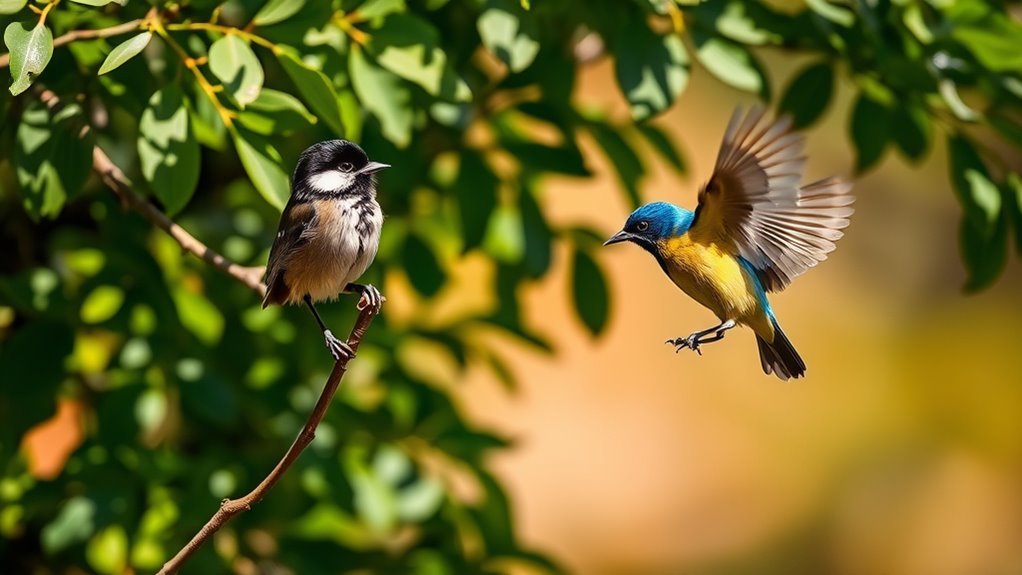
Many birdwatchers enjoy observing the Marsh Tit (Poecile palustris) because of its unique features. A key difference is its darker cap and the lack of white markings on the nape, which contrasts with the Willow Tit.
The Marsh Tit also has a softer voice, often making a gentle "pitt," while related species have sharper calls.
When foraging, Marsh Tits prefer dense shrubbery and commonly nest in tree cavities, similar to the Great Tit.
Their elusive behavior can make them hard to identify, encouraging birdwatchers to sharpen their skills and connect with this intriguing bird.
The Long-tailed Tit: Social Behavior and Nesting
Long-tailed Tits (Aegithalos caudatus) are small birds that show interesting social behaviors that help them survive.
They live in groups where each bird plays a part in helping others. You can observe them doing the following activities:
- Foraging for insects and seeds together.
- Sharing where to find food.
- Grooming each other to build friendships.
- Working together to build nests using feathers, moss, and spider silk.
Their nests, often tucked away in thick plants, keep their young safe.
Understanding their social behaviors and nesting habits helps us appreciate their flexibility and important role in nature.
The Willow Tit: Conservation Status and Distribution
The Willow Tit (Poecile montanus) is currently facing significant challenges. Its main threats include habitat loss and environmental changes. The destruction of willow habitats from deforestation and wetland drainage directly affects its population. As a result, the Willow Tit's numbers have declined significantly in recent decades, leading to its classification as a vulnerable species.
To address these issues, effective conservation measures are necessary. Key actions include restoring habitats by replanting willow woods and managing wetlands.
Additionally, engaging local communities in conservation efforts can greatly improve these restoration initiatives.
Understanding the specific needs of the Willow Tit is crucial for its survival. By working together to protect this bird, we can help ensure that future generations will enjoy the presence of the Willow Tit in their local environments.
The Crested Tit: Unique Traits and Range
The Crested Tit (Lophophanes cristatus) is known for its unique feather crown and interesting behaviors. This small bird mainly lives in coniferous forests, which fit its habitat needs.
You can notice several interesting traits in its behavior:
- Social Structure: Crested Tits often live in close family groups.
- Vocalizations: They use calls to communicate with each other.
- Foraging Techniques: They skillfully search branches for insects and seeds.
- Territorial Displays: Males show specific postures to show dominance.
These characteristics help you appreciate the Crested Tit and its role in the forest ecosystem.
Observing these birds can connect you more deeply with nature.
Foraging Techniques Among British Tits
The foraging methods of the Crested Tit provide valuable insights into the foraging strategies of British Tits. They skillfully cling to tree branches and probe crevices for insects and seeds. This behavior involves using their bills to manipulate objects and access hard-to-reach food sources.
In contrast, the Blue Tit has a different tactic, often foraging at the ends of twigs. These varied foraging strategies show how British Tits adapt to different environments.
Breeding and Parental Care in Tits
British Tits display interesting behaviors during breeding that show how adaptable they're and how well they care for their young. Males perform courtship displays to attract females. Once they form pairs, they build nests using natural materials to keep their future chicks safe.
Key points about their breeding and care include:
- Site Selection: They choose good spots for nests, often in tree holes or human-made structures.
- Material Gathering: They collect moss, feathers, and other items to insulate the nest and provide security.
- Incubation Duties: Both parents share the job of keeping the eggs warm.
- Chick Feeding: After the eggs hatch, both adults actively feed the chicks a diet rich in insects.
This teamwork helps strengthen their family bonds.
The Role of British Tits in Ecosystems
British Tits exhibit adaptable breeding behaviors, but their impact extends beyond reproduction.
These birds play a critical role in supporting biodiversity. As insect eaters, they help control pest populations, particularly aphids, which benefits local plants and other animals.
Your observations of their interactions show that British Tits actively forage and alert other species to predators. This awareness creates a safer environment for many birds.
Furthermore, their nesting habits aid in seed dispersal, promoting forest growth. By recognizing these roles, you can see how each British Tit contributes to the balance of their ecosystem.
They're important and valuable members of their habitats.
Frequently Asked Questions
How Can I Attract British Tits to My Garden?
To attract British tits to your garden, place feeders close to your garden plants. Make sure the feeders are visible but also have some shelter nearby. Use a mix of seeds and suet to draw them in. Adding shrubs can provide natural cover, making your garden more inviting for these birds. This setup will enhance your chances of enjoying their presence.
What Predators Threaten British Tits?
British tits face several predators, including cats and sparrowhawks. During nesting, risks for chicks increase from crows and magpies. You can help protect these birds by providing safe, sheltered nesting areas in your garden. By making small changes, you can support local wildlife and contribute to their safety. Creating a friendly environment will make your garden a haven for these colorful birds.
Do British Tits Migrate Seasonally?
British tits show limited seasonal migration patterns. Their movement is mainly influenced by food availability in their habitats. Some species choose to stay in areas with plenty of food, while others may change locations to find better resources during the winter months.
What Foods Are Harmful to British Tits?
Certain harmful foods, like avocados and chocolate, can significantly harm British tits. Some people believe all human food is safe for birds, but that is not true. It is important to provide nutrition that meets their unique needs. Always choose safe foods like seeds, nuts, and fruits that are safe for them. This way, you help keep them healthy and happy.
How Can I Identify Different Tit Calls?
To identify different tit calls, pay attention to the pitch and rhythm of the sounds. Listen for variations from different locations, as these differences can indicate specific species. Understanding these calls can help you connect with local wildlife and appreciate their diversity.

Hello, I’m Emily Price, the founder of Birds Affection. As a passionate bird enthusiast and spiritual seeker, I’ve always been fascinated by the symbolic meanings and mystical connections between birds and our lives. On this website, I share my knowledge and insights on the spiritual significance of various bird species, exploring their roles as messengers, guides, and teachers. Through my writing, I aim to inspire and educate others on the profound wisdom and beauty that birds bring to our world. Join me on this journey as we delve into the enchanting realm of bird symbolism and discover the hidden meanings behind these magnificent creatures.