
Can You Hatch Eggs Bought From the Supermarket?
Hatching eggs from the supermarket might seem like a fun idea, but it's important to know the facts first. Most supermarket eggs are unfertilized. They come from hens kept without roosters. Because of this, these eggs cannot hatch.
For eggs to hatch, they must meet specific conditions. Temperature and humidity are crucial for embryo development. Unfortunately, the eggs you buy will not fulfill these requirements.
In summary, supermarket eggs are not suitable for hatching. If you're interested in hatching eggs, you will need to find fertilized eggs from a reliable source.
Key Takeaways
- Supermarket eggs are typically unfertilized, making them unsuitable for hatching since they won't develop embryos.
- Fertilization requires the presence of a rooster, which is absent in most commercial egg production.
- Hatching success rates from supermarket eggs are low due to improper incubation and lack of fertilization.
- Identifying fertilized eggs involves checking for developing embryos, which supermarket eggs generally do not have.
- For hatching, seek out eggs specifically labeled as fertilized from local farms or specialty stores.
Understanding Egg Fertilization

Supermarket eggs are commonly viewed as food items, but understanding their fertilization process reveals their journey from hen to table.
Egg development starts when a hen's ovary releases an ovum. This ovum can become fertilized if a rooster is present. Fertilization begins the growth of an embryo inside the egg's protective layers.
Without a rooster, the eggs sold in stores remain unfertilized and won't develop into chicks.
To hatch an egg, specific conditions are needed, even for fertilized eggs. Recognizing these biological basics can increase your appreciation for eggs, highlighting the processes involved in your food choices.
The Types of Eggs Available in Supermarkets
As you shop in a supermarket, you'll find various types of eggs. These eggs are categorized based on how they're produced and what dietary needs they meet.
Cage-free eggs come from hens that have more space to move. This method often promotes better animal welfare. Many people view cage-free eggs as a healthier and more ethical option.
Organic eggs are another choice. These eggs come from hens that are fed organic feed. This feed doesn't contain synthetic pesticides or fertilizers.
Consumers often choose organic eggs for their potential health benefits, including higher nutrient levels.
Both cage-free and organic eggs align with the values of those who care about animal treatment and personal health. Knowing these differences helps you make choices that reflect your beliefs and needs.
Are Supermarket Eggs Fertilized?

Are the eggs in the supermarket fertilized? In most cases, they're not.
Commercial egg production usually involves hens that don't have access to roosters. Here are some important points to consider:
- Farming Practices: Most commercial farms focus on producing eggs, not breeding them.
- Hen and Rooster Ratio: Typically, one rooster is with many hens, making fertilization unlikely.
- Egg Storage: Eggs are collected and kept in cool places, which stops any fertilization process.
- Supply Chains: Supermarket eggs go through strict quality checks to ensure they're safe to eat, not to hatch.
The Role of Roosters in Egg Fertilization
Roosters are important for fertilizing eggs in a flock. A healthy rooster mates with hens to start the fertilization process. During mating, sperm transfers to the hen, which can fertilize the egg before it's laid.
For fertilization to happen, the rooster needs to be healthy and mating should occur regularly. If not, the eggs won't be fertilized and won't develop into chicks.
The rooster's genetic traits affect the offspring. Without roosters, supermarket eggs are usually unfertilized and can't hatch.
Knowing this relationship helps you understand egg production in poultry farming.
The Importance of Incubation Conditions
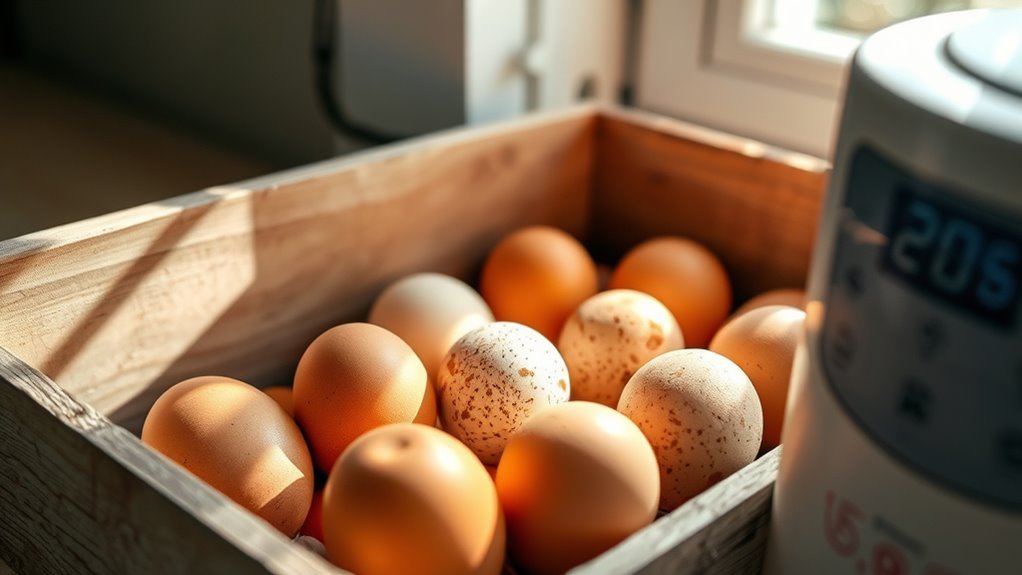
Incubation conditions are crucial for successful egg hatching. Monitoring specific factors promotes embryo development.
Here are key elements to consider:
- Temperature: Keep the temperature steady at 99.5°F (37.5°C) for strong growth.
- Humidity: Maintain humidity levels between 40-50% for the first 18 days. Increase it to 65% for the final days to aid hatching.
- Airflow: Ensure good ventilation for oxygen supply and CO2 removal.
- Egg Position: Position eggs upright to allow proper development of air cells.
How Long Does It Take for Eggs to Hatch?
Understanding the timeline for hatching eggs is important for successful incubation. Chicken eggs usually hatch in about 21 days under the right conditions. This process has several key stages.
It starts with the development of the embryo. After this, the embryo grows quickly over several days. In the final week, as the chick prepares to hatch, you may notice increased movement and small cracks in the eggshell.
Each stage of incubation is vital. If any stage is poorly managed, it can result in failed hatching or unhealthy chicks.
Creating the right environment is crucial for a successful outcome, so pay close attention to temperature, humidity, and other factors.
The Science of Temperature and Humidity
Temperature and humidity are essential for successful embryo development during the hatching process.
Maintaining the right conditions during incubation is crucial. Here are key points to consider:
- Temperature: Keep the temperature between 99°F and 102°F. This range supports optimal metabolic activity.
- Humidity Levels: Maintain humidity at 50-60% for the first 18 days. Increase it to about 70% during the final days.
- Monitoring: Regularly check the temperature and humidity with accurate tools. This helps prevent fluctuations that can harm embryos.
- Adjustments: Be aware that different species may need slight changes in these conditions.
Can You Identify Fertilized Eggs?
Identifying fertilized eggs is important for successful incubation and hatching. To check for fertility, inspect the eggs a few days after starting incubation. Look for signs like a developing embryo or blood vessels.
You can use a technique called candling, where you hold the egg up to a light. This method helps you see these signs more clearly.
Fertilized eggs usually show a darker area that indicates where the embryo is developing. In contrast, unfertilized eggs remain clear. If you notice a difference in color or shadowing, it likely means you have a fertilized egg.
Recognizing these signs can help you improve your hatching success and connect with the process of nurturing new life.
What Happens to Eggs That Don't Hatch?
Eggs that don't hatch can experience different outcomes based on their development and environment. Here are four common results:
- Decomposition: Non-viable embryos will break down, which can create unpleasant odors.
- Disease Risks: Failed eggs may contain bacteria or pathogens, posing health risks.
- Repurposing: Unhatched eggs can be used for animal feed or compost, reducing waste.
- Environmental Adjustments: If identified early, some eggs can be moved to better incubation settings.
Knowing these outcomes can help you improve future hatching efforts.
Understanding what happens to unhatched eggs allows you to make informed decisions and increases your chances for success.
Alternative Sources for Hatching Eggs
Many breeders and poultry fans look for alternative sources for hatching eggs. This allows them to go beyond traditional suppliers. Breeder farms usually offer high-quality, fertilized eggs. These eggs support strong genetic lines for backyard chickens.
You can also explore different hatcheries. They generally provide a variety of breeds for specific breeding needs.
When choosing eggs, focus on the fertilization methods used. Knowing how eggs are fertilized can affect hatch rates. Having the right incubation supplies is also key for successful hatching.
Whether you're raising chickens for fun or for a small business, exploring these options can improve your experience. It also connects you with others who share your interests and helps you learn more about egg sourcing and breeding.
Ethical Considerations in Hatching Eggs
When considering hatching eggs, focus on ethical practices.
Be aware of these important points related to animal welfare and ethical farming:
- Source Transparency: Know where your eggs come from. Not all farms maintain high ethical standards.
- Breeding Practices: Check if the birds have humane living conditions. Their health and wellbeing matter.
- Life Cycle Evaluation: Look at the life cycle of the poultry. Understand the effects on the environment and society.
- Regulatory Compliance: Confirm that the source follows local and national rules for ethical farming and animal welfare.
Frequently Asked Questions
Can I Hatch Eggs From Different Supermarket Brands?
When comparing eggs from different supermarket brands, the ability to hatch them depends on their fertilization status. Most supermarket eggs are not fertilized and, therefore, will not hatch. To find suitable eggs for hatching, research brands that specifically sell fertilized eggs. This research will help you understand which brands might meet your needs. Always check local regulations regarding egg hatching before making your purchase.
Are Organic Supermarket Eggs Suitable for Hatching?
Organic supermarket eggs usually do not have the fertilization needed for hatching. These eggs come from farms that focus on organic practices, but they are typically not fertilized. Only fertilized eggs from specific producers can develop into chicks. If you want to hatch eggs, choose fertilized ones from a reliable source.
What Is the Success Rate of Hatching Supermarket Eggs?
The success rate of hatching supermarket eggs depends on factors like egg quality and incubation methods. Without proper conditions, achieving a high hatching rate is unlikely. This process can be unreliable, especially for beginner incubators.
Is It Legal to Hatch Supermarket Eggs in My State?
You should check your state laws about hatching eggs. Some states allow it, while others have rules against it. Knowing the local laws helps you stay compliant and builds a sense of community in your hatching projects.
How Do I Store Supermarket Eggs Before Incubation?
To store supermarket eggs before incubation, keep them at a steady temperature between 50-60°F. A reliable thermometer will help you maintain this range. Avoid temperature changes, as they can negatively affect embryo development. Proper care will support healthy growth and better hatching success.

Hello, I’m Emily Price, the founder of Birds Affection. As a passionate bird enthusiast and spiritual seeker, I’ve always been fascinated by the symbolic meanings and mystical connections between birds and our lives. On this website, I share my knowledge and insights on the spiritual significance of various bird species, exploring their roles as messengers, guides, and teachers. Through my writing, I aim to inspire and educate others on the profound wisdom and beauty that birds bring to our world. Join me on this journey as we delve into the enchanting realm of bird symbolism and discover the hidden meanings behind these magnificent creatures.