Kintor Bird Nest Snuggle Hut Tent Review 2026: Worth Buying?
Your parrot fluffs up every evening and looks for a dark corner. Cage bars offer no comfort. A hanging fabric cave changes that routine fast.
The Kintor Bird Nest Snuggle Hut Tent sells as one of the most popular hanging bird beds on Amazon, and thousands of budgie and cockatiel owners keep reordering it.
But popularity does not equal safety. Fabric huts carry a real reputation problem in the parrot community. Some avian vets warn against them. Some breeders swear by them. So which side is right, and does the Kintor version fix the old problems?
Key Takeaways
- The hard bottom panel is the best feature. Most cheap huts sag into a hammock shape. The Kintor uses a rigid plastic insert under the pad, so the floor stays flat and your bird stands with a natural posture instead of curling into a sling.
- The removable pad makes washing simple. You pull the pad out, wash it, and dry it separately. The shell also survives a gentle machine wash inside a laundry bag. This matters because bird huts get dirty fast from droppings and dander.
- Two sizes exist, and the small one is genuinely small. The small measures roughly 8.2 x 4.7 x 2.5 inches and the medium measures roughly 10.6 x 5.9 x 7.8 inches. Budgie owners usually want the small. Cockatiel and conure owners want the medium.
- Heavy chewers will destroy it. This is fabric, not rope or wood. A determined conure or lovebird can shred the seams within weeks and swallow loose fibres, which creates a crop impaction risk.
- Hormonal behaviour is a genuine concern. Dark enclosed spaces trigger nesting instincts in some parrots. Expect possible territorial biting, regurgitation, or egg laying in mature hens.
- Best suited to calm, non chewing birds in cold rooms. For a gentle budgie or a senior cockatiel that shivers at night, this hut earns its money. For a destructive parrot, skip it entirely.
Kintor Bird Nest Snuggle Hut Tent Overview

Last update on 2026-09-08 / Affiliate links / Images from Amazon Product Advertising API Some of the links on this website are affiliate links, which means that at no additional cost to you, I earn a commission if you click through and make a purchase. I only recommend products and services that I believe will add value to my readers. Thank you for your support!
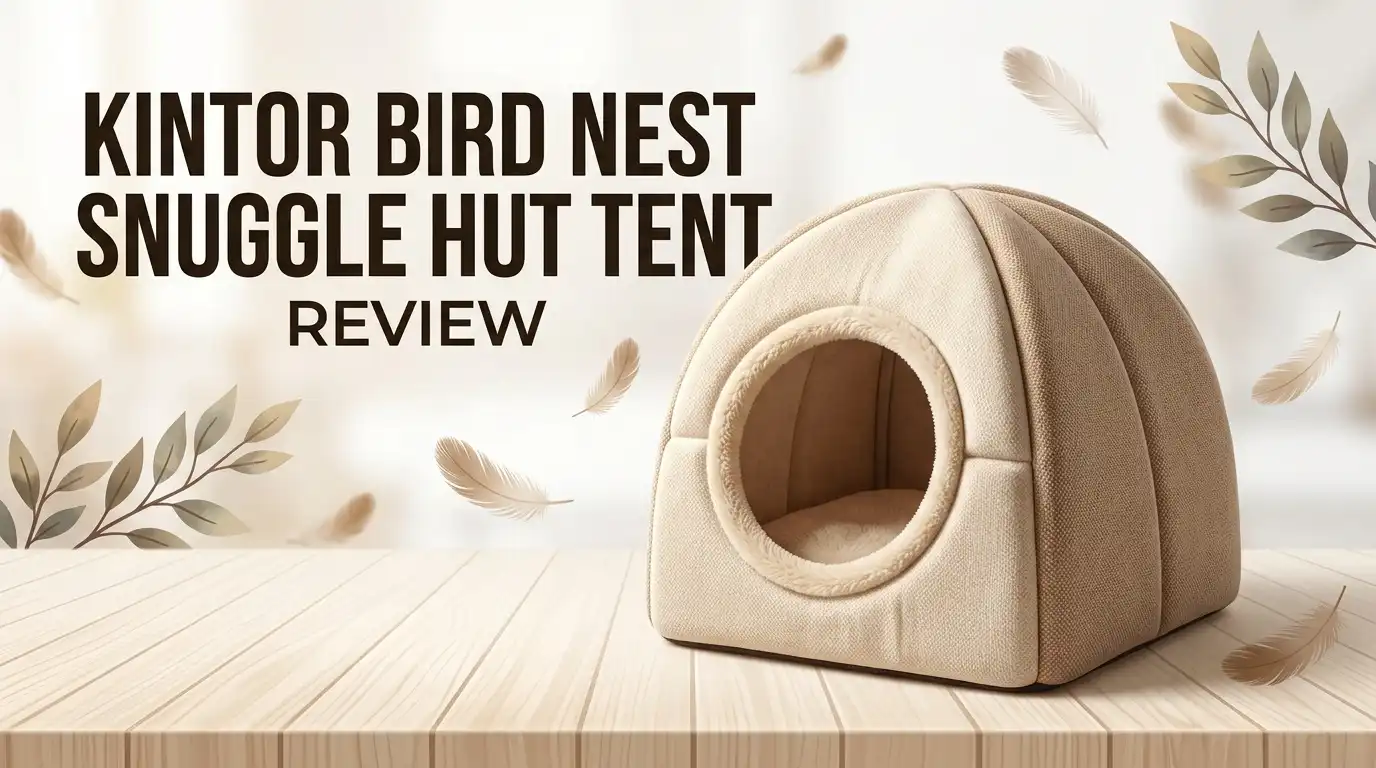
The Kintor Bird Nest Snuggle Hut Tent is a hanging fabric cave for cage birds. The brand markets it under model number NW001. The shape looks like a tiny pup tent with a wide front opening and a flat interior floor.
The exterior uses a printed cotton and linen blend fabric. Popular versions include a yellow owl print, a grey design, and a plain neutral option. Inside, a soft plush pad lines the floor. The pad lifts out through the front opening.
Two metal hooks sit on the top corners. You clip these over the cage bars and the hut hangs at whatever height you choose. The hooks feel like standard stainless steel wire clips, similar to the ones on rope perches.
The design intent is simple. Small parrots in the wild sleep inside tree hollows. A cage offers nothing similar. This hut recreates the enclosed feeling, which lowers stress for nervous birds and holds body heat during cold nights.
Kintor aims the product at budgies, parakeets, cockatiels, lovebirds, conures, and small African greys. In practice the medium size fits birds up to roughly conure body size. An African grey will find it cramped, whatever the listing suggests.
The key selling point over rival huts is the hard bottom support. Cheaper snuggle huts collapse into a fabric sling once a bird steps inside. The Kintor keeps a rigid floor, which reduces foot strain and stops the bird from getting tangled in slack fabric.
Unboxing Experience
The package arrived in a plain poly mailer, not a retail box. Do not expect a premium presentation. The hut sat inside a clear plastic sleeve, folded flat with the pad already inserted.
First impression: it smells faintly of new fabric. I aired mine out for two full days before hanging it in the cage. New textiles often carry residual dye or sizing odour, and bird respiratory systems handle chemicals poorly. This step is worth the wait.
The fabric felt sturdier than I expected for the price. The outer shell has a slight canvas texture with a visible weave. The printed owl face on my unit was crisp, not blurry or off centre.
The stitching told a mixed story. Main seams looked tight and doubled over. But I found two loose thread ends near the front opening, roughly half an inch long each. I trimmed them immediately with nail scissors.
Loose threads are the number one hazard in fabric bird products. A bird toe slips into a thread loop, the bird panics, and the loop tightens. Check every seam before installation, and keep checking weekly.
The plush pad pulled out easily. Underneath, I found the plastic support panel sewn into a fabric pocket. The panel felt firm and did not flex under thumb pressure.
The hooks came pre attached and already opened at a useful angle. I clipped the hut onto a cage bar within about ten seconds. No tools, no assembly, no instruction sheet needed.
Design and Build Quality
Last update on 2026-09-08 / Affiliate links / Images from Amazon Product Advertising API Some of the links on this website are affiliate links, which means that at no additional cost to you, I earn a commission if you click through and make a purchase. I only recommend products and services that I believe will add value to my readers. Thank you for your support!
Build quality sits above the budget average but below premium avian gear. Let me break that down honestly.
The outer shell uses a cotton and linen style fabric. It holds its tent shape without wire framing, which surprised me. The two top hooks and the rigid base do the structural work together, so the sides stay open rather than pinching closed.
The plush interior pad is the softest part and the fastest to wear. Mine developed slight matting after three washes. It still functioned, but the fluffy loft flattened noticeably.
The hard bottom panel deserves specific praise. It measures the full floor width, so there is no soft dip in the middle. My cockatiel stands on it with flat feet and grooms comfortably. In a sling style hut, the same bird had to brace against curved fabric.
The hooks are the weakest engineering point. They work fine on standard vertical cage bars. On thick bars or on horizontal wire spacing, the clips slip more than I liked. I added two small stainless quick links to secure mine properly.
Seam strength varies by unit. Reviews mention occasional loose stitching straight out of the packet. My unit was acceptable but not flawless.
Colour fastness held up well. After three cold washes, the owl print showed no bleeding or fading.
Overall, this is a competent piece of fabric goods at a low price point. It is not a lifetime product. Plan to replace it every few months with regular use.
Top 3 Alternative for Kintor Bird Nest Snuggle Hut Tent

Last update on 2026-08-27 / Affiliate links / Images from Amazon Product Advertising API Some of the links on this website are affiliate links, which means that at no additional cost to you, I earn a commission if you click through and make a purchase. I only recommend products and services that I believe will add value to my readers. Thank you for your support!
MEWTOGO Large Winter Warm Bird Nest House with Support Board

Last update on 2026-07-01 / Affiliate links / Images from Amazon Product Advertising API Some of the links on this website are affiliate links, which means that at no additional cost to you, I earn a commission if you click through and make a purchase. I only recommend products and services that I believe will add value to my readers. Thank you for your support!
MuYaoPet Bird Nest Parrot Bed Hut Hammock

Last update on 2026-08-13 / Affiliate links / Images from Amazon Product Advertising API Some of the links on this website are affiliate links, which means that at no additional cost to you, I earn a commission if you click through and make a purchase. I only recommend products and services that I believe will add value to my readers. Thank you for your support!
Vktech Plush Snuggle Bird Hammock Hanging Hut
Size Options and Fit Inside Your Cage
Kintor offers two sizes, and picking the wrong one causes most of the complaints I read.
The small size measures roughly 8.2 x 4.7 x 2.5 inches. The medium measures roughly 10.6 x 5.9 x 7.8 inches. Read those numbers twice, because the height difference is dramatic.
The small hut is genuinely low profile. A budgie fits and sleeps happily. A cockatiel cannot stand upright inside it. Crest feathers press against the ceiling, which annoys the bird and wears down plumage.
The medium suits cockatiels, lovebirds, green cheek conures, parrotlets, and small quaker parrots. Two budgies also share a medium comfortably, and pairs often do exactly that.
Cage volume matters more than bird size. A medium hut swallows a huge chunk of a small cage. My cockatiel cage measures 20 inches wide, and the hut takes roughly a quarter of the upper flight space. Birds need room to flap and climb, so a crowded cage defeats the purpose.
Measure your cage before ordering. Hang the hut in a rear top corner where your bird does not fly through. Keep it clear of food bowls, because dropped seed collects inside fabric fast.
One practical note on placement height. Very high placement encourages territorial guarding in some parrots. Hanging the hut at mid cage height reduces that behaviour noticeably. My cockatiel became calmer after I lowered his hut by four inches.
The Hard Bottom Support Explained
This single feature separates the Kintor from most rivals, so it earns its own section.
Standard snuggle huts use fabric alone. A bird steps in, the floor sags, and the hut becomes a hammock. The bird then sits with curled toes on an unstable surface.
Sagging floors cause three problems. Foot posture suffers over time. Loose fabric folds create tangle points for toes and nails. And droppings pool in the low centre instead of spreading out.
The Kintor solves this with a rigid plastic panel sewn under the plush pad. The floor stays flat under bird weight. My cockatiel walks in and turns around without wobbling, which he never did in his old hammock.
The panel also helps hygiene. A flat floor lets you scrape droppings off in one pass. Curved fabric traps waste in creases.
There is a small trade off. The rigid base adds weight, so the hut swings less playfully and puts slightly more strain on the hooks. Birds that enjoy rocking motion may prefer a softer hammock.
The panel also blocks the classic failure mode where a bird chews through the floor and falls out. Fabric floors tear. This one has a plastic barrier underneath.
Check the panel monthly. If a chewing bird cracks it, sharp plastic edges become a hazard, and the hut needs replacing at that point.
Comfort and Warmth for Your Bird
Comfort is where this hut genuinely delivers, especially in cold rooms.
Small parrots lose body heat quickly overnight. Cages sit in open air with no insulation. A fabric cave traps warm air and cuts draughts, which reduces the energy your bird spends shivering.
My cockatiel started using the hut on the second night. By week one he entered it within minutes of lights out, every single evening. That behaviour repeats across hundreds of owner reports.
The plush pad adds real softness. Birds knead it with their feet and settle down flat rather than gripping a perch. Older birds with arthritis benefit most from this, because standing all night hurts them.
The enclosed shape also lowers visual stress. Nervous birds hide from ceiling fans, cats, and household noise. A dark pocket gives them a retreat that no perch can match.
Rescue birds and newly rehomed birds often calm down faster with a hideaway available. The hut becomes a safe base while they adjust to a new home.
One caution on warmth. If your room already sits above 75 degrees Fahrenheit, the hut can overheat. Watch for panting or wing held postures. In summer, swap the plush hut for an open mesh hammock instead.
Comfort has a psychological cost too, which I cover in the safety section below. A bird that loves its cave too much may guard it aggressively.
Installation and Daily Use
Installation takes under a minute. Clip the two top hooks over adjacent cage bars, then tug down gently to confirm they seated properly.
Position the opening so it faces into the cage, not against a wall. Birds need a clear exit view, otherwise they hesitate to enter.
I recommend a rear corner at mid to upper height. Avoid the direct area under a perch, because droppings will land on the roof of the hut daily.
Introduction takes patience with cautious birds. Some budgies enter immediately. Others treat the hut as a monster for a week. Millet placed just inside the opening solves this quickly.
Do not force a bird inside. Fear associations stick for months. Let curiosity do the work.
The hooks hold well on vertical bars up to about 4 millimetres thick. On thicker bars, the clips gape slightly. Two stainless steel quick links fix this permanently for a couple of dollars.
Daily use is uneventful in the best way. The hut stays put, the bird climbs in and out, and no maintenance is needed beyond a quick droppings scrape.
Weekly, do a seam inspection. Pull gently at the front opening and look for fraying threads or bite holes. Trim any loose thread the moment you find it.
Remove the hut during breeding season if your hen shows nesting signs. That includes shredding paper, tail lifting, or sitting in the hut all day.
Cleaning and Maintenance
Bird huts get filthy. This one handles cleaning better than most, and that alone justifies the price for many owners.
The plush pad lifts out through the front opening. Wash the pad in warm water with unscented soap, rinse thoroughly, and air dry it completely. Damp fabric grows mould, and mould near a bird is dangerous.
The shell itself survives a gentle machine cycle. Put it inside a mesh laundry bag first, use cold water, and skip the fabric softener. Softener leaves residue and perfume that irritate avian airways.
Do not tumble dry. Heat warps the plastic base panel. Air dry the shell over a rack for around 24 hours.
Expect a two hut rotation to work best. Buy two, so one hangs in the cage while the other dries. This avoids leaving your bird without a bed for a day.
Spot cleaning handles daily mess. Dried droppings on the flat floor scrape off with a plastic card in seconds.
The plush loft flattens with repeated washing. After three or four cycles, my pad looked visibly matted. It stayed usable but lost the fluffy appearance.
Replace the whole hut every three to six months. Fabric accumulates bacteria in the weave that washing does not fully remove. At this price, regular replacement is realistic rather than annoying.
Check the plastic panel each time you wash. Cracks mean immediate retirement.
Safety Concerns Every Bird Owner Should Know
This section matters more than any feature list. Fabric huts carry documented risks, and honest reviews must say so.
Fibre ingestion is the biggest danger. Birds chew fabric, swallow loose threads, and the material collects in the crop. Crop impaction requires emergency veterinary surgery. Some birds die from it.
The Kintor uses a tighter woven fabric than fleece huts, which reduces loose fibre shedding. That helps, but no fabric hut removes the risk entirely.
Thread entanglement comes second. A frayed loop catches a toe or a nail. The bird thrashes, the loop tightens, and circulation stops. Owners have lost toes on birds this way.
Hormonal behaviour is the risk owners least expect. A dark enclosed cavity mimics a nest hollow. Mature birds respond by producing hormones, and that leads to territorial aggression, constant regurgitation, feather plucking, and chronic egg laying in hens.
Chronic egg laying drains calcium and causes egg binding, which is life threatening. If your hen starts laying after you add a hut, remove the hut immediately.
Watch for these warning signs: sudden biting when you approach the cage, refusing to leave the hut, shredding the hut lining, or regurgitating onto it. Any of these means the hut comes out.
Mould is the fourth concern. Damp fabric grows aspergillus spores, which cause fatal respiratory infections in birds.
My honest position: this hut suits calm, non chewing, non hormonal birds under daily supervision. It is not a set and forget accessory.
What the Kintor Snuggle Hut Does Not Do Well
Every review should list the failures plainly. Here are mine after weeks of testing.
It does not survive chewers. My cockatiel is gentle and the hut held up. A friend’s green cheek conure destroyed the same model in eleven days. Lovebirds and conures shred fabric as a hobby.
It does not fit large parrots. The listing mentions African greys. The medium size is too tight for an adult grey to turn around inside. Ignore that claim.
It does not include a safety liner against fibre ingestion. There is no chew resistant inner layer, so determined beaks reach loose thread quickly.
The hooks are underbuilt. They slip on thick cage bars and on horizontal wire. Budget for two quick links as a standard upgrade.
The plush pad does not hold its loft. Three washes flattened mine. It stays warm but loses the plush look shown in product photos.
Quality control varies between units. Loose threads out of the packet appear in multiple owner reports. Inspect before installation, without exception.
It does not breathe well in warm rooms. Above roughly 75 degrees Fahrenheit, the enclosed space traps heat and birds pant.
It does not come with any hormonal behaviour warning. New bird owners install it, then face aggression and egg laying with no idea why. That omission is a real failing of the packaging.
Finally, it does not last long. Treat it as a consumable, replaced every few months.
Pros and Cons
Here is the honest balance sheet.
Pros
- Hard plastic bottom panel keeps the floor flat, which supports natural foot posture and stops the hammock sag that plagues cheaper huts.
- Removable plush pad makes washing genuinely simple, and the shell survives a gentle cold machine cycle inside a laundry bag.
- Installation takes under a minute with two pre attached hooks, no tools, and no assembly steps.
- Excellent warmth retention for cold rooms, which helps senior birds, arthritic birds, and small species that shiver overnight.
- Tighter woven cotton and linen style fabric sheds fewer loose fibres than fleece style rivals.
- Low price makes routine replacement affordable, and buying two allows a clean rotation while one dries.
- Attractive printed designs, including the popular owl pattern, that look good in a living room cage.
- Two sizes cover budgies through to conures, so most small parrot owners find a workable fit.
Cons
- Heavy chewers destroy it fast, sometimes within two weeks, which creates a fibre ingestion and crop impaction risk.
- The enclosed cavity triggers hormonal and nesting behaviour in mature birds, leading to aggression or chronic egg laying.
- Hooks slip on thick or horizontal cage bars and often need stainless quick links added.
- Loose threads appear on some units straight out of the packet, so inspection is mandatory.
- The plush pad flattens and mats after a few washes, losing its original loft.
- Too small for genuinely medium parrots despite the listing claims.
- Traps heat in warm rooms, which makes it a seasonal product rather than a year round one.
- No included safety guidance on chewing, mould, or hormonal risks.
Which Birds Suit This Hut Best
Match the product to the bird, and most complaints disappear.
Budgies are the ideal match. They chew less aggressively than conures, they feel the cold, and they love enclosed spaces. Pairs share the medium size happily.
Cockatiels come a close second. Mine uses the medium every night with no chewing. Buy the medium, never the small, because crest feathers need headroom.
Parrotlets, canaries, and finches also do well, though finches usually prefer a woven nest instead.
Senior birds of any small species benefit most. Arthritic feet suffer on perches all night. A padded flat floor removes that strain.
Rescue birds and nervous rehomes gain confidence from a retreat. The hut becomes a safe base during the adjustment period.
Now the birds to avoid. Green cheek conures, sun conures, lovebirds, and quakers chew relentlessly. Fabric huts become shredded hazards in their cages.
Mature hens with a laying history should not get a hut at all. The nest cue is too strong, and chronic egg laying causes serious illness.
Large parrots including African greys, amazons, and cockatoos need different products entirely. Their beaks demolish fabric in minutes.
Birds that already show hormonal aggression should stay hut free. Removing dark cavities is standard advice from avian vets for hormone management.
If your bird sits in any doubtful category, ask an avian vet before buying.
Price and Value for Money
The Kintor sits in the low price bracket for cage accessories, typically in the low to middle teens in US dollars depending on size and colour.
At that price, the hard bottom panel is unusual. Most huts with rigid floors cost noticeably more. This is the main value argument.
Compare it to the cheapest fleece huts. Those cost a few dollars less, sag badly, and shed fibres heavily. The upgrade is worth the difference.
Compare it to premium avian hideaways in wood or woven grass. Those last far longer and carry lower fibre risk, but they cost several times more and offer less warmth.
Value depends entirely on lifespan. With a gentle budgie, this hut lasts several months and represents strong value. With a conure, it lasts two weeks and represents poor value.
Buying two units for rotation roughly doubles the cost but improves hygiene substantially. I consider that the sensible purchase.
Factor in two stainless quick links as a small extra expense. They fix the hook weakness permanently.
My verdict on price: fair and honest for what it is. This is a consumable comfort item, not durable equipment. Judge it by that standard and it performs well.
Skip it if your bird chews, and the money saved goes further on wood and rope toys instead.
Final Verdict
The Kintor Bird Nest Snuggle Hut Tent does one job properly. It gives a small, gentle parrot a warm, flat floored, dark retreat for very little money.
The hard bottom support is a genuine engineering improvement over sling style huts, and the removable pad makes hygiene manageable. My cockatiel adopted his within two nights and still sleeps there.
The failures are equally real. Chewers destroy it. Hooks slip. The pad mats. Quality control wobbles. And the hormonal risk deserves a warning label the packaging does not provide.
My recommendation: buy it for a budgie, a cockatiel, a parrotlet, or a senior bird in a cool room. Inspect it weekly, wash it often, and replace it every few months.
Do not buy it for a conure, a lovebird, a quaker, a large parrot, or a hen with a laying history. Those birds need a different solution entirely.
Used with attention, this hut earns a solid recommendation. Used without supervision, any fabric hut becomes a hazard. The product is fine. The owner has to stay involved.
Frequently Asked Questions
Are bird snuggle huts safe for parrots?
They carry real risks. Birds swallow loose fibres, which causes crop impaction, and enclosed dark spaces trigger nesting hormones. A hut is reasonably safe for a calm, non chewing bird under weekly inspection. It is unsafe for chewers and for hens prone to egg laying. Many avian vets advise removing huts entirely during hormonal seasons.
What size Kintor hut should I buy for a cockatiel?
Buy the medium, roughly 10.6 x 5.9 x 7.8 inches. The small size measures about 8.2 x 4.7 x 2.5 inches, which is too low for a cockatiel crest. Budgies and parrotlets suit the small size. Always measure your cage first, since the medium fills a large portion of a compact cage.
Can I machine wash the Kintor Bird Nest Snuggle Hut?
Yes, with care. Remove the plush pad first and wash it by hand. Place the shell in a mesh laundry bag, run a cold gentle cycle, and skip fabric softener. Air dry both parts completely, because heat warps the plastic base panel and damp fabric grows mould.
Why does my bird get aggressive after using a snuggle hut?
Dark cavities imitate nesting hollows and stimulate hormone production. The bird then defends the hut as a nest site. Signs include lunging, biting near the cage, regurgitation, and refusing to come out. Remove the hut for several weeks and the behaviour usually settles.
How long does the Kintor snuggle hut last?
Expect three to six months with a gentle bird and regular washing. Chewing birds destroy it far sooner, sometimes within two weeks. Treat it as a replaceable item and retire it as soon as you see holes, fraying seams, or a cracked base panel.
Should I remove the hut during the day?
Many owners do, and it helps. Offering the hut only at night reduces nesting behaviour and encourages daytime activity on perches and toys. This routine works well for birds that show early hormonal signs but still need warmth overnight.

Hello, I’m Emily Price, the founder of Birds Affection. As a passionate bird enthusiast and spiritual seeker, I’ve always been fascinated by the symbolic meanings and mystical connections between birds and our lives. On this website, I share my knowledge and insights on the spiritual significance of various bird species, exploring their roles as messengers, guides, and teachers. Through my writing, I aim to inspire and educate others on the profound wisdom and beauty that birds bring to our world. Join me on this journey as we delve into the enchanting realm of bird symbolism and discover the hidden meanings behind these magnificent creatures.