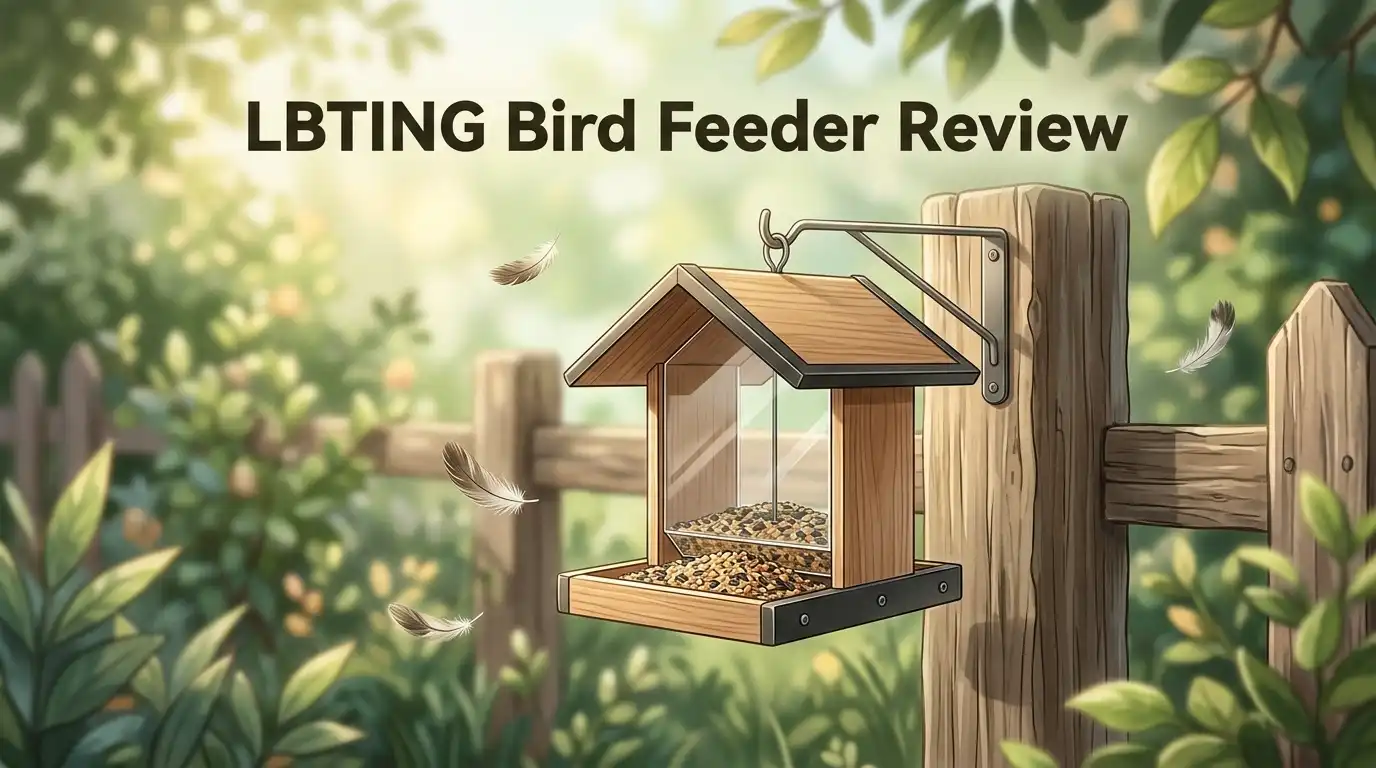
LBTING Bird Feeder Review 2026: Worth Buying?
Bird feeders sell by the millions every spring, and most of them look the same. A plastic tube, a metal cap, four tiny perches.
Then LBTING shows up with a bronze cat sitting on your shepherd hook, holding seed in its belly. It gets attention. The real question is whether that attention translates into birds, and whether the metal holds up after a wet winter.
I bought the LBTING Cat Shaped feeder in early 2025, hung it in a suburban yard with heavy squirrel traffic, and later added the Lantern Shaped model to compare.
In a Nutshell:
- The metal is genuinely heavy. This is not thin stamped tin. The LBTING body has real weight in the hand, and the retro brushed finish looks far more expensive than the price suggests. Guests always ask where I bought it.
- Squirrel resistance is partial, not absolute. The adjustable baffle on the cat model blocks casual climbers. A determined squirrel jumping from a fence still lands on the tray. Do not buy this expecting a fortress.
- Capacity runs small on the cat model. Two pounds sounds fine until finches empty it in three days. The lantern model holds four pounds and refills far less often.
- Rain drainage works well. The tray holes clear water quickly, and I found no moldy seed clumps after storms.
- Cleaning is the weak point. The narrow interior needs a bottle brush, and the corners trap seed dust.
- Best fit: gardeners who want decoration first and feeding second, in yards without aggressive squirrel pressure.
LBTING Cat Shaped Bird Feeder Overview


Last update on 2026-08-29 / Affiliate links / Images from Amazon Product Advertising API Some of the links on this website are affiliate links, which means that at no additional cost to you, I earn a commission if you click through and make a purchase. I only recommend products and services that I believe will add value to my readers. Thank you for your support!
The Cat Shaped feeder is the model that made this brand visible on Amazon. It measures roughly 7.4 by 7.4 by 7.8 inches and holds up to 2 pounds of seed. The body is heavy duty metal finished in a bronze tone with a retro brushed texture. A cat silhouette forms the roof and sides, and the seed sits in a shallow tray below.
LBTING sells it fully assembled. You unwrap it, fill it, hang it. That matters more than it sounds, because many decorative feeders arrive as a bag of screws and a diagram nobody can read.
The tray includes drainage holes. The top cover lifts off for filling. An adjustable baffle sits above the feeding area and can be raised or lowered depending on how much clearance you want.
In practice, the design leans decorative. The seed area is open and wide, which suits cardinals, jays, and doves that dislike cramped tube ports. Small clinging birds like chickadees use it fine, but they do not need it.
The honest framing is this: LBTING built a garden ornament that also feeds birds, rather than a feeding machine that happens to look nice. If your priority order matches that, you will be satisfied. If you want maximum seed throughput per dollar, a plain mesh tube beats it.
Unboxing the LBTING Bird Feeder
The box arrived plain brown with the product photo printed on one side. No retail gloss, no plastic window. Inside, the feeder sat wrapped in a thin foam sleeve with cardboard corner blocks. Amazon ships it in the product packaging, so there was no second outer box.
First impression was weight. I expected something light and hollow. Instead the feeder pulled my hand down slightly when I lifted it out. That heft is the single strongest signal of quality here.
The finish had a faint metallic smell for the first day, typical of fresh rust proof coating. It faded outdoors within twenty four hours.
I found no instruction sheet, and none was needed. The hanging hook was already attached to the top. The lid twisted off with light pressure. The baffle slid along its post without tools.
One small annoyance: my unit had a thumbprint smudge in the paint near the base, and a tiny scuff on one cat ear. Neither is visible from three feet away, but a buyer paying attention will notice quality control is not perfect.
Total setup time from cardboard to hanging on the shepherd hook was under four minutes. I filled it with black oil sunflower seed, hung it, and stepped back. It looked like something from a garden center display, not a budget online listing. That moment is the product’s strongest selling point.
Top 3 Alternative for LBTING Bird Feeder

Last update on 2026-07-11 / Affiliate links / Images from Amazon Product Advertising API Some of the links on this website are affiliate links, which means that at no additional cost to you, I earn a commission if you click through and make a purchase. I only recommend products and services that I believe will add value to my readers. Thank you for your support!
Kingsyard Rain Resistant Metal Mesh Bird Feeder

Last update on 2026-08-29 / Affiliate links / Images from Amazon Product Advertising API Some of the links on this website are affiliate links, which means that at no additional cost to you, I earn a commission if you click through and make a purchase. I only recommend products and services that I believe will add value to my readers. Thank you for your support!
Birdream Retro Pagoda Hanging Bird Feeder

Last update on 2026-08-29 / Affiliate links / Images from Amazon Product Advertising API Some of the links on this website are affiliate links, which means that at no additional cost to you, I earn a commission if you click through and make a purchase. I only recommend products and services that I believe will add value to my readers. Thank you for your support!
Kingsyard All Metal Mesh Wild Bird Feeder
LBTING Lantern Shaped Bird Feeder

Last update on 2026-08-29 / Affiliate links / Images from Amazon Product Advertising API Some of the links on this website are affiliate links, which means that at no additional cost to you, I earn a commission if you click through and make a purchase. I only recommend products and services that I believe will add value to my readers. Thank you for your support!
The Lantern Shaped model solves the biggest complaint about the cat version. It measures about 7 by 7 by 12 inches and holds up to 4 pounds of seed, double the capacity. The tube uses dense mesh, which suits mixed seed, peanut pieces, safflower, and black oil sunflower.
Four foldable perches sit around the base, and the feeding port runs a full 360 degrees. Multiple birds eat at once without shoving each other off. I counted six house finches on it at the same time during a March morning.
The top cover adds a buckle that squirrels struggle to flip open. On the cat model, a squirrel eventually learned to lift the lid. On the lantern, that never happened in my yard.
Bird patterns are stamped into the metal panels. The look is closer to an antique garden lantern than a feeder, which is the point.
Cleaning is easier than the cat model because the wide top opening lets a brush reach the bottom. Rinse with water, scrub, and let it air dry.
The tradeoff is height. At twelve inches, it swings more in strong wind and needs a sturdier hook. It also costs a few dollars more. For most buyers, the extra capacity justifies that difference easily.
Build Quality and Material Honesty
LBTING advertises heavy duty metal with rust proof paint and a retro brushed craft finish. That description holds up better than most Amazon marketing copy.
After fifteen months outdoors through rain, snow, and summer heat, my cat feeder shows no through rust and no structural failure. The hanging hook has not bent. The tray has not warped.
What did change is the finish. The bronze coating faded slightly on the sun facing side. Two small chips appeared where the feeder knocked against the shepherd hook during wind, and surface oxidation started at those chips. It is cosmetic so far, not spreading.
The metal gauge feels thicker than the discount feeders I have owned. Pressing the tray with a thumb produces no flex.
Welds and seams are the weak spot. On close inspection, a few joints show uneven paint buildup. Nothing has separated, but the finishing work is clearly done fast.
The baffle post is the thinnest component. It holds fine under normal load, but a heavy squirrel hanging from it will flex the post over time.
My verdict on build: this is solid mid tier hardware sold at a lower tier price. It will not match a cast aluminum feeder that costs eighty dollars, and it does not pretend to. It will comfortably outlive plastic feeders in the same price bracket.
Squirrel Proof Claims Versus Reality
LBTING calls the cat model squirrel proof and points to the adjustable height baffle. I want to be direct here, because this claim is the one buyers get burned on.
The baffle reduces squirrel access. It does not eliminate it.
Here is what happened in my yard. Squirrels climbing down the shepherd hook chain hit the baffle and slid off. That part works, and it works consistently. The adjustable height helps because you can lower the baffle to shrink the gap.
Squirrels that jumped horizontally from my fence, roughly four feet away, landed directly on the seed tray. The baffle sits above the tray and does nothing against a side approach.
One squirrel also learned to lift the lid on the cat model. The lantern model’s buckle stopped that behavior entirely.
Placement fixes most of this. Hang the feeder at least ten feet from any launch point and five feet off the ground, and squirrel visits drop close to zero.
Bottom line: treat the baffle as a helpful accessory, not a guarantee. If you have serious squirrel pressure, add a separate pole mounted baffle. Buyers who expect a weight activated mechanism like a Yankee Flipper will be disappointed, because this feeder has no moving defense at all.
Seed Capacity and Refill Experience
Two pounds on the cat model sounds generous. It is not, once birds find you.
My first week was quiet. By week three, a flock of house finches plus a cardinal pair emptied the tray every two to three days. In peak winter, I refilled daily.
The lantern model at four pounds cut my refill trips roughly in half. That alone changed how I felt about the brand.
Refilling is simple on both. Lift or twist the lid, pour, replace. No funnel needed for the lantern’s wide mouth. The cat model’s opening is smaller, and I spilled seed on the first few attempts until I switched to a scoop.
Seed type matters here. Black oil sunflower flows perfectly. Safflower and peanut splits work well. Fine mixes with millet dust settle at the bottom of the lantern mesh and occasionally bridge, meaning seed stops dropping while the tube still looks full. Tapping the side clears it.
Cheap grocery store mixes with red milo produce the worst results. Birds kick the milo out, it piles under the feeder, and it attracts ground pests.
Practical tip: fill only what your birds eat in five days. Seed left longer in humid weather loses freshness even with good drainage.
Which Birds Actually Show Up
Attracting birds depends far more on your region and placement than on feeder branding, but the design does shape which species stay.
In my yard, the LBTING feeders pulled in house finches, American goldfinches, black capped chickadees, tufted titmice, northern cardinals, white breasted nuthatches, and downy woodpeckers.
Cardinals favored the cat model. The open tray gives them room to sit and crack seed, which tube feeders deny them. That was the biggest surprise of the test.
Chickadees and titmice preferred the lantern mesh. They grab one seed, fly to a branch, and return.
Mourning doves cleaned up spillage underneath rather than landing on the feeder itself. Blue jays visited the cat tray but found it slightly cramped.
I saw no hummingbirds, which is expected since neither model handles nectar.
Expect a slow start. Birds took nine days to trust the cat feeder and six days to trust the lantern. New feeders always take time. Placing it near a shrub or low branch speeds this up because birds want a staging perch before they commit.
One warning: the cat shape does not scare birds, despite what buyers assume. Birds do not read silhouettes as predators the way people expect.
Weather Resistance and Drainage Performance
Wet seed ruins more feeders than squirrels do. LBTING handled this better than I expected.
The cat model’s tray has drilled drainage holes along the base. After heavy rain, water cleared within an hour. I never found a solid clump of moldy seed at the bottom.
The lantern’s roof overhangs the mesh tube, which shields most of the seed column. Wind driven rain still reaches the mesh, and seed near the ports gets damp. It dries, but it does dry slowly in humid summer weather.
Snow sat on both roofs without collapsing anything. The metal shed ice easily once temperatures rose.
The finish is where weather shows. Fifteen months of sun dulled the bronze tone slightly on one side. A yearly wipe with a cloth and a light coat of outdoor metal wax would slow that down.
Wind is worth mentioning. The lantern’s twelve inch height catches gusts and swings hard. During one storm it spun enough to spill a handful of seed. The shorter cat model stays steadier.
Neither feeder rusted through. Small chips oxidized at the surface only. Compared to painted steel feeders in the same price range, that is above average performance, though it falls short of powder coated premium models that show nothing after two years.
Cleaning and Maintenance Difficulty
This is where I have real criticism, and buyers deserve to hear it plainly.
The LBTING cat feeder is annoying to clean.
The interior is narrow and shaped around the decorative body. A standard sponge does not reach the corners. I use a slim bottle brush and a toothbrush for the tray edges. Full cleaning takes about fifteen minutes.
Seed dust and hull fragments collect in the seams where the tray meets the body. Left alone, that residue turns into a damp paste in summer.
The lantern model is considerably easier. The wide top opening accepts a full sized brush, and the mesh rinses clean under a hose.
Neither feeder is dishwasher safe. Hot water and detergent will damage the painted finish over time. Use warm water with a small amount of unscented soap, or a diluted vinegar rinse, then dry completely before refilling.
Health guidance from birding groups recommends cleaning feeders every two weeks, and more often in warm weather or during any local disease outbreak. That schedule is the real cost of owning a decorative metal feeder. If you know you will not keep up with it, choose a simpler design with fewer trapped corners.
What the LBTING Bird Feeder Does Not Do Well
Every honest review needs this section, so here it is without softening.
It is not truly squirrel proof. The baffle helps against vertical climbers only. Side jumpers reach the tray without effort.
Capacity on the cat model is too small for busy yards. Two pounds disappears fast in winter.
Cleaning access is poor on the cat model. Decorative shaping creates corners a brush cannot reach.
The paint chips. Contact with a metal hook during wind creates bare spots, and those spots oxidize.
It offers no seed level window. You must lift the lid to check, which disturbs feeding birds.
Quality control varies. My unit had a scuff and a paint smudge out of the box. Other buyers report the same inconsistency.
Perches are basic. The folding perches on the lantern feel light and would bend under a large bird’s repeated landing.
No pole mount option is included. You hang it or you buy separate hardware.
It also does not handle nectar, suet, or nyjer seed properly. Nyjer falls straight through the cat tray gaps, and there is no suet cage anywhere in the lineup.
None of these flaws are dealbreakers at this price. They are the predictable compromises of a twenty five dollar decorative metal feeder, and pretending otherwise would waste your time.
Pros and Cons of the LBTING Bird Feeder
Here is the balanced summary in list form.
Pros
- Genuinely heavy metal construction that outlasts plastic feeders in the same price range, with no structural failure after fifteen months outdoors.
- Arrives fully assembled, so setup takes under five minutes with no tools and no instruction sheet needed.
- Strong decorative value. Both the cat and lantern designs work as garden ornaments, and visitors notice them immediately.
- Effective tray drainage keeps seed dry after rain, and I found no mold during the entire test period.
- Open tray design attracts cardinals and jays that avoid narrow tube ports, which widens the species mix in your yard.
- The lantern model’s 4 pound capacity and lid buckle solve the two biggest weaknesses of the cat model.
- Rust proof coating resists real corrosion, with damage limited to surface oxidation at chip points.
Cons
- Squirrel proof claim overstates reality. Side jumping squirrels reach the seed without difficulty.
- Cat model holds only 2 pounds, forcing frequent refills in active yards.
- Cleaning the cat model is genuinely tedious because of trapped corners and narrow access.
- Paint chips at contact points and fades on the sun facing side.
- No seed level window, so checking supply disturbs feeding birds.
- Inconsistent quality control, with occasional scuffs and paint smudges on arrival.
- Tall lantern model swings hard in wind and can spill seed.
Price and Value in 2026
The cat model and lantern model both sit near the twenty five dollar mark, with the hexagon lantern variant slightly lower. Prices shift with Amazon promotions, so check the current listing before assuming.
At that price, the comparison set includes plain plastic tube feeders, mesh cylinder feeders, and other decorative metal imports.
Against plastic tubes, LBTING wins on durability and looks. A plastic feeder cracks after two seasons of UV exposure. This metal one did not.
Against premium brands, LBTING loses on engineering. A Droll Yankees weight activated feeder actually stops squirrels, but it costs three to four times more.
The value question comes down to what you are buying. If you want a functional feeding station that maximizes seed capacity per dollar, a Kingsyard mesh feeder at a similar price holds more and cleans faster.
If you want your yard to look intentional, and you accept slightly more maintenance for that, LBTING delivers a look that normally costs fifty dollars or more.
My honest assessment: it is fair value, not exceptional value. You are paying roughly ten dollars for the decoration and fifteen for the feeder. Whether that split makes sense depends entirely on how much you care about the view from your kitchen window.
Who Should Buy the LBTING Bird Feeder
This feeder fits specific people well and disappoints others predictably.
Buy it if you are a gardener first and a birder second. The design complements patios, porches, and planted borders. It photographs beautifully.
Buy it if you want a gift. It presents well, needs no assembly, and the recipient sees value immediately. It suits housewarmings, retirements, and Mother’s Day.
Buy it if your yard has moderate squirrel pressure and you can hang the feeder away from fences, roofs, and branches.
Buy the lantern model if you feed year round. The extra capacity and lid buckle matter more than the price difference.
Skip it if you have heavy squirrel traffic and no separate baffle. You will spend more on stolen seed than you saved on the feeder.
Skip it if you dislike cleaning. The cat model punishes neglect.
Skip it if you need suet, nyjer, or nectar. This lineup does none of those.
Skip it if you are building a serious feeding station with multiple ports and high volume. Dedicated hardware serves that goal better.
For everyone else, it lands in a comfortable middle. It is attractive, sturdy, affordable, and imperfect. That combination satisfies most casual backyard birders who want something better than plastic without spending real money.
Final Verdict on the LBTING Bird Feeder
After fifteen months, both LBTING feeders still hang in my yard. That is the simplest endorsement I can offer, because I remove products that fail.
The cat model earns a 3.8 out of 5 from me. It looks wonderful, holds too little seed, and cleans poorly. The lantern model earns 4.3 out of 5, because the larger capacity, the lid buckle, and the easier access fix nearly everything I disliked.
Amazon ratings sit around 4.2 stars across the lineup, which matches my experience almost exactly. Buyers love the appearance. Complaints cluster around squirrels and capacity, the same two issues I found.
Would I buy again? Yes, but I would buy the lantern model first and treat the cat model as a second feeder for cardinals.
The core truth is this. LBTING makes decorative metal feeders that work adequately and look excellent. They do not compete with engineered squirrel proof systems, and the marketing should not suggest they do.
If you set expectations correctly, hang it in a smart spot, clean it every two weeks, and fill it with quality black oil sunflower seed, this feeder will bring birds to your window and hold up through several seasons. That is a reasonable outcome for twenty five dollars, and reasonable is worth saying out loud.
Frequently Asked Questions
Is the LBTING bird feeder really squirrel proof?
Partially. The adjustable baffle blocks squirrels climbing down from above, and it does that reliably. It does not stop squirrels that jump sideways onto the tray from a fence, wall, or branch. Hang the feeder at least ten feet from any launch point and five feet above ground for the best results. Adding a separate pole baffle solves the problem completely.
How much seed does the LBTING bird feeder hold?
The Cat Shaped model holds up to 2 pounds. The Lantern Shaped model holds up to 4 pounds. The Hexagon Lantern variant sits between them. In an active yard, expect to refill the 2 pound model every two to three days during winter.
What seed works best in an LBTING feeder?
Black oil sunflower seed performs best in both models. Safflower, peanut splits, and quality mixed seed also work well. Avoid cheap mixes heavy in red milo, since birds discard it and it piles up below. Nyjer seed falls straight through and should go in a dedicated finch feeder.
How often should I clean the feeder?
Every two weeks under normal conditions, and weekly in hot or humid weather. Use warm water with mild unscented soap or a diluted vinegar solution. Dry the feeder completely before refilling. Never put it in a dishwasher, because heat and detergent damage the painted finish.
Does the LBTING bird feeder rust?
The rust proof coating held up well across fifteen months of outdoor exposure. Surface oxidation appeared only where paint chipped from contact with a metal hook. No structural rust developed. A yearly wipe and light outdoor metal wax will extend the finish.
Does it come assembled?
Yes. Both models arrive fully assembled with the hanging hook attached. You lift off the lid, add seed, and hang it. Setup takes under five minutes and requires no tools.

Hello, I’m Emily Price, the founder of Birds Affection. As a passionate bird enthusiast and spiritual seeker, I’ve always been fascinated by the symbolic meanings and mystical connections between birds and our lives. On this website, I share my knowledge and insights on the spiritual significance of various bird species, exploring their roles as messengers, guides, and teachers. Through my writing, I aim to inspire and educate others on the profound wisdom and beauty that birds bring to our world. Join me on this journey as we delve into the enchanting realm of bird symbolism and discover the hidden meanings behind these magnificent creatures.