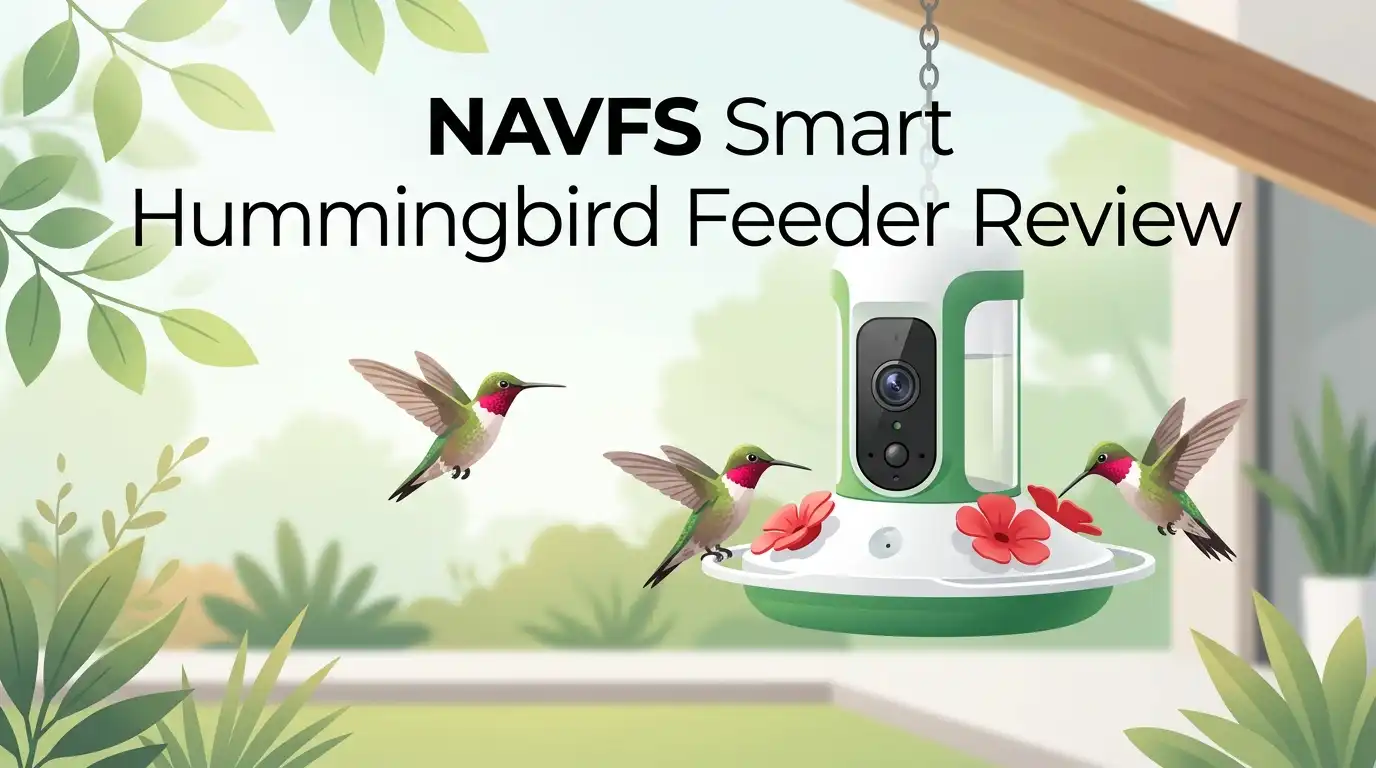
NAVFS Smart Hummingbird Feeder Review 2026
Imagine sitting on your couch while a tiny hummingbird lands at your feeder outside. Your phone buzzes. A crystal clear 2K video appears on your screen.
The app tells you it’s a Ruby-throated Hummingbird. That moment right there is what the NAVFS Smart Hummingbird Feeder promises to deliver every single day.
Smart bird feeders have taken the backyard hobby world by storm. But most of them cost a fortune or fall short on camera quality. The NAVFS Smart Hummingbird Feeder with Camera sits at an interesting price point.
Key Takeaways
- The NAVFS Smart Hummingbird Feeder uses a 2K HD camera with AI recognition that can identify thousands of hummingbird species and send instant alerts to your phone through the companion app.
- Solar power and a built-in rechargeable battery keep this feeder running for months without manual charging. The included solar panel maintains battery levels even on partly cloudy days.
- The feeder design includes an ant moat and bee-proof ports that keep pests away from the nectar. The ABS plastic body holds up well against rain, wind, and direct sunlight.
- Setup takes about 15 minutes from unboxing to live camera feed. The feeder connects through 2.4GHz WiFi and works with a free companion app on both iOS and Android devices.
- AI features include a free trial period but require a subscription for full access after the trial ends. Basic camera features like live view and motion alerts work without a subscription.
- The price sits well below premium competitors like Bird Buddy and Birdfy while still offering comparable camera quality, AI species identification, and solar-powered convenience.

Last update on 2026-07-11 / Affiliate links / Images from Amazon Product Advertising API Some of the links on this website are affiliate links, which means that at no additional cost to you, I earn a commission if you click through and make a purchase. I only recommend products and services that I believe will add value to my readers. Thank you for your support!
NAVFS Smart Hummingbird Feeder Overview
The NAVFS Smart Hummingbird Feeder is a camera-equipped nectar feeder built for outdoor use. It combines a 2K high-definition camera with advanced AI bird recognition software. The feeder connects to your smartphone through a companion app over 2.4GHz WiFi.
NAVFS designed this feeder to attract hummingbirds with its red-accented ports and easy-access nectar reservoir. The built-in camera sits inside the feeder body. It records video automatically when motion is detected. The AI system then analyzes the footage and identifies the hummingbird species.
The feeder runs on a rechargeable lithium-ion battery paired with a solar panel. This combination means you can hang the feeder in a sunny spot and let it run on its own. The ABS plastic housing carries an IP65 water resistance rating. It handles rain, humidity, and temperature swings without trouble.
NAVFS sells this feeder on Amazon under ASIN B0GHVF3HDX. It ships with the feeder body, solar panel, mounting hardware, USB-C charging cable, and a quick setup guide. The feeder holds enough nectar for several days of regular hummingbird visits.
2K Camera Quality and Video Performance
The camera inside the NAVFS hummingbird feeder records at 2K resolution (2560 x 1440 pixels). This gives you sharp, detailed video of every hummingbird that visits. You can see individual feather patterns, throat colors, and wing movements clearly on your phone screen.
The wide-angle lens captures a broad view of the feeder area. This means you do not miss birds that approach from different angles. Daytime footage looks vibrant with accurate color reproduction. Greens, reds, and iridescent throat patches on hummingbirds show up beautifully.
Night vision also works on this camera. Low-light footage is not as colorful, but you can still see nocturnal activity around the feeder. This feature helps you spot other creatures that may visit after dark.
The camera supports live streaming through the app. You can open the app at any time and see what is happening at your feeder in real time. The video stream runs smoothly on a stable WiFi connection. Short buffering can happen if your router sits far from the feeder.
Video clips save automatically when motion is detected. You can review these clips later in the app gallery. The footage quality stays consistent across different weather conditions. Even on overcast days, the 2K resolution keeps the image clear and usable.
AI Bird Identification Features
The AI recognition system is one of the strongest selling points of this feeder. NAVFS claims the system can identify over 10,000 bird species. For hummingbird watchers, this means the app can often tell you the exact species visiting your feeder.
The AI processes each video clip after motion triggers the camera. Within seconds, the app sends a notification to your phone. This notification includes a snapshot and the identified species name. Common species like Ruby-throated Hummingbirds, Anna’s Hummingbirds, and Rufous Hummingbirds get recognized quickly and accurately.
Accuracy depends on lighting and camera angle. In good daylight, the AI gets the species right most of the time. In dim conditions or when a bird moves too fast, the system sometimes labels the species as “unknown” or gives a less confident match.
The AI feature runs through a free trial period after you first set up the feeder. Once the trial ends, you need a subscription to continue using full AI identification. Basic motion alerts and live video still work without the subscription. This is an important detail to consider before you buy.
The species log in the app tracks every identified bird over time. You can see how many different species visit your feeder and how often each one appears. This data adds a fun, educational layer to the experience.
Top 3 Alternatives for NAVFS Smart Hummingbird Feeder
1. Birdfy Smart Hummingbird Feeder with Camera

Last update on 2026-10-13 / Affiliate links / Images from Amazon Product Advertising API Some of the links on this website are affiliate links, which means that at no additional cost to you, I earn a commission if you click through and make a purchase. I only recommend products and services that I believe will add value to my readers. Thank you for your support!
2. Birdbuddy Smart Solar Pro Hummingbird Feeder with Camera

Last update on 2026-10-12 / Affiliate links / Images from Amazon Product Advertising API Some of the links on this website are affiliate links, which means that at no additional cost to you, I earn a commission if you click through and make a purchase. I only recommend products and services that I believe will add value to my readers. Thank you for your support!
3. SOVMIKU FCG6 Smart Hummingbird Feeder with Camera

Last update on 2026-07-11 / Affiliate links / Images from Amazon Product Advertising API Some of the links on this website are affiliate links, which means that at no additional cost to you, I earn a commission if you click through and make a purchase. I only recommend products and services that I believe will add value to my readers. Thank you for your support!
Solar Panel and Battery Life
The NAVFS hummingbird feeder includes a detachable solar panel that connects to the feeder body. This solar panel charges the internal lithium-ion battery during daylight hours. The battery capacity sits at approximately 5200mAh, which provides enough power to run the camera for extended periods.
In a sunny location, the solar panel keeps the battery topped up throughout the day. You can expect the battery to maintain its charge for weeks or even months without manual intervention. On cloudy days, the charging slows down, but the stored battery power keeps the camera running.
If the solar panel does not get enough light, you can charge the battery manually using the included USB-C cable. A full charge from empty takes a few hours. The combination of solar and manual charging gives you flexibility in feeder placement.
Battery drain increases with heavy camera use. If the feeder sits in a high-traffic area with constant motion triggers, the battery depletes faster. Placing the feeder in a spot that balances sunlight exposure and bird activity gives the best results.
The solar panel attaches to the top of the feeder or mounts nearby with a cable extension. This design lets you angle the panel toward the sun even if the feeder hangs in partial shade. The system works well in most US climates from spring through fall.
App Experience and WiFi Connectivity
The NAVFS feeder connects to your phone through a companion app available on iOS and Android. The app handles live video streaming, video clip storage, AI identification results, and feeder settings. The interface is clean and straightforward.
Setup requires a 2.4GHz WiFi network. The feeder does not support 5GHz WiFi. This is common among smart bird feeders, but it matters if your router only broadcasts on 5GHz. Most dual-band routers broadcast both frequencies, so this is usually not a problem.
Pairing the feeder with the app takes just a few minutes. You scan a QR code, connect to your WiFi, and the live feed appears on your screen. The process is simple enough that most people complete it without reading the full manual.
Push notifications arrive quickly after a bird lands. You can customize notification settings to reduce alert frequency if the feeder gets many visitors. The app also supports sharing access with family members. Multiple people can watch the live feed and review clips from their own phones.
Cloud storage is available through the app for saving video clips online. A microSD card slot in the feeder supports cards up to 128GB for local storage. Using a memory card removes the need for a cloud subscription if you just want to save footage.
Build Quality and Feeder Design
The feeder body uses ABS (Acrylonitrile Butadiene Styrene) plastic. This material resists UV damage, impact, and moisture. The housing feels solid in hand and does not flex or creak when handled. The overall build inspires confidence for long-term outdoor use.
The feeder design includes multiple nectar ports that attract hummingbirds effectively. Red accents on the ports mimic the colors that hummingbirds prefer. The nectar reservoir holds enough liquid for several days of feeding before you need to refill it.
A built-in ant moat sits at the top of the feeder. This moat stops ants from crawling down to the nectar ports. You fill the moat with water, and ants cannot cross it. This small detail saves a lot of frustration for feeder owners who deal with ant problems.
The bee-proof port design reduces the chance of bees and wasps accessing the nectar. The ports are shaped so that hummingbird tongues can reach the nectar, but bee mouthparts cannot. This feature works well in practice, though very persistent wasps may still investigate the feeder.
The feeder disassembles completely for cleaning. You can take apart every section, wash it with warm water, and reassemble it in minutes. Regular cleaning is important with hummingbird feeders. Mold and bacteria grow fast in sugar water, so easy disassembly matters a lot.
Setup and Installation Process
Getting the NAVFS feeder up and running takes about 15 minutes from start to finish. The box includes everything you need. You do not need any extra tools or accessories to hang and activate the feeder.
Start by charging the battery fully using the USB-C cable. While it charges, download the companion app and create an account. Once the battery reaches full charge, attach the solar panel to the top of the feeder. Fill the nectar reservoir with homemade sugar water (four parts water to one part white sugar).
Hang the feeder in your chosen location using the included hanging mount. Pick a spot that gets at least a few hours of direct sunlight for the solar panel. Make sure the location sits within range of your 2.4GHz WiFi network.
Open the app and follow the on-screen prompts to pair the feeder. You will scan a QR code displayed on the feeder or in the manual. Enter your WiFi password, wait a moment, and the live camera feed appears on your screen. The whole pairing process takes under five minutes.
Choose your feeder placement carefully. Hummingbirds prefer feeders near flowers, shrubs, or trees where they can perch between feedings. Avoid placing the feeder in deep shade if you want the solar panel to work well. A location with morning sun and afternoon shade often works best.
Nectar Management and Cleaning
Hummingbird feeders need regular cleaning to keep birds healthy. The NAVFS feeder makes this process simple with its fully disassembled design. Every part separates for thorough washing. No hidden corners trap old nectar or mold.
Use plain white sugar and water at a 1:4 ratio for the nectar. Do not use honey, red dye, or artificial sweeteners. These can harm hummingbirds. The feeder reservoir holds enough nectar for multiple days, but you should change the nectar every 3 to 5 days in warm weather.
In hot temperatures above 90°F, nectar ferments faster. You may need to change it every 2 days during peak summer heat. Cloudy or discolored nectar means it is time for a fresh batch. Do not wait for the feeder to empty before replacing old nectar.
Clean the feeder with warm water and a small bottle brush. Avoid using soap unless you rinse extremely well. Soap residue can be harmful to hummingbirds. A mild vinegar solution works well for stubborn residue. Rinse thoroughly after cleaning.
The ant moat also needs occasional attention. Refill the moat water when it evaporates. Keep the moat clean to prevent mosquito larvae from developing in standing water. A drop of cooking oil on the moat water surface helps repel insects.
Pros and Cons of the NAVFS Smart Hummingbird Feeder
Every product has strengths and weaknesses. Here is an honest look at what this feeder does well and where it falls short.
The 2K camera quality stands out at this price point. Many budget smart feeders use 1080p cameras. The NAVFS feeder delivers noticeably sharper video. Hummingbird feather details and color patterns look stunning on screen. This alone makes the feeder attractive to bird photography enthusiasts.
Solar charging is a genuine convenience. You hang the feeder, position the solar panel, and forget about power management for weeks at a time. This removes one of the biggest annoyances with battery-powered smart feeders.
The AI identification adds real value for anyone interested in learning about hummingbird species. The species log and notification system make the experience interactive rather than passive.
On the downside, the AI subscription requirement after the trial period is disappointing. Many buyers expect full AI features included with the purchase price. The ongoing cost may not suit budget-conscious buyers.
The 2.4GHz WiFi limitation can be frustrating for users with newer mesh WiFi systems that default to 5GHz. You may need to adjust your router settings.
Nectar capacity could be larger. Heavy hummingbird traffic empties the reservoir quickly. A bigger tank would reduce refill frequency. The current size works fine for moderate visitation, but popular feeding spots may need daily refills.
Who Should Buy This Feeder
The NAVFS Smart Hummingbird Feeder fits a specific type of buyer. Understanding who benefits most helps you decide if it is right for you.
Casual backyard birdwatchers who want to upgrade from a basic feeder will love this product. The camera and app transform passive bird feeding into an active, engaging hobby. You get to see birds up close without sitting outside for hours.
Families with kids benefit from the educational AI feature. Children enjoy receiving bird identification alerts and learning species names. The live camera view turns birdwatching into a shared family activity.
Gift buyers looking for a unique present will find this feeder appealing. It arrives ready to use with everything included in the box. The experience of seeing a hummingbird for the first time through the camera delights most recipients.
Budget-conscious buyers who want smart feeder features without paying premium prices should consider this option. The NAVFS feeder costs significantly less than Bird Buddy and Birdfy models. You get comparable camera quality and AI features at a lower entry price.
This feeder is not ideal for serious ornithologists who need professional-grade identification accuracy. The AI works well for common species but may struggle with rare or juvenile birds. Professional birders may prefer higher-end options with more reliable species databases.
How It Compares to Premium Smart Hummingbird Feeders
The smart hummingbird feeder market includes several well-known brands. The Bird Buddy Hummingbird Feeder and Birdfy Hummingbird Feeder sit at the premium end. The NAVFS feeder competes at a lower price point.
Camera quality is comparable across all three. The NAVFS 2K resolution matches what Bird Buddy and Birdfy offer. Video clarity, color accuracy, and motion detection perform similarly. The main differences appear in app polish and AI accuracy.
Bird Buddy has the most refined app experience. Its interface looks polished and the species identification database receives frequent updates. However, the Bird Buddy hummingbird feeder costs roughly two to three times more than the NAVFS model.
Birdfy offers dual camera options on some models, letting you see birds from two angles. This is a unique feature the NAVFS feeder does not have. Birdfy’s pricing sits between NAVFS and Bird Buddy.
The NAVFS feeder wins on value. If your priority is getting a working smart hummingbird feeder with a good camera and AI features at the lowest price, the NAVFS delivers. You sacrifice some app refinement and brand reputation, but the core experience remains solid.
All three feeders share the same 2.4GHz WiFi limitation and subscription model for AI features. This is an industry-wide pattern rather than a NAVFS-specific issue. The ongoing subscription cost should factor into your total budget regardless of which brand you choose.
Long-Term Durability and Weather Resistance
Outdoor feeders face harsh conditions. Sun, rain, wind, and temperature swings test every component. The NAVFS feeder handles these challenges reasonably well.
The IP65 water resistance rating protects the camera and electronics from rain and splashing water. It does not mean the feeder is waterproof under submersion, but normal rain and heavy downpours do not damage it. The camera continues recording through rainstorms without fogging or water intrusion.
UV exposure affects all plastic products over time. The ABS housing resists UV degradation better than cheaper plastics. After several months of direct sun exposure, you may notice slight color fading. The structural integrity remains intact even after prolonged outdoor use.
The solar panel durability matters for long-term performance. The panel uses tempered glass and weather-resistant wiring. It holds up well in typical outdoor conditions. Heavy hail or falling branches could damage it, so placement near protective tree cover helps.
Winter use depends on your climate. Hummingbirds migrate south in cold regions, making the feeder unnecessary during winter months. In warmer climates where hummingbirds stay year-round, the feeder performs well through mild winters. Freezing temperatures can affect battery performance and nectar quality. Bring the feeder indoors during hard freezes.
The hanging mount and hardware resist rust and corrosion. Metal components use coated or stainless materials that hold up in humid environments. After months of outdoor use, the mount hardware should still function properly without seizing or corroding.
Is the NAVFS Smart Hummingbird Feeder Worth It
The NAVFS Smart Hummingbird Feeder delivers a solid smart bird feeding experience at a budget-friendly price. The 2K camera captures beautiful hummingbird footage. The AI identification adds an engaging layer to the hobby. Solar charging keeps maintenance low.
The subscription model for AI features is the biggest drawback. If you plan to use AI identification long-term, factor the ongoing cost into your budget. Without the subscription, you still get a capable camera feeder with live streaming and motion alerts.
For the price, this feeder offers strong value. It does not match the polish of Bird Buddy or the dual-camera versatility of Birdfy. But it costs far less and delivers the core features most backyard birders want. A good camera, reliable notifications, solar power, and a functional feeder design cover the essentials.
If you want to start smart hummingbird watching without a big investment, the NAVFS feeder is a smart, affordable entry point. It brings hummingbirds closer to you through technology that actually works.
Last update on 2026-07-11 / Affiliate links / Images from Amazon Product Advertising API Some of the links on this website are affiliate links, which means that at no additional cost to you, I earn a commission if you click through and make a purchase. I only recommend products and services that I believe will add value to my readers. Thank you for your support!
FAQs
Does the NAVFS Smart Hummingbird Feeder require a subscription?
The AI bird identification feature includes a free trial period. After the trial ends, a subscription is needed for full AI species recognition. Basic features like live video, motion alerts, and manual recording work without any subscription.
What WiFi does the NAVFS hummingbird feeder need?
The feeder connects through 2.4GHz WiFi only. It does not support 5GHz networks. Most home routers broadcast both frequencies. Check your router settings if you have trouble connecting.
How long does the battery last on the NAVFS feeder?
The battery lasts weeks to months depending on solar panel exposure and camera activity. In a sunny location with moderate bird traffic, the solar panel maintains the charge without manual intervention.
Can multiple people view the NAVFS feeder camera?
Yes. The companion app supports multi-user sharing. You can invite family members to view the live feed and receive bird arrival notifications on their own phones.
Is the NAVFS feeder safe for hummingbirds?
The feeder uses food-grade safe materials for the nectar reservoir and ports. The bee-proof and ant moat features protect the nectar from contamination. Always use plain white sugar and water as nectar and clean the feeder every 3 to 5 days.
Does the camera work at night?
Yes. The camera includes night vision capability. Footage is less colorful than daytime video, but you can still see activity around the feeder after dark. This helps you spot nocturnal visitors.
How do I clean the NAVFS hummingbird feeder?
The feeder disassembles completely for cleaning. Remove all parts and wash them with warm water. Use a bottle brush to reach inside the reservoir. A mild vinegar rinse helps remove stubborn residue. Rinse thoroughly and let everything dry before reassembling.
What nectar recipe should I use?
Mix one part plain white sugar with four parts water. Stir until dissolved. Do not add red dye, honey, or artificial sweeteners. Store extra nectar in the refrigerator for up to two weeks.

Hello, I’m Emily Price, the founder of Birds Affection. As a passionate bird enthusiast and spiritual seeker, I’ve always been fascinated by the symbolic meanings and mystical connections between birds and our lives. On this website, I share my knowledge and insights on the spiritual significance of various bird species, exploring their roles as messengers, guides, and teachers. Through my writing, I aim to inspire and educate others on the profound wisdom and beauty that birds bring to our world. Join me on this journey as we delve into the enchanting realm of bird symbolism and discover the hidden meanings behind these magnificent creatures.