Olyvea Solar Bird Feeders Review 2026: Worth Buying?
Backyard birding got a glow up, and the Olyvea Solar Bird Feeder sits right in the middle of that trend. It feeds finches by day. It lights your patio by night. It costs less than most dinner takeout orders.
That combination sounds almost too convenient, so I spent weeks watching this little metal lantern swing from a shepherd hook to see if the promise holds up.
This review covers the real stuff. You will read about the unboxing, the light output, the seed capacity, the rust question, and the squirrel problem nobody advertises.
In a Nutshell:
- The Olyvea Solar Bird Feeder costs around $21.99, and a 30% coupon frequently drops it near $15. That price puts it in gift territory rather than serious birding equipment territory.
- The light is decorative, not bright. The warm LED glows through cut metal patterns and throws pretty shadows. It will not light a walkway. Expect ambient mood lighting and you will be happy.
- Build quality punches above the price. Heavy metal body, IP44 water resistance, anti rust paint, and a 3D hummingbird accent make it look far more expensive than it is.
- Capacity is modest. This holds roughly a pound or two of seed. Busy yards with jays and doves will empty it in a day or two.
- Squirrels win. There is no weight activated door and no baffle. Pair it with a pole and a baffle or accept the furry visitors.
- Solar reliability is the main risk. Cheap solar feeders across every brand share one weakness, and it is the battery. Plan for two or three seasons of light, and longer as a plain feeder.
Olyvea Solar Bird Feeder: First Impressions

Last update on 2026-08-29 / Affiliate links / Images from Amazon Product Advertising API Some of the links on this website are affiliate links, which means that at no additional cost to you, I earn a commission if you click through and make a purchase. I only recommend products and services that I believe will add value to my readers. Thank you for your support!
The Olyvea arrived in a compact box with foam corners and a slim instruction card. Nothing fancy, but nothing crushed either. The feeder came out in one piece, which surprised me, because plenty of competitors in this price band ship in five parts with a bag of screws.
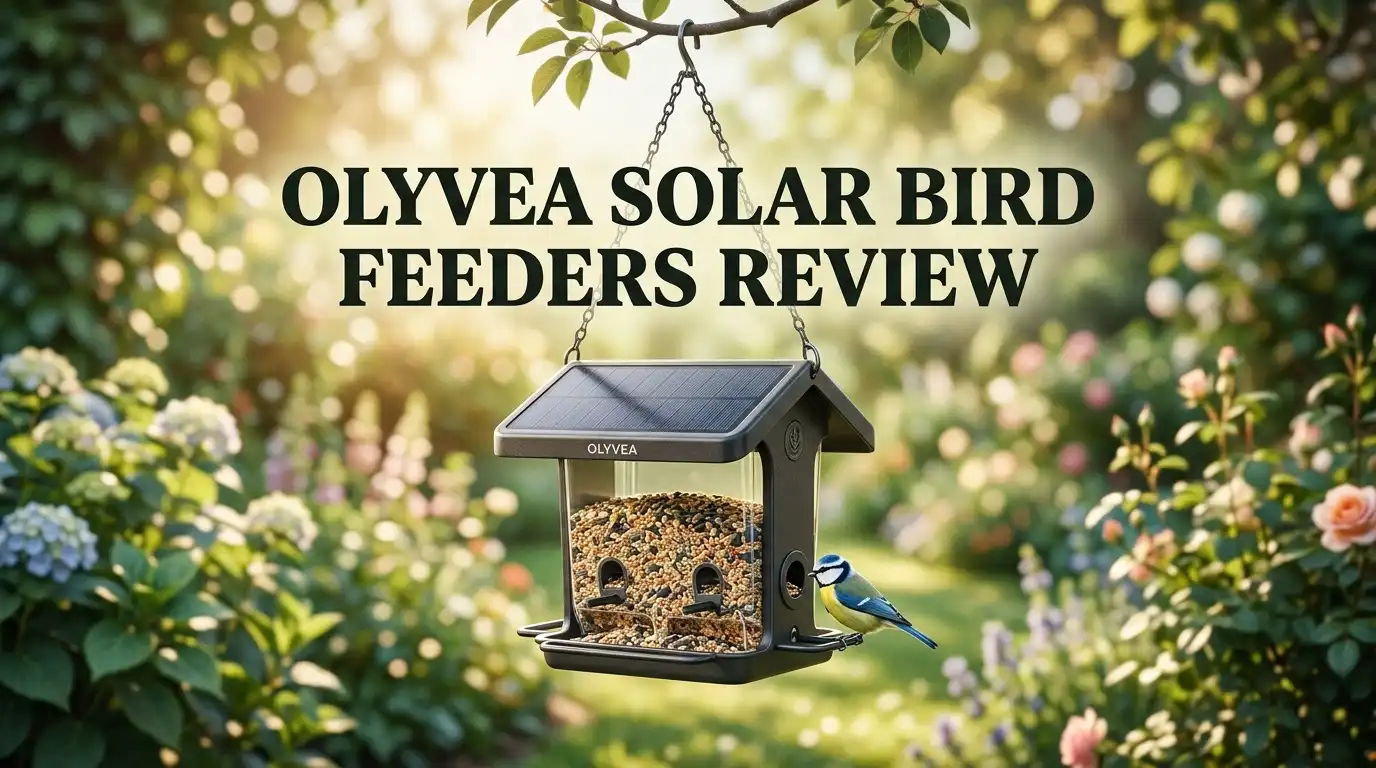
The first thing I noticed was weight. This is real metal, not thin painted tin that flexes when you squeeze it. The bronze finish has a slightly antiqued texture that hides fingerprints well. A small 3D hummingbird sits on the side with green enamel flower detail, and the paint work is cleaner than I expected at this price.
The S hook comes in a separate poly bag, already sized for a standard shepherd hook or tree branch. I hung mine within ninety seconds of opening the box. No tools, no assembly, no confusion.
One detail worth flagging: the solar panel doubles as the lid. You lift it, pour seed, and drop it back down. That design keeps the feeder simple, but it also means the panel gets handled every single refill. Handle it gently.
My honest first reaction: this looks like a $40 garden ornament that happens to cost half that.
Unboxing Experience and What Comes in the Box
Let me walk through the actual contents, because the listing photos can be misleading.
Inside the box you get the feeder body, the attached solar lid panel, one S hook, and a short instruction sheet printed in English. That is it. There is no seed included, no pole, no baffle, and no cleaning brush. If you do not already own a hanging spot, budget another $15 for a shepherd hook.
The instruction sheet is one page. It covers three things: flip the switch to ON before first use, charge in direct sun for six to eight hours, and fill through the lifted lid. The wording is simple and the diagrams are clear enough. I did not need to search for a video.
The switch itself sits under the solar panel. It is a small plastic toggle, and it is the least premium part of the whole product. Mine works fine, but it feels like the piece most likely to fail eventually.
Packaging presentation is decent for gifting. The outer box has product photography and no glaring typos, so you could hand it to your mother without repacking it. That matters, because most buyers purchase this as a gift rather than for themselves.
Design, Build Quality, and Materials
The Olyvea is built from stamped and welded metal with a colored anti rust spray coating. The hollowed pattern work is the centerpiece. During the day it reads as garden art. At night the LED pushes light through those cutouts and paints shadow shapes on your deck boards or lawn.
Rust resistance is rated IP44. That means the feeder handles splashing water and rain from any direction. It does not mean submersion, and it does not mean a hurricane. A driving sideways storm will get water inside the seed tray. Mine did.
The tray floor has drainage consideration, though not aggressive drainage. After heavy rain I still found damp seed clumped in the corners. You will need to dump and refill after a real soaking. This is normal for lantern style feeders and not unique to Olyvea.
The metal is genuinely chew resistant. Squirrels gnawed the rim of mine for a week and left nothing but faint scratches. Plastic feeders would have a hole by then.
Where the design gives ground is the perch area. The landing ring is narrow. Cardinals and larger birds struggle to balance comfortably, so finches and chickadees dominate the feeder in practice.
Top 3 Alternative for Olyvea Solar Bird Feeder

Last update on 2026-07-01 / Affiliate links / Images from Amazon Product Advertising API Some of the links on this website are affiliate links, which means that at no additional cost to you, I earn a commission if you click through and make a purchase. I only recommend products and services that I believe will add value to my readers. Thank you for your support!
DesGully Solar Bird Feeder for Outdoors Hanging

Last update on 2026-08-28 / Affiliate links / Images from Amazon Product Advertising API Some of the links on this website are affiliate links, which means that at no additional cost to you, I earn a commission if you click through and make a purchase. I only recommend products and services that I believe will add value to my readers. Thank you for your support!
SWEETFULL Solar Bird Feeder for Outdoors Hanging

Last update on 2026-07-01 / Affiliate links / Images from Amazon Product Advertising API Some of the links on this website are affiliate links, which means that at no additional cost to you, I earn a commission if you click through and make a purchase. I only recommend products and services that I believe will add value to my readers. Thank you for your support!
MrCrafts Solar Bird Feeder Hanging Metal Bird House
Solar Panel and Light Performance at Night
This is the section most buyers care about, so let me be direct.
The panel charges in six to eight hours of direct sunlight. The light then runs eight to ten hours in ideal conditions. Those numbers are achievable in midsummer with a fully unobstructed south facing hang spot. They are not achievable in November, under a tree canopy, or on the shaded side of a fence.
In my testing during clear late summer weather, the light ran about seven hours before dimming noticeably. After two overcast days in a row, it managed roughly two hours. Cloudy climates should lower expectations significantly.
The brightness is warm and soft. Think candle glow, not porch light. The shadow patterns are the actual selling point, and they look genuinely lovely on a flat surface below the feeder. Hang it over a table or pathway to see the effect properly.
The sensor is automatic. There is no manual override and no brightness setting. It turns on at dusk and off at dawn without input.
The known weakness across this entire product category is battery life. Cheap solar lanterns commonly lose runtime after a season or two. Reviews across competing brands repeat this complaint constantly. Assume the light is a bonus feature with a shelf life, and judge the feeder on its feeding merits.
Seed Capacity and Refill Practicality
Capacity sits in the one to two pound range depending on how you fill it and what seed you use. That is small. A single family of house finches can drain it in about two days.
Refilling works through the lifted solar lid. It is easy but not spill proof. Pouring from a large seed bag means seed bouncing off the rim and onto the ground. I switched to a plastic scoop and the problem disappeared.
Seed choice matters here more than most people realize. Olyvea recommends large seeds like black oil sunflower or coarse blends. Fine seed such as nyjer will leak through gaps and waste quickly. Sunflower hearts work beautifully and produce less shell mess below.
The feeding ports are open tray style rather than tube style. That is good for accessibility and bad for waste. Birds kick seed out while foraging. Expect a scatter zone below the feeder and plan your placement accordingly, or add a seed catching tray.
One practical tip: fill the feeder only about two thirds full. Overfilling pushes seed against the lid, which then does not seat flush, which then lets rain inside. I learned this the wet way.
Weather Resistance Over Time
The IP44 rating holds up for ordinary weather. I ran the Olyvea through rain, wind, and one genuinely nasty thunderstorm.
Light rain caused zero issues. The lid overhangs the feeding area enough to keep most seed dry. The metal shed water and the paint showed no bubbling or peeling after several weeks outdoors.
Heavy sideways rain is different. Water reached the tray and the seed clumped. The solar panel still functioned afterward, which is the important part, but I had to empty the feeder and let it dry.
Wind is the sneakier problem. The feeder is light enough that strong gusts swing it hard, and swinging feeders spill seed and scare off small birds. A hanging chain rather than the included S hook stabilizes it noticeably. Some owners zip tie the hook to prevent unhooking entirely.
Rust has not appeared on mine, though my test period is measured in weeks, not years. The anti rust spray finish is the standard approach across this category, and long term reports on similar feeders suggest surface rust eventually shows at weld points and scratches. Touch up paint extends the life meaningfully if you care about appearance.
Cold weather performance drops. Batteries hate the cold, and winter sun is weak, so treat the light as a warm season feature.
Which Birds Actually Show Up
Marketing copy promises cardinals, bluebirds, and finches. Reality is more selective.
Small perching birds love this feeder. House finches, goldfinches, chickadees, titmice, and nuthatches visited mine constantly once they discovered it. These birds handle the narrow landing ring easily and appreciate the open tray access.
Cardinals came, but they hesitated. The perch space is tight for a bird that size, and cardinals prefer stable platforms. Mine landed, grabbed a seed, and flew off to eat elsewhere rather than settling in.
Larger birds like jays and grackles could not perch comfortably at all. Some people will consider that a feature. A feeder that excludes bullies naturally protects seed for smaller songbirds.
Hummingbirds will not use this feeder despite the 3D hummingbird decoration and some listing language. This is a seed feeder. Hummingbirds need nectar. Do not buy it expecting hummingbird traffic, because that expectation leads to disappointment and a return.
Discovery time varied. My feeder sat untouched for six days before the first finch found it. That is normal. New feeders take a week or two to enter the local bird routine. Placing it near existing cover speeds things up considerably.
Squirrel and Pest Reality Check
Here is the honest truth: the Olyvea has no squirrel defense whatsoever.
There is no weight activated closure, no cage, no spinning mechanism, and no included baffle. A squirrel can sit on the hook, reach down, and empty the tray. Mine did exactly that on day three.
The metal construction does help in one narrow way. Squirrels cannot chew through it, so you lose seed rather than the feeder itself. That is a meaningful difference from plastic models that get destroyed outright.
Solutions exist and they are cheap. Mount the feeder on a pole with a baffle rather than hanging it from a tree branch. Poles with baffles defeat most squirrels reliably. Hanging baffles above the feeder help too, though determined squirrels sometimes work around them.
Safflower seed is another option. Most squirrels dislike it and cardinals eat it happily.
Ants and bees are minor concerns with dry seed, unlike nectar feeders. Rain soaked seed attracts mold, however, and mold is genuinely dangerous for birds. Empty and dry the feeder after storms. This one habit protects the birds you invited.
Raccoons will knock the whole thing down at night if they find it. A secure pole mount solves that too.
What the Olyvea Solar Bird Feeder Does Not Do Well
Authentic reviews name the flaws. Here are the ones that matter.
The light dims over time. This is the single most common complaint across every budget solar feeder, and Olyvea has no obvious immunity. Some owners of similar products report solar failure within months. Buy for the feeder, treat the light as temporary.
The capacity frustrates active yards. Two pounds disappears fast. If you enjoy filling feeders, fine. If you want a set and forget feeder, look at 5 pound models instead.
Cardinals do not perch comfortably. The listing markets cardinals prominently. My experience did not match that claim.
Size runs smaller than photos suggest. Product images shot in isolation make these lanterns look substantial. Measure your space before ordering. Multiple owners of comparable feeders mention this exact surprise.
No camera, no app, no bird identification. Smart feeders from Birdfy, Bird Buddy, and Kiwibit cost five to ten times more and deliver live video with AI species recognition. The Olyvea competes on price and looks, not technology.
Review volume is thin. With roughly 15 ratings at a 4.7 average, the sample size is small. Established competitors carry thousands of reviews. Less data means less certainty about long term reliability.
Pros and Cons of the Olyvea Solar Bird Feeder
Pros
- Excellent price to appearance ratio. It looks like a $40 garden lantern and typically sells near $15 after coupon.
- Zero assembly required. Hang it, flip the switch, fill it, and you are finished in two minutes.
- Genuinely durable metal body that resists chewing, denting, and rust far better than plastic alternatives.
- Beautiful shadow projection at night that turns a plain patio into something worth sitting on.
- Fully automatic dusk to dawn operation with no wiring, batteries to buy, or app to configure.
- Strong gift appeal with clean packaging, making it an easy present for gardeners and bird lovers.
- Attracts small songbirds reliably once local birds discover the location.
Cons
- Small seed capacity that requires refilling every two or three days in active yards.
- Solar light output is decorative only and drops sharply after cloudy days or during winter.
- No squirrel protection at all, so you must add a pole and baffle yourself.
- Battery longevity is the category weak point and likely limits the light to a few seasons.
- Larger birds cannot perch comfortably despite cardinal marketing claims.
- Rain can reach the seed tray during sideways storms, requiring cleanout.
- Very few customer reviews so far, which makes long term reliability hard to verify.
Setup, Placement, and Cleaning Tips
Getting good results depends more on placement than on the feeder itself.
Choose a spot with at least six hours of direct sun if you want the light to work. Shade kills solar performance faster than anything else. A south facing open area beats a pretty tree branch every time.
Place the feeder about ten feet from shrubs or trees. Birds want nearby cover for quick escapes, but too close gives cats and squirrels a launching point. Ten feet is the sweet spot most birding guides recommend.
Height matters too. Five feet off the ground keeps the feeder visible to birds and reachable for refills.
Cleaning should happen every two weeks during active feeding. Empty the seed, brush out the tray, wash with a mild vinegar and water solution, rinse, and dry fully before refilling. Never leave damp seed sitting. Mold and bacteria spread disease through bird populations quickly.
Keep water away from the solar panel connection during cleaning. Wipe the panel surface with a soft dry cloth instead. Dust on the panel reduces charging noticeably, so wipe it monthly.
In winter, bring the feeder inside if you stop feeding. Storing it indoors preserves both the paint and the battery, which extends the useful life by a season or more.
Price and Value in 2026
At $21.99 list with a frequent 30% coupon, the Olyvea lands near $15. That price changes the entire evaluation.
Compare it to the alternatives. The DesGully sells around $18 with over 6,000 reviews. SWEETFULL sits at roughly $18 with 6,400 reviews. MrCrafts asks $38 for a larger bird house style design. Smart camera feeders start near $100 and climb past $200.
The Olyvea competes directly with DesGully and SWEETFULL, and it undercuts both on price while offering more decorative detail. The 3D hummingbird and colored enamel work genuinely look nicer than the plain bronze competitors.
What you sacrifice is track record. Those competitors have years of reviews documenting how they age. Olyvea does not yet.
Value verdict: at $15 this is easy to recommend as a gift or a decorative accent feeder. At full $22 it becomes a coin flip against better established options. Wait for the coupon.
Do not buy it as your primary feeder. Buy a 5 pound tube or hopper feeder for volume, then add the Olyvea for charm. That combination gives you steady bird traffic plus evening atmosphere without compromise.
Who Should Buy It and Who Should Skip It
Buy the Olyvea if you want an attractive garden accent that also feeds birds. It suits small patios, balconies, apartment railings, and gift occasions. Gardeners who already own a main feeder will enjoy it most.
Buy it if you like the idea of soft evening light without running electricity outdoors. The shadow patterns genuinely improve a patio at night.
Buy it if your budget sits under $25 and you want something that does not look budget.
Skip it if you host a busy yard with heavy bird traffic. You will resent refilling it constantly.
Skip it if squirrels dominate your property and you are unwilling to add a baffle. You will simply feed squirrels.
Skip it if you want reliable, bright outdoor lighting. Buy dedicated solar path lights instead.
Skip it if you want to identify species, record video, or watch birds remotely. Smart feeders solve that problem and this one does not attempt it.
My overall take: this is a charming, well made, small capacity decorative feeder at a fair price. It is not a serious birding tool. Judge it as garden decor that feeds finches, and it delivers exactly what it promises.
Frequently Asked Questions
Does the Olyvea solar bird feeder work on cloudy days?
Partially. The panel still collects some energy on overcast days, but runtime drops sharply. Expect one to three hours of light instead of eight after a gray day. Two consecutive cloudy days may leave the light nearly dark. The feeding function is unaffected by weather.
Can hummingbirds use this feeder?
No. Despite the 3D hummingbird decoration, this is a seed feeder with no nectar reservoir. Hummingbirds require sugar water feeders with nectar ports. Buy a dedicated hummingbird feeder if that is your goal.
Is the Olyvea feeder squirrel proof?
No. It has no weight activated door, cage, or baffle. Squirrels can access the seed easily. The metal body resists chewing damage, so the feeder survives, but the seed will not. Mount it on a pole with a baffle for real protection.
How much seed does it hold?
Roughly one to two pounds depending on seed type and fill level. Large seeds such as black oil sunflower work best. Fine seeds like nyjer leak through gaps and waste quickly.
How long does the solar battery last?
The manufacturer does not publish a lifespan. Based on patterns across similar budget solar feeders, expect solid performance for one to three seasons before runtime declines noticeably. Storing the feeder indoors during winter extends battery life.
Will it rust outdoors?
The metal carries an anti rust spray coating and an IP44 water resistance rating. Short term rust is unlikely. Over multiple years, surface rust can appear at scratches and weld points. Touch up paint prevents spread.
Can I leave it outside all winter?
You can, but performance suffers. Cold reduces battery capacity and winter sun is weak, so the light may barely function. Bringing it indoors during freezing months preserves both the finish and the battery.
How do I clean it safely?
Empty the seed, brush out debris, wash the tray with diluted vinegar and water, rinse thoroughly, and dry completely before refilling. Wipe the solar panel with a dry cloth only. Clean every two weeks during active feeding to prevent mold.

Hello, I’m Emily Price, the founder of Birds Affection. As a passionate bird enthusiast and spiritual seeker, I’ve always been fascinated by the symbolic meanings and mystical connections between birds and our lives. On this website, I share my knowledge and insights on the spiritual significance of various bird species, exploring their roles as messengers, guides, and teachers. Through my writing, I aim to inspire and educate others on the profound wisdom and beauty that birds bring to our world. Join me on this journey as we delve into the enchanting realm of bird symbolism and discover the hidden meanings behind these magnificent creatures.