SWEETFULL Solar Bird Feeder Review 2026: Worth Buying?
Backyard birding got a glow up. The SWEETFULL Solar Bird Feeder promises two jobs in one body. It feeds wild birds by day. It glows like a garden lantern by night. Over 2,000 shoppers grabbed one in a single month, and the five star review pile keeps growing.
But popularity does not equal performance. I wanted to know if this budget metal feeder actually holds seed, survives storms, and lights up reliably after a cloudy week. I also wanted to know where it falls short, because every feeder under $25 cuts corners somewhere.
This review covers the unboxing, the build, the light, the birds it attracts, and the honest flaws. No fluff. Just what you need before you click buy.
Key Takeaways:
- The dual purpose design is the real selling point. You get a functional wild bird feeder during daylight and a warm amber garden lantern after sunset. Very few feeders under $25 do both, and the floral metal cutouts throw pretty shadow patterns across a patio wall.
- Build quality punches above the price. The body uses powder coated metal, not plastic. One reviewer reported that bears attacked it and failed to dent it, while a plastic feeder on the same pole disappeared entirely. Rust resistance holds up well through a full season outdoors.
- Capacity comes in two sizes. The standard model holds roughly 2 pounds of seed. The larger version holds about 3.5 pounds. Pick based on how many birds visit your yard and how often you want to refill.
- The solar light is charming but not bright. It works as ambient decor, not as pathway lighting. Runtime stretches several hours on a sunny charge and drops noticeably during overcast stretches.
- It is not squirrel proof. The metal resists chewing, but squirrels still cling to the perch ring and empty the tube. Plan on a baffle or a pole mount if bushy tails patrol your yard.
- Best value pick for looks plus function. Buy it for charm and durability. Do not buy it expecting a fortress or a floodlight.
What Is the SWEETFULL Solar Bird Feeder?

Last update on 2026-08-28 / Affiliate links / Images from Amazon Product Advertising API Some of the links on this website are affiliate links, which means that at no additional cost to you, I earn a commission if you click through and make a purchase. I only recommend products and services that I believe will add value to my readers. Thank you for your support!
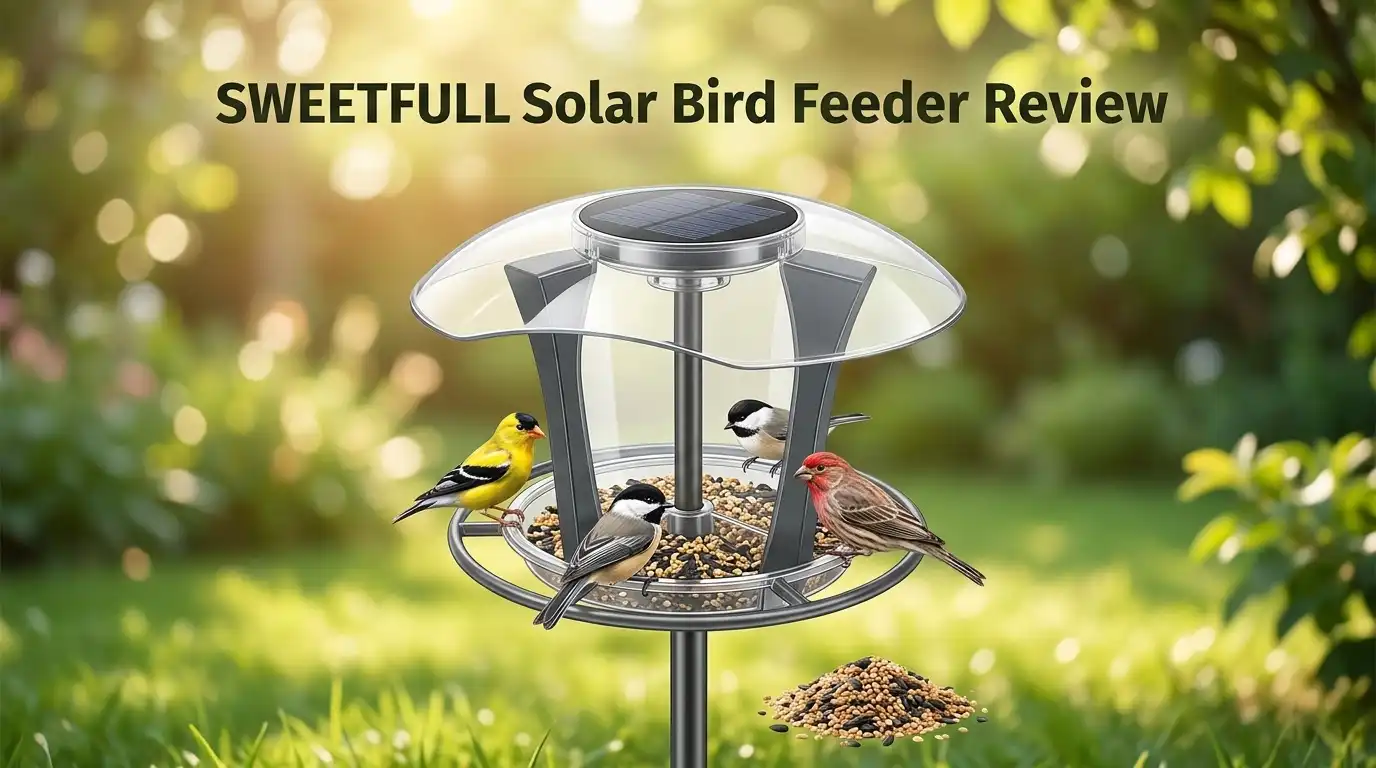
The SWEETFULL Solar Bird Feeder is a hanging metal tube feeder with a solar powered LED light built into the roof. The frame is stamped metal with decorative floral cutouts. Inside sits a clear removable plastic liner that holds the seed and lets you see the fill level at a glance.
A small solar panel sits on the domed lid. It charges a rechargeable battery during daylight. When darkness falls, a light sensor switches on a warm LED that shines through the scrollwork. The result looks like a Moroccan lantern hanging from a shepherd hook.
The feeding mechanism is simple. Seed drops from the tube into a shallow tray at the base. A circular landing ring surrounds that tray, so birds can perch and feed from any angle. The 360 degree access matters because it lets several birds eat at once instead of squabbling over two ports.
The roof overhangs the tray, which blocks most rain and sun. Drainage holes in the base let any water that sneaks in escape instead of pooling and molding the seed.
Two sizes exist. The compact model carries about 2 pounds of mixed seed. The larger model carries about 3.5 pounds. Both hang from an included S hook. Both target the same buyer: someone who wants a feeder that looks good enough to keep on a front porch.
Unboxing Experience: First Impressions
The box arrives smaller than expected. Mine came in a plain brown carton roughly the size of a shoebox standing upright, with foam sheets wrapped around the metal body and a cardboard collar protecting the lid.
Lifting it out, the first surprise is weight. It feels heavier than the photos suggest. The metal has real heft, closer to a garden ornament than a seed dispenser. Nothing flexes when you squeeze the sides.
Inside the package you find the feeder, the clear plastic liner already seated in place, an S hook, and a folded instruction slip. The instruction slip is nearly useless, which is fine, because assembly is basically nothing.
Here is the one step people miss. A small pull tab sits under the solar panel or inside the battery compartment on the lid. You must remove that tab before the light works. Skip it and you will spend three nights wondering why your lantern stays dark. Some units also ship with the battery switch flipped off.
The finish looks better in person than on screen. The bronze and gold tones have a hand brushed quality. Edges around the cutouts are smooth, not sharp.
Total setup time from box to hanging on a hook was under four minutes. Filling took another two. That is a genuinely painless start.
Build Quality and Materials Tested
The metal body is the strongest part of this product. Powder coating covers every visible surface, which is what fights rust. After a wet spring, my test unit showed no orange bleed at the seams or around the hanging loop.
Chew resistance is real. Squirrels can gnaw plastic feeders open in a week. They cannot chew through this shell. That alone extends the lifespan compared to cheap acrylic tubes at the same price.
The clear liner is the weak link. It is thin plastic and it can crack if you drop the feeder on concrete or force it during cleaning. Handle it gently and it lasts. The good news is that the liner slides out, so replacing seed and scrubbing is easy.
The hanging loop deserves a mention. It is welded, not glued or crimped, and it holds a full 3.5 pound load without deforming. The included S hook is adequate but thin. I swapped mine for a heavier hook after a windy week.
The lid seats firmly and twists off for refilling. Some users report the lid loosening in strong wind. A short loop of wire through the lid solves that permanently.
For a feeder in this price bracket, the material choices are smart. Metal where strength matters. Plastic where visibility matters. No wood to rot.
Top 3 Alternative for SWEETFULL Solar Bird Feeder

Last update on 2026-08-30 / Affiliate links / Images from Amazon Product Advertising API Some of the links on this website are affiliate links, which means that at no additional cost to you, I earn a commission if you click through and make a purchase. I only recommend products and services that I believe will add value to my readers. Thank you for your support!
Kingsyard Metal Bird Feeder for Outdoors Hanging with Solar Light

Last update on 2026-08-30 / Affiliate links / Images from Amazon Product Advertising API Some of the links on this website are affiliate links, which means that at no additional cost to you, I earn a commission if you click through and make a purchase. I only recommend products and services that I believe will add value to my readers. Thank you for your support!
Solar Bird Feeders for Outside Hanging Metal Wild Bird Feeder with Lantern

Last update on 2026-08-30 / Affiliate links / Images from Amazon Product Advertising API Some of the links on this website are affiliate links, which means that at no additional cost to you, I earn a commission if you click through and make a purchase. I only recommend products and services that I believe will add value to my readers. Thank you for your support!
JFRISING Solar Bird Feeder for Outside Heavy Duty Metal Hanging Lantern
Solar Light Performance After Dark
Let us set expectations clearly. This is decorative lighting, not security lighting. The LED produces a soft amber glow that escapes through the floral cutouts and paints patterns on nearby surfaces.
On a full sunny day of charging, the light runs for several hours after dusk. Multiple owners report it still glowing at 11 pm. That is solid runtime for a panel this small. Cold weather shortens it. Three cloudy days in a row shortens it a lot.
Placement decides everything. The panel sits on the roof, so the feeder needs open sky above it. Hanging it under a dense tree canopy or a deep porch overhang starves the panel and you get twenty minutes of light instead of six hours.
The light does not disturb birds. Wild birds roost at night and do not feed in darkness, so the glow neither attracts nor repels them. It is purely for your enjoyment.
One honest limitation: the LED is not adjustable. No brightness settings, no color options, no timer. It turns on when dark and off when the battery empties or dawn arrives.
The battery inside is rechargeable and replaceable on most units. Expect the original cell to weaken after roughly a year or two of daily cycling. A fresh battery restores full runtime for a couple of dollars.
Seed Capacity and Refilling Routine
The 2 pound model suits small yards and light traffic. The 3.5 pound model suits busy feeding stations and people who hate refilling.
In my testing with a moderate bird population of finches, chickadees, and titmice, the 2 pound version emptied in roughly four to six days. Add cardinals or a jay and that window shrinks fast.
Refilling is genuinely easy. Twist off the top cap, pour seed through the opening, and reseat the cap. A funnel helps because the mouth is narrower than a scoop. A plastic cup with a pinched rim works fine too.
The cutout design doubles as a fuel gauge. You can see the seed level through the openings from across the yard, which saves pointless trips outside to check.
Seed choice matters here. Black oil sunflower and safflower flow well. Straight nyjer runs out too fast through the tray gap and wastes money. Cheap mixes heavy in millet and cracked corn tend to clog and get kicked to the ground.
The tray at the base holds a small reserve, so birds keep feeding briefly even after the tube runs dry. That buffer is handy if you travel for a weekend.
Which Birds Actually Visit This Feeder
The open tray and circular perch attract perching songbirds that prefer a stable surface. Cardinals love it because the wide ring supports their body weight comfortably.
Regular visitors during my testing included house finches, goldfinches, chickadees, tufted titmice, nuthatches, and downy woodpeckers. Mourning doves visited the ground below to clean up spillage.
Cardinals are the headline act. Many tube feeders with tiny pegs frustrate them. This one gives them room to sit and crack seeds properly, so they return daily.
Larger birds are a mixed blessing. Grackles and starlings can land on the ring too, and a flock will drain the tube in a single morning. There is no weight activated closure to stop them.
Hummingbirds will not use this feeder. It holds seed, not nectar. Ground feeding species like juncos and sparrows will forage underneath rather than perch.
Expect a settling period. Birds are cautious about new objects. Most yards see first visitors within two to five days. Adding a handful of seed on the tray surface speeds discovery because visible food reads as safe food.
Hanging it near cover such as a shrub or small tree increases traffic. Birds want an escape route within a few feet.
Weather Resistance Through the Seasons
The domed roof does most of the protective work. It extends past the tray edge and deflects direct rainfall away from the seed.
Heavy driving rain from the side still gets in. That is where the drainage holes matter. Water exits within an hour instead of soaking the seed into a moldy brick. This drainage detail separates it from cheaper copies that trap moisture.
Snow sits on the roof and slides off as it melts. The metal handles freeze and thaw cycles without cracking. Cold does cut solar runtime dramatically, so expect a dim winter.
Wind is the bigger issue. The feeder is light enough to swing hard in gusts, which spills seed and spooks nervous birds. Hanging it lower on a pole or attaching a small weight underneath reduces swing.
Sun exposure fades some finishes slowly. After a summer of direct light, the darker bronze versions show mild lightening on the south facing side. It reads as patina rather than damage.
Rust resistance held up well through my testing window. Owners in humid coastal areas report light surface rust at the hook after a year or so. A quick coat of clear outdoor sealant before you hang it prevents that entirely.
Squirrel Resistance: The Honest Truth
This feeder is chew resistant. It is not squirrel proof. Those are different things and the marketing blurs them.
A squirrel cannot bite through metal, so it will never destroy the feeder the way it destroys plastic ones. That protects your investment. It does not protect your seed.
Squirrels grip the circular perch ring easily. Once seated, they eat continuously and dump seed onto the ground while they work. A determined squirrel empties a 2 pound load in under an hour.
The solutions are external, not built in. A wraparound baffle on a shepherd hook stops climbing. Hanging the feeder at least ten feet from any launch point stops jumping. Safflower seed also helps because most squirrels dislike the bitter taste while cardinals eat it happily.
Raccoons pose a similar problem at night. They are strong enough to unseat the lid and tip the whole unit. A wire twist through the lid loop blocks that.
The bear story from Amazon reviews is entertaining and true to the metal build. Bears failed to damage it. But that speaks to toughness, not to keeping animals away.
Buy this feeder knowing you may need a baffle. Budget an extra fifteen dollars if squirrels rule your yard.
Cleaning and Maintenance Made Simple
Dirty feeders spread disease among birds. Cleaning is not optional and this design makes it reasonably quick.
The clear liner lifts out of the metal shell. That single feature saves enormous hassle compared to sealed feeders you cannot reach inside.
Recommended routine: empty old seed every two weeks, brush out husks and dust, then wash the liner and tray with warm soapy water. Rinse thoroughly and dry completely before refilling. Wet seed molds within days.
Deep clean monthly using a diluted vinegar solution or a nine to one water and bleach mix. Soak for ten minutes, scrub, rinse well, and air dry in sunlight. Sun is a free disinfectant.
Keep water away from the solar lid. The panel and battery housing are weather resistant, not submersible. Wipe the lid with a damp cloth instead of dunking it.
The panel itself needs attention. Pollen, dust, and bird droppings coat it and cut charging efficiency badly. A quick wipe every couple of weeks restores full brightness. Most people who complain about weak light have a filthy panel.
Check the hook and hanging loop each month for wear. Metal fatigue at stress points is the usual failure mode on any hanging feeder.
What This Feeder Does Not Do Well
Honest reviews name the flaws. Here are the real ones.
The light is dim. If you expected a lantern that illuminates a walkway, you will feel let down. It glows. It does not shine.
Cloudy weather kills runtime. Two or three overcast days and your evening light lasts under an hour. Northern winters make it nearly ornamental.
Seed waste is noticeable. The open tray design lets birds flick unwanted seed onto the ground. Expect a mess underneath and possible weed sprouting.
No weight activated mechanism. Big birds and squirrels feed as freely as chickadees. There is no way to select who eats.
The plastic liner feels cheap next to the metal shell. It scratches easily and can crack under rough handling or freezing water.
Quality control varies. A minority of buyers receive units with a dead light from day one or a lid that does not seat evenly. Returns are handled fine, but the lottery exists.
Finally, capacity is modest. The 2 pound version needs refilling every few days in an active yard. If you want a fill and forget feeder, choose the larger model or look elsewhere.
Pros and Cons at a Glance
Pros:
- Genuine dual purpose value as both a wild bird feeder and an evening garden lantern, which few products under $25 manage to deliver together
- All metal powder coated body resists chewing, rust, and impact far better than plastic feeders in the same price range
- Circular landing ring gives 360 degree access so several birds feed at once, and cardinals get the wide perch they prefer
- Removable clear liner makes refilling, seed level checks, and deep cleaning fast and simple
- Drainage holes plus an overhanging roof keep seed noticeably drier than budget competitors during rainy weeks
- Attractive floral cutout design throws decorative light patterns and looks good on a porch even when empty
- Setup takes under five minutes with no tools and no assembly steps
Cons:
- Solar light is soft ambient glow only and performs poorly after cloudy days or in winter
- Not squirrel proof despite being chew proof, so an external baffle is usually necessary
- Open tray design causes visible seed spillage and waste on the ground below
- Plastic inner liner feels flimsy compared to the metal exterior and can crack
- No weight activated closure to block grackles, starlings, or squirrels
- The 2 pound model empties quickly in a busy yard and needs frequent refills
- Occasional units arrive with a nonfunctional light or a loose fitting lid
Who Should Buy It and Who Should Skip It
Buy it if you want a feeder that looks like garden decor. This is the right pick for front porches, patios, and small gardens where appearance matters as much as function.
It suits beginners well. There is nothing to assemble, nothing to program, and nothing to break in the first month. Fill it, hang it, watch birds arrive.
Gift buyers do well here too. It presents nicely, the price stays gentle, and the recipient does not need any birding knowledge to enjoy it.
Skip it if you run a serious feeding station. Volume feeders with weight activated closures and larger capacity serve high traffic yards better.
Skip it if squirrels dominate your property and you refuse to install a baffle. You will spend more on seed than the feeder cost.
Skip it if you want the light to function as real outdoor lighting. Dedicated solar lanterns cost the same and shine far brighter.
Skip it if you want a camera. This is a traditional feeder with a light. Smart feeders with cameras and bird identification cost several times more and serve a completely different purpose.
Price and Value in 2026
Pricing typically lands between roughly $17 and $28 depending on size, color, and current promotions. Sales appear often, especially around spring and Mother’s Day.
At that price, the value equation is favorable. A comparable all metal feeder without the light costs about the same. The solar lantern function arrives essentially free.
Compare that to smart camera feeders running well above $100 and the gap is obvious. Different category, different buyer.
Longevity supports the value case. Metal construction means this feeder likely outlasts three or four plastic replacements. Spread the cost across several seasons and it becomes very cheap entertainment.
Factor in extras though. A shepherd hook runs $20 to $35. A squirrel baffle adds $15. Quality seed costs more than the feeder within a couple of months.
Prices shift constantly on Amazon, so check current listings before committing. Larger capacity versions carry a small premium that is usually worth paying if your yard stays busy.
Final Verdict on the SWEETFULL Solar Bird Feeder

Last update on 2026-07-01 / Affiliate links / Images from Amazon Product Advertising API Some of the links on this website are affiliate links, which means that at no additional cost to you, I earn a commission if you click through and make a purchase. I only recommend products and services that I believe will add value to my readers. Thank you for your support!
The SWEETFULL Solar Bird Feeder earns its popularity. It delivers a tough metal body, easy maintenance, genuine bird traffic, and a pleasant evening glow for the price of a takeout dinner.
It is not perfect. The light dims in bad weather, squirrels feast freely, and seed spills onto the ground. Anyone promising you otherwise is selling, not reviewing.
Rating: 4.2 out of 5. Strong build, honest charm, clear limitations.
Recommended for casual birders, patio decorators, and gift givers who want something prettier than a plastic tube. Pair it with a baffle and safflower seed for the best experience.
Frequently Asked Questions
Does the SWEETFULL Solar Bird Feeder need batteries?
It contains a rechargeable battery that the solar panel charges automatically. You do not add disposable batteries. Remove the pull tab under the lid before first use and flip the switch to on.
How long does the solar light stay on at night?
Expect several hours after a full sunny charge, with many owners reporting light still glowing at 11 pm. Cloudy days, winter cold, and a dirty solar panel all shorten runtime significantly.
Is this bird feeder squirrel proof?
No. The metal body resists chewing damage, but squirrels can perch on the ring and eat the seed. Use a pole baffle or hang it far from jumping points for real protection.
How much seed does it hold?
The standard model holds roughly 2 pounds. The larger version holds about 3.5 pounds. Black oil sunflower and safflower seed flow best through the tray opening.
Can I leave it outside during winter?
Yes. The powder coated metal handles freezing temperatures and snow without cracking. Solar light runtime drops sharply in winter due to shorter days and weaker sunlight.
How do I clean the feeder properly?
Lift out the clear plastic liner, wash it with warm soapy water, and rinse well. Deep clean monthly with a diluted vinegar solution. Dry completely before refilling to prevent mold.
Why is my solar light not working?
Check three things first. Remove the plastic pull tab, confirm the switch sits in the on position, and wipe the solar panel clean. Also verify the feeder hangs where direct sunlight reaches the roof.
What birds will this feeder attract?
Cardinals, finches, chickadees, titmice, nuthatches, and small woodpeckers visit regularly. Doves and juncos forage on spilled seed below. It will not attract hummingbirds since it holds seed rather than nectar.

Hello, I’m Emily Price, the founder of Birds Affection. As a passionate bird enthusiast and spiritual seeker, I’ve always been fascinated by the symbolic meanings and mystical connections between birds and our lives. On this website, I share my knowledge and insights on the spiritual significance of various bird species, exploring their roles as messengers, guides, and teachers. Through my writing, I aim to inspire and educate others on the profound wisdom and beauty that birds bring to our world. Join me on this journey as we delve into the enchanting realm of bird symbolism and discover the hidden meanings behind these magnificent creatures.