CQAIRIOU Standing Bird Feeder Tray Review 2026: Worth Buying?
Backyard birding gets addictive fast. You hang one feeder, and suddenly you are watching cardinals with your morning coffee. The problem starts when tube feeders keep out the birds you actually want to see. Doves, jays, juncos and cardinals need flat space to land and eat.
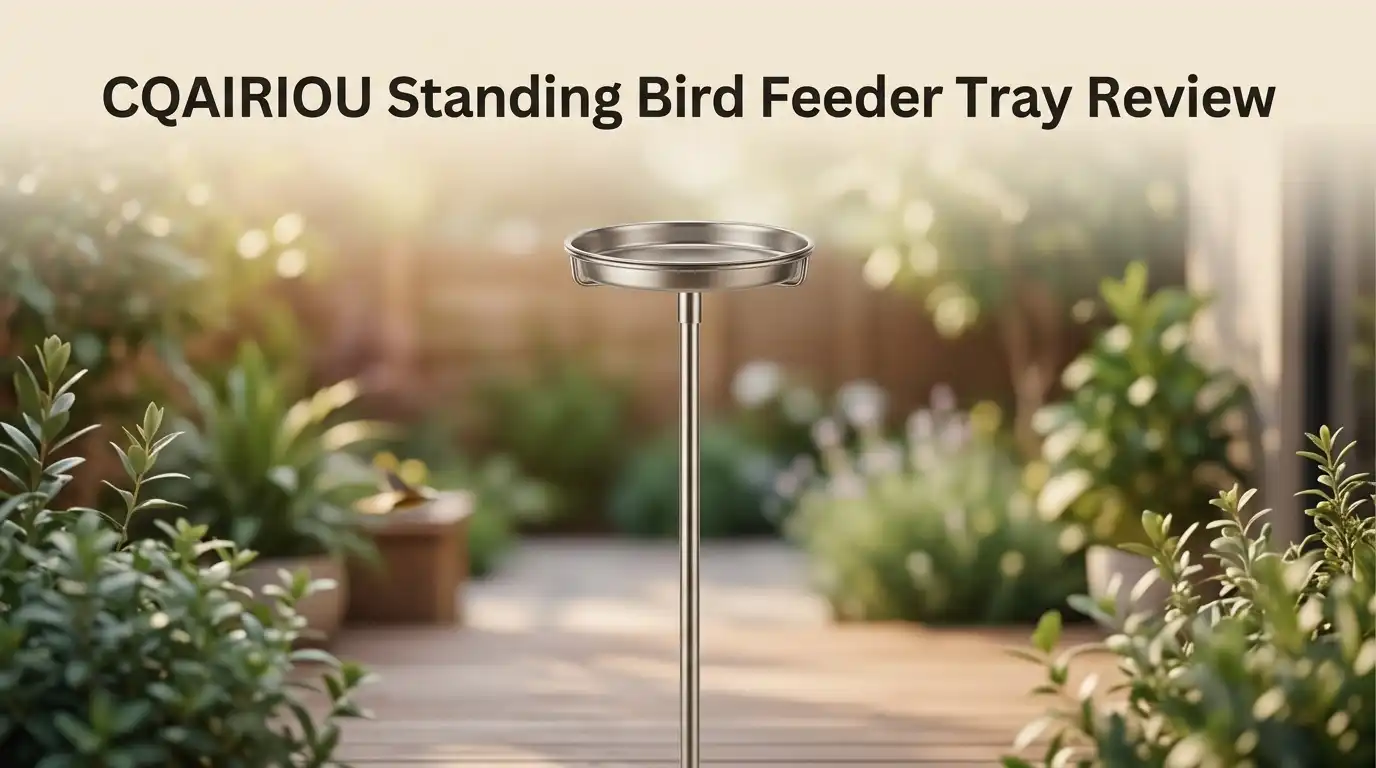
The CQAIRIOU Standing Bird Feeder Tray tries to fix that. It gives you an 11.8 inch open stainless steel platform on a height adjustable pole. No roof, no cages, no tiny perches. Just a wide table for birds.
I have watched this model closely through spring rain, summer heat and a windy autumn. This review covers the unboxing, the assembly, the real bird traffic and the parts that annoyed me. I will also tell you exactly where this feeder falls short, because no feeder is perfect.
In a Nutshell:
- The tray is genuinely large. At 11.8 inches wide, it fits four to six small birds at once. Doves and jays land without knocking each other off. This is the single biggest reason people buy it.
- Three heights give you real flexibility. The pole adjusts to 49 inches, 33.8 inches and 18.9 inches. Tall for songbirds, mid for cardinals, low for ground feeders and even chickens.
- Drainage works well. Dozens of small holes cover the tray floor. Rain passes through in minutes, so seed stays dry and does not turn into a moldy paste.
- Assembly takes about five minutes. The pole sections twist together, the tray drops into the station, and you push the stake into soil. No tools needed.
- It offers zero weather protection. There is no roof and no dome. Seed gets wet during heavy storms, and snow sits right on top of the food.
- Squirrels eat here too. This is an open platform. It welcomes every animal that can climb a pole, so treat it as a shared buffet rather than a squirrel proof feeder.
What Is the CQAIRIOU Standing Bird Feeder Tray?

Last update on 2026-09-03 / Affiliate links / Images from Amazon Product Advertising API Some of the links on this website are affiliate links, which means that at no additional cost to you, I earn a commission if you click through and make a purchase. I only recommend products and services that I believe will add value to my readers. Thank you for your support!
The CQAIRIOU Standing Bird Feeder Tray is a freestanding platform feeder. It has two main parts. The first is a square stainless steel mesh tray measuring 11.8 inches across. The second is a black metal pole with a stake bottom that pushes into the ground.
The tray sits inside a small cradle at the top of the pole. It lifts out completely, which makes refilling and washing very easy. You never need to carry the whole pole to the kitchen sink.
CQAIRIOU builds the pole from a 0.86 inch iron rod. The entire feeder gets a powder coated finish in matte black. The finish looks better in person than in the listing photos. It reads as quiet garden hardware, not cheap painted metal.
Total height reaches 48.8 inches at the tallest setting. The tray footprint measures 11.7 by 11.7 inches. Weight stays light enough to move around your yard with one hand.
The design goal here is simple. Open feeding attracts species that avoid tube feeders and hopper feeders. Ground loving birds like mourning doves, towhees, juncos and sparrows use flat surfaces naturally. A raised tray also keeps seed off wet soil, which lowers mold risk and reduces contact with rodents.
CQAIRIOU sells this same tray in six mounting styles. You can pick hanging, deck rail, ground, wall mount or this standing version. The tray itself stays identical across the range. Only the mounting hardware changes.
Unboxing Experience and First Impressions
The box arrives small and flat, which surprised me for a 49 inch feeder. Amazon ships it in the product packaging, so expect a plain brown carton with product printing on the front. Mine had one dented corner and no damage inside.
Open it up and you find everything nested tightly. The tray sits at the bottom. Above it, three pole sections lie side by side in a molded cardboard tray. A tiny paper instruction sheet slides in along the edge.
First thing I noticed was the weight of the pole sections. They feel dense. The metal does not flex when you squeeze it, and the threaded ends are cleanly cut with no burrs.
The tray impressed me more. It is pressed from a single sheet, so there are no welded joints. Run your finger along the inside rim and you feel a smooth folded edge. Birds have delicate feet, and sharp welds cause injuries, so this detail matters.
The powder coating on my unit was even across all parts. No drips, no bare spots, no scratches. Colors matched perfectly between pole and tray cradle.
One small letdown. The instruction sheet is nearly useless. It shows a single diagram with almost no text. Luckily assembly is obvious enough that you will not need it.
Nothing arrived loose or rattling. No packing peanuts, no plastic clamshells, no wasted material. The whole unboxing takes under a minute, and cleanup means folding one cardboard box.
Build Quality and Material Check
Build quality is where this feeder earns its rating. I have handled plenty of $25 feeders that feel disposable. This one does not.
The tray uses stainless steel. That means the mesh surface resists rust even after months of wet seed sitting on it. My tray still shows no orange spots after a full season outdoors.
The pole is iron with powder coating rather than stainless. This is the weak point of the material choice. Powder coating protects iron well, but any deep scratch exposes bare metal. Once water reaches that spot, rust starts. Keep the pole out of the mower path.
Wall thickness on the pole feels generous. I pressed down hard on the assembled tray with both hands and got no bending. A cat jumping onto the tray would not snap it.
The threaded connections between pole sections tighten firmly by hand. No wobble develops at the joints once you snug them properly. I did need to retighten mine once after two weeks of wind.
The stake tip tapers into a sharp point. It pushes into soft soil with body weight alone. In dry clay or rocky ground, you will need to pre soak the spot or start a hole with a screwdriver.
Overall the metal quality sits above the price bracket. It feels closer to a $45 feeder than a $28 one. That impression matches what most buyers report about sturdiness.
Top 3 Alternative for CQAIRIOU Standing Bird Feeder Tray

Last update on 2026-07-01 / Affiliate links / Images from Amazon Product Advertising API Some of the links on this website are affiliate links, which means that at no additional cost to you, I earn a commission if you click through and make a purchase. I only recommend products and services that I believe will add value to my readers. Thank you for your support!
Kingsyard Ground Bird Feeder with Recycled Poly Lumber

Last update on 2026-09-03 / Affiliate links / Images from Amazon Product Advertising API Some of the links on this website are affiliate links, which means that at no additional cost to you, I earn a commission if you click through and make a purchase. I only recommend products and services that I believe will add value to my readers. Thank you for your support!
iBorn Standing Bird Feeder with 5 Pronged Base


Last update on 2026-10-13 / Affiliate links / Images from Amazon Product Advertising API Some of the links on this website are affiliate links, which means that at no additional cost to you, I earn a commission if you click through and make a purchase. I only recommend products and services that I believe will add value to my readers. Thank you for your support!
MIXXIDEA Ground Bird Feeder Tray
Assembly Guide and Setup Time
Assembly took me four minutes with no tools. Here is how it goes.
Start by laying out the three pole sections. Each one has a male thread on one end and a female thread on the other. Screw them together in any order you like, since the sections are interchangeable.
Next, slide the tray cradle onto the top section. On my unit the cradle came pre attached to the top piece. Check that the cradle arms point upward before you continue.
Drop the tray into the cradle. It seats with a light click and stays put through wind and bird landings. Lifting it out takes a two finger pull.
Now pick your spot and push the stake into the ground. Aim for a level patch with clear sight lines from your window. Press straight down with steady weight rather than hammering, since hammering can bend the pole.
One tip that made a big difference for me. Water the soil the night before. Damp ground swallows the stake easily and then firms up around it as it dries. The feeder ends up noticeably more stable.
Skip the top pole section if you want a shorter setup. That gives you the 33.8 inch height without extra parts. Store the spare section in your shed.
The only awkward step is aligning the threads on the first joint. Tilt the pole slightly and rotate slowly until the threads catch. Forcing them cross threaded will chew the metal.
Three Adjustable Heights and Real Uses
The height range is the feature people underrate. Most standing feeders come at one fixed height. This one offers three, and each one serves a different purpose.
At 49 inches, the tray sits near chest level for most adults. This height keeps seed above tall grass and out of easy reach for cats. Cardinals, blue jays, chickadees and finches all use this setting comfortably. It is also the best height for window viewing.
At 33.8 inches, the tray sits about knee to thigh level. This works well on patios and small balconies. It also brings the tray closer to shrub cover, which shy birds prefer. Juncos and sparrows visited more often at this setting in my yard.
At 18.9 inches, you get a near ground feeder. Mourning doves loved this setting. Towhees and thrashers also feed happily this low. Some owners use this height for chicken feed, duck feed or deliberate squirrel feeding away from other feeders.
Switching heights takes about ninety seconds. Pull the stake, unscrew a section, push the stake back in. No tools, no leftover hardware.
One caution about the low setting. A near ground tray invites cats, raccoons and rodents. If you have outdoor cats nearby, stay at the tallest height and keep the feeder several feet from any launch point.
Drainage Holes and Seed Freshness
Wet seed is the enemy of every platform feeder. Open trays collect rain, and standing water turns sunflower hearts into sour mush within a day. Mold in wet seed can sicken birds.
CQAIRIOU handles this with a fully perforated tray floor. Dozens of small round holes cover the entire base. Water passes straight through instead of pooling in corners.
I tested this after a heavy thunderstorm. The tray drained visibly within ten minutes. By the time the sun came out, the surface was damp but not flooded. Seed on top stayed usable.
Fine seed does sift through those holes, though. Nyjer thistle and cracked millet dust fall to the ground. Stick with larger seed like black oil sunflower, striped sunflower, safflower, peanuts or dried mealworms. Those sit on the mesh perfectly.
The airflow underneath also helps. Because nothing blocks the bottom, breeze moves across the tray and dries residual moisture. A solid bottom tray would stay soaked much longer.
Drainage does not mean weatherproof. Seed still gets wet during rain, and it still needs to dry after. During a multi day storm, I dumped the tray each morning and refilled with a small amount.
That leads to my main seed advice. Fill it with only one or two days of food. Small frequent fills keep seed fresh, cut waste and give you an easy excuse to check on the tray daily.
Birds That Show Up on the Tray
Bird traffic is the real test, and this is where an open tray shines. Within four days of setup, I had regular visitors. Within two weeks, the tray had a queue at sunrise.
Species that came consistently included mourning doves, northern cardinals, house finches, black capped chickadees, tufted titmice, dark eyed juncos and white throated sparrows. Blue jays claimed it first every morning.
The wide surface is the reason. Jays and doves are big birds with long tails. They cannot balance on a tube feeder perch, so they usually feed off the ground. A 11.8 inch platform gives them room to stand flat and eat calmly.
Multiple birds feed together here too. I regularly counted four small birds at once, and occasionally five. Feeder aggression dropped noticeably compared with my tube feeder, because birds were not fighting over two perches.
Buyer reviews back this up. Bird attraction is the single most mentioned positive in customer feedback, with dozens of owners specifically praising how many species arrive.
You can also serve foods that tube feeders cannot handle. Try halved oranges for orioles, suet crumbles, chopped fruit, mealworms, peanuts in the shell or leftover eggshell for calcium. The flat tray takes all of it.
One realistic note. Bird arrival depends on your yard, not the feeder. If you have no nearby cover, expect slower traffic. Place the tray within ten feet of a shrub or small tree so birds feel safe.
Cleaning and Maintenance Routine
Cleaning is a duty, not an option. Dirty feeders spread salmonella, avian pox and conjunctivitis between birds. Platform feeders need more cleaning than tube feeders because droppings land directly in the food.
The removable tray makes this painless. Lift it out with two fingers and carry it to a hose or sink. You never wrestle with a pole or unscrew anything.
My routine looks like this. Every two or three days, I tip out old seed, shells and debris. Every week or two, I do a real wash with hot water, dish soap and a stiff brush.
Once a month, I soak the tray in a nine to one water and bleach solution for about ten minutes. Then I rinse thoroughly and dry it fully in the sun before refilling. Never put damp seed into a damp tray.
Stainless steel handles all of this without complaint. No rust, no staining, no coating peel on the tray after repeated bleach soaks.
The pole needs almost nothing. Wipe droppings off the cradle when you clean the tray. Check the pole joints for looseness every few weeks and hand tighten as needed.
One honest annoyance. Shells and husks build up fast on an open tray. You will see mess sooner than with a covered feeder, and you will clean more often. Budget five minutes twice a week and it stays under control.
Squirrels, Cats and Other Visitors
Let us be direct. This is not a squirrel proof feeder. It has no cage, no baffle and no weight activated mechanism. An open tray on a pole is an open invitation.
Squirrels reach the tray in three ways. They climb the pole directly, they jump from nearby fences or branches, or they simply stand up and reach it at the low height setting.
Interestingly, several owners report the opposite outcome. The smooth powder coated pole gives squirrels poor grip, and some units sit high enough that repeat climbing fails. One reviewer specifically noted it solved their critter problem.
My experience landed in the middle. Squirrels visited daily, but they could not stay long. The tray tips slightly under a squirrel’s weight, which spooks them off after a minute or two.
Want to reduce squirrel access? Add a pole baffle below the tray. Place the feeder at least ten feet from any fence, tree trunk or roof edge. Use safflower seed, which most squirrels dislike and cardinals love.
Cats deserve a word too. A low tray next to a bush creates an ambush spot. Keep the feeder at 49 inches and place it in open sight lines if outdoor cats roam your area.
Raccoons will empty the tray overnight. If raccoons visit your yard, bring the tray inside at dusk. That is the honest solution, and the removable tray makes it a five second job.
Weather Testing Through Rain, Wind and Snow
Outdoor gear lives or dies by weather. Here is how this feeder held up across conditions.
Rain performance was good but not great. Drainage cleared water quickly, so no puddles formed. However, seed got soaked during every storm. There is no roof, so you will dump and refill after heavy rain.
Wind was better than I expected. At the tallest setting in a 30 mile per hour gust, the pole swayed slightly but never tipped. Sinking the stake deep and choosing firm soil makes a big difference. Multiple owners specifically praise that it has never tipped over.
Sun exposure caused no damage. The powder coating showed no fading after months of direct summer sun. Stainless steel does get hot to the touch, though. I moved mine to partial shade during a heat wave.
Snow is the toughest test. Snow lands directly in the tray and buries the seed. You must brush it out by hand, sometimes twice a day during heavy snowfall.
Freezing rain creates an ice crust on the mesh. Warm water clears it fast. The metal handles freeze and thaw cycles without cracking or coating loss.
My overall weather verdict is straightforward. The materials survive anything. The design does not protect the food. If you live somewhere with constant rain or heavy winter snow, plan on adding a separate hanging dome above the tray or accept daily maintenance.
Pros and Cons of the CQAIRIOU Standing Bird Feeder Tray
Here is the honest balance sheet after months of use.
Pros
- Large 11.8 inch platform fits several birds at once and welcomes doves, jays and cardinals that avoid tube feeders.
- Three height settings at 49, 33.8 and 18.9 inches let you serve songbirds, ground feeders or even poultry from one product.
- Stainless steel tray resists rust through wet seed, bleach soaks and full seasons outdoors with no orange spotting.
- Non welded single piece tray has smooth folded edges that protect bird feet from cuts.
- Removable tray design makes refilling, dumping and deep cleaning genuinely fast.
- Excellent drainage through dozens of holes clears rainwater within minutes.
- Tool free assembly takes under five minutes and needs no hardware.
- Stable in wind thanks to a thick 0.86 inch pole and a deep stake.
- Strong value at roughly $28.97 with build quality above the price bracket.
Cons
- No roof or weather cover, so seed gets wet in rain and buried in snow.
- Zero squirrel protection, since an open tray on a pole has no barrier at all.
- Fine seed falls through the drainage holes, which rules out nyjer and fine millet.
- Powder coated iron pole can rust if the finish gets scratched.
- Needs frequent cleaning because droppings and shells collect on the open surface.
- Stake struggles in hard soil, requiring pre soaking or a starter hole.
- Instruction sheet is barely useful, though assembly is simple enough anyway.
- No seed capacity rating, so overfilling wastes food during wet weather.
What This Feeder Does Not Do Well
Every review should name the failures clearly. Here are the four things this feeder simply does not do.
It does not keep food dry. This is the biggest limitation. An open platform with no roof will always lose seed to rain. If you want dry seed through a storm without touching it, buy a covered hopper feeder or a tray with a dome.
It does not deter squirrels. Any product marketing that hints otherwise is optimistic. The pole is slippery and the tray tips a little, which discourages long visits, but a determined squirrel gets fed. Pair it with a separate pole baffle if squirrels frustrate you.
It does not hold small seed. The drainage holes that keep seed dry also let fine seed escape. Nyjer, canary seed and fine millet dust drop through to the ground. Stick to larger seeds and you avoid this entirely.
It does not stay clean by itself. Open feeders show mess. Shells pile up, droppings land in the food, and rain makes a paste at the bottom. Skipping cleaning for two weeks creates a genuine bird health risk, not just an ugly tray.
Two smaller gripes deserve mention. The stake needs soft soil, so hard clay owners will struggle. The tray also lacks any seed capacity spec, which makes portion planning guesswork at first.
None of these flaws are defects. They are the honest tradeoffs of open tray feeding. Knowing them upfront is what separates a happy buyer from a disappointed one.
Price, Value and Final Verdict
Last update on 2026-09-03 / Affiliate links / Images from Amazon Product Advertising API Some of the links on this website are affiliate links, which means that at no additional cost to you, I earn a commission if you click through and make a purchase. I only recommend products and services that I believe will add value to my readers. Thank you for your support!
At around $28.97, this feeder sits in the middle of the platform feeder market. Basic mesh trays without stands cost $12 to $15. Poly lumber platform feeders with roofs run $35 to $60. Premium pole systems climb past $80.
For that middle price you get a stainless steel tray, a thick iron pole, powder coating, three height settings and tool free assembly. That package genuinely undercuts what similar builds usually cost.
Customer sentiment supports the value case. The listing holds 4.5 stars across roughly 127 ratings, with hundreds of units selling monthly. Buyers most often praise bird attraction, sturdiness, easy assembly, drainage and value for money.
So who should buy it? Buy this feeder if you want to attract ground feeding birds, if you like watching several birds eat at once, if you enjoy offering fruit and mealworms, or if you need one feeder that adjusts to different heights and animals.
Who should skip it? Skip it if you live in a rainy or snowy region and cannot check the feeder daily. Skip it if squirrels already ruin your yard. Skip it if you feed nyjer for finches. Skip it if you want a set and forget feeder you fill once a week.
My verdict is a clear yes with conditions. This is a well built, well priced open platform feeder that does exactly what it claims. It brings in more species than any tube feeder I own. It just asks for five minutes of attention every couple of days in return.
Frequently Asked Questions
How tall is the CQAIRIOU Standing Bird Feeder Tray?
The pole offers three heights. The tallest setting reaches about 49 inches, the middle setting reaches 33.8 inches, and the lowest setting reaches 18.9 inches. Total assembled product height measures 48.8 inches at the tallest configuration, with an 11.7 by 11.7 inch tray footprint.
Is the tray really stainless steel?
Yes, the tray itself is stainless steel pressed from a single sheet. The stand pole is iron with a powder coated finish rather than stainless. That means the tray resists rust reliably, while the pole depends on the coating staying intact.
What seed works best in this feeder?
Black oil sunflower seed, striped sunflower, safflower, peanuts, dried mealworms, suet crumbles and chopped fruit all work well. Avoid nyjer thistle and fine millet, because those small seeds fall through the drainage holes.
Will squirrels get into it?
Most likely yes. This is a fully open platform with no cage or baffle. The slick pole and slight tray movement discourage long visits, and some owners report squirrels giving up, but plan on sharing. Add a pole baffle and use safflower seed to reduce squirrel interest.
How often should I clean it?
Empty debris every two or three days. Wash with hot soapy water weekly or biweekly. Disinfect monthly with a nine to one water and bleach solution, rinse well, and dry completely before refilling. Open trays collect droppings, so regular cleaning protects bird health.
Does it work on a patio or balcony?
Yes, but not on hard surfaces without help. The stake needs soil. On a patio, push it into a heavy planter filled with soil or gravel. CQAIRIOU also sells the same tray in deck rail, hanging and wall mount versions if you need a non stake option.
Does the seed stay dry in the rain?
The tray drains fast, so water does not pool. The seed still gets wet, though, because there is no roof. Fill only one or two days of seed at a time and dump the tray after heavy rain to prevent mold.
How long does assembly take?
About four to five minutes with no tools. Screw the three pole sections together, drop the tray into its cradle, and press the stake into damp soil. Watering the ground the night before makes stake installation much easier.

Hello, I’m Emily Price, the founder of Birds Affection. As a passionate bird enthusiast and spiritual seeker, I’ve always been fascinated by the symbolic meanings and mystical connections between birds and our lives. On this website, I share my knowledge and insights on the spiritual significance of various bird species, exploring their roles as messengers, guides, and teachers. Through my writing, I aim to inspire and educate others on the profound wisdom and beauty that birds bring to our world. Join me on this journey as we delve into the enchanting realm of bird symbolism and discover the hidden meanings behind these magnificent creatures.