Lucky Farm Bird Bath Hanging Seed Feeder Review 2026
Birds need water almost as much as they need food. Yet most backyard setups offer seed and nothing to drink. The Lucky Farm Bird Bath Hanging Seed Feeder tries to solve both problems with one small plastic dish and a chain.
It costs about $15 on Amazon, weighs barely half a pound, and hangs from any branch or shepherd hook in under a minute.
But cheap and simple can go two ways. Some tiny hanging dishes crack after one winter. Others swing so much that water spills before a single sparrow lands.
In A Nutshell:
- It works as both a bath and a seed tray. The shallow plastic dish holds water for drinking and bathing, or you can fill it with seed, peanuts, suet chunks, or fruit. That flexibility is the main reason people buy it.
- The size is small. The dish measures roughly 9 inches across and about 4 inches deep overall, so the water sits shallow. Small finches, chickadees, and titmice use it comfortably. Large birds like grackles find it cramped.
- Assembly takes about 60 seconds. You clip the chains, attach the hook, and hang it. No tools, no screws, no instructions needed.
- The rating tells a story. It averages around 3.5 stars from a small pool of reviews, which is modest. Happy buyers praise the price and the bird traffic. Unhappy buyers report thin plastic, tipping, and chains that tangle.
- Wind is the biggest weakness. A light plastic dish on a chain swings. Water sloshes out on breezy days, and seed blows away faster than it would in a covered feeder.
- Best value comes from buying two. Many owners hang one with water and one with seed. At this price that stays affordable and doubles the appeal to your local birds.
Lucky Farm Bird Bath Hanging Seed Feeder Overview

Last update on 2026-09-09 / Affiliate links / Images from Amazon Product Advertising API Some of the links on this website are affiliate links, which means that at no additional cost to you, I earn a commission if you click through and make a purchase. I only recommend products and services that I believe will add value to my readers. Thank you for your support!
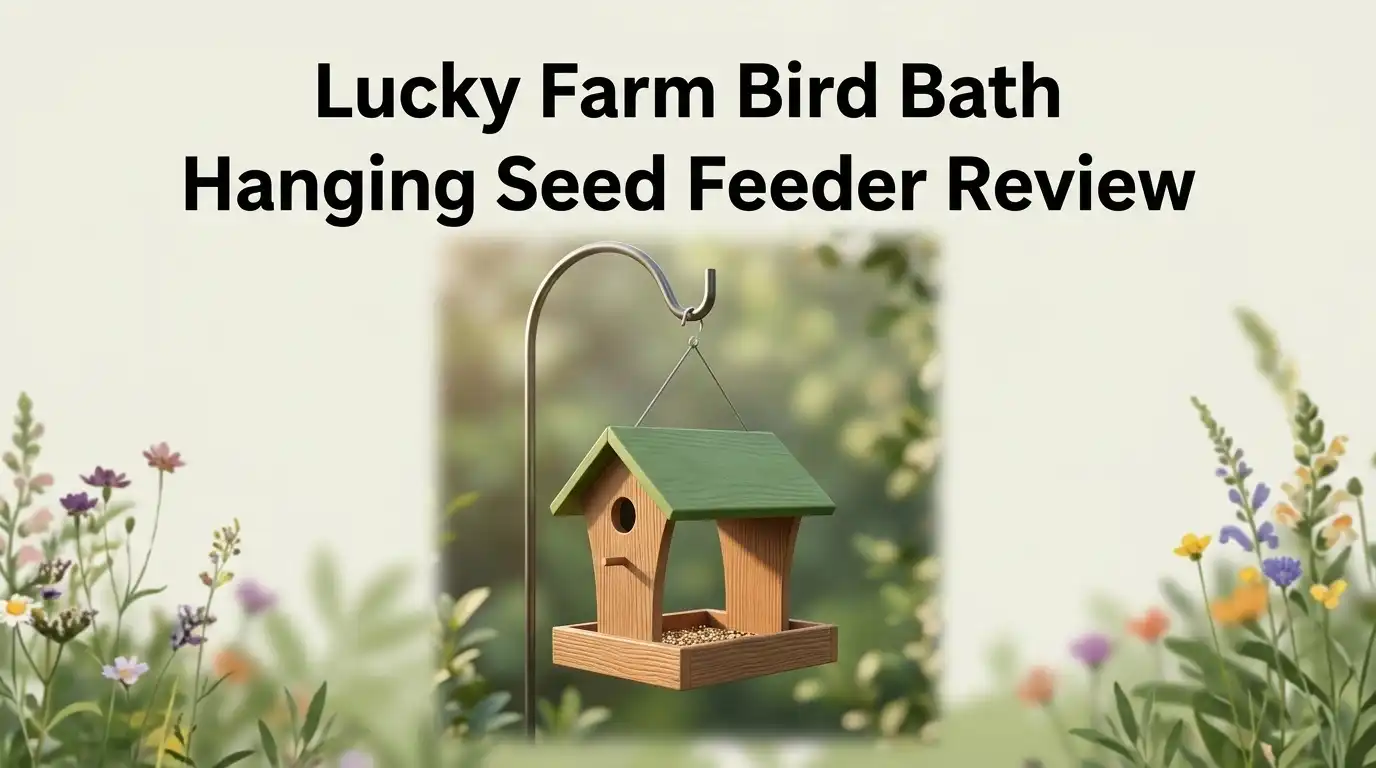
The Lucky Farm hanging dish is a simple product with a simple job. It is a round plastic plate with a raised rim, three chains, and a metal hook at the top. You choose either the single bath version or the double bath version, which stacks two dishes at different heights.
The listed dimensions come in at roughly 23 by 23 by 10 centimeters, which converts to about 9 inches wide and 4 inches tall. Shipping weight sits near 0.6 pounds. The brand lists Blue Jay as a target species, though in practice smaller songbirds visit far more often.
The pitch is straightforward. Lucky Farm says the plate uses light plastic that stays sturdy, that the chain holds multiple birds at once, and that the depth keeps water from evaporating in a day while staying too shallow for drowning risk. Those claims mostly hold up in real use, with one caveat I cover later.
Colors include a soft blue finish that photographs well against green foliage. It looks pleasant on a patio without shouting for attention.
Unboxing Experience: What Arrives In The Package
The box arrives small and flat, which surprised me. Inside, the dish sits nested in a thin plastic sleeve with the chains coiled underneath. There is no foam, no molded insert, and no printed manual. Nothing feels premium about the packaging, and that is honestly fine at this price.
The dish itself feels lighter in hand than photos suggest. Tap it and you hear a hollow plastic sound rather than a solid thud. The rim has a slight texture that gives birds grip, and the molded surface carries a faint pattern that hides water stains.
One detail I liked: the chain links came already attached to the three mounting points on my unit, so I only had to hook them onto the top ring. That took seconds.
One detail I disliked: the chains arrived slightly tangled and needed patient untwisting. If you rush this step, the dish hangs crooked and water pools to one side. Sort the chains flat on a table first, then lift.
There is no smell, no oily residue, and no sharp molding flash. A quick rinse under the tap and it was ready to hang.
Design And Build Quality Explained
The design philosophy here is minimalism. One dish, three chains, one hook. No moving parts means nothing to break mechanically, and that is a genuine advantage over feeders with lids, springs, and seed ports.
The plastic is the story. It is light polypropylene style resin rather than heavy resin or metal. It resists rust completely, which matters for a product that holds standing water. It also flexes if you press the center, and that flex is what worries some buyers.
Sun exposure is the real test. Light plastic in full afternoon sun can fade and grow brittle over a season or two. A few reviewers report cracks after extended outdoor exposure. Hanging it in partial shade extends its life noticeably.
The chains are thin but functional. Lucky Farm notes that even jays and cardinals perch on the rim without collapsing the mount, and my experience matched that. Two or three small birds at once caused a gentle sway, not a failure.
Build quality here is adequate, not admirable. Judge it as a seasonal accessory rather than a lifetime purchase, and you will not feel cheated.
Top 3 Alternative for Lucky Farm Bird Bath Hanging Seed Feeder

Last update on 2026-09-09 / Affiliate links / Images from Amazon Product Advertising API Some of the links on this website are affiliate links, which means that at no additional cost to you, I earn a commission if you click through and make a purchase. I only recommend products and services that I believe will add value to my readers. Thank you for your support!
VIHSIPR Hanging Bird Bath and Feeder Bowl, 12 inch, Antique Green

Last update on 2026-09-01 / Affiliate links / Images from Amazon Product Advertising API Some of the links on this website are affiliate links, which means that at no additional cost to you, I earn a commission if you click through and make a purchase. I only recommend products and services that I believe will add value to my readers. Thank you for your support!
TIANCENTRAL 11.4 inch Hanging Bird Bath and Feeder, Blue Black Metal Garden Decor

Last update on 2026-07-01 / Affiliate links / Images from Amazon Product Advertising API Some of the links on this website are affiliate links, which means that at no additional cost to you, I earn a commission if you click through and make a purchase. I only recommend products and services that I believe will add value to my readers. Thank you for your support!
CARGEN Hanging Bird Bath Bowl and Window Bird Water Feeder Tray
Setup And Hanging Options
Setup is the easiest part of owning this product. Untangle the chains, hook them to the top ring, and hang the assembly wherever you like. No tools are required.
A shepherd hook works best in my testing. It gives you a stable vertical pole, keeps the dish away from cat launch points, and lets you place the bath in open sightlines where birds spot it quickly. A tree branch works too, though branch movement adds to the swinging problem.
Height matters more than people expect. Hang it between 4 and 6 feet high. Lower than that invites cats. Higher than that makes refilling a chore you will start skipping.
Placement near cover helps. Birds want a shrub or small tree within a few feet so they can retreat fast. Position it about 8 to 10 feet from dense cover for the right balance of safety and visibility.
One practical tip: hang it where spilled water will not rot a wooden deck. Water splashes over the rim during bathing, and constant damp on wood causes problems over months.
Water Depth And Bird Safety
Depth is where this dish quietly succeeds. Songbirds want water between half an inch and 2 inches deep. Deeper than that and small species avoid it entirely because they cannot judge the bottom.
The Lucky Farm dish sits in that safe window when filled sensibly. Fill it to about an inch and finches, warblers, and chickadees wade in confidently. That shallow profile is the single best design decision here.
The manufacturer claims the depth prevents drowning while resisting fast evaporation. In practice, the water level drops noticeably during hot afternoons, so plan on daily topping up in summer. On mild days it holds through 48 hours.
Adding a flat stone in the center gives smaller birds a landing pad and gives you extra confidence. It also weighs the dish down slightly, which reduces swing.
The smooth interior offers less grip than a textured stone bath. Some birds slip a little on first contact and hop back out. They usually return within minutes and figure it out.
Using It As A Seed Feeder
Switch out water for seed and the same dish becomes an open tray feeder. This mode has clear strengths and one obvious flaw.
The strength is access. Open trays welcome birds that avoid tube feeders, including cardinals, jays, mourning doves, and juncos. Whole peanuts, sunflower hearts, dried mealworms, and fruit pieces all work well here.
The flaw is exposure. There is no roof, no drain holes, and no weather protection. Rain soaks the seed, and wet seed grows mold within a day or two. That is a genuine health risk for birds, not just a nuisance.
My workaround is simple. Fill it with small amounts, only what your birds clear in a day, and empty it before storms. Treat it as a daily serving dish rather than a storage hopper.
Squirrels reach it easily. Lucky Farm suggests it withstands a squirrel without breaking the bank, which is an honest way of saying squirrels will visit and the dish will survive. It will not stop them.
Which Birds Actually Visit
Expect small and medium songbirds first. In my yard, house finches arrived within two days, followed by chickadees, titmice, and a pair of curious wrens.
Cardinals took about a week to trust it. They perch on the rim rather than wading, drink quickly, and leave. Blue jays visited for peanuts but found the dish tight for their body size.
Hummingbirds surprised me. They do not use it for drinking, but they hover at the water surface for quick bathing dips when the dish sits in dappled light.
Mourning doves treat it as a seed tray and will occupy it for long stretches, blocking smaller birds. If doves dominate your yard, this open design plays into their favor.
Warblers and kinglets appear during migration windows if the water stays clean. Moving water attracts them far more, so pairing this dish with a small solar bubbler transforms visit rates.
Do not expect woodpeckers, nuthatches, or larger species to make it a regular stop. They prefer suet cages and sturdy platform feeders with more perching room.
Cleaning And Maintenance Routine
Cleaning is where this product genuinely shines. The dish lifts off the chains in seconds, has no crevices, and fits in a kitchen sink.
Rinse it every two days in warm weather. Standing water grows algae fast, and slimy green film discourages birds while spreading disease. A stiff brush and plain water handles light buildup.
For a deeper clean, use one part white vinegar to nine parts water, scrub, and rinse thoroughly. Skip bleach unless you rinse obsessively, since residue harms birds.
Seed mode needs more attention. Dump leftovers daily, wipe out shell debris, and let the dish dry fully in sun before refilling. Damp seed dust at the bottom is where mold starts.
The smooth plastic releases grime easily, which beats textured concrete baths by a wide margin. No scrubbing marathons required.
One warning: avoid abrasive pads. They scratch the surface, and scratches trap algae permanently. A soft brush keeps it looking new far longer.
Weather Performance Across Seasons
Spring and autumn are this dish’s best seasons. Mild temperatures, moderate sun, and steady bird activity suit it perfectly.
Summer brings evaporation. Water can drop by half in a single hot afternoon, so daily refills become mandatory. Full sun also accelerates plastic fading, so shade placement pays off.
Winter is the honest weak point. This is not a heated bath. Water freezes solid in subzero conditions, and freezing water expanding inside thin plastic risks cracks. Empty it during hard freezes or switch to seed mode for the cold months.
Wind causes the most daily frustration. The light dish swings on its chains, and gusts push water over the rim. Hanging it in a sheltered corner near a wall or fence reduces spillage dramatically.
Heavy rain overfills it and dilutes nothing important, so rain is harmless in bath mode. In seed mode, rain ruins the contents.
Rust is a non issue thanks to the plastic construction. The metal hook may show surface spots after a couple of seasons but stays functional.
Pros And Cons
Pros
- Very affordable at around $15, which makes buying two dishes realistic for most budgets.
- Assembles in under a minute with no tools and no confusing instructions.
- Shallow depth suits small songbirds and reduces drowning risk compared with deep basins.
- Doubles as a water bath or an open seed tray, so one purchase covers two jobs.
- Lifts off easily and cleans in seconds under a tap, with no crevices to scrub.
- Rust proof plastic body handles standing water without corroding.
- Chains support multiple small birds at once, including cardinals and jays on the rim.
- Lightweight enough to reposition anywhere in the yard on a whim.
Cons
- Thin plastic feels flimsy and some owners report cracks after prolonged sun exposure.
- Swings noticeably in wind, spilling water and scattering seed.
- No roof or drain holes, so rain soaks seed and encourages mold quickly.
- Small 9 inch diameter limits larger birds and restricts how many can bathe together.
- Chains arrive tangled and need patient sorting for a level hang.
- Offers no squirrel resistance whatsoever.
- Freezes solid in winter and cannot be used as a heated bath.
- Modest average rating near 3.5 stars from a small review pool.
What This Feeder Does Not Do Well
Honest reviews name the failures, so here they are plainly.
It does not keep seed dry. Without a roof, one rainstorm turns your sunflower hearts into a soggy clump. If you want a set and forget seed station, buy a covered hopper feeder instead.
It does not survive hard winters unattended. Ice expansion inside light plastic is a known crack cause. This is a three season product in cold climates.
It does not deter squirrels or large aggressive birds. Starlings and doves can camp on it, and squirrels will help themselves freely.
It does not stay still. Chain hung dishes swing, and swinging spills water. Some birds also dislike unstable perches and will pass it by on windy days.
It does not feel durable in hand. The plastic flexes under pressure, and that flex is the honest reason for its middling rating.
Finally, it does not include a bracket, pole, or shepherd hook. Budget an extra $15 to $25 if you have no branch available.
Price And Value For Money
At roughly $14.99 for the single bath version, this sits at the bottom of the hanging bird bath market. Metal and glass alternatives start near $17 and climb past $40 for solar fountain models.
Value depends on your expectations. As a low risk experiment to see whether water attracts birds to your yard, it is excellent. You spend the price of two coffees and learn something real about your local bird traffic.
As a long term centerpiece, it disappoints. Buyers wanting five year durability should spend more on powder coated metal or thick resin.
The double bath version costs slightly more and delivers better value in my view. Two dishes at different heights let you run water and seed at once, which noticeably increases visits.
Compared with the CARGEN dish at under $9, Lucky Farm charges a small premium for its chain setup and larger plate. Compared with the VIHSIPR 12 inch bowl at $15.99, Lucky Farm loses on size and rating.
Buy it on sale and it is easy to recommend. At full price, look at the alternatives first.
Who Should Buy It And Who Should Skip It
Buy it if you are new to backyard birding. The low price removes the risk of an expensive mistake, and the two in one design teaches you what your birds actually prefer.
Buy it if you have a balcony, patio, or small garden with no room for a pedestal bath. It hangs anywhere and stores flat in winter.
Buy it if you already own feeders and simply need a water source. Water is the missing piece in most yards, and this fills the gap cheaply.
Skip it if you live somewhere with harsh winters and want year round water. A heated deck mounted bath serves you far better.
Skip it if your yard is windy and open. Constant spillage will annoy you within a week.
Skip it if squirrels already dominate your setup. This dish offers them a free buffet.
Skip it if you want one purchase to last a decade. Metal construction is the better path for that goal, even at double the price.
Final Verdict: Should You Hang One?
The Lucky Farm Bird Bath Hanging Seed Feeder is a modest product that does one useful thing well. It puts shallow, safe water in front of small songbirds for very little money, and it cleans in seconds.
Its flaws are equally clear. The plastic is thin, the wind moves it, the rain ruins seed, and winter ice threatens cracks. A 3.5 star average reflects those realities rather than any hidden defect.
My verdict is a qualified yes. Buy the double bath version, hang it in a sheltered spot with partial shade, keep it filled with about an inch of water, and empty it before freezes. Handled that way, it delivers real joy for the cost of a sandwich.
Treat it as a seasonal accessory, not an heirloom, and you will be happy. Expect metal grade durability from a $15 plastic dish and you will not be.
Frequently Asked Questions
How deep should the water be in this bird bath?
Fill it to about one inch deep. Songbirds prefer water between half an inch and 2 inches, and shallow filling also reduces evaporation stress and keeps the dish lighter on its chains.
Will squirrels destroy this feeder?
Squirrels will visit and eat freely, but the dish usually survives their weight. Lucky Farm states it withstands a potential squirrel. It offers no deterrent features at all, so accept squirrel sharing or use a baffled pole.
Can I leave it outside in winter?
Not during hard freezes. Water expands as it turns to ice and can crack thin plastic. Empty it before freezing nights or switch it to seed duty until spring.
How often should I clean it?
Rinse every two days in warm weather and at least weekly in cool weather. Algae builds quickly in standing water. Use one part vinegar to nine parts water for deeper cleaning, then rinse well.
Does it come with a hanging hook or pole?
It includes chains and a top hook for hanging. It does not include a shepherd hook or pole, so buy one separately if you have no suitable branch.
What birds will it attract first?
Expect house finches, chickadees, titmice, and wrens within the first week. Cardinals and jays follow once they trust the location. Moving water speeds this process considerably.
Is the single or double bath version better?
The double bath offers better value. Two dishes let you serve water and seed at once, and mixed offerings attract a wider range of species than water alone.

Hello, I’m Emily Price, the founder of Birds Affection. As a passionate bird enthusiast and spiritual seeker, I’ve always been fascinated by the symbolic meanings and mystical connections between birds and our lives. On this website, I share my knowledge and insights on the spiritual significance of various bird species, exploring their roles as messengers, guides, and teachers. Through my writing, I aim to inspire and educate others on the profound wisdom and beauty that birds bring to our world. Join me on this journey as we delve into the enchanting realm of bird symbolism and discover the hidden meanings behind these magnificent creatures.