ROLUXENTIA Wild Bird Feeder Tray Review 2026: Worth Hanging?
Bird feeding looks simple until you buy the wrong feeder. Tube feeders clog. Plastic hoppers crack after one winter. Seed gets wet, turns into a moldy brick, and the birds stop visiting.
So the open tray style keeps growing in popularity, and the ROLUXENTIA Wild Bird Feeder Tray sits right in the middle of that trend.
This feeder promises a lot for a small price. It uses a 7 inch steel dish, a fine mesh base, and three chains that meet at a hanging hook. The listing claims it holds up to 3 pounds of seed. It carries a 4.5 star average rating from a small pool of buyers, which is promising but not a huge sample.
Key Takeaways:
- The mesh base is the best feature. Rain drains through fast, so seed dries instead of rotting. This single design choice solves the biggest problem with solid bottom trays and cheap plastic feeders.
- Value is strong for the price. You get powder coated steel, a mesh platform, and three hanging chains for the cost of a bag of premium seed. Very few metal feeders land in this range.
- The 7 inch size is small. It fits two to four small birds at once. Cardinals, jays, and doves crowd it quickly. Larger yards with heavy traffic will want an 11 inch tray instead.
- The 3 pound capacity claim is generous. In practice you fill it with about 1 to 2 cups of seed before it looks heaped and starts spilling. Treat the number as a maximum, not a target.
- Squirrels win. This is an open tray with no baffle and no cage. Squirrels, grackles, and starlings all get free access, and they empty it fast.
- Cleaning takes two minutes. Rinse, brush, dry. That ease matters more than most buyers expect, because dirty feeders spread disease.
What Is the ROLUXENTIA Wild Bird Feeder Tray?

Last update on 2026-09-09 / Affiliate links / Images from Amazon Product Advertising API Some of the links on this website are affiliate links, which means that at no additional cost to you, I earn a commission if you click through and make a purchase. I only recommend products and services that I believe will add value to my readers. Thank you for your support!
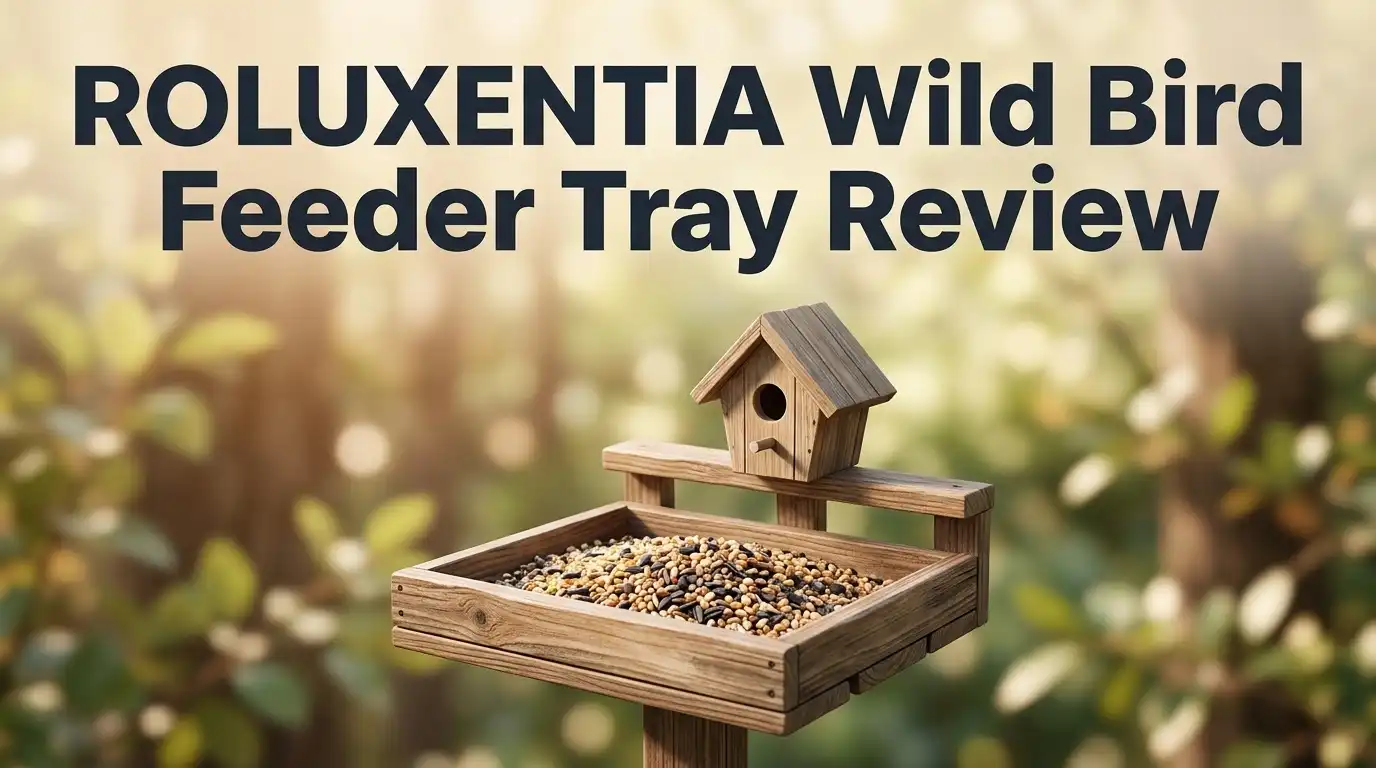
The ROLUXENTIA Wild Bird Feeder Tray is an open platform feeder. It has no roof, no tube, and no ports. Birds land on the rim or directly on the mesh floor and eat straight from the pile. That open format is the whole point.
The dish measures about 7 inches across. The frame uses alloy steel with a dark powder coat finish. A fine metal mesh forms the floor of the tray, and a raised lip runs around the edge to slow seed from rolling out. Three thin chains clip to the rim and join at a single ring for hanging.
The brand markets it as a gift item, which explains the packaging and the simple presentation. ROLUXENTIA itself is a generic marketplace brand that sells a wide mix of products, from kitchen tools to training balls. That is worth knowing. You are not buying from a dedicated wild bird company with decades of design history. You are buying a decent commodity feeder at a low price.
Target species listed by the seller include cardinals, but the real answer is broader. Any bird willing to perch on an open edge will use it. That includes chickadees, finches, titmice, juncos, sparrows, nuthatches, and bluebirds if you offer mealworms.
Recommended fill types cover seed, and the mesh also handles suet nuggets and dried worms without dropping them through.
Unboxing Experience and First Impressions
The box arrives small and light. Mine came in a plain brown carton with the feeder wrapped in a thin plastic sleeve and a folded card of foam padding under the tray. No fancy printing. No branded insert. It feels like a marketplace product, not a gift shop product, which slightly undercuts the gift angle in the listing.
Inside you find three pieces total: the tray, the chain assembly, and the S shaped hanging hook. The chains often come attached already. Mine arrived clipped to two of the three rim loops, so I only had to snap on the third. That took about ten seconds.
First impression of the metal is positive. The powder coat is even, with no bare patches or drips. The mesh feels tight and springs back when you press it with a thumb. The rim is smooth to the touch, with no sharp burrs, which matters because you handle that edge every time you refill.
First impression of the chains is less positive. They are thin. The links are light gauge and the connectors are simple split rings. They hold the weight fine, but they look and feel like the cheapest part of the build.
There is no instruction sheet, and none is needed. Total setup time from box to hanging feeder ran under two minutes for me.
Build Quality and Materials Tested
Steel is the reason to choose this tray over a plastic one. The frame resists chewing, cracking, and sun damage. Squirrels can strip a plastic feeder in a season. They cannot do that here, even though they will still eat the food.
The powder coat did its job through several weeks of rain and sun. I saw no bubbling and no flaking on the frame. Small rust spots did appear on the mesh weld points after repeated soakings, which is common on budget feeders. A quick dry after washing slows that down noticeably.
The mesh is the part I watched hardest. Fine mesh can sag under a wet seed load. This one held its shape. Push down on it and it flexes, then returns. Over a long season I would expect a slight dish in the center, which is cosmetic rather than functional.
Weight is very low. The whole feeder weighs little more than a coffee mug. That helps with hanging on light branches, but it also means wind moves the tray around, and seed sometimes tips off the edge in a gust.
The chain connections are the weak link, literally. Split rings can work open over time if the feeder swings hard. I added a small carabiner at the top ring for peace of mind, and I would suggest the same to anyone in a windy spot.
Top 3 Alternative for ROLUXENTIA Wild Bird Feeder Tray
If the 7 inch size feels too small or you want a heavier build, these three feeders solve those exact problems. Each one takes a different approach to the same open tray concept.

Last update on 2026-09-09 / Affiliate links / Images from Amazon Product Advertising API Some of the links on this website are affiliate links, which means that at no additional cost to you, I earn a commission if you click through and make a purchase. I only recommend products and services that I believe will add value to my readers. Thank you for your support!
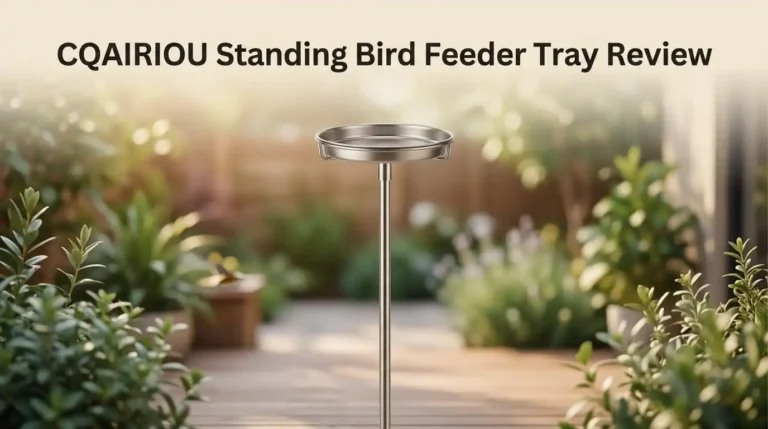
CQAIRIOU Premium Hanging Bird Feeder Tray

Last update on 2026-07-01 / Affiliate links / Images from Amazon Product Advertising API Some of the links on this website are affiliate links, which means that at no additional cost to you, I earn a commission if you click through and make a purchase. I only recommend products and services that I believe will add value to my readers. Thank you for your support!
Kingsyard Platform Bird Feeder for Outdoors

Last update on 2026-08-13 / Affiliate links / Images from Amazon Product Advertising API Some of the links on this website are affiliate links, which means that at no additional cost to you, I earn a commission if you click through and make a purchase. I only recommend products and services that I believe will add value to my readers. Thank you for your support!
Hanging Bird Feeder Tray Platform Metal Mesh Seed Feeder
Setup, Hanging, and Placement Tips
Setup is the easiest part of owning this feeder. Clip the chains, hook the ring, hang it. There are no screws, no tools, and no assembly steps that can go wrong.
Placement matters far more than setup. Hang the tray about 5 to 6 feet off the ground so you can reach it for refills without a ladder. Higher looks nice but turns every refill into a chore, and refills happen often with an open tray.
Distance from cover is the next choice. Birds want an escape route within about 10 feet, such as a shrub or low branch. Place it too far into open lawn and shy species like chickadees will hesitate. Place it directly against dense cover and cats gain an ambush spot.
Window distance is a safety issue, not a preference. Either keep the feeder within 3 feet of glass or beyond 30 feet from it. Those two zones cut collision deaths dramatically.
A shepherd hook works well here because the light weight will not bend the pole. A tree branch works too, though squirrels reach it instantly. I got the best results hanging it under the edge of a pergola, which gave partial rain cover while keeping the tray open.
Avoid hanging it directly above a patio table. Open trays scatter shells, and cleanup gets old fast.
Which Birds Actually Visit This Feeder
Open trays attract the widest species list of any feeder type, and that showed up quickly in my yard. Within two days I had house finches. Within a week the list grew a lot.
Regular visitors included cardinals, mourning doves, house finches, chickadees, tufted titmice, white breasted nuthatches, and song sparrows. Blue jays showed up for peanuts and cleared the tray in one visit. Juncos arrived when the weather cooled.
Cardinals deserve a special note. They struggle on small perch feeders because their tails need room. An open tray fixes that instantly, and cardinals became my most reliable guests here. If cardinals are your goal, this feeder format is the right choice.
Ground feeding species also benefit. Doves, towhees, and juncos prefer flat surfaces, and they cannot use tube feeders at all. This tray gives them a clean, dry place to eat instead of the wet soil below.
The 7 inch size caps the party, though. Two small birds share it comfortably. Three gets tight. One dove takes the whole thing. Larger feeder trays hold more birds and produce more watching time, which is the main argument for sizing up.
Bluebirds came for mealworms, but only after I moved the tray away from the busy sunflower zone.
Best Seed and Food Types to Use
The mesh floor opens up options that tube feeders cannot handle. That flexibility is one of the real strengths here.
Black oil sunflower seed is the best all around choice. The shells sit above the mesh, the kernels have high fat content, and nearly every songbird eats them. Fill the tray about halfway and top it up rather than heaping it.
Safflower is my recommendation if grackles bother you. Cardinals, finches, and doves eat safflower happily. Starlings and grackles usually reject it, which quietly solves a common tray feeder problem without any hardware.
Suet nuggets, peanut pieces, and dried mealworms all work well. The mesh gaps are fine enough to hold them. Fruit pieces also work, especially orange halves and grape halves in spring.
Skip cheap mixed seed with red milo and cracked corn filler. Birds kick the filler out, it piles under the feeder, and it draws rodents. Nyjer seed also fails here because the tiny grains slip through the mesh and blow away in wind.
Peanuts in the shell are fun but disappear instantly to jays and squirrels.
One practical habit helps a lot. Fill small and fill often. Seed stays fresh, waste drops, and you avoid the soggy layer that forms at the bottom of an overfilled tray.
Drainage and Weather Performance
Drainage is where this feeder earns its keep. Solid bottom trays trap water, and trapped water ruins seed within a day. The mesh base solves that problem in a direct way.
I tested it through several heavy rain events. Water passed straight through within minutes. The seed on top got wet, but it also dried out, which is the outcome you want. No standing puddle formed at any point.
Airflow adds to that effect. Because the mesh is open underneath, breeze moves through the seed layer and speeds drying. Mold growth was far slower than in the solid plastic tray I used as a comparison.
The feeder has no roof, and that is the honest limit. In a multiday downpour the seed still turns to mush at the top. A roofed platform or a separate weather dome handles that better. I ended up hanging mine under partial cover for this reason.
Snow simply sits on top and buries the food. You will need to tip and clear it after each storm, which takes seconds but must be done.
Wind is the other weather factor. The light frame swings, and swinging spills seed. A heavier tray stays put in wind, and this one does not. Hanging it from a shorter chain reduces the swing noticeably.
Cleaning and Long Term Maintenance
Feeder hygiene is not optional. Dirty feeders spread salmonella and finch eye disease between birds. So an easy cleaning routine matters more than any marketing feature.
This tray cleans up fast. Unhook it, dump the old seed, and rinse the mesh under a hose. Most debris falls straight through, which beats scrubbing the corners of a plastic hopper.
For a deeper clean, use a solution of one part white vinegar to nine parts water, or a weak bleach solution at one part to nine. Soak for about ten minutes, scrub with a stiff brush, rinse well, and let it dry completely before refilling. Dry it fully. Trapped moisture at the weld points is what starts rust.
Frequency depends on traffic. Once every two weeks works for light use. Once a week is better in warm, humid weather or when many birds visit. Clean immediately if you see a sick bird at the feeder.
Long term care comes down to two habits. Watch the split rings for wear and replace them cheaply if they open. Touch up any rust spots with outdoor enamel paint before they spread.
The mesh may hold a thin film of seed oil over time. A quick vinegar soak lifts it.
Pros and Cons
Here is the balanced view after real use.
Pros
- Excellent drainage. The fine mesh base lets rain pass through in minutes, so seed dries instead of turning moldy. This is the feature that justifies buying it.
- Steel build at a low price. Powder coated alloy steel resists chewing, cracking, and sun damage far better than the plastic feeders sold at the same cost.
- Attracts the widest range of species. Open trays serve cardinals, doves, jays, and juncos that cannot use tube feeders or small perch ports.
- Two minute setup. Chains often arrive attached. There are no tools, screws, or instructions to decode.
- Very easy to clean. Debris falls through the mesh, and a hose rinse handles routine maintenance in about a minute.
- Flexible food options. Sunflower, safflower, suet nuggets, peanut pieces, mealworms, and fruit all work in the same tray.
Cons
- Only 7 inches wide. Capacity claims of 3 pounds are optimistic. Realistically it holds a cup or two before spilling.
- Zero squirrel defense. No baffle, no cage, no weight mechanism. Squirrels and grackles empty it quickly.
- Thin chains and split rings. These are the cheapest parts and the most likely failure point in wind.
- No roof or dome. Heavy rain and snow still ruin the food on top.
- Light weight causes swing. Gusty days scatter seed off the edge.
- Generic brand support. ROLUXENTIA sells across many categories, so do not expect specialist customer service or spare parts.
What This Feeder Does Not Do Well
Honest reviews name the failures, so here they are plainly.
It cannot stop squirrels. This is an open dish on a chain. A squirrel drops onto it, sits in the seed, and eats until empty. Nothing in the design prevents that. If squirrels are your main frustration, this feeder will disappoint you badly. You need a caged feeder or a pole mounted baffle instead.
It cannot handle bully birds. Starlings and grackles love flat trays. They arrive in groups, dominate the surface, and drive smaller birds off. Switching to safflower helps, but the feeder itself offers no protection.
It also does not hold what the listing implies. The 3 pound figure describes a heaped maximum. Fill it that high and seed rolls off the rim with the first landing. Plan on much smaller fills.
It does not keep food dry in a storm. Drainage is good. Rain shelter does not exist. Buy a separate weather dome if your area gets long soaking rains.
It is not a decorative centerpiece either. The finish is plain and functional. It looks fine, but it will not draw compliments the way a cedar or copper feeder does.
Finally, it is not a long haul product. Expect a few good seasons, not a decade.
Price, Value, and Who Should Buy It
Last update on 2026-09-09 / Affiliate links / Images from Amazon Product Advertising API Some of the links on this website are affiliate links, which means that at no additional cost to you, I earn a commission if you click through and make a purchase. I only recommend products and services that I believe will add value to my readers. Thank you for your support!
Value is the strongest argument for this feeder. It sits in the low budget tier, roughly the cost of a single bag of quality sunflower seed. At that price, getting steel instead of plastic is genuinely good.
Buy it if you are new to bird feeding. It is cheap enough to experiment with. You learn which birds visit your yard, which seed they prefer, and where the best hanging spot is, all without a large investment.
Buy it also as a second feeder. Many experienced feeders run a tube feeder for finches and a small tray nearby for cardinals and doves. This tray fills that role well for very little money.
Buy it if drainage is your main problem. The mesh base fixes wet seed better than most feeders at any price.
Skip it if squirrels rule your yard. Skip it if you host large flocks and want a big platform. Skip it if you want something that lasts many years or looks like garden art.
The 4.5 star rating fits my experience, though the review count stays low. Treat that as limited data rather than proof.
My verdict: a solid, honest budget tray with clear limits. It does one job well and makes no attempt at the rest.
Frequently Asked Questions
How much seed does the ROLUXENTIA tray really hold?
The listing states 3 pounds. In practice about 1 to 2 cups fills it to a sensible level. Anything more heaps above the rim and spills when birds land.
Will squirrels get into this feeder?
Yes, easily. It is a fully open tray with no baffle or cage. Squirrels will sit in it and eat freely. Pair it with a pole baffle if you want any protection.
Does the mesh let small seed fall through?
Sunflower, safflower, peanut pieces, suet nuggets, and mealworms all stay put. Nyjer and other very fine seed will slip through and blow away.
Can I mount it on a pole instead of hanging it?
It ships as a hanging feeder with chains and a hook. There is no pole mount. A shepherd hook is the simplest pole style option.
How often should I clean it?
Every one to two weeks in normal conditions, and weekly in hot or humid weather. Clean immediately if you notice a sick bird visiting.
Does it rust outdoors?
The powder coated frame held up well for me. Small rust spots can form at the mesh weld points after repeated soaking. Drying it after washing slows that.
Is it good for cardinals specifically?
Yes. Open trays give cardinals the tail room they need, and cardinals became the most consistent visitor in my testing.
What should I do about rain?
Hang it under partial cover such as an eave or pergola edge, or add a separate weather dome above it. The mesh drains well but offers no shelter.

Hello, I’m Emily Price, the founder of Birds Affection. As a passionate bird enthusiast and spiritual seeker, I’ve always been fascinated by the symbolic meanings and mystical connections between birds and our lives. On this website, I share my knowledge and insights on the spiritual significance of various bird species, exploring their roles as messengers, guides, and teachers. Through my writing, I aim to inspire and educate others on the profound wisdom and beauty that birds bring to our world. Join me on this journey as we delve into the enchanting realm of bird symbolism and discover the hidden meanings behind these magnificent creatures.