
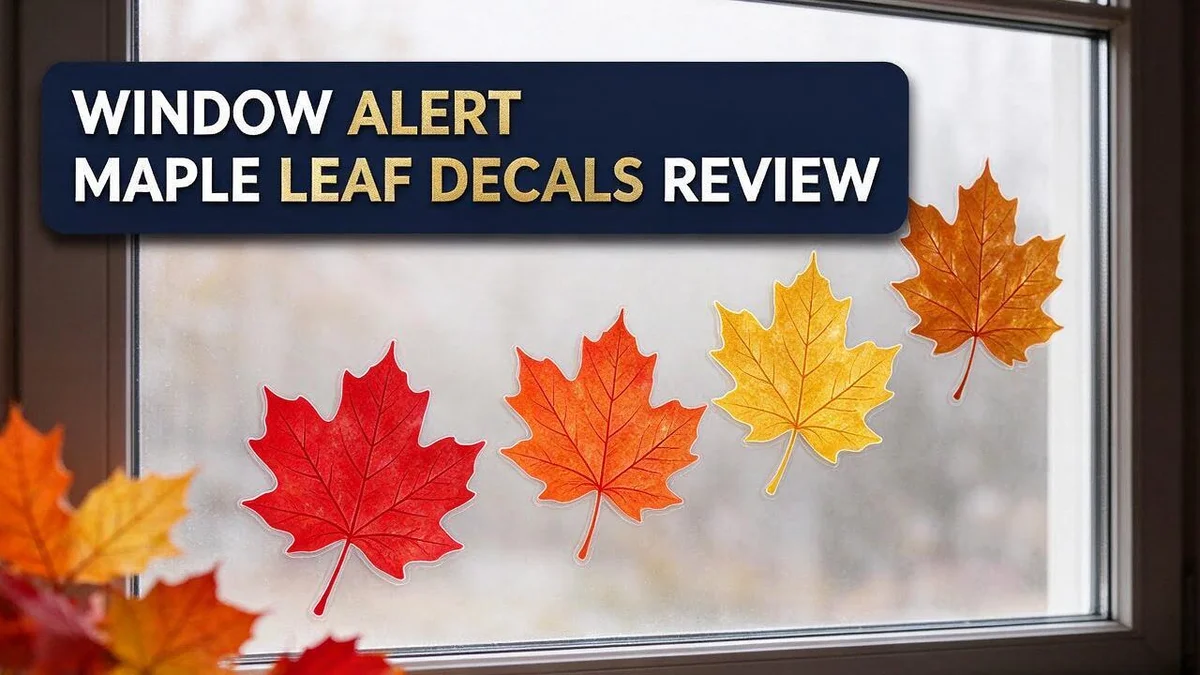
Window Alert Maple Leaf Decals Review 2026: The Ultimate Guide
Birds often fly into clear glass because they cannot see it. That problem worries many homeowners and bird lovers.
Window Alert Maple Leaf Decals offer a simple fix. These decals stick to windows, glass doors, and sliding doors. Each one has a UV reflective coating that birds can see. People barely notice it.
This review covers how the decals work, what comes in each pack, and how they compare with other options. A standard pack holds 4 decals, and an 8 count set is also listed.
In a Nutshell
- Best for: These maple leaf decals suit home and office windows, glass doors, and sliding doors. They fit most glass surfaces around your space.
- Easy to apply: The decals use a static cling or low tack backing. You press them on, and you can move them later if needed.
- Pack options: You get 4 decals per package. An 8 count set is also available for larger windows.
- Clear view for you: The translucent design stays nearly invisible to people. Your window view stays open while the decals do their job.
- Reviewer feedback: Our research found no listed drawbacks and no complaints in the reviews. That is a strong sign of satisfied buyers.
- Alternatives: Similar options include Pinecone Medley, Aspen Leaf, and Leaf Medley decals. Pick the leaf shape that matches your style.
UV-Reflective Coating and Bird Visibility

Last update on 2026-11-13 / Affiliate links / Images from Amazon Product Advertising API Some of the links on this website are affiliate links, which means that at no additional cost to you, I earn a commission if you click through and make a purchase. I only recommend products and services that I believe will add value to my readers. Thank you for your support!
Birds see a wider range of color than people do. Their eyes pick up ultraviolet light, which sits just beyond the violet end of the visible spectrum.
The UV reflective coating on these decals works with that natural sense. The leaves send back UV light that birds can notice as they fly near the glass.
Think of it like a warning sign that only one audience can read. People look through a clear pane and see the yard beyond, while birds see a pattern they can avoid.
This matters most near feeders, bird baths, and busy windows. Birds often fly fast between trees and perches, so a clear pane can catch them off guard.
For best results, spread the decals across the glass instead of grouping them in one corner. A wider pattern gives birds more signals to read from different angles.
Placement counts as much as the decals themselves. Apply them on the outside of the window, where the UV light hits first. Keep the surface clean so the backing grips well.
Some owners wonder if the pattern fades over time. Check the decals now and then, and replace any that peel or lose their shine.
Clean glass helps the reflection work well. Dust, rain spots, and smudges can block the light that birds need to see. A quick wipe with mild soap and water keeps the pattern clear.
Pair the decals with other steps for stronger protection. Screens, blinds, or curtains can add a second layer of visual cue. Bird feeders should sit well away from the glass, too.
Over time, you will notice which windows see the most bird activity. Start with those spots first, then add decals to the rest of the glass as needed.
Design, Shape and Pack Contents
The shape of these decals does more than look nice. The maple leaf outline has lobed edges and pointed tips. Those details break up the glass in a natural way.
Many people choose this shape for its familiar look. Maple leaves appear across many landscapes, so the decals blend well with gardens, cabins, and modern homes alike.
The standard pack holds four decals. An eight count set is also available. A larger set suits wide windows or several glass doors that need more coverage.
Each piece works as a single leaf. You can place them one at a time and adjust their position as you go. This gives you control over the final layout.
Small windows may need only a couple of leaves. Large glass doors often need more pieces to cover the space well. Measure your glass first so you know which pack suits your home.
Smooth each leaf before you move on. The flat surface needs to press firmly onto the pane. Run your fingers across the leaf to remove any air bubbles. A smooth surface helps the shape stay in place.
If your home has many windows, plan your leaves in small groups. Sort the pieces by room before you start. This simple step keeps the work organized and saves time.
Keep unused decals flat and dry between uses. Store them in a safe spot so the edges stay neat. Clean, flat pieces are easier to apply the next time you need them.
Effectiveness at Reducing Bird Strikes
Bird strikes happen when birds fly into glass they cannot see. Many homeowners want to know if decals like these actually help. The short answer depends on how you use them.
The Window Alert Maple Leaf Decals are designed to reduce wild bird window strikes. Their purpose is clear, and that focus sets them apart from plain decorative stickers.
Reviewers point to one key strength. They say the UV reflection is easy for birds to notice. Birds can spot the pattern while people barely see it.
The research listed no drawbacks. No review in our research cites a complaint about strike reduction. That is a positive sign, but it is not a guarantee.
Keep your expectations realistic. A decal cannot stop every collision. It works best as one part of a larger plan. Even partial coverage may help some birds.
Many bird lovers suggest layering several methods. You might add more decals, close blinds during busy feeding hours, or place feeders either very close to windows or far away from them.
How can you judge results? Watch your windows over several weeks. Count any strikes you notice and compare them with past seasons. Simple notes show whether the change helps.
Our research did not include long term tests, so results may vary by home. Your windows and local birds shape the outcome. Large panes, busy yards, and bird species all change the results.
Still, many people find these decals a helpful first step. If strikes continue, consider adding more coverage or changing feeder spots. Small changes often bring the best gains.
Top 3 Alternatives
If you want a different way to keep birds away from your windows, these three options work well. Each one uses a simple idea to scare birds off without harming them.
Bird-X Scare Eye Balloon


Last update on 2026-11-13 / Affiliate links / Images from Amazon Product Advertising API Some of the links on this website are affiliate links, which means that at no additional cost to you, I earn a commission if you click through and make a purchase. I only recommend products and services that I believe will add value to my readers. Thank you for your support!
The Bird-X Scare Eye Balloon uses a large, bright eye design. Birds see the eye and think a predator is watching them.
The balloon moves in the wind, which adds to the effect. It works well on patios, decks, and open yards. Hang it where birds often gather for the best results.
Bird-X Scare Tape

Last update on 2026-11-13 / Affiliate links / Images from Amazon Product Advertising API Some of the links on this website are affiliate links, which means that at no additional cost to you, I earn a commission if you click through and make a purchase. I only recommend products and services that I believe will add value to my readers. Thank you for your support!
The Bird-X Scare Tape is a reflective ribbon that flashes in sunlight. It twists and flutters whenever the wind blows.
Birds dislike the movement and bright light, so they tend to stay away. Tie several strips near window ledges or garden beds. Replace the tape every few months so it stays effective.
Bird-X Predator Owl
Last update on 2026-11-13 / Affiliate links / Images from Amazon Product Advertising API Some of the links on this website are affiliate links, which means that at no additional cost to you, I earn a commission if you click through and make a purchase. I only recommend products and services that I believe will add value to my readers. Thank you for your support!
The Bird-X Predator Owl looks like a real owl perched on a stand. Many birds fear owls, so they avoid the area when they spot one.
Move the owl every few days so birds do not get used to it. Place it near windows or rooftops where birds like to land.
Each option gives you a simple way to protect your windows. Pick the one that fits your space and your style best. With the right choice, you can enjoy a cleaner, calmer view outside.
Application, Adhesion and Removal
Applying these decals is simple, even for first time users. Start with a dry, clean pane. Dust and oily spots weaken the grip, so wipe the glass with a soft cloth first. Most people finish a whole window in just a few minutes.
Peel each leaf from its backing slowly. Avoid touching the sticky side with bare fingers, because skin oils can reduce how well the decal clings.
Cold or damp weather can make sticking harder. Work when the glass feels comfortably warm and the air feels dry. Your decals will hold better in these conditions.
Removing the decals is easy when you go slowly. Lift one corner with your fingernail. Pull the leaf down at a low angle instead of straight away from the glass.
Gentle heat can help too. A hair dryer on a low setting softens the adhesive for a few seconds. Keep the dryer moving so the glass does not overheat.
Some people notice a faint film after removal. Use a mild glass cleaner and a soft cloth to wipe it away. Skip sharp tools, since they can scratch the glass.
Static cling designs usually lift off without leaving marks on most glass. Still, test one leaf first in a small area. This shows how your window reacts before you finish the full set.
Reusing decals depends on how they were removed. If a leaf loses its grip, press it gently with a clean finger to see if it sticks again. Test stickiness before you put them back up, because some leaves regain only partial hold.
Taking your time makes the process smooth and calm. Good preparation saves frustration later, and it keeps your glass looking clean.
Appearance on Glass and Indoor Views
From inside your home, the leaves look soft and natural. They add a gentle pattern without blocking the view.
Daylight plays a big role here. During bright hours, the decals catch light and show a subtle sheen. On cloudy days, they blend into the glass and almost disappear.
At night, the picture changes. Indoor lights can make the leaves look darker, so the pattern stands out against the window. Keep your blinds or curtains in mind, because they can hide or highlight the design.
Sunlight also creates shadows. Light passing through the leaves can cast small leaf shapes on your floor or walls. Kids and pets often enjoy watching these moving patterns.
Viewing angle matters too. Stand close to the glass and you see the leaf edges clearly. Step back across the room and the pattern blends into a light scatter of color.
Keep the glass clean for the best look. Dust and fingerprints show more on clear decals than on bare glass. A soft cloth and mild cleaner keep the view crisp.
Think about where you sit most. Place your leaves where they fit your favorite chair or breakfast table view. That way, you enjoy the design every day.
Many homeowners test one leaf first. Hold it to the pane and check how it looks from your favorite seat. This quick test saves time.
Overall, the leaves add a calm touch to your windows. They look soft and natural, and they suit almost any room style. Small details make a big difference. Your view stays bright while the design brings a fresh feel. Enjoy the view every morning.
Durability and Weather Resistance
Outdoor weather is the real test for any window decal. The research did not include long term outdoor tests, so the exact lifespan is unclear. Still, the design gives us some useful clues.
The decals use a translucent film made for glass. This film handles normal indoor conditions well. Sun, rain, and temperature changes affect outdoor surfaces more.
Sunlight is the main factor to watch. Strong UV exposure can slowly wear down coatings over time. Since the UV reflective layer helps birds see the glass, fading may reduce that effect.
Check the leaves every few weeks for changes in shine or color.
Rain rarely causes trouble for static cling designs. Water usually runs off the smooth surface. However, wet leaves can trap dirt along the edges, so wipe them now and then.
Temperature swings matter too. Hot afternoons can soften the film, while freezing nights can make it stiff. Both situations may loosen edges on some windows. Pressing the edges back down with a soft cloth often fixes the problem.
Wind is another concern for outdoor placement. Strong gusts may pull on loose corners. Decals on sheltered panes often stay in place longer.
Winter brings its own challenges. Snow and ice can build up on glass and press against the leaves. Brushing off snow gently protects the edges.
Cleaning also affects how long the decals last. Use a soft cloth and mild soap. Harsh chemicals or scrapers can scratch the film or dull the coating.
If one leaf wears out, you can replace just that piece. Regular checks help you spot wear early and keep your windows protected all year.
Pros and Cons
Pros
- Reviewers mention a good mix of leaf designs.
- Designed to help reduce bird strikes at the glass where birds fly into windows.
- Birds can see the UV pattern while people see a clear, open view.
- The leaves suit both home and office windows.
- Each leaf can be placed where birds hit the glass most.
Cons
- The research found no drawbacks listed by reviewers, so feedback is limited.
- A few leaves may not cover a large window fully.
- Many competitor sets use similar leaf designs, so comparing options takes time.
- Results depend on where your windows face and how birds fly near them.
Who Should Buy It
Bird lovers who hang feeders near a window will find these decals helpful. Birds dart around feeders, and that is when glass becomes a hazard. These decals suit anyone who wants to protect local birds. They keep the view clear for you while signaling the glass to birds.
Gardeners with tall trees outside often see heavy bird traffic from spring through fall. Windows facing those trees need extra attention. A few leaves on the lower panes can add quiet protection.
Renters are another good match. Many leases limit changes to walls and fixtures. Static cling decals rest on the glass without drilling or paint, so they fit rental life nicely.
Families with curious children may enjoy this project. Kids can help choose leaf spots at their own height. Parents can also explain why the leaves matter for birds. It becomes a simple weekend lesson for the whole household.
Office teams often overlook bird strikes. A shared window near a courtyard can cause trouble. Facility staff can place leaves on those panes. Coworkers may ask about them, which starts helpful talks.
Apartment dwellers near parks may also welcome the extra care. Birds often fly between trees and buildings, so balcony doors deserve a look.
Decor fans who love seasonal changes may also like this look. The leaves bring an autumn feel without heavy decorations. Think of them as a gentle accent for any room.
Shoppers who want full frosted coverage should look elsewhere. These leaves cover only parts of a pane. Privacy needs call for a different style of film. Choose the option that fits your room best.
Final Verdict
Window Alert Maple Leaf Decals earn a confident recommendation from us. They give you a simple, low effort way to help birds near your glass.
The research lists no complaints from reviewers. That is a good sign, but long term feedback is still thin. We see this as a promising pick, not a guaranteed fix.
Spacing matters more than any single decal. Birds read gaps as open sky. Place the leaves close together so few empty spots remain.
Start before migration season if you can. Birds move in large numbers each spring and fall. Early placement gives them safer passage from day one.
Keep a simple log for a few weeks. Note the date and window each time a bird bumps the glass. Patterns show you where to add more leaves.
Compare a few alternatives before you decide. Aspen Leaf, Leaf Medley, and Pinecone Medley sets from the same brand offer other looks. Pick the shape that fits your yard and your style.
Choose the Maple Leaf pack if you love the classic leaf shape. The larger 8 count set gives you more room for big panes. The smaller set works well for a single window.
Our advice is simple: apply the leaves, watch your windows, and adjust as you learn. Small changes often make a big difference for local birds.
Our final take: these decals are a thoughtful, friendly upgrade for bird safe windows. They keep your view clear and give wildlife a better chance. We feel good about recommending them.
Frequently Asked Questions
Can I put these decals on sliding glass doors?
Yes, the decals work on glass doors and sliding doors. Place a few leaves at bird eye level and spread them across the full panel. Birds often try to fly through clear glass, so covering the open area helps most.
Can I remove the decals without damaging my glass?
The decals use a static-cling or low-tack design, so they stick without glue. You can peel them off and move them to a new spot whenever you like. This makes them a good choice for renters and anyone who likes to change things up.
Which pack size should I choose?
The standard pack includes 4 decals per package, and an 8-count set is also available. Pick the 4-count pack for one small window or a single test spot. Choose the 8-count set for a large window, several rooms, or a full sliding door.
Do the decals work for both home and office windows?
Yes, the leaves suit both settings. At home, you can add them to a kitchen window or a patio door. At the office, you can place them on a break room window or a glass wall. Start with the spots where birds hit the glass most often. Then add more leaves to other areas as needed.

Hello, I’m Emily Price, the founder of Birds Affection. As a passionate bird enthusiast and spiritual seeker, I’ve always been fascinated by the symbolic meanings and mystical connections between birds and our lives. On this website, I share my knowledge and insights on the spiritual significance of various bird species, exploring their roles as messengers, guides, and teachers. Through my writing, I aim to inspire and educate others on the profound wisdom and beauty that birds bring to our world. Join me on this journey as we delve into the enchanting realm of bird symbolism and discover the hidden meanings behind these magnificent creatures.
