St. Albans Bay Suet Cakes Review 2026: Worth Buying?
Backyard bird feeding has turned into a serious hobby, and suet sits at the center of it. Winter arrives, insects disappear, and small birds burn calories just staying warm. A good suet cake solves that problem fast.
St. Albans Bay Suet Plus has become one of the most purchased suet brands on Amazon, with thousands of cakes shipping every month. But popularity does not always equal quality.
I bought a 20 pack, hung cakes in three different feeders, and watched my yard for several weeks. This review covers the unboxing, the ingredients, the birds that showed up, the mess, the smell, and the real flaws nobody mentions on the label.
Key Takeaways
- Price per cake is the main selling point. A 20 pack of 11 ounce cakes runs around $37.99, which lands near $1.90 per cake. That is cheaper than most pet store suet, and the cost gap widens when you buy the 60 pack.
- The melt resistant formula actually works. My cakes held their shape through warm afternoons without turning into a greasy puddle. They soften, but they do not collapse.
- Packaging deserves real praise. Each cake comes in an easy tear wrapper that opens like a candy bar. No knife, no scissors, no greasy fingers. The wrappers are recyclable too.
- Filler content is the biggest weakness. Processed grain by products and cracked corn sit high in the ingredient list. Picky birds in seed rich neighborhoods sometimes ignore these cakes for a week or two.
- Bird variety is strong but not guaranteed. Woodpeckers, chickadees, nuthatches, and titmice came quickly. Bluebirds and warblers mostly skipped it.
- Starlings and squirrels love it. If you battle either one, this suet will feed them generously unless you use a caged or upside down feeder.
What Are St. Albans Bay Suet Cakes?

Last update on 2026-10-13 / Affiliate links / Images from Amazon Product Advertising API Some of the links on this website are affiliate links, which means that at no additional cost to you, I earn a commission if you click through and make a purchase. I only recommend products and services that I believe will add value to my readers. Thank you for your support!
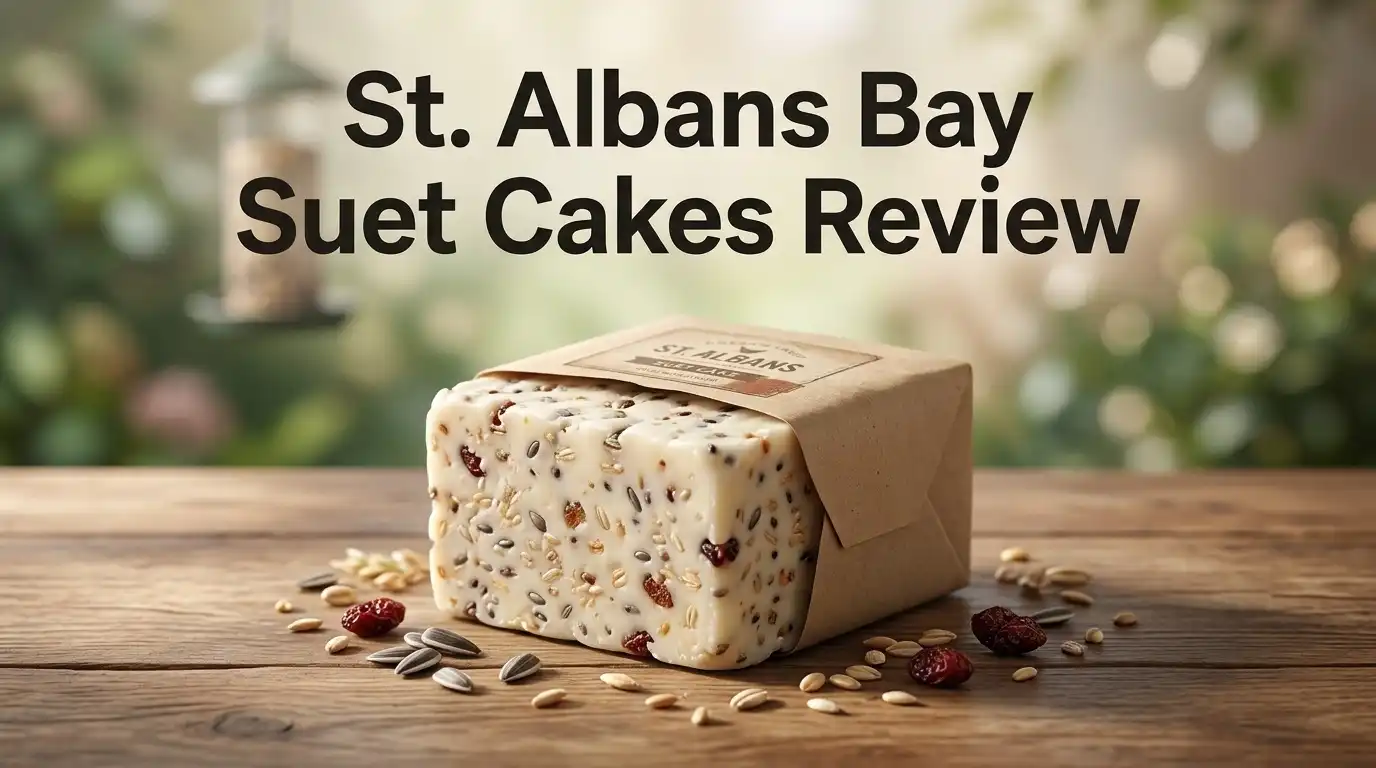
St. Albans Bay Suet Plus is a wild bird suet line made by Wildlife Sciences, a small business based in Vermont. The cakes measure roughly 5 inches by 5 inches by 1 inch and weigh 11 ounces each.
That size fits every standard suet cage sold in the United States. The company sells single flavors and mixed variety packs in counts of 5, 10, 12, 15, 20, and 60.
The core idea is simple. Rendered beef suet gets blended with grains, seeds, and flavor ingredients, then pressed into a firm block. Each cake is individually wrapped, so you open only what you need.
Production happens in the USA. The brand markets the product for year round use, not just winter, thanks to the melt resistant blend.
The Unboxing Experience
My 20 pack arrived in a plain brown shipping box with no extra padding, which is fine since suet cakes are basically bricks. Inside, the cakes were stacked in two tidy columns. Nothing was crushed, and nothing leaked. The box was heavier than expected at roughly 14 pounds, so plan for that if an older family member handles your deliveries.
Each cake wears a bright wrapper that looks like an oversized candy bar. Graphics wrap all the way around, so you can identify flavors without digging. Tearing one open took about two seconds. The notch works. My hands stayed clean, which never happens with plastic tray suet.
One small gripe: the outer box has no handle cutouts. Carrying it from the porch felt awkward. A minor thing, but worth mentioning.
Ingredients Breakdown and Nutrition
The High Energy cake lists rendered beef suet, cracked corn, black oil sunflower, and processed grain by products. That order matters. Beef suet provides the fat calories birds need in cold weather. Black oil sunflower adds protein and oil. Cracked corn adds bulk and attracts ground feeders.
Processed grain by products is the phrase that raises eyebrows. It is a legal catch all term for milling leftovers. It is not harmful, but it is filler. Premium suet brands often skip it entirely and pack in more nuts and whole seeds instead.
Other varieties change the mix. Peanut cakes add roasted peanuts. Berry cakes add fruit flavoring. Insect blends add dried mealworms. The suet base stays the same across the line. Nutrition labels are not printed on the wrapper, which frustrates detail focused feeders.
Melt Resistance Tested in Real Weather
The brand claims the cakes stay solid in heat, with some listings citing temperatures near 100 degrees Fahrenheit. I tested that during a stretch of warm days. The cakes softened at the edges and felt slightly tacky, but they never dripped or slumped out of the cage.
Compare that to cheap grocery store suet, which turns into a greasy smear on a 85 degree afternoon. The difference is real. The firmer binding also means fewer chunks fall to the ground, so less waste collects under the feeder.
Cold weather performance is excellent. The cakes stay firm without becoming rock hard, which lets small beaks still chip away pieces. One caution: direct afternoon sun on a dark metal cage speeds softening. Hang your feeder in shade during summer months and the cakes last noticeably longer.
Top 3 Alternative for St. Albans Bay Suet Cakes

Last update on 2026-07-11 / Affiliate links / Images from Amazon Product Advertising API Some of the links on this website are affiliate links, which means that at no additional cost to you, I earn a commission if you click through and make a purchase. I only recommend products and services that I believe will add value to my readers. Thank you for your support!
Wildlife Sciences High Energy Suet Cake 10 Pack


Last update on 2026-07-01 / Affiliate links / Images from Amazon Product Advertising API Some of the links on this website are affiliate links, which means that at no additional cost to you, I earn a commission if you click through and make a purchase. I only recommend products and services that I believe will add value to my readers. Thank you for your support!
Heath Outdoor Products DD4 All Season High Energy Suet Cake, Case of 10

Last update on 2026-11-12 / Affiliate links / Images from Amazon Product Advertising API Some of the links on this website are affiliate links, which means that at no additional cost to you, I earn a commission if you click through and make a purchase. I only recommend products and services that I believe will add value to my readers. Thank you for your support!
C&S Peanut Delight No Melt Suet Dough, 12 Pack
Which Birds Actually Show Up
Within two days, downy woodpeckers found my cake. Hairy woodpeckers followed. By the end of week one, I counted chickadees, white breasted nuthatches, tufted titmice, and a pair of Carolina wrens. Blue jays showed up and dominated the feeder for short bursts.
Cardinals visited but preferred the sunflower feeder nearby. Juncos and sparrows worked the ground under the cage, cleaning up fallen crumbs. That ground feeding crowd is a real bonus during snow cover.
What did not show up: bluebirds, orioles, and warblers. Those species usually want mealworm heavy or fruit heavy suet. The standard High Energy cake does not pull them in. Starlings arrived around week two and emptied a cake in under a day. A caged feeder solved that problem completely.
Packaging and Everyday Handling
This is where the brand genuinely beats most competitors. Traditional suet comes sealed in a thin plastic tray that requires scissors and leaves grease on your fingers. St. Albans Bay uses a paper style wrapper with a tear notch across the top.
You pull, the wrapper splits, and the cake slides straight into the cage. I never touched the suet itself. That matters when you refill feeders in freezing weather with gloves on.
The wrappers are listed as 100 percent recyclable, which is a nice touch for anyone trying to cut plastic waste. The downside is simple. Paper wrappers are not waterproof. One cake sat in a damp garage corner and the wrapper softened and stuck slightly to the suet. Store them dry.
Flavor Varieties Compared

Last update on 2026-11-12 / Affiliate links / Images from Amazon Product Advertising API Some of the links on this website are affiliate links, which means that at no additional cost to you, I earn a commission if you click through and make a purchase. I only recommend products and services that I believe will add value to my readers. Thank you for your support!
St. Albans Bay sells the same suet base in several flavors, and the differences matter more than you would expect. Peanut is the strongest all around performer. Woodpeckers and nuthatches go for it first, and it disappears fastest in my yard.
Berry pulls in mockingbirds and the occasional catbird, but many feeders report slower consumption. Insect blends work well in spring when parents feed nestlings. Hot pepper versions deter squirrels since mammals taste capsaicin and birds do not.
The High Energy cake is the budget choice and the most generic. It works, but it moves slower than peanut. Variety packs are the smart starting point. Buy a mixed 10 pack, watch which flavor empties first, then order that single flavor in bulk. That approach saved me money.
Price and Value Analysis
At roughly $37.99 for 20 cakes, you pay close to $1.90 per cake. Subscribe and Save knocks that down further, landing near $1.70 with the higher discount tier. That is strong value for an 11 ounce cake.
Compare it to premium nut packed suet which often runs $3.50 to $5.00 per cake. You can feed twice as long for the same money. The 60 pack drops the per cake price even lower for serious feeders.
The value math shifts if birds ignore the cakes. A cheap cake that sits untouched costs more than an expensive one that empties in two days. In my yard, consumption was steady, so the math worked. Readers in areas with abundant natural food may see slower uptake and should start with a smaller pack.
What These Suet Cakes Do Not Do Well
Honest reviews need honest flaws, so here they are. Filler content is the biggest issue. Cracked corn and processed grain by products make up a large share of each cake. Birds in seed rich neighborhoods frequently choose richer suet from other brands first.
Smell is inconsistent. Most cakes smell faintly like rendered fat. A few buyers report a rancid odor from older stock, and I encountered one cake with a sharper smell than the rest. Check production freshness if you can.
The product is non returnable on Amazon because it is food. If a batch disappoints, you are stuck with it. Starlings and squirrels love this suet, so an open cage feeder becomes a buffet. Finally, no printed nutrition panel means you cannot verify fat or protein percentages.
Pros and Cons
Here is the balanced summary after several weeks of feeding.
Pros
- Excellent price per cake, especially in the 20 pack and 60 pack sizes.
- Melt resistant formula holds shape in heat that destroys cheaper suet.
- Easy tear wrappers eliminate greasy hands and the need for scissors.
- Standard 5 by 5 inch size fits every common suet cage.
- Attracts a wide mix of woodpeckers, chickadees, nuthatches, and titmice.
- Recyclable packaging and made in the USA production.
- Multiple flavors let you match the blend to local species.
Cons
- High filler content from cracked corn and processed grain by products.
- No printed nutrition panel on the wrapper.
- Occasional reports of rancid smelling cakes from older stock.
- Starlings and squirrels devour it quickly without a protective feeder.
- Non returnable due to food safety rules.
- Paper wrappers absorb moisture in damp storage.
- Berry and some specialty flavors move slowly for many feeders.
Feeder Compatibility and Setup
Every standard suet cage accepts these cakes without trimming. I tested a basic wire cage, a tail prop woodpecker feeder, and an upside down starling resistant cage. All three worked perfectly.
The upside down cage was the clear winner. Woodpeckers, chickadees, and nuthatches cling comfortably and feed without trouble. Starlings cannot hang that way, so they gave up after a few attempts. That single change cut my suet consumption nearly in half.
Double cages hold two cakes and reduce refill trips. Mount feeders at least 5 feet off the ground and near cover, since small birds want an escape route close by. Avoid hanging suet directly above a deck railing. Crumbs and droppings land there, and cleaning becomes a weekly chore you will quickly resent.
Storage and Shelf Life
Suet is animal fat, so heat and time are its enemies. The brand recommends a cool dry area, and that advice is not optional. I store my unopened cakes in a sealed plastic bin in the basement. Temperature stays steady and rodents cannot smell their way in.
A freezer works even better for long term storage. Cakes keep for many months frozen and go straight into a feeder without thawing. Birds do not mind cold suet at all.
Avoid a hot garage or a sunny shed. Fat goes rancid under those conditions, and rancid suet can make birds sick. Trust your nose. Fresh suet smells mild and slightly beefy. Sharp, sour, or paint like odors mean the cake belongs in the trash, not the feeder.
Seasonal Feeding Tips
Winter is prime suet season. Birds need fat calories to survive long cold nights, and consumption can triple. Keep a cake available at all times from November through March. Refill before the cage empties so your regulars do not relocate.
Spring brings nesting season. Switch to insect or peanut blends then, since parent birds hunt protein for chicks. Summer feeding works fine with this melt resistant formula, but hang the feeder in shade and offer smaller amounts.
Fall is migration time. Suet fuels long flights, and you may spot species that never visit otherwise. Clean your feeder every two weeks year round with hot soapy water and a stiff brush. Old grease buildup breeds bacteria. A clean feeder keeps your birds healthy and your yard busy.
Who Should Buy These Suet Cakes
Buy these if you feed birds daily and want bulk value. High volume feeders benefit most from the 20 pack and 60 pack pricing. Beginners also do well here, since the easy tear wrappers remove the messiest part of suet feeding.
Skip these if you chase specialty species. Bluebird and oriole enthusiasts need mealworm heavy or fruit heavy suet from a premium brand. Readers who scrutinize every ingredient will dislike the filler content and the missing nutrition panel.
If you fight starlings or squirrels without a protective feeder, expect fast disappearance and frustration. Buy a caged feeder first, then the suet. For everyone else feeding a normal mix of woodpeckers, chickadees, and nuthatches, this product delivers reliable results at a fair price.
Final Verdict
St. Albans Bay Suet Plus earns a solid recommendation with clear limits. The packaging is the best in the category, the melt resistance is genuine, and the price per cake beats nearly every competitor at the same size.
The filler content keeps it from being a premium product. These are workhorse cakes, not gourmet ones. Birds eat them steadily, but they will choose nut packed suet first if both are available.
My score sits at 4.3 out of 5. The Amazon rating of roughly 4.6 across thousands of reviews lines up closely with my experience. Start with a variety pack, learn what your local birds prefer, then buy that flavor in bulk. That strategy delivers the best value and the busiest feeder.
Frequently Asked Questions
Do St. Albans Bay suet cakes melt in summer?
They soften but hold their shape. The melt resistant formula is rated for high heat, and my cakes never dripped. Hang the feeder in shade for best results during hot months.
What birds do these suet cakes attract?
Woodpeckers, chickadees, nuthatches, titmice, blue jays, wrens, cardinals, sparrows, and juncos all visit. Bluebirds and warblers generally ignore the standard blend and need insect or fruit specific suet instead.
Are these cakes safe for squirrels to eat?
Yes, squirrels eat them without harm, though they empty a cake quickly. Hot pepper varieties deter mammals because birds cannot taste capsaicin. A caged or upside down feeder works even better.
How long does one cake last?
In my yard, one cake lasted three to five days during active winter feeding. Starling flocks can finish a cake in a single day. Consumption varies widely by season and local bird population.
Can I use these cakes year round?
Yes. The firm formula handles warm weather, and birds eat suet in every season. Switch to insect or peanut blends during spring nesting for better protein content.
Do the cakes fit standard suet feeders?
Yes. Each cake measures about 5 by 5 by 1 inch, the universal suet cage size. No cutting or trimming is required for any common feeder design.
Where are these suet cakes made?
They are produced in the USA by Wildlife Sciences, a small business operation. The wrappers are recyclable, and the company emphasizes environmentally friendly packaging across the product line.

Hello, I’m Emily Price, the founder of Birds Affection. As a passionate bird enthusiast and spiritual seeker, I’ve always been fascinated by the symbolic meanings and mystical connections between birds and our lives. On this website, I share my knowledge and insights on the spiritual significance of various bird species, exploring their roles as messengers, guides, and teachers. Through my writing, I aim to inspire and educate others on the profound wisdom and beauty that birds bring to our world. Join me on this journey as we delve into the enchanting realm of bird symbolism and discover the hidden meanings behind these magnificent creatures.