
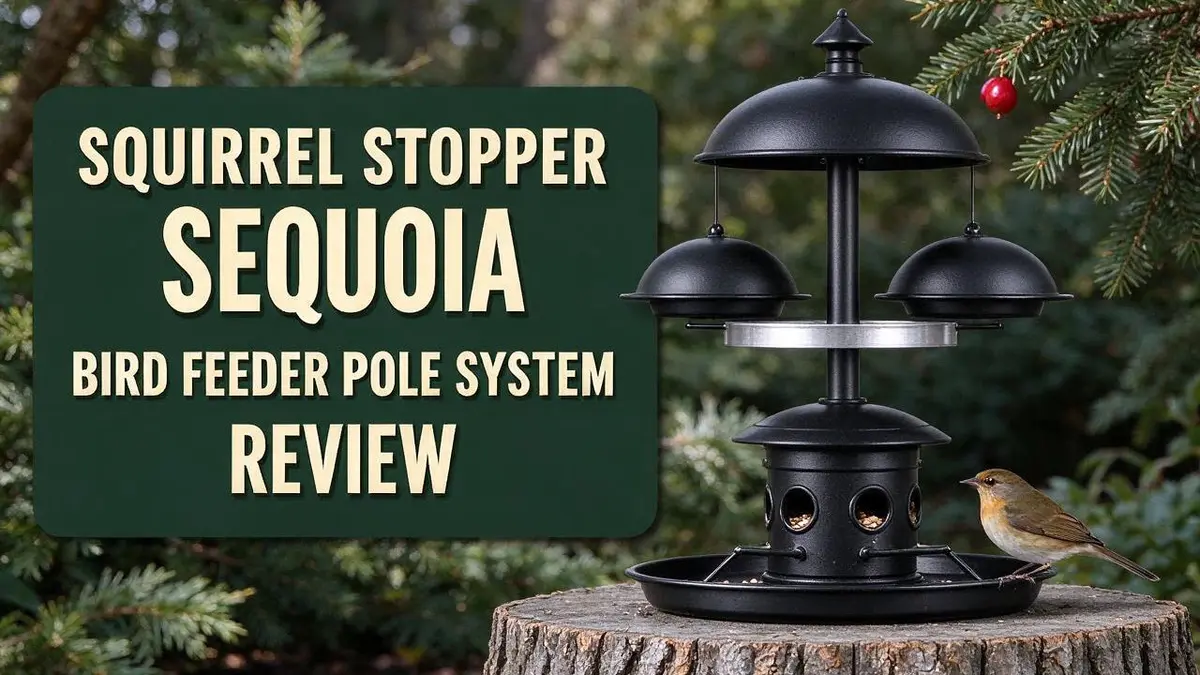
Squirrel Stopper Sequoia Bird Feeder Pole System Review 2026
Squirrels raid your bird feeders every single day. They empty the seed, scare off the birds, and test your patience.
The Squirrel Stopper Sequoia Bird Feeder Pole System promises to end that battle. It uses a patented baffle and a galvanized steel pole with an auger base.
The system has four arms and adjustable hanging stations. You can hang feeders, birdhouses, and small plants about 5 to 6 feet off the ground.
In a Nutshell
- Strong build: The galvanized steel feels much stronger than wrought iron. The 1.25 inch pole also handles outdoor weather well.
- Simple anchoring: The auger base twists into the soil. It keeps the pole steady in most yards.
- Squirrel defense: A patented baffle sits on the pole to block climbers. The brand markets the system as totally squirrel proof.
- Flexible hanging: The pole holds feeders, birdhouses, and small to moderate plants. You hang them about 5 to 6 feet off the ground.
- Weak spots: Some pole sections do not screw together correctly. The hooks sit too close for side by side feeders. The included feeders also feel flimsy, so many buyers will want better ones.
- Baffle wobble: Reddit users say the spring loaded baffle feels bouncy and unstable. On the bright side, reviewers praise the prompt delivery.
Build Quality and Galvanized Steel Construction

Last update on 2026-10-13 / Affiliate links / Images from Amazon Product Advertising API Some of the links on this website are affiliate links, which means that at no additional cost to you, I earn a commission if you click through and make a purchase. I only recommend products and services that I believe will add value to my readers. Thank you for your support!
Build quality matters a lot for a pole that stays outside all year. Wind, rain, and snow test every joint and seam. A solid frame keeps the whole setup standing.
The pole uses heavy duty galvanized steel. The zinc coating shields the metal from moisture. This helps the pole resist rust over many seasons.
A 1.25 inch pole adds a solid core. It feels steady when full feeders hang from the arms. The thick steel carries the weight well.
The auger base grips the soil at ground level. Once it twists in, the pole stays upright through strong gusts. A firm base keeps the frame level.
The joints deserve a closer look though. Loose connections can cause extra wobble, so check each fit before you tighten.
Small parts also feel less sturdy than the frame. The hooks sit too narrow for side by side feeders. The included feeders feel flimsy next to the steel.
Overall, the steel frame feels dependable. The pole and base do the heavy lifting well, while the joints and feeders need extra attention.
Outdoor ready construction means less upkeep over time. Galvanized metal does not need paint to stay protected. A quick wipe with a damp cloth keeps the surface clean.
Patience helps when you assemble the parts. Line up each section slowly and gently. Forcing a mismatched joint can damage the coating and weaken the seam.
Think about your yard before you buy. Choose a spot with soft soil for the auger. Hard ground may make twisting the base tougher.
Clear space around the pole also helps you refill feeders easily. Good planning makes setup smoother.
Squirrel-Proofing and Baffle Performance
Squirrels rarely give up after one failed try. They test every route, so the setup needs open space around it. Place the pole away from tree limbs, fences, and porch roofs.
A baffle only works when it sits in the right spot. Check that the baffle sits on a straight, clean section of pole. Keep the pole free of nearby furniture, branches, and spilled seed.
The spring action needs a closer test. Reddit users describe the baffle as bouncy, and that movement may throw off a climbing squirrel.
However, the same bounce can also make the feeder feel less stable for birds. Test the setup at home first, then watch how squirrels respond.
Watch your yard over several weeks. Squirrels often find a new route after a few days. Keep a simple log of visits so you know when the setup holds and when it needs a change.
Feeder choice matters too. Flimsy feeders invite squirrels to chew, tip, or pull them down. Choose sturdy feeders with tight lids and solid perches. Seed stays dry and safe that way.
Other options exist for different needs. The Ofasixx Squirrel Feeder with Metal Drainage Bowl takes a different route than a pole.
DIY squirrel baffles give you control over size and material. Generic squirrel proof poles from the 2019 roundup offer similar goals with unnamed designs.
Squirrels adapt, so no setup stays perfect forever. Pair the pole with clean ground beneath the feeder and regular checks of the baffle. Your yard layout decides how well this system performs. Add extra baffles or move the pole if squirrels still find a way.
Setup, Auger Base, and Pole Assembly
Setup goes faster when you lay everything out first. Count every pole section, arm, and hook before you start. This quick check saves you from hunting for missing pieces in the middle of the job.
Next, gather a few simple tools. A rubber mallet, a level, and a pair of gloves work well. A tape measure helps too.
A helper also makes the job easier. Lifting the pole upright goes much smoother with two people.
Dig a test hole first if your soil feels hard or rocky. Loose, damp dirt lets the auger slide in with less effort. Rocky ground may need a pilot hole to keep the base straight.
Turn the auger slowly and keep the pole steady. Stop often and check the angle with your level. Check it from two sides for accuracy. A leaning pole may throw off your feeders.
Assemble the pole sections in order before you lock them in place. Tighten each joint by hand first. Then give a gentle turn with the twist rod. Avoid too much force, which could strip the threads.
Attach the arms after the pole stands firm. Spread the hanging stations evenly so birds can reach each feeder. Leave room between arms for easy refilling. Good spacing also keeps seed from piling up in one spot.
Wait to add the baffle until the pole stays upright on its own. Slide it on from the top, then check that it sits flat. A crooked baffle gives squirrels an easy path around it.
Finally, walk around the setup and shake the pole gently. Listen for creaks or wiggles at the joints. Fixing small issues now prevents bigger headaches once birds arrive.
Top 3 Alternatives
Looking for another way to keep squirrels off your bird seed? These three options are worth a look. Each one offers a different approach.
Brome Squirrel Buster Plus


Last update on 2026-07-01 / Affiliate links / Images from Amazon Product Advertising API Some of the links on this website are affiliate links, which means that at no additional cost to you, I earn a commission if you click through and make a purchase. I only recommend products and services that I believe will add value to my readers. Thank you for your support!
This feeder uses a dome shaped baffle that blocks squirrels from climbing the pole. Birds can still land and eat with ease. Many people like how it fits on standard poles. It works well for yards with heavy squirrel traffic.
Droll Yankees Flipper

Last update on 2026-09-13 / Affiliate links / Images from Amazon Product Advertising API Some of the links on this website are affiliate links, which means that at no additional cost to you, I earn a commission if you click through and make a purchase. I only recommend products and services that I believe will add value to my readers. Thank you for your support!
This feeder has a spring loaded perch that tips when a heavy squirrel lands on it. The seed stays closed off until small birds approach. It keeps the food safe without blocking the birds. Many backyard watchers enjoy its simple design.
Stokes Select Feeder

Last update on 2026-11-05 / Affiliate links / Images from Amazon Product Advertising API Some of the links on this website are affiliate links, which means that at no additional cost to you, I earn a commission if you click through and make a purchase. I only recommend products and services that I believe will add value to my readers. Thank you for your support!
This feeder has a large seed capacity and a sturdy cover. Squirrels find it hard to reach the openings. It suits people who want to fill the feeder less often. Its clear design makes it easy to check the seed level.
Hanging Arms, Hook Spacing, and Feeder Capacity
Four arms give you room to spread out. The Sequoia pole system includes four arms, and each one holds its own hanging station. This setup lets you run several feeding spots from a single pole.
The arms also adjust, so you can slide each station to fit the space you have. Place the busiest station where you see the most bird activity from your window. Adjusting the stations also helps you avoid crowding from larger birds.
Hook spacing needs a careful eye. Reviewers say the hooks sit too narrow for side by side feeders. Measure your feeders before you plan two stations on one arm. A tape measure saves you from a frustrating mismatch.
If space feels tight, hang one feeder per arm. Stagger the heights so birds do not crowd into one spot. A little vertical space makes a big difference.
Capacity depends on what you hang. The system supports feeders, birdhouses, and small to moderate plants. Everything should hang five to six feet off the ground. Heavy loads strain the hooks, so keep feeders filled but never overflowing. Check the hooks after each refill to confirm they still hold steady.
Birdhouses need their own space. Hang a birdhouse on the arm farthest from the feeders. Nesting birds need quiet, so keep them away from busy stations.
Plan your stations before you hang anything. Sketch the four arms on paper first. Mark where each feeder will sit and where birds will land. Leave a gap between stations so birds can come and go without bumping into each other.
Good spacing keeps your yard calm and your birds comfortable. Take a few minutes to plan, and your setup will work better for years.
Included Feeders and Accessories
Most buyers want to know what arrives in the box. The Sequoia system ships with a pole, an auger base, four arms, and a patented baffle. Everything you need for mounting sits in one package.
Think of the included feeders as a starting point. They help you test the setup before you commit to a favorite style. Many people later swap them for models that suit their backyard birds.
Feeder style matters more than most people expect. Tube feeders work well for small songbirds like finches. Platform feeders suit larger birds, but they can collect more seed spills.
Look for metal parts and a sturdy base. Heavy materials resist chewing and help the feeder stay put in the wind. Weight matters too, so choose a size your arm can hold comfortably.
Accessories deserve attention too. A birdhouse adds shelter, while a small plant can attract insects that birds enjoy eating. Each accessory needs its own spot on the pole, so plan ahead.
Weather affects every piece you add. Check plastic parts after storms, and wipe off seed dust often. Galvanized steel holds up well, but other materials may crack or fade over time.
Replacement parts can keep the system running for years. Store the original packaging and manual somewhere safe. That way, you can find the right piece quickly if a part wears out.
Overall, the included items cover the basics. Upgrade the feeders and add a few extras, and you get a setup that fits your yard well. Take your time choosing each piece, and enjoy watching the visitors arrive.
Price, Replacement Parts, and Value
Replacement parts can keep your Sequoia system working for years. Parts wear down over time, especially after storms and freezing winters. Knowing which piece to replace saves you time and frustration.
The twist rod is the smallest part you might need. It helps lock the pole sections together. If the rod bends or wears out, swap only that piece instead of the whole setup.
The lower pole segment with the auger is the bigger replacement. It matters most when the base loosens or the auger bends. Check this part first if the pole leans or wobbles after a windy day.
Before you order anything, take a photo of the damaged part. Compare it with the product listing. This simple step prevents wrong orders and extra waiting.
Reviewers also say the pole sections do not screw together correctly. A replacement segment can fix that issue, so you do not need a brand new system. Keep notes on which piece fails, since that helps you order the right fix.
Reviewers often praise shipping speed. A missing part rarely keeps your birds waiting for long.
Reddit users describe the spring loaded baffle as bouncy and unstable. Check the spring tension before you blame the whole pole. A loose spring often causes the wobble, so tighten or replace it first.
Some buyers prefer to compare other options before they commit. Generic squirrel proof poles and the Ofasixx Squirrel Feeder with Metal Drainage Bowl are common alternatives. DIY squirrel baffles can also add protection to a pole you already own.
Plan replacements early, and your feeding station stays ready all season long.
Pros and Cons
Pros
- The steel build is described as much stronger than wrought iron.
- The system is marketed as totally squirrel proof, which appeals to stubborn backyard visitors.
- The patented baffle is designed to stop climbing squirrels.
- It holds a 4.5 rating from over 7,300 reviews.
- The auger base helps the pole stay firm in the ground.
Cons
- The stations hang only 5 to 6 feet high, which may limit where you can place them.
- Larger plants do not fit well, so the system suits small to moderate plants only.
- Some yards may need a different setup if the pole height does not match the space.
Who Should Buy It
Backyard bird lovers who battle squirrels every day should take a close look at this system. Many people watch their seed vanish within just a few hours. This pole setup aims to stop that frustrating problem for good.
Homeowners with open, firm ground benefit most. The auger base needs solid soil to stay steady in the yard. Keep the pole away from branches that squirrels could jump from during their daily raids.
Renters should check with their landlord before buying. Pushing an auger into a lawn may not be allowed in every rental. Getting written permission early saves time and avoids future trouble.
Families with children often enjoy this setup. Kids can watch cardinals, finches, and chickadees from a nearby window. Simple feeding routines build an early love for nature. Parents may also find it a calm weekend project.
Feeder fans who like variety can use all four arms. Each arm holds its own station, so you can mix tube feeders with platform styles. This layout suits people who enjoy watching many bird species at once.
Beginners can learn useful skills with a simple setup. Basic assembly teaches you how the parts fit together. Read the instructions slowly and keep every small piece in a labeled tray.
Plant lovers with lightweight containers should consider it. Small to moderate plants can hang from the stations without trouble. Choose pots that match the hanging height for the best look.
Shoppers who need a fully caged feeder may want more. This system relies on a baffle rather than a wire cage. Yards with heavy squirrel traffic may need extra steps as well.
In short, this system fits patient backyard fans. It suits people who want a clear squirrel barrier and enjoy practical yard work. Careful planning leads to the best results.
Final Verdict
The Sequoia pole system earns a solid recommendation from me. It gives you a dependable base for a feeding station that fights back against squirrels. It also asks for a little patience and a few smart upgrades.
The hooks need your attention first. They sit too narrow for side by side feeders, so spread your feeders across different arms.
The included feeders feel flimsy. Plan to swap them for sturdier tube or tray feeders. That small change protects your seed and your birds.
Placement matters just as much. Set the pole away from fences, branches, and rooflines. Squirrels jump far, so open space helps the baffle do its job.
Other options exist, but each one has trade offs. The Ofasixx Squirrel Feeder with Metal Drainage Bowl works well as a single feeder. It does not give you several stations on one pole.
DIY baffles demand time and testing. Generic poles often skip the patented baffle design. The Sequoia gives you a ready made package instead.
Expect a small project, not a plug and play kit. Set aside an afternoon, a level, and a helper.
My advice is simple. Buy this system if you want a full feeding station in one box and you accept minor fixes. Skip it if you want a perfect, no fuss build.
Check each part on arrival. Tighten every joint, test the baffle, and add better feeders. Then sit back and enjoy the show.
Final verdict: a strong pick for squirrel weary bird lovers, with small flaws you can fix.
Frequently Asked Questions
Does the baffle move much once it is installed?
Some owners say yes. Reddit users describe the spring loaded baffle as bouncy and unstable. Test the movement before you fill the feeders, and make sure it still blocks climbing squirrels.
What should I do if the pole sections do not line up?
Turn each section slowly by hand. Stop if you feel strong resistance. Forcing the threads can damage the metal, so contact the seller about a replacement segment.
Can I use different types of feeders on this system?
Yes, the arms can hold tube feeders, hopper feeders, and platform trays. Choose lighter feeders for the best balance. Heavy seed loads can make the arms sag over time.
How often should I refill the feeders?
Refill them often during cold months, when birds need more energy. Check the feeders every few days. Wet seed spoils quickly, so keep the trays dry and clean.
Is the Ofasixx feeder a better fit for my yard?
It depends on your goals. The Ofasixx model has a metal drainage bowl that helps keep seed dry. This pole system offers four arms, so it suits people who want more feeding stations in one spot.

Hello, I’m Emily Price, the founder of Birds Affection. As a passionate bird enthusiast and spiritual seeker, I’ve always been fascinated by the symbolic meanings and mystical connections between birds and our lives. On this website, I share my knowledge and insights on the spiritual significance of various bird species, exploring their roles as messengers, guides, and teachers. Through my writing, I aim to inspire and educate others on the profound wisdom and beauty that birds bring to our world. Join me on this journey as we delve into the enchanting realm of bird symbolism and discover the hidden meanings behind these magnificent creatures.