
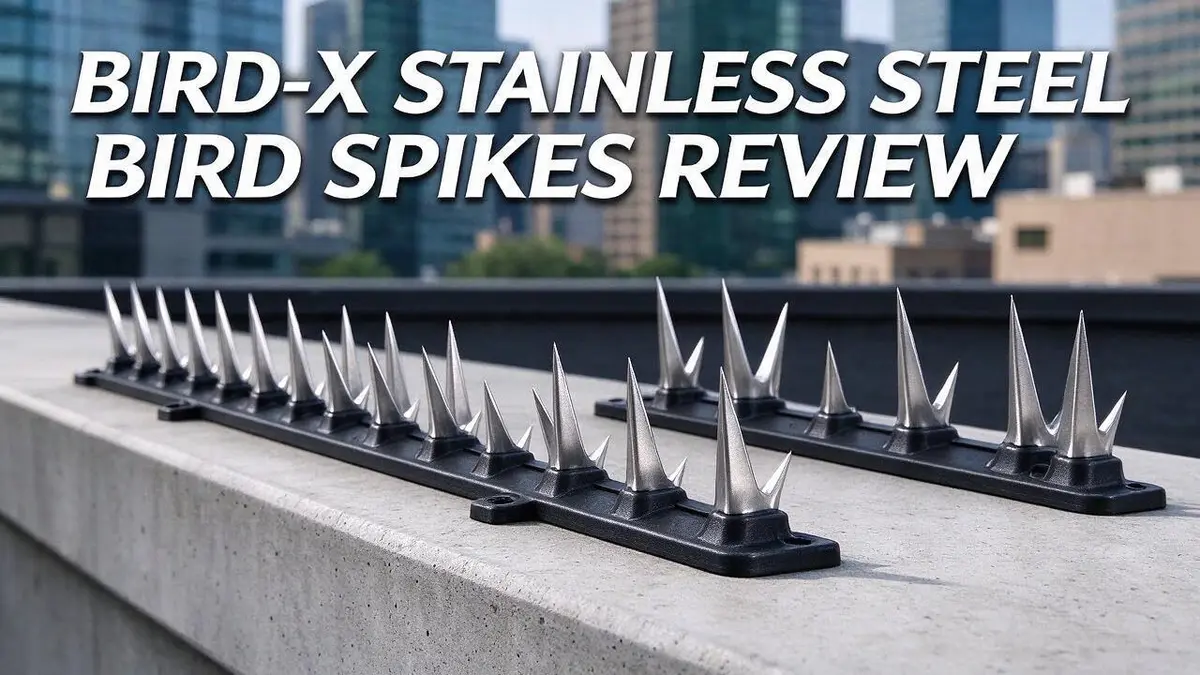
Bird-X Stainless Steel Bird Spikes Review 2026: Complete Guide
Birds on your ledges can turn a clean home into a messy one fast. Droppings, noise, and nesting debris pile up before you notice. This review covers the Bird-X Stainless Steel Bird Spikes. We look at how they work, what they offer, and where they fall short.
The spikes use stainless steel rods that resist weather and corrosion. The narrow model sits on a clear polycarbonate base and fits ledges from 1 to 4 inches wide.
Bird-X also makes Birdwire, a seven stranded stainless steel wire with a clear nylon coating. It has a breaking strength of 100 lbs. Do these spikes keep birds away for good? Read on to see if they fit your space.
In a Nutshell
- Best for: narrow ledges. The narrow model measures 12 inches long and 2.5 inches wide. It fits ledges from 1 to 4 inches deep.
- Physical barrier: The spikes block birds from landing. They work without noise, chemicals, or power.
- Long life: Bird-X describes the stainless steel build as lasting for years. The clear polycarbonate base blends into many surfaces.
- Strong wire option: The Birdwire has a 0.7 mm diameter. It has a breaking strength of 100 lbs.
- Drawbacks: Spikes can look bulky and stand out on your home. They also work less well on wide, flat surfaces. One user reported that birds were not deterred.
- Other options: You can compare the Bird-X Original Plastic Bird Spikes Kit or the BIRD BARRIER Industrial Stainless Steel Spikes. Polycarbonate spikes weigh less but wear out sooner. Nets and humane deterrents suit open areas.
Materials and Build Quality


Last update on 2026-11-13 / Affiliate links / Images from Amazon Product Advertising API Some of the links on this website are affiliate links, which means that at no additional cost to you, I earn a commission if you click through and make a purchase. I only recommend products and services that I believe will add value to my readers. Thank you for your support!
Materials shape how a bird deterrent performs over time. Bird-X uses different materials across its models, so each one works a little differently. Each part plays a clear role.
The 24 foot model uses Birdwire, a wire made from seven strands of stainless steel. A clear nylon coating wraps the wire. The coating carries a UV stabilizer. That helps it handle long hours of sunlight outdoors.
The wire has a breaking strength of 100 pounds. That number shows how much pull the wire can take before it snaps. Strength matters most on long runs, so the wire can keep its shape along a wide edge.
The narrow model takes a different approach. It has a clear polycarbonate base with thin stainless rods set into it. The base measures 12 inches long and 2 1/2 inches wide. It fits ledges from 1 to 4 inches.
Polycarbonate is a clear plastic. The steel rods block birds from landing, and the base holds them in place. Each part has a job.
Match the material to your surface. A narrow ledge suits the rod design, while a long edge suits the wire. Flat, wide surfaces need extra thought, since spikes work less well there. Wire or another barrier may suit those spaces better.
Heavier builds can look more noticeable on your building, so weigh looks against strength. A clear coating may blend in more easily than bare metal. Pick the option that fits your space, not just the one that looks strongest. Measure your ledge before you choose.
Spike Design and Coverage Options
Start by measuring every ledge, sill, and roof edge you want to protect. Write down the length of each surface. This simple step helps you pick the right length and avoid gaps that birds can use.
Corners need extra attention. Birds often squeeze into corners and tight joints. Plan to extend the spikes a few inches past each corner so the area stays covered.
Spacing matters too. Most spike rows sit close together, so birds cannot find a clear landing spot between them. Check that the rods line up evenly across the full surface.
Flat, wide surfaces need a different plan. A row of spikes may leave open space on a broad ledge, so birds can still settle there. For these areas, many people add a second row or switch to a wire option.
Consider the shape of your building too. A curved or sloped edge may need careful placement so the rods stay level and secure. Ask a pro if the surface is hard to reach.
Think about where birds sit most. Watch your building for a few days. Mark the spots with droppings or nesting material. These spots tell you where coverage matters most.
Also think about which areas people see. Spikes on the front of a home stand out more than spikes on a back wall. You can cover the busiest bird spots first and add more later if needed.
Plan the work for a dry, calm day. Wear thick gloves because the rods have sharp tips. A helper can hold the ladder and pass tools up to you. Check the final layout from the ground before you finish.
Effectiveness at Deterring Birds
Effectiveness depends on the birds you face. Pigeons and gulls may respect a spike line, but small birds can still slip through wide gaps. Watch which species visit your space before you decide.
One research note stands out. A user reported that the deterrent did not stop birds. Results can vary, so set clear expectations first.
Flat surfaces create the biggest challenge. Spikes work best as a line that stops a bird from perching. On a broad ledge, birds may still settle in the open space between rods. Adding a second row or a netting strip can help.
Nesting matters too. Birds may build nests behind or under spikes if a gap remains. Check for small twigs and feathers during spring. Remove them early so the barrier stays clear.
Leaves and dust can collect between the rods over time. A quick brush keeps the line clear and ready for birds to meet.
Many birds learn which spots feel unsafe. They may still test nearby areas, so cover the full length of the ledge rather than one small section.
Pairing spikes with other tools can improve results. Some owners add visual scare devices or bird netting for open areas. Mixing methods often works better than relying on one product alone.
Monitor the results after each season. Note where birds still land, then adjust the layout. Small changes often make a big difference over time.
Spikes work well as a physical barrier on narrow edges. They may fall short on large flat areas, so set realistic goals. Check the results after several weeks.
Top 3 Alternatives
If you want other ways to keep birds off your roof, ledge, or patio, these three options are worth a look. Each one offers a different way to block roosting birds.
Nixalite Bird Spikes

Last update on 2026-11-13 / Affiliate links / Images from Amazon Product Advertising API Some of the links on this website are affiliate links, which means that at no additional cost to you, I earn a commission if you click through and make a purchase. I only recommend products and services that I believe will add value to my readers. Thank you for your support!
Nixalite bird spikes use a stainless steel design that sits on top of ledges and beams. The spikes block birds from landing while still letting you keep the surface clean. Many homeowners choose them for lasting use on barns, commercial buildings, and window sills.
Installation is simple. Most people attach the base with strong adhesive or screws. Clean the surface first so the bond holds well.
Bird B Gone Spikes

Last update on 2026-11-13 / Affiliate links / Images from Amazon Product Advertising API Some of the links on this website are affiliate links, which means that at no additional cost to you, I earn a commission if you click through and make a purchase. I only recommend products and services that I believe will add value to my readers. Thank you for your support!
Bird B Gone spikes take a slightly different approach. They use a polycarbonate base with stainless steel rods that discourage pigeons and other larger birds. The rods are easy to cut to length, so you can fit them around pipes, vents, and narrow edges.
They work well on flat roofs and railings. You can also pick a clear or dark finish to match your building.
Bird Barrier Spikes
Last update on 2026-11-13 / Affiliate links / Images from Amazon Product Advertising API Some of the links on this website are affiliate links, which means that at no additional cost to you, I earn a commission if you click through and make a purchase. I only recommend products and services that I believe will add value to my readers. Thank you for your support!
Bird Barrier spikes offer a flexible option for tight spaces. The spikes sit on a mounting strip that bends around curves and corners. This design helps you cover areas that rigid spikes often miss.
Check the surface before you install. Smooth, dry surfaces give the best grip. Rough or wet areas may need extra adhesive or screws.
Weather Resistance and Long-Term Durability
Weather tests every bird deterrent you install. Rain, snow, and hot sun reach the rods on your roof or ledge every day.
Salt air near the coast adds extra stress. Salt can speed up corrosion on weaker metals, so check your location first.
Temperature swings matter too. Metal expands in heat and shrinks in cold, so the base needs a firm grip on the surface.
Mounting often fails first. Loose adhesive or thin screws let water seep under the base and loosen the hold over time.
Seal the base well. Use a quality exterior adhesive or stainless fasteners. Apply sealant around the edges so water does not pool underneath.
Nylon coatings face sun damage. The Birdwire coating is UV stabilized, which helps it resist fading and brittleness. Still, check the coating each season for cracks or peeling.
Dirt and debris build up too. Leaves, droppings, and dust collect between the rods. This buildup holds moisture and can speed wear on the base.
Clean the spikes once or twice a year. Use a soft brush and mild water. Avoid harsh chemicals that could damage the coating.
Set up a simple check schedule. After storms, look for bent rods, gaps, or loose sections. Replace damaged parts quickly so birds cannot slip through.
Wind can shift loose spikes out of line. Gusts may also push debris into corners where birds like to perch. Tighten any loose hardware after strong winds.
Hail and falling branches can bend rods too. A bent rod leaves a gap, so straighten or replace it right away.
Keep a short log. Note the date and condition of each section. Over several years, this record shows which areas need more attention.
Installation and Surface Compatibility
Check the ledge depth first. The narrow model fits ledges between 1 and 4 inches deep. Deeper ledges may need a different layout, so measure before you order.
Test the surface before drilling. Brick and concrete need masonry bits and wall anchors. Wood and vinyl usually accept standard screws. Metal roof edges may need a different mounting method.
Use painter’s tape to mark the layout. Lay tape along the ledge to preview the spike line. This simple step shows gaps before you drill anything.
Leave room for maintenance. Keep access to gutters, vents, and light fixtures. Spikes should never block a ladder path or a service walkway.
Plan around equipment. Air conditioning units, solar panels, and signs need clear space. Keep spikes away from vents so airflow stays strong.
Protect wiring and pipes. Check the wall before drilling. A stud finder or the building plans can reveal hidden lines. Hidden wires cause more trouble than a few extra minutes of checking.
Choose the right tools. A hammer drill, a bit set, and a level make the job easier. The level keeps the base straight so the rods sit evenly.
Trim the wire neatly. The 24 foot length can be cut to fit each section. Smooth the cut ends so they do not catch on clothing or tools.
Keep the ground clear. Remove debris and tools from below before you climb. Safe footing matters on roofs and tall ladders.
Ask for permission when needed. Renters and condo owners often need approval first. A quick call can prevent extra work later.
Work in sections. Install one section, then check how it sits. Small tests help you adjust the angle before you finish the whole run.
Appearance and Visibility
Stainless steel spikes stand out in the sun. The metal rods catch daylight and can flash from a distance. This makes them easy to spot from the street. Some homeowners like the clean metal look, while others prefer something quieter.
The clear nylon coating on the Birdwire changes how the spikes appear. It softens the shine a little. Up close, the seven strands look neat and even. This gives the line a tidy finish.
The narrow model sits on a clear polycarbonate base. Because the base is see through, it blends with light colored ledges. On dark stone or painted trim, the base may show more. Test the look first.
Visibility depends on your viewpoint. From the ground, thin rods can be hard to see. From a second floor window or a rooftop, the full line appears more clearly.
Early morning and late afternoon light also change how the rods look. Plan the layout with this angle in mind.
Neighbors and property managers may notice a visible barrier on a shared building. Some community rules limit exterior changes. Check the guidelines before installing. Clear communication helps avoid surprises.
A good visual tip helps. Pick a spot where the spikes look like part of the architecture. Run them along the line of the ledge, not across windows or decorative trim. Keep the layout straight so the design looks intentional.
Ask a friend to check the view from the street. Take photos from several angles.
Some people want the spikes to blend in more. Compare the sample line against your building before you commit. Look at the spikes in daylight and at dusk.
Pros and Cons
Pros
- Stainless steel resists rust and corrosion over time.
- The Birdwire uses seven strands of stainless wire for added strength.
- The wire has a breaking strength of 100 lbs.
- The maker describes the spikes as a permanent physical barrier.
- The maker says the spikes can last for years.
Cons
- Spikes can look bulky and draw more attention.
- They work less well on wide, flat surfaces.
- One user reported that the spikes did not stop birds.
- Gaps in an uneven layout can still let birds perch nearby.
Who Should Buy It
Bird-X stainless steel spikes suit people with a clear problem spot. Think about the exact ledge where birds gather. A focused target makes this product a smart pick.
Homeowners often choose spikes for windowsills, dormers, and small rooftop edges. These areas need a simple fix.
Pigeons and sparrows often return to the same perch. A physical barrier breaks that habit.
Property managers also find this option useful. They look after many buildings and want fewer repeat visits. A barrier that stays in place means fewer callbacks for the crew.
People who dislike ongoing upkeep may appreciate this approach. Spikes do not need chemicals or regular feeding. They sit in place and do their job.
Animal lovers should also consider the design. Spikes do not hurt birds. They block landing spots without trapping or injuring the animals. This makes them a humane choice for many owners.
Owners who want less mess near entry doors often see the biggest gain. Droppings and nesting debris can stain paint and clog drains. A barrier keeps birds from settling there in the first place.
Busy business owners also gain peace of mind. Fewer birds mean fewer complaints from staff and customers. Spikes give a quiet, steady result.
Some people should look elsewhere first. Renters need landlord approval before drilling into any ledge. Anyone facing a problem across a whole building should consider a wider plan.
Bird netting or wire may suit larger zones. This spike kit works best for a defined ledge. Choose it when you want a simple physical fix.
Write down each problem spot and its main use. This short list shows whether spikes fit your plan.
Final Verdict
Bird-X Stainless Steel Bird Spikes earn a solid recommendation for the right job. They give you a physical barrier that works without noise, motion, or chemicals.
I see them as a strong choice for narrow ledges and small trouble spots. The match between product and place matters most.
Use this quick guide before you decide:
- Choose these spikes if birds land on a thin, defined ledge.
- Choose another option if the area is wide and open.
- Choose a lighter product if you need only a short term fix.
Set your expectations before you buy. Spikes change where birds land. They do not change why birds visit. Birds may simply move to the next open surface.
So check nearby perches after installation. Cover the whole area, not just one corner. A few weeks of watching shows you if the plan works.
Compare a few alternatives as well. The Bird-X Original Plastic Bird Spikes Kit offers a lighter option. BIRD BARRIER Industrial Stainless Steel Spikes suit larger commercial jobs. Nets and humane deterrents cover areas that spikes cannot.
Good planning decides your results. Measure the ledge, clean the surface, and fit each piece with care. That effort keeps your space cleaner for longer.
Add one simple habit too. Inspect the spikes after storms and remove nests or debris that build up. Clean spikes keep working as intended.
My verdict: recommended for small, targeted bird problems. Skip them for open roofs or large flat areas.
Pick them when you know exactly where birds land. Good placement and a little patience will do the rest.
Frequently Asked Questions
Can I install these spikes myself?
Yes, most people can install them with basic tools. Measure the ledge first and wear gloves, because the wire edges can feel sharp.
Which model fits my ledge?
The narrow model suits ledges between 1 and 4 inches wide. It has a clear polycarbonate base with thin stainless rods. Measure the top of the ledge, not the wall behind it.
Will the spikes harm birds?
No, the spikes do not hurt birds. They only make the ledge uncomfortable to land on. Birds can still fly to other spots nearby.
Should I clean the surface before installing?
Yes, dust and grime can stop the base from sitting flat. Wipe the ledge dry before you set each piece in place. A clean surface helps the spikes stay secure.
How often should I check the spikes?
Check them every few months and after strong storms. Look for loose pieces, bent rods, or new droppings nearby. Small repairs now can prevent bigger problems later.

Hello, I’m Emily Price, the founder of Birds Affection. As a passionate bird enthusiast and spiritual seeker, I’ve always been fascinated by the symbolic meanings and mystical connections between birds and our lives. On this website, I share my knowledge and insights on the spiritual significance of various bird species, exploring their roles as messengers, guides, and teachers. Through my writing, I aim to inspire and educate others on the profound wisdom and beauty that birds bring to our world. Join me on this journey as we delve into the enchanting realm of bird symbolism and discover the hidden meanings behind these magnificent creatures.
