
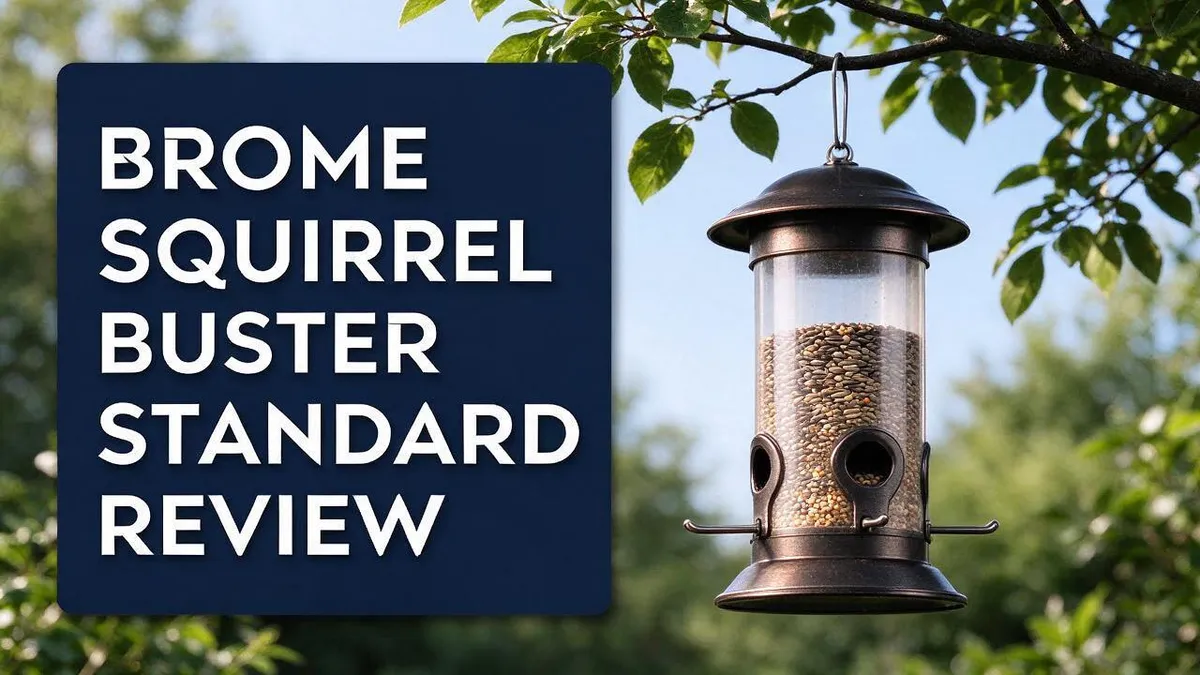
Brome Squirrel Buster Standard Review: Is This Worth It?
Squirrels love bird seed. You probably know that already. One clever squirrel can empty a feeder in minutes, and your birds go hungry.
The Brome Squirrel Buster Standard aims to fix that problem. This patented feeder uses weight to block raiders. When a squirrel climbs on, its weight shuts the cage over the food supply.
The Standard is smaller than the Classic model. It has a metal skirt, green mesh, and a Seed Ventilation System™ that the maker says keeps seed fresher. The design also resists chewing and cleans easily.
In a Nutshell
- Closing mechanism: A squirrel’s weight shuts the cage and cuts off the food supply. Birds keep eating, and squirrels walk away hungry.
- Chew resistance: The feeder uses a metal skirt and green mesh. Squirrels cannot gnaw their way to the seed.
- Fresher seed: The Seed Ventilation System™ moves air through the feeder. The manufacturer says this keeps seed fresher and draws more birds.
- Simple upkeep: The easy clean design makes refills and washing quick. Regular cleaning keeps your birds healthier.
- Setup: Assembly instructions come with the feeder. Most people can put it together without special tools.
- Our verdict: The Standard suits gardeners who want a reliable, low fuss feeder. We found no major drawbacks in our research.
Squirrel-Proof Mechanism and Weight Adjustment


Last update on 2026-10-13 / Affiliate links / Images from Amazon Product Advertising API Some of the links on this website are affiliate links, which means that at no additional cost to you, I earn a commission if you click through and make a purchase. I only recommend products and services that I believe will add value to my readers. Thank you for your support!
Ever wonder how a feeder can tell a bird from a squirrel? The answer comes down to weight. Birds are light enough to feed freely, while squirrels are heavy enough to trigger the cage.
The weight setting gives you real control over this process. You can change the trigger point to match the animals visiting your yard. This means one feeder can work for many different garden setups.
Here is how the process works. When an animal lands on the feeder, its weight activates the mechanism. The mechanism then cuts off the food supply and locks the cage.
Think about the squirrels you see most often. Larger, heavier squirrels may need a setting that responds quickly. Smaller visitors might need a looser setting so they still reach the seed.
Adjusting the setting is simple. Make small changes, then watch the feeder for a few days. If squirrels still reach the food, make the setting more sensitive. If birds struggle to get inside, make it less sensitive.
Squirrels learn fast. When the cage locks every time they try, they often move on to easier targets. Birds, on the other hand, keep returning because the feeder works for them.
Keep the moving parts clean too. Brush away spilled seed or debris that could block the mechanism. A clear path helps the weight system respond the way you expect.
Check the feeder after strong wind or heavy rain. Make sure it hangs straight and moves freely. A steady feeder makes the weight adjustment easier to judge.
Keep a simple log of your changes. Write down the setting, the date, and which animals visited. Over time, you will see which setting works best for your yard. This small habit saves guesswork.
Patience pays off with this feeder. Small tweaks made over a week often lead to the best results. Your birds get steady access, and squirrels get less chance to win.
Build Quality and Chew-Proof Construction
Build quality shapes how long this feeder lasts in your yard. Squirrels test every part, so solid construction matters most.
Start your inspection during assembly. Tighten each fastener and check that every piece sits flat.
Loose parts give a squirrel something to grip. Wiggle each section gently after it is joined.
Next, look closely at the mesh edges. Make sure the mesh sits firmly inside its frame with no gaps.
Gaps at the corners are where persistent squirrels often try their luck first. Close them before you hang the feeder.
The metal skirt deserves a close look too. Run your fingers along the seams to feel for sharp edges or bends.
Bent metal can weaken the skirt over time. A straight, even skirt keeps the feeder working as designed.
Hanging hardware matters just as much. Hooks, chains, and clips carry the full weight of the feeder, the seed, and any visiting animals.
Test the hardware before adding seed. Hang the empty feeder and push it sideways. Listen for creaks or rattles.
Solid metal parts usually hold their shape longer than thin plastic. That helps the feeder stay accurate over many seasons.
Look at the seed tray and base as well. Solid bases stay level when birds land and when a squirrel tries to climb.
A level base keeps seed from spilling onto the ground. Spilled seed draws more pests to your yard.
Plan a simple monthly look at screws and hooks. Small fixes early prevent bigger repairs later.
Good build quality saves you time. A feeder that stays tight needs fewer repairs and less guesswork.
Finally, take a photo of the feeder when it arrives. Photos make it easy to spot changes later.
Seed Ventilation and Bird Attraction
Seed freshness matters more than many people realize. Damp seed can grow mold and clump inside the feeder. Birds often skip spoiled food, so fresh seed keeps them coming back.
The manufacturer says the Seed Ventilation System™ keeps seed fresher and draws in more birds. Good airflow matters because moisture is the main enemy of backyard seed.
Rain, morning dew, and humid days all add water to seed. Steady airflow helps dry out the feed after each shower. That simple step protects the food between refills.
Bird attraction works in a similar way. Songbirds such as chickadees, finches, and nuthatches look for dry, easy food. When they find a steady supply, they often visit more often.
Keep the seed type in mind too. Black oil sunflower seed is a popular choice for many feeder visitors. Pick a mix that suits the birds in your area.
Placement matters just as much as the feeder itself. Hang it near shrubs or a tree where birds feel safe. Keep it away from busy doors so birds can approach calmly.
Some birds stay shy at first. Watch which species arrive first and note the times they visit. Those notes help you shape your setup over time.
Seasonal changes also affect feeding habits. In winter, birds need more energy to stay warm. In spring, many birds look for high protein foods for their young. Watch your feeder across the seasons and adjust your mix as needed.
Refresh the seed when it looks clumped or wet. Empty old seed before adding new supply. Fresh batches keep the feeder inviting for every visitor who stops by.
Many gardeners enjoy a quick daily check. A glance at the feeder shows whether birds are eating or ignoring the seed. That small habit reveals what works in your yard and shows you new visitors too.
Top 3 Alternatives
Looking for other ways to keep squirrels away from your bird seed? These three options work well for many backyard feeders. Each one helps birds eat while blocking the pests.
Droll Yankees Flipper

Last update on 2026-09-13 / Affiliate links / Images from Amazon Product Advertising API Some of the links on this website are affiliate links, which means that at no additional cost to you, I earn a commission if you click through and make a purchase. I only recommend products and services that I believe will add value to my readers. Thank you for your support!
The Flipper uses a spring-loaded perch that tips squirrels off the feeder. Small birds stay on the perch and keep eating. This simple design suits people who want a hands-off solution. It works best when you hang the feeder from a sturdy pole. Most squirrels give up after a few failed tries.
Brome Squirrel Buster Plus

Last update on 2026-07-01 / Affiliate links / Images from Amazon Product Advertising API Some of the links on this website are affiliate links, which means that at no additional cost to you, I earn a commission if you click through and make a purchase. I only recommend products and services that I believe will add value to my readers. Thank you for your support!
This model offers the classic cage protection that many bird lovers trust. Squirrels cannot reach the seed through the wire guard. Birds slip through the openings with ease. It suits gardeners who want a clear view of their feeding station. You can set it up in just a few minutes, and it fits most standard poles.
Aspects QuickDraw

Last update on 2026-11-05 / Affiliate links / Images from Amazon Product Advertising API Some of the links on this website are affiliate links, which means that at no additional cost to you, I earn a commission if you click through and make a purchase. I only recommend products and services that I believe will add value to my readers. Thank you for your support!
The QuickDraw takes a different approach with its quick-closing feed ports. When a squirrel lands on the feeder, the ports shut within seconds. Birds can still reach the seed without trouble. It fits well in yards with heavy squirrel traffic. Cleaning is easy because the seed tray pulls out for quick refills.
Assembly, Filling, and Cleaning
Setting up this feeder takes less time than you might think. The manufacturer provides instructions, so you can follow each step with confidence.
Lay out every part on a clean table first. Check that each piece is present before you begin. This quick step saves you from stopping halfway through.
Follow the order shown in the instructions. Join the sections in sequence. Tighten connectors by hand before you reach for any tools.
Fill the feeder only after it hangs securely. Pour seed in slowly. Let it settle evenly inside the cage so birds can reach it easily.
Avoid packing seed tightly into the feeder. Leave room for birds to reach the openings. Overfilling can also block the feed path and waste seed.
Choose a seed mix that suits the birds in your area. Large chunks may clog small openings. Smaller seed flows more freely through the ports.
Cleaning keeps birds healthy and keeps the feeder working well. Empty the old seed before every refill. Brush away hulls and droppings with a small brush.
Wash each part with warm water and mild soap. Rinse every piece well. Let everything dry fully before you add new seed.
The easy to clean design makes this job faster. Removing the parts for washing takes little effort. Most gardeners finish the full process in a few minutes.
Clean the feeder every two weeks during mild weather. Clean it more often during wet or humid seasons. Mold grows fast in damp seed, so do not skip this step.
Store spare seed in a dry, sealed container. Keep it away from pests and moisture. Fresh seed makes each cleaning day easier.
Make cleaning a habit. Pair it with your regular seed check. A quick wipe-down between full washes keeps the feeder fresh and ready for visitors.
Size, Capacity, and Placement in Your Yard
The Brome Squirrel Buster Standard is smaller than the Classic model. This compact frame suits decks, balconies, and small yards. It also fits well on a post or hook with limited space.
Smaller size means smaller capacity. The tray holds less seed than a larger feeder would. Busy yards may need more frequent top ups. Plan your refills around how fast your birds eat.
Capacity also depends on your visitors. A few chickadees or finches eat slowly. A large flock empties the tray much faster. Watch the seed level for a week and note when birds arrive most often.
The weight system needs open space. The cage closes when a squirrel lands on it. Leave clear room around the feeder so the cage moves freely. Nearby railings, siding, or plant pots can block the motion.
Distance from branches matters too. Squirrels often leap from nearby limbs onto a feeder. Keep the feeder several feet away from trees, fences, and roof edges. This gap makes long jumps harder for them.
Height is another practical choice. Hang the feeder at a level you can reach easily. You will fill, check, and clean it more often than you expect. An easy reach keeps routine care simple.
Think about your yard as a whole. Look at the view from your kitchen window. A nearby shrub gives birds a quick place to hide. Just keep branches from reaching the feeder itself.
Size, capacity, and placement work together. A smaller feeder with clear space and a comfortable height can serve your birds well. Check the setup each season and adjust as needed. Your birds will enjoy a steady food supply, and you will enjoy watching them.
Pros and Cons
Pros
- Squirrel proof design keeps seed away from pests.
- The cage closes when a squirrel lands on it.
- Chew proof construction holds up over time.
- The weight setting can be adjusted for your yard.
- The easy to clean design makes upkeep faster.
Cons
- Its smaller size means less seed per fill.
- The weight system needs open space around it.
- Some birds stay shy at first.
- Setup takes care, so follow the order in the instructions.
Who Should Buy It
Not every bird lover needs this feeder, but some people will gain a lot from it. Think about your yard, your goals, and your daily routine before you choose.
This feeder suits people who lose seed to clever squirrels again and again. If you feel tired of chasing pests off your deck, this model may bring real relief.
Small yard owners often make the best match. Small yards rarely have room for a crowded feeding station, so a compact design fits well.
Beginners can also benefit from this feeder. They can learn which birds visit their yard without managing a large flock. Small, steady visits also make each bird easier to identify.
Balcony gardeners and renters deserve a look too. A compact feeder can hang from a railing without taking over the space.
Wildlife watchers who enjoy squirrels may find extra fun here. Watching the cage respond to a squirrel’s weight becomes a lively show. It turns pest control into entertainment for the whole household.
Older adults who enjoy birds from a porch may appreciate a manageable routine. A smaller feeder means fewer trips outside to keep the birds visiting.
On the other hand, this feeder may not suit everyone. People who want to feed large flocks or many bird species at once may need a bigger model.
Busy households with children may also find this feeder interesting. Kids can watch the squirrels and birds from a nearby window. Learning about wildlife at home becomes a fun family project.
Pick this feeder if squirrels are your main problem and your yard has room for a small, steady crowd of birds. Your goals should guide the final decision.
Final Verdict
The Brome Squirrel Buster Standard earns a strong recommendation from us. It targets one problem and handles that problem well.
Most feeders lose the battle with squirrels. This one changes the outcome. A squirrel’s weight shuts off the food supply, so the seed stays for the birds.
The Seed Ventilation System™ adds another reason to like it. The manufacturer says it keeps seed fresher and attracts more birds. Fresh seed gives birds a reason to return, so the claim makes sense.
Our biggest takeaway is peace of mind. You fill the feeder, hang it, and stop watching the window with a frown. That calm is hard to find with a basic feeder.
The design also looks built for the long haul. A chew proof build and an adjustable weight setting mean the feeder can adapt as your backyard visitors change. You do not need to replace it each time a squirrel gets bolder.
We want to stay fair, too. The research we reviewed does not list any clear drawbacks. That gap does not prove the feeder is flawless.
Read recent buyer feedback before you decide. Real owners often share small details that specs never show. Their stories can confirm whether the feeder fits your yard.
Here is our overall view in simple terms:
- Performance: Excellent for stopping squirrels
- Durability: Strong, based on the chew proof build
- Upkeep: Friendly for regular cleaning
- Flexibility: Good, thanks to the adjustable weight
Our final verdict: this feeder is a smart choice for anyone tired of feeding squirrels instead of birds. It delivers on its main promise, and that matters most.
Take a look at the current listing below. Then pick the feeder that brings more birds and fewer squirrel raids to your yard.
Frequently Asked Questions
Will squirrels still try to reach the seed?
Some squirrels keep trying for a while. No feeder stops every squirrel. Watch the feeder during the first week so you can spot any issues early.
Which birds can use this feeder?
Many backyard birds can use it. Check a local bird guide to see which species visit your area. This helps you choose the right seed mix.
How often should I clean it?
Clean the feeder on a regular schedule. Remove old seed and debris before each refill. Damp seed can spoil, so keep the feeder as dry as you can.
What seed works best?
Plain seed is a good starting point. Avoid moldy or wet mix. Fill the feeder only as needed so the seed stays fresh and birds keep coming back.

Hello, I’m Emily Price, the founder of Birds Affection. As a passionate bird enthusiast and spiritual seeker, I’ve always been fascinated by the symbolic meanings and mystical connections between birds and our lives. On this website, I share my knowledge and insights on the spiritual significance of various bird species, exploring their roles as messengers, guides, and teachers. Through my writing, I aim to inspire and educate others on the profound wisdom and beauty that birds bring to our world. Join me on this journey as we delve into the enchanting realm of bird symbolism and discover the hidden meanings behind these magnificent creatures.


