Roamwild PestOff Squirrel-Proof Bird Feeder Review: Does It Really Stop Squirrels?
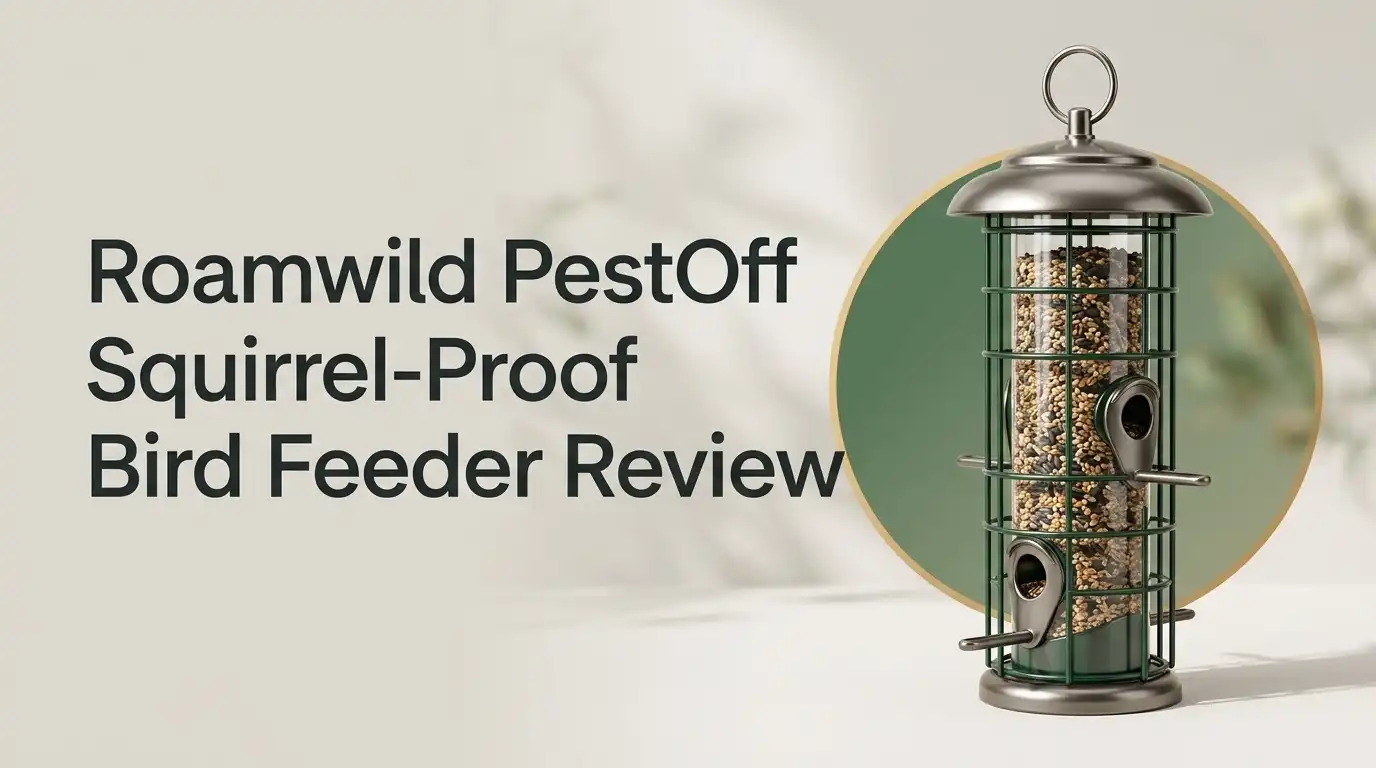
The Roamwild PestOff Squirrel Proof Bird Feeder aims to end that daily battle. Its metal baffles block climbers. Its weight sensitive perch closes when a squirrel lands.
The original model holds 3 lb of seed. The PestOff 2.0 holds 4 lb and adds dual baffles plus an anti squirrel ring.
Does it work? Users say it stops squirrels when you hang it as instructed. Larger birds like rooks and magpies can still shake seed loose.
This review covers the strengths, the weak spots, and who should buy it.
In a Nutshell
- Smart design: The weight sensitive perch closes when a squirrel climbs on. Metal baffles add extra protection.
- Newer version: The PestOff 2.0 holds 4 lb of seed. It adds dual baffles and an anti squirrel ring for better defense.
- Easy setup: Users say assembly takes little effort. The feeder also kept seed dry in heavy rain, according to one reviewer.
- Fewer refills: The large seed capacity means less time spent topping up the feeder.
- Weak spots: One birdforum user reported that all the seed fell out after setup. Rooks and magpies can also hang on one side and shake seed out of the other.
- Bigger options: The Roamwild Mega PestOff holds 8 lb. The Squirrel Buster Plus suits decks, as long as you mount it high above the rail.
Keep one caution in mind. Claims like “100% squirrel proof” come from the manufacturer. Independent tests have not verified them.
Squirrel-Proof Design and Baffle Mechanism

Last update on 2026-11-05 / Affiliate links / Images from Amazon Product Advertising API Some of the links on this website are affiliate links, which means that at no additional cost to you, I earn a commission if you click through and make a purchase. I only recommend products and services that I believe will add value to my readers. Thank you for your support!
The metal baffles do much of the heavy lifting. Squirrels often struggle to grip smooth metal, so they slide off before reaching the seed.
The PestOff 2.0 adds a second layer of defense. It uses dual baffles and an anti squirrel ring that blocks climbing from below.
Two barriers give squirrels more ways to fail. Persistent pests often give up after a few tries.
Placement matters just as much. Hang the feeder on a clear pole or wire, away from branches, fences, and roofs.
A squirrel that jumps from a nearby limb can still reach the top. Keep the feeder a safe distance from any launch point.
Larger birds need a different approach. Rooks and magpies can hang on one side and shake seed out the other.
Their size and grip make them a unique challenge at busy feeding stations. Check the seed ports after each refill. Clear any clumps or debris so the seed flows freely.
Careful installation matters too. Read the guide before you mount the feeder. A loose hook or a low height can open a path for clever squirrels.
Look at the baffle from below before you fill it. Make sure it sits level and moves without rubbing. Bent metal or built up dirt can weaken its protection.
Clear sightlines also help. Place the feeder where you can watch it from a window. You will spot trouble fast and fix it sooner.
Overall, the design shows real thought. The baffles, the ring, and the spacing work together. Most squirrels will struggle, though no feeder is perfect. Test it for a week before you rely on it.
Seed Capacity and Refill Frequency
Every feeder needs a steady supply of food. The real question is how often you will climb out to refill it. Your daily bird traffic decides that answer more than any spec sheet.
Small flocks of chickadees and finches eat slowly. A feeder like this can last several days between fills. Busy yards with jays, doves, and cardinals empty it much faster.
Seed type changes everything. Sunflower seed is heavy and attracts many species. Low grade mixes contain filler that birds toss onto the ground. Less waste means the seed in the tube lasts longer.
Rain can test any feeder. One reviewer reported that seed stayed dry during a heavy storm. Dry seed does not clump or sprout, so the food stays fresh until the next fill.
Watch for seed loss. Large birds such as rooks and magpies can shake seed out the other side. Check the ports and tray after windy days. Spilled seed attracts ground feeders and pests.
Fill the feeder only partway at first. This lets you see how fast birds eat. Adjust the amount based on what you observe over one or two weeks.
Clean the feeder every time you refill it. Old seed can grow mold, which harms birds. Wipe the tray and ports with warm water and let everything dry fully before adding fresh seed.
Plan a refill schedule that fits your routine. Set a reminder on your phone for the same day each week. Consistent refills keep birds coming back to your yard.
Keep a notebook or simple tally of refill dates. Over time, the pattern shows your true refill rate. That record helps you decide whether a larger feeder makes sense.
Assembly and Hanging Setup
Setting up the PestOff takes less time than most people expect. Open the box and lay out every part on a table. Check that the hanger, the baffles, and the perch are all present before you start.
Most builds need only basic hand tools. Keep a small screwdriver nearby. Tighten each fastener until it feels firm, but do not force the parts.
Test the perch before you hang it. Press down gently on the perch with your hand. It should move freely and return to its starting position. A stiff perch can stay open and let squirrels reach the seed.
Choose a hook or pole that can handle the full weight. A filled feeder gets heavy fast. Sturdy hardware keeps the feeder steady in wind.
Hang the feeder at a height you can reach easily. Consider a shepherd’s hook or a pole with a stable base. Reaching up each week makes refilling and cleaning simpler.
Think about the surface where the feeder hangs. A sturdy branch or metal post works well. Avoid thin branches that bend under weight or sway in a breeze.
Note the wind direction in your yard. Strong gusts can make the feeder swing hard. A short chain or swivel hook can help absorb the motion.
Give the feeder a gentle shake after hanging. Watch for swaying or wobbling. Tighten the hanger if the feeder moves more than expected.
Check the hanger connection once a month. Weather and bird traffic can loosen screws over time. A quick look keeps the setup secure all season.
Save the manual for later checks. Parts may need retightening after storms. Reviewing the steps saves time when you clean or repair the feeder.
Top 3 Alternatives
Brome Squirrel Buster Plus


Last update on 2026-07-01 / Affiliate links / Images from Amazon Product Advertising API Some of the links on this website are affiliate links, which means that at no additional cost to you, I earn a commission if you click through and make a purchase. I only recommend products and services that I believe will add value to my readers. Thank you for your support!
The Brome Squirrel Buster Plus helps keep squirrels away from your seed. It uses a weight activated perch that closes the feeding ports when a heavy squirrel lands on it. Small birds can still eat with ease.
The feeder holds a good amount of seed, so you refill it less often. This model works well for busy yards with many visitors.
Droll Yankees Yankee Flipper

Last update on 2026-09-13 / Affiliate links / Images from Amazon Product Advertising API Some of the links on this website are affiliate links, which means that at no additional cost to you, I earn a commission if you click through and make a purchase. I only recommend products and services that I believe will add value to my readers. Thank you for your support!
The Droll Yankees Yankee Flipper takes a playful approach to squirrel control. When a squirrel climbs onto the perch, the perch flips and sends it tumbling off. Birds land on the perch without any trouble.
This feeder fits well in open spaces where squirrels try to jump in. Many people enjoy watching the flip action from a window.
Brome Squirrel Buster Classic

Last update on 2026-07-11 / Affiliate links / Images from Amazon Product Advertising API Some of the links on this website are affiliate links, which means that at no additional cost to you, I earn a commission if you click through and make a purchase. I only recommend products and services that I believe will add value to my readers. Thank you for your support!
The Brome Squirrel Buster Classic is the original model in this line. It uses the same weight sensing design that closes the seed ports under a squirrel’s weight. It is a simple choice for anyone who wants basic protection.
The Classic keeps setup easy and cleaning simple. It suits gardeners who want a trusted feeder without extra features.
Weather Resistance and Seed Dryness
Weather is one of the biggest threats to bird seed. Wet seed swells, clumps, and can grow mold. Birds may ignore soggy food, and it can make them sick.
The PestOff keeps most rain away from the seed. Its top shields the openings from falling water. Still, you should check how water moves through the feeder.
Look for drainage at the base. Water that pools at the bottom soaks seed from below. Tip the feeder slightly after a storm and watch for trapped water.
Wind changes everything. A strong gust can push rain sideways past the top. Think about storm direction in your yard. Face the openings away from that wind when you hang it.
Cold weather brings its own challenges. Snow piles up on top and slips into small gaps. Frost can form inside and melt into drips later.
Winter moisture causes the biggest problems. Dry seed flows freely through the feeder. Damp seed sticks together and blocks the openings. Birds then lose access to food.
Sunshine can help too. Warm sun dries out any dampness inside the feeder. Hang the feeder where it gets morning light. Morning sun dries dew quickly and keeps seed fresher.
Check your seed every week during wet months. Scoop out any clumps or moldy pieces. Fresh seed keeps birds coming back to your yard.
Store extra seed in a sealed bin indoors. Moisture in the garage or shed can ruin a large bag. Buy only what you can use in a few weeks.
Watch for signs of trouble. Look for seed that smells sour or looks discolored. Dump it out and clean the feeder before adding new seed.
Bird Access and Larger Bird Limitations
Small songbirds usually do well here. Chickadees, finches, and sparrows land on the perch with ease. Their light bodies rarely cause problems.
Larger birds need more room to balance. Jays, doves, and starlings may find the perch cramped. Watch which species visit most often, and note any that seem frustrated.
The weight sensitive perch closes for squirrels, so it must also respond correctly to birds. Observe how the perch moves when a bird lands. If it stays closed too often, birds may give up on the feeder.
Ground feeding birds need a different plan. Doves, towhees, and juncos often prefer the ground. A simple tray placed nearby can serve them well. Keep it away from the feeder so seed does not mix with dirt.
Think about perch height too. Birds that flock in groups can crowd one hanging spot. Adding a second feeder gives more birds a turn.
Sometimes a bird cannot reach the seed port. Shorter birds may need to hover or stretch. A quick look from a distance tells you a lot.
Keep a simple list of the birds you see each week. Note which species use the perch and which avoid it. Patterns appear quickly after a few weeks.
Bird access changes with the seasons. Winter flocks grow larger and more aggressive, while summer visitors become fewer. Adjust your setup as the flock changes. This keeps every visitor happy and fed.
PestOff 2.0 vs Original: What Changed
The biggest change is capacity. The original PestOff holds 3 lb of seed. The PestOff 2.0 holds 4 lb instead. That extra pound means fewer trips with a scoop each week.
The 2.0 adds more squirrel defenses. It uses dual squirrel proof baffles and an anti squirrel ring. Squirrels face several barriers before they reach the seed.
Metal baffles give the 2.0 a sturdier build. The design uses metal baffles, which add strength. Metal can help the feeder last through rough weather and busy squirrels.
Size details only cover the original. The listed size is 20.5 by 7.5 by 7.5 inches with the hanger. Check the 2.0 measurements before you buy.
Reviews focus on squirrel control. Users report the feeder stops squirrels when hung as instructed. Many people value this result most.
Some buyers report seed loss. One birdforum user said all seed fell out after setup, though two earlier units worked. This suggests a single unit may have a fault.
Larger birds can cause trouble too. Rooks and magpies can hang on one side and shake seed out the other. Watch how these birds behave near your feeder.
Bigger capacity exists in the same line. The Roamwild Mega PestOff holds 8 lb. Squirrel Buster Plus is another option for deck use if you mount it high enough above the rail.
Read the strong claims with care. The makers call it “100% squirrel proof” and “virtually indestructible.” Independent tests have not confirmed these claims, so treat them as marketing language.
Choose the version that fits your habits. The 2.0 suits people who want more seed and extra squirrel barriers. Watch your refill rate and bird traffic to see what works.
Pros and Cons
Pros
- Users report it stops squirrels when hung as instructed.
- Assembly is easy for most buyers.
- Seed stayed dry during heavy rain, according to one reviewer.
- Large capacity means fewer refills.
- Metal baffles add strength to the build.
Cons
- One birdforum user said all seed fell out after setup.
- Rooks and magpies can hang on one side and shake seed out the other.
- Claims like 100 percent squirrel proof come from the maker, not independent tests.
- Size details only apply to the original model.
Who Should Buy It
This feeder suits people who love feeding birds but feel frustrated by squirrels. If squirrels empty your current feeder every week, this design deserves a close look.
New bird watchers often feel unsure about where to start. This feeder gives beginners a simple way to attract birds to a backyard. It also works well for families who want children to watch birds from a window.
Gardeners with a sturdy hanging spot can get the most from it. A strong branch, a shepherd hook, or a solid post will do. Anyone without a safe place to hang it should look for another option.
Hanging height matters a lot for this feeder. Squirrels must be able to climb to reach it. The feeder must also hang where it can move freely.
Retirees and people who work from home often enjoy watching birds all day. A feeder near a window keeps the activity in clear view. Steady visitors make the hobby more fun for them.
Deck owners need a different plan in many cases. A deck railing often limits where the feeder can hang. The Squirrel Buster Plus may suit deck owners who can mount it high above the rail.
Think about your yard before you buy. Ask yourself three questions. Do you have a clear hanging spot? Do squirrels cause trouble? Do you want to attract small songbirds? If your answers match this design, it can be a strong choice for your yard.
Final Verdict
The Roamwild PestOff earns a solid recommendation for most backyard bird fans. It solves the problem that annoys people most. Squirrels lose their free meal, and your birds keep it.
The weight sensitive perch makes the difference. It closes when a heavy visitor lands. Small birds still feed with no trouble.
I see this feeder as a smart first step into squirrel control. Hang it well, fill it with good seed, and watch what happens. Placement decides success.
Take a few steps when it arrives. Check that the seed port sits straight. Run a short test with a small amount of seed before you fill the whole feeder. This habit catches a faulty unit early.
Think about your flock size as well. A bigger yard with many birds may prefer the Roamwild Mega PestOff, which holds 8 lb. Deck owners may like the Squirrel Buster Plus instead. It works when you mount it high enough above the rail.
Keep your expectations realistic. No feeder beats every clever animal. Maker claims sound bold, so judge the feeder by your own results.
Here is my final take in plain terms. Buy the PestOff if you have a sturdy hook, a clear hanging spot, and a squirrel problem. You will likely enjoy calmer mornings and busier perches.
Skip it if you can only mount it on a low rail. Pick a different model for that setup.
Overall, the PestOff is a smart upgrade for patient bird lovers. Give it a good spot, check it often, and clean it every few weeks so the seed stays fresh. Then enjoy your visitors.
Frequently Asked Questions
Which birds visit this feeder most often?
Small songbirds like finches, chickadees, and cardinals often visit first. Larger birds may stop by too. Watch your yard for a few days to see which visitors show up most.
What seed works best in this feeder?
Black oil sunflower seed is a popular choice for many backyard birds. Try a small batch first. Then watch which birds eat it and adjust your mix from there.
How often should I clean the feeder?
Empty old seed and wash the feeder every few weeks. Use warm water and a mild soap, then let every part dry fully before you refill it. Wet or moldy seed can make birds sick, so this step matters.
Can I keep the feeder filled in winter?
Yes, many people keep it stocked all year. After snow or an ice storm, check that the perch and feeding ports still move freely. Brush snow off the hanger so the perch works as designed.
What should I do if squirrels still reach it?
First, check that the perch moves freely and that nothing blocks it. Next, look at jump routes. Remove nearby branches, move the feeder away from fences or railings, and keep it out of reach from roofs. Small changes like these often solve the problem.

Hello, I’m Emily Price, the founder of Birds Affection. As a passionate bird enthusiast and spiritual seeker, I’ve always been fascinated by the symbolic meanings and mystical connections between birds and our lives. On this website, I share my knowledge and insights on the spiritual significance of various bird species, exploring their roles as messengers, guides, and teachers. Through my writing, I aim to inspire and educate others on the profound wisdom and beauty that birds bring to our world. Join me on this journey as we delve into the enchanting realm of bird symbolism and discover the hidden meanings behind these magnificent creatures.