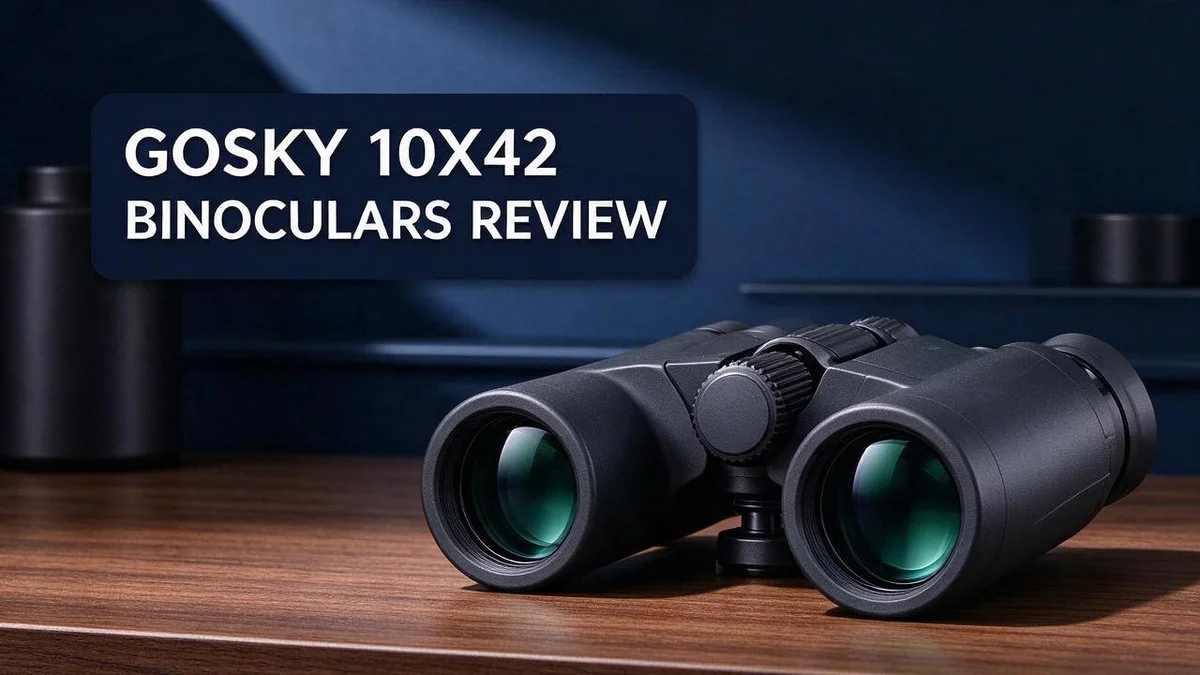
GoSky 10×42 Binoculars Review: The Only Guide You’ll Need
Do you want a sharper view of birds, trails, or game? The GoSky 10×42 Binoculars promise a close look at distant scenes.
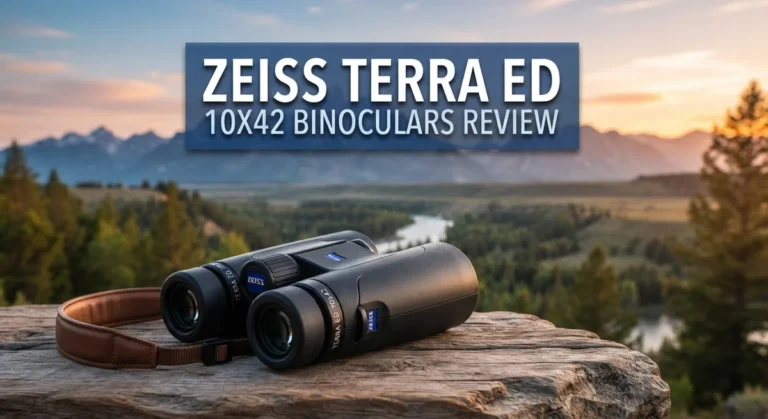
This model uses a roof prism design and a center focus wheel. It also has HD branded optics and a tripod mount.
GoSky markets it for travel, hiking, hunting, sports, and birding. That is a wide range of uses.
User feedback adds useful detail. Some people pair the 10×42 with a monopod to reduce shake. One user notes bright areas crossing the field edge. Others say the 8×42 version gives a wider view, which helps birders.
In this review, we look at what the 10×42 does well and where it falls short. We also compare it with rivals like the Bushnell Excursion HD and the Vortex Triumph HD. Let’s get started.
In a Nutshell
-
Best for: The 10×42 suits casual birders, hikers, and hunters who want extra reach and do not need premium glass.
-
Strong point: The 10x power pulls distant subjects closer. Faraway birds and game look larger and easier to study.
-
Trade off: Higher power magnifies hand shake. Some users pair these with a monopod or tripod for a steadier image. The built in tripod mount makes that easy.
-
Field of view: A Reddit comparison says the 8×42 model gives a wider view. That helps with fast moving birds. It also feels less shaky in the hand.
-
Edge quality: One user noticed bright areas crossing the edge of the field. Expect some softness near the borders in harsh light.
-
Competition: Rivals like the Bushnell Excursion HD 10×42 and the Vortex Triumph HD offer a step up. Premium picks like the Swarovski NL Pure 8×32 sit in another class.
Bottom line: The GoSky 10×42 works well for steady, relaxed viewing. Choose the 8×42 if you want a wider and calmer view.
Optical Performance and Image Quality

Last update on 2026-08-28 / Affiliate links / Images from Amazon Product Advertising API Some of the links on this website are affiliate links, which means that at no additional cost to you, I earn a commission if you click through and make a purchase. I only recommend products and services that I believe will add value to my readers. Thank you for your support!
Light matters just as much as magnification. The 42 mm objective lens gathers plenty of light, so the view stays bright during early morning bird walks and evening hikes.
The exit pupil works out to about 4.2 mm. That size suits most adult eyes in dim conditions, so details stay visible when the sun drops.
Colors look natural on most scenes. Greens in leaves and browns in bark appear clear rather than washed out. Your eyes feel less strain after a long session.
Sharpness changes across the view. Most people find the center crisp and clear. Edges may soften a little, so slow panning works better than quick sweeps.
Contrast decides how much detail you see in shadows. Dark tree lines and bright sky can both show texture. This matters when you scan thick woods for movement.
The center focus wheel adjusts quickly. Fast focusing helps when a bird flies in or a deer moves into view. Quick focus keeps the subject sharp without losing the moment.
Color fringing is a common concern at this power. Some viewers notice faint edge tints on bright objects. Test the glasses on a sunny scene before you commit.
Glasses wearers should check eye relief. Many people find a comfortable view with glasses on, but try them in person first. A good fit lets the whole image appear without dark edges.
A tripod or monopod can steady the view for long watches. Stable support lets fine details stand out during slow observation sessions. It also reduces eye fatigue over time.
Overall, the optics deliver bright, sharp views in good light. Birders and hikers get clear detail for everyday outdoor use.
Field of View and Image Stability at 10x Magnification
Field of view shapes how quickly you find your subject. It describes how much of the scene you see at once. As magnification rises, that window usually narrows. So the 10×42 can feel slower when you sweep across a wide meadow or track a flock in flight.
Many people solve this with a simple habit. Spot the bird with your naked eyes first. Then raise the binoculars while you keep your eyes locked on that spot. This method saves time and cuts down on frustration.
Image stability matters even more at 10x. Small movements in your arms show up as a shaky picture. The good news is that you can control much of this motion.
Try bracing your elbows against your ribs. Rest your back against a tree or fence post when you can. Breathe slowly and pause between breaths, since chest movement can blur the view.
Short watches work best for most users. Start with a few minutes on one subject, then rest your arms. Tired muscles make the picture wobble more over time.
Wind also plays a role on open ground. Gusts move your body and the binoculars together. Choose a sheltered spot when the breeze picks up, or crouch behind a rock or bush.
A monopod helps most on long sessions. It takes weight off your arms and keeps the image calmer. Pair it with a slow scan, and you will see more detail with less effort.
Overall, the 10×42 rewards careful handling. With a steady stance and a slow scan, you get a clear and detailed view. Practice makes the difference, and most people improve within a few outings.
Build, Design and Handling
The GoSky 10×42 feels solid in the hand. Its roof prism design keeps the body slim and easy to hold. Most people can carry it on a short hike without strain.
Start with fit. Hold the binoculars before each outing and check how the barrels rest in your palms. A good fit makes a real difference after an hour of scanning.
Like most roof prism models, this one uses a hinge to adjust barrel spacing. Set the width until you see one round circle instead of two overlapping ones.
The center focus wheel sits where your fingers naturally rest. You can make quick changes with one hand while keeping the other steady on a tree or rail.
Carrying comfort depends on the strap. A neck strap spreads the weight across your shoulders. Many hikers prefer a chest harness for long walks.
Handling also changes in cold weather. Thick gloves can make small controls hard to turn, so test the focus with gloves on before a cold morning birding trip.
Lens caps are easy to lose. Attach them to the strap or keep a soft pouch in your pack. Dust and fingerprints can soften the image, so wipe the lenses with a microfiber cloth.
Store them in a dry spot. Moisture can cause fogging inside and wear down the lenses over time. Check the product listing for water resistance details before rainy trips.
Overall, the body suits people who value simple controls and comfortable carry. The layout stays clear, so you can focus on the scene instead of the gear.
Top 3 Alternatives
Nikon Monarch 5


Last update on 2026-07-11 / Affiliate links / Images from Amazon Product Advertising API Some of the links on this website are affiliate links, which means that at no additional cost to you, I earn a commission if you click through and make a purchase. I only recommend products and services that I believe will add value to my readers. Thank you for your support!
The Nikon Monarch 5 gives you bright, sharp images. Its extra low dispersion glass keeps colors true and natural. Many outdoor fans love its comfortable grip. Its wide field of view helps you track fast birds without losing focus. It also resists water and fog, so it works well in rough weather.
Vortex Diamondback HD

Last update on 2026-10-31 / Affiliate links / Images from Amazon Product Advertising API Some of the links on this website are affiliate links, which means that at no additional cost to you, I earn a commission if you click through and make a purchase. I only recommend products and services that I believe will add value to my readers. Thank you for your support!
The Vortex Diamondback HD is a strong choice for everyday use. Its high definition optics deliver clear edges and rich contrast. The lenses stay sharp from the center to the edge. Rubber armor protects the body from bumps and drops. A smooth focus wheel lets you adjust quickly. Its light frame also feels good during long walks.
Celestron Nature DX

Last update on 2026-08-27 / Affiliate links / Images from Amazon Product Advertising API Some of the links on this website are affiliate links, which means that at no additional cost to you, I earn a commission if you click through and make a purchase. I only recommend products and services that I believe will add value to my readers. Thank you for your support!
The Celestron Nature DX suits people who want simple, dependable views. Its fully multicoated lenses boost light for brighter scenes at dawn and dusk. It is fully waterproof and filled with nitrogen. This keeps the inside dry and clear. Its rubber covered body gives a firm grip in wet conditions. Beginners find it easy to learn and use right away.
Focus System and Tripod or Monopod Use
Focusing works best with a light touch. Turn the center wheel slowly until your subject looks sharp. Then pause and turn it back a tiny bit. This small habit helps you land on the exact spot.
Your two eyes rarely match perfectly. Use the diopter ring on the right eyepiece to fix that gap. Close the left eye, focus on a distant object with the center wheel, then close the right eye and turn the ring until the image looks clear.
Set the diopter once and leave it alone. A small dot of paint or a strip of tape on the ring helps you find the same spot later.
Think about the distance before you focus. Distant birds need a different setting than trees close by. Many people refocus each time they move to a new target. Slow adjustments keep your image clean and steady.
A tripod adds a different kind of steadiness. The GoSky has a tripod mount, so you can attach it to a standard tripod with an adapter. Check the thread size and mount type before you buy any accessories.
Use the mount for stationary watches, such as waiting for deer at a field edge. Rest the binoculars on the tripod, then scan slowly by moving the head. The tripod carries the weight, so your neck and arms can relax.
Practice switching between the tripod and your hands. Remove the binoculars quickly and keep them ready. Quick changes help you catch animals that move fast.
Best Uses: Birding, Hiking, Hunting and Sports
Birders often reach for these binoculars first. The large 42 mm lenses gather plenty of light at dawn and dusk.
Feathers show rich color, so you can spot small markings on warblers and finches.
Hiking brings a different challenge. You carry the glasses for hours, so every ounce matters.
Scan distant ridgelines and valleys during rest stops. Many hikers look ahead more often and spot wildlife before it runs.
Hunting starts before sunrise. Shadows fill the timber, and game moves slowly through brush.
Sweep slowly along tree lines and clearings. Clear contrast helps you separate an animal from its background.
Sports move fast. Follow a player across a field or track a runner on a long course.
Keep the action near the center of the view. Quick scans let you catch plays before they drift out of view.
Watch the sun in every setting. Some users notice bright patches crossing the edge of the view in strong light.
Turn your back to the sun when you can. This keeps glare off the lenses and makes shapes easier to read.
Overall, one pair covers many activities. Birds at dawn, trails at midday, and fields at dusk all suit this model.
Plan each outing around the light. Early mornings suit birding and hunting, while afternoons favor sports and open hikes.
Think about how long you stay in one place. Sports fans move around a lot, while birders often sit and wait for an hour.
Bring a small notebook for bird names or hunting notes. Jot down the time and place, so you can plan the next trip.
Over time, you will learn which setting suits your style best.
Value for Money
The GoSky 10×42 packs several useful features into one pair. A roof prism body, center focus, and a tripod mount all come standard. Those features cover most outdoor needs.
Magnification and field of view involve a choice. The 10×42 brings distant birds and deer closer. The 8×42 version offers a wider view, which helps when you track fast birds. A Reddit comparison noted that the wider view matters for birding. Pick the model that fits your main activity.
Steadiness matters more at higher power. Higher magnification shows more hand movement. Many owners pair the 10×42 with a monopod for smoother views. A monopod is lighter and quicker to set up than a tripod.
Some bright areas can appear at the field edge. One reviewer mentions bright light crossing the edge of the view. This happens most when the light source enters the frame. Shift your angle slightly to reduce the glare.
Similar models share the same core specs. The Bushnell Excursion HD 10×42 matches the magnification and objective size. The Vortex Triumph HD and Hawke Frontier 8×42 ED X also target outdoor users. The GPO Passion ED 8×42 and Swarovski NL Pure 8×32 offer other options. Compare them side by side to see which fits your needs.
Long term performance depends on simple care. Clean the lenses with a soft cloth after each outing. Store the binoculars in a dry case to avoid moisture damage. Regular care keeps the optics bright for years.
Plan your choice around your main activity. Birders may prefer the wider view of the 8×42. Hunters and hikers often choose the 10×42 for extra detail at a distance. Think about how you plan to use the binoculars most often.
Pros and Cons
Pros
- The 10x power pulls distant birds and deer closer.
- The 42mm front lenses gather plenty of light at dawn and dusk.
- HD branded optics aim for sharper, more detailed views.
- One pair suits travel, hiking, hunting, sports, and birding alike.
Cons
- A narrower field of view makes it harder to follow fast birds.
- Many users add a monopod for steady viewing, which means extra gear.
- Few formal reviews list clear weak points, so test them in person first.
Who Should Buy It
Anyone new to binoculars can find this pair a helpful first step. The controls stay simple, so there is little to learn before your first outing.
New buyers often feel unsure about what to look for. This pair gives a clear starting point, so you can focus on enjoying nature instead of comparing confusing terms.
Gift shoppers often want something useful that lasts. This pair suits a nature loving friend, a curious teenager, or a relative who enjoys long walks.
Families who share one pair will also appreciate the quick adjustments. Each person can sharpen the view with a simple turn, so nobody waits long for their turn.
Students on field trips may find this pair useful too. The wide view helps a small group study the same bird or tree together.
Road trippers who love scenic overlooks may enjoy it as well. It brings distant mountains and lakes closer without much fuss.
This model may not suit everyone, though. People who need a pocket size pair for daily carry will likely want something smaller. Those who struggle to hold optics steady may also need extra support.
In short, this pair fits people who want a big view and a simple setup. Think about where you plan to use it, then decide if it matches your needs.
Final Verdict
The GoSky 10×42 earns a solid recommendation for the right buyer. It brings wildlife and scenery close and keeps the controls simple.
Think of it as a versatile all rounder instead of a specialist tool. It handles many outings without fuss.
Who should buy it? Hikers, travelers, and sports fans will get the most from this pair. Casual birders who enjoy distant detail will like it too.
Who should look elsewhere? Birders who follow fast movers may prefer the 8×42 sibling. A Reddit comparison says it offers a wider view and feels less shaky.
Shoppers who want premium glass can compare other options. The Vortex Triumph HD, GPO Passion ED 8×42, and Hawke Frontier 8×42 ED X all aim at serious users. The Swarovski NL Pure 8×32 sits at the top end of that group.
Those models focus on different strengths. The GoSky focuses on reach and everyday flexibility.
Ask yourself three quick questions before you decide.
First, do you want more reach or a wider scene? Second, will you hold the binoculars by hand or use a support? Third, do you need them for one trip or for many seasons?
A short trial helps a lot. Walk around, focus on a distant tree, and notice how your hands feel after a few minutes.
Used with a little patience, this pair can deliver many enjoyable moments outdoors. It rewards people who practice their technique and spend time in the field.
That makes it a friendly pick for curious nature lovers.
Our verdict: Choose the GoSky 10×42 if you want a closer look and a straightforward, versatile pair. Choose the 8×42 if a steadier, wider scene matters more to you.
Frequently Asked Questions
Is the GoSky 10×42 a good pick for beginners?
Yes, it can be a helpful first pair. Beginners often find the center focus easy to learn. The setup stays simple, so new users can start watching right away.
Can I hold the GoSky 10×42 by hand?
You can, but steady viewing takes practice. Higher magnification shows small shakes more clearly. Some users add a monopod for longer sessions, which adds one more item to pack.
Does the 10×42 work well for birding?
It works for many birds, but fast movers can be tricky. The narrower view makes it harder to follow flying birds. Serious birders who track quick movement may prefer the 8×42 sibling.
Are there any known weak points?
Formal reviews rarely list clear weak points. Some users notice bright areas near the edge of the view. Look for glare during a daytime check.
Which competitors should I compare?
Many shoppers compare the Bushnell Excursion HD 10×42, the Vortex Triumph HD, and the Hawke Frontier 8×42 ED X. Each model focuses on different strengths. Compare the views, comfort, and weight before you decide.

Hello, I’m Emily Price, the founder of Birds Affection. As a passionate bird enthusiast and spiritual seeker, I’ve always been fascinated by the symbolic meanings and mystical connections between birds and our lives. On this website, I share my knowledge and insights on the spiritual significance of various bird species, exploring their roles as messengers, guides, and teachers. Through my writing, I aim to inspire and educate others on the profound wisdom and beauty that birds bring to our world. Join me on this journey as we delve into the enchanting realm of bird symbolism and discover the hidden meanings behind these magnificent creatures.