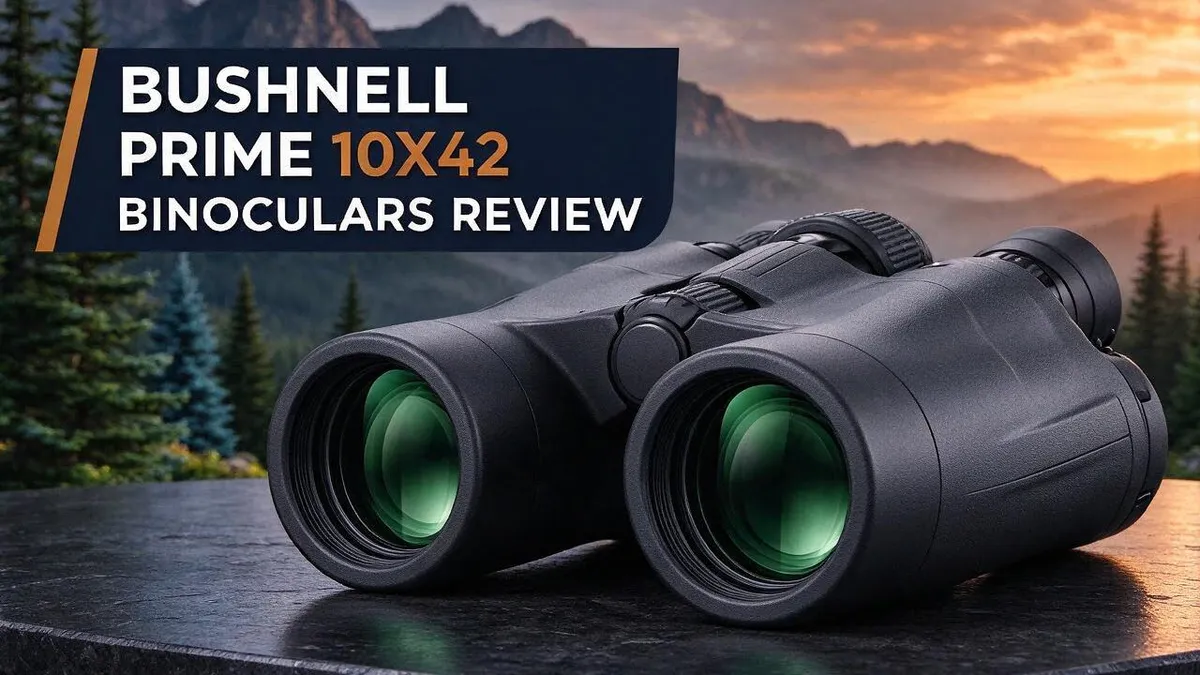
Bushnell Prime 10×42 Binoculars Review: In-Depth Breakdown
Do you want a pair of binoculars that handles rain, fog, and rough trails? The Bushnell Prime 10×42 aims to do exactly that.
This model offers 10x magnification and 42mm objective lenses. You get a bright, close view of birds, deer, and distant ridgelines.
The optics are multi coated for clearer images. EXO Barrier protection helps shed water, dust, and oils from the glass.
The body is IPX7 waterproof and fogproof. A diamond cut grip also keeps your hands steady in wet weather.
In this review, I will break down how the Prime performs in the field. You will see who it suits best and how it compares to rivals.
In a Nutshell
- Best for: Hunters, birdwatchers, and general outdoor users who want a dependable pair for daily use.
- Lens protection: The EXO Barrier coating helps repel water, oil, dust, and fingerprints. That keeps the view clean on messy days.
- Sealed build: O ring sealed optics keep moisture out. The listing says the binoculars can handle submersion for up to 30 minutes.
- Handling: The diamond cut grip gives you a secure hold, even with wet or gloved hands. Textured adjustment knobs are easy to find and turn.
- Extras: The matte body looks clean and low profile. Black lens caps come with the binoculars to protect the glass when you store them.
- Alternatives: Shoppers who want more can look at the Bushnell Nitro or Legend Ultra HD. Those models sit higher in the lineup. Experts often recommend ED glass for the sharpest views.
Optical Quality and Coatings


Last update on 2026-10-31 / Affiliate links / Images from Amazon Product Advertising API Some of the links on this website are affiliate links, which means that at no additional cost to you, I earn a commission if you click through and make a purchase. I only recommend products and services that I believe will add value to my readers. Thank you for your support!
Good optics decide how much you enjoy every look. The Prime 10×42 focuses on light transmission and clean color. Your eyes stay relaxed, even after hours on the trail.
Coatings do most of the heavy lifting here. Each lens surface gets layers that reduce glare and reflections. More light then reaches your eyes, so the view feels brighter.
Brightness matters most at dawn and dusk. A 42mm objective gathers plenty of light for this. The exit pupil sits around 4.2mm, which helps your eye take in that light easily.
Contrast matters too. Good coatings keep colors true, so greens look natural and feathers show their shades. Birders will notice the difference on a grey morning.
Edge sharpness is another test. Weaker optics often blur near the rim of the view. Test this yourself by sweeping across a tree line or fence post. A clear edge means the optics are working well.
Glare control helps when the sun sits low. Sunrise or sunset views can wash out details. Coated lenses reduce that wash, so you see more texture in bark, rock, and fur.
Tips for testing in store: look at a sign with fine text, then check the edges. Watch for color fringes around bright objects. Note how calm the image feels after a minute.
Look for a clean, bright image. Dull views often mean weak coatings or poor light flow. A sharp view should feel easy on your eyes.
Field tests tell the full story. Spend ten minutes watching birds or distant trees. Your eyes will tell you if the optics suit you. Comfort counts as much as spec sheets. The Prime 10×42 gives a solid start.
Build and Grip
The build feels solid from the first moment you pick up the Bushnell Prime 10×42. The parts fit together with no loose feel. That matters when you carry binoculars all day.
The center hinge sits in a sensible spot. Your hands rest near the barrels without strain. This helps during long birding walks or slow hunts.
Focus knob reach is another strength. The textured knobs sit where your thumb or finger can find them. You can adjust focus fast, even when a bird moves quickly.
Gloves can make small controls hard to use. These knobs stay easy to find by touch. Feel matters more than looks when the weather turns cold.
Eyecups deserve a closer look. Try them with and without glasses. A comfortable eyecup blocks stray light and keeps your view steady.
Strap attachment points matter on the trail. Check that the strap feels secure when you swing the binoculars. A loose strap can cause bumps and scratches.
Keep the black lens caps on when you pack the binoculars. This protects the lenses from scratches and everyday wear.
Think about daily carry too. Pack the binoculars in a backpack or a chest bag and walk for a while. Notice whether the grip still feels right after each stop.
Quick store test: Hold the pair at arm length, then bring them up to your eyes. Note how the weight shifts and how the grip feels. Take your time before you decide.
Overall, the build feels made for real use. A few hands on checks will show if it suits you. Trust your own feel more than any spec list.
Waterproofing and Weather Protection
Weather changes fast in the field. A sudden shower can catch you on a ridge or beside a lake. The Prime handles that moment well.
Cold mornings bring a different challenge. Warm breath and sudden temperature shifts can push moisture into a pair. Let the binoculars adjust slowly before you start glassing.
After each wet outing, wipe down the body with a dry cloth. Leave the lens caps off, then let the pair air dry for a while.
Sand and salt need extra care near the coast. Brush off grit before you wipe the lenses. Grit can scratch glass, so never rub it in.
Never pack wet binoculars into a closed case. Trapped moisture can lead to mold inside the optics. Keep the case open at home until everything feels fully dry.
Storage spot matters too. Pick a cool shelf away from heaters and direct sun. Heat and damp air can wear down gear over time.
Keep a small microfiber cloth in your pocket. Use it for quick rain drops between sightings. Clear glass means you never miss the next bird.
Rain also affects how you hold the pair. Wet hands slip, so keep a firm grip on the body. Keep the strap around your neck during downpours, so a stumble does not send the pair to the ground.
Sudden changes can still cause condensation on the outer lenses. Wipe them gently and wait in shade. Patience usually clears the view within minutes.
Plan your trips around the forecast when you can. Check wind and rain before you head out. A quick glance at the sky saves gear and keeps your day fun. Good planning makes weather less of a worry.
Top 3 Alternatives
Nikon Monarch 7

Last update on 2026-10-26 / Affiliate links / Images from Amazon Product Advertising API Some of the links on this website are affiliate links, which means that at no additional cost to you, I earn a commission if you click through and make a purchase. I only recommend products and services that I believe will add value to my readers. Thank you for your support!
Looking for a bright, clear view? The Nikon Monarch 7 is a strong pick. Its ED glass keeps colors true and edges sharp. The body is waterproof and fogproof, so rain or cold mornings will not stop you. Many hikers also like its light weight and comfortable grip.
Best for: Wildlife watchers who want clear images in low light.
Vortex Diamondback HD

Last update on 2026-10-31 / Affiliate links / Images from Amazon Product Advertising API Some of the links on this website are affiliate links, which means that at no additional cost to you, I earn a commission if you click through and make a purchase. I only recommend products and services that I believe will add value to my readers. Thank you for your support!
The Vortex Diamondback HD offers high definition optics in a friendly size. Its fully multi-coated lenses help bring out rich colors and fine detail. The body is waterproof and nitrogen purged, so the lenses stay clear in wet weather. Vortex also backs this model with a generous warranty, which gives buyers extra peace of mind.
Best for: Beginners who want dependable performance for sports and travel.
Celestron Nature DX

Last update on 2026-08-27 / Affiliate links / Images from Amazon Product Advertising API Some of the links on this website are affiliate links, which means that at no additional cost to you, I earn a commission if you click through and make a purchase. I only recommend products and services that I believe will add value to my readers. Thank you for your support!
The Celestron Nature DX is a good choice for nature lovers. It uses ED glass and phase-corrected prisms for sharp detail across the whole view. The frame is light enough to carry all day on a trail. It also handles moisture well, which helps during early morning birding trips.
Best for: Birders and hikers who want a lightweight option with clear views.
Handling and Focus Adjustment
Focus speed changes how the pair feels in use. A quick turn helps when a bird jumps from a branch. A slower turn helps when you study fine detail on a distant tower.
Try this in store. Pick a near object first, then turn to a far sign. Watch how fast the image snaps into place.
Smooth motion counts just as much. The wheel should turn without grit or sudden stops. A loose wheel can drift while you walk, and a stiff one slows you down when light fades.
Check both eyes separately. Most people see slightly differently with each eye. Cover one lens, focus on a sharp edge, then switch sides. If one side looks soft, the eyepiece balance may need a small tweak.
Your hand position helps too. Rest your index finger lightly on the wheel while you hold the body. This lets you adjust focus without shaking the view.
Test the wheel on the move. Walk a few steps while you track a moving object, like a car or a leaf in the wind. The focus should stay steady and easy to correct.
Practice builds comfort fast. Spend five minutes at home or in a park, switching between near and far targets. Muscle memory forms quickly, so the knob becomes second nature on your first real outing.
Focus also depends on your own eyes. Tired eyes struggle to lock onto detail, so take short breaks during long sessions.
Good focus feels almost invisible. You stop thinking about the knob and start watching the scene. That is the goal for any pair you carry into the field.
Best Uses: Hunting, Birdwatching and Outdoor Use
Hunters often scan open fields and tree lines for hours. The 10×42 magnification brings distant animals closer without a heavy shake. Glassing a ridge at first light feels calm and clear.
Early and late hours matter most for hunters. Wildlife moves when the light is low. The 42mm objective lens gathers more light than smaller models. This helps shapes stand out in shady cover.
Hunters also benefit from quick scanning. You can check a far slope, then sweep back to nearby brush. A bright, steady view helps you keep your place without losing focus.
Birdwatchers can take the Prime to many places. Try it in woodland, beside a lake, or along a coastal path. A steady image makes it easier to follow a flock as it turns in the sky.
Many birdwatchers pick a favorite spot and return often. They keep a notebook nearby and log each sighting. This pair suits that routine because it stays ready for a quick look.
Outdoor fans often use binoculars for more than wildlife. Hikers can read trail markers from a distance. Sports fans can follow a game from the stands or a hillside. Stargazers can also spot the Moon’s craters with clear detail.
Think about your own routine before you head out. Do you walk long trails or sit in one spot all day? Your daily habits shape which uses suit you best. A pair you carry often should feel light enough for the whole trip.
Value Compared With Other 10×42 Binoculars
Shoppers often compare the Bushnell Prime 10×42 with other 10×42 models before they decide. This section shows how it stacks up against its main rivals.
The Bushnell Nitro 10×42 shares the same basic size. Both models suit daily outdoor trips. The Prime fits wetter trips better, though.
Many shoppers see the Legend Ultra HD 10×42 as the upgrade pick. Buyers often choose it for clearer images in low light. The Prime offers a grip that holds firm in the hand.
The Zen-Ray ZRS 10×42 keeps the design simple. Its plain layout suits people who like direct controls.
The Nature View 10×42 comes in porro and roof styles. Roof models feel slimmer in the hand. Porro models have a classic shape that many people like.
The PowerView 2 10×42 suits people who want basic features. Hawke, Opticron, and Viking models often use ED glass. Look for that term when you compare sharpness and color.
Differences often show up in small details. Check the lens coatings, the body shape, and the grip before you choose. ED glass helps reduce color fringing, and many birders prefer that clean look when they scan bright skies.
Pick a model that matches your main use. Hunters may want a secure grip in cold weather. Birdwatchers may want a light body for long walks.
Choose the Prime if you want strong weather protection and a secure grip. Line up the features side by side before you make a final choice.
Pros and Cons
Pros
- Waterproof body keeps working in rain and wet fields.
- Sealed optics resist fog when temperatures shift.
- Multi coated lenses help bring out brighter views.
- EXO Barrier protection helps guard the lenses from dirt.
- Diamond cut grip gives a firm hold in damp conditions.
Cons
- The research lists no drawbacks yet.
- Full size 10×42 models can feel heavy on long hikes.
- Fit depends on your hand size and eye spacing.
- Testing in person helps you spot issues the listing leaves out.
Who Should Buy It
This pair suits people who want one set for many outdoor plans. It works well for those who do not want to carry separate gear for each trip.
Weekend campers often want one set for trail walks, lake days, and wildlife spotting. A 10×42 pair handles all of these with ease.
New nature fans also find it a good starting point. The strong magnification helps them see distant animals, and the layout stays simple to learn.
Families can enjoy it together. Kids who love nature walks can spot deer or boats, and parents can take turns without buying a second pair.
Hiking groups often share gear on trips. One pair can pass between friends, so everyone gets a turn scanning the ridge.
Sports fans can use it at outdoor games too. A seat far from the field becomes easier to enjoy with a clear view of each play.
People who dislike complicated gear will appreciate the plain design. Less fuss means more time watching the view.
Gift shoppers should consider this model too. It suits a relative who loves hunting, bird watching, or long days outside.
Travelers may want a different choice. A full size pair takes up space in a carry bag. Someone who flies often may prefer a compact model that packs small.
Consider where you will use it most. If you plan trips often and want one dependable pair, this model deserves a spot on your list. A quick look at your typical week makes the answer clear.
Final Verdict
The Bushnell Prime 10×42 earns a confident recommendation from me. It gives you a clear, steady view without fuss. It feels like a pair you can grab and go.
The 10x magnification brings distant birds and animals close. The 42 mm lenses gather plenty of light for dawn and dusk outings. You get a good balance between reach and brightness.
I like how the design keeps things simple. The textured knobs are easy to find and turn. You spend less time adjusting and more time watching.
Who should buy it? Choose this pair if you want a dependable all rounder for hunting, birding, and general outdoor use. It also suits anyone who wants gear that handles weather without worry.
Who should look elsewhere? Serious birders who want the sharpest edge detail may prefer a model with ED glass. The Legend Ultra HD fits that goal better. Casual users rarely need that step up.
Think about your habits too. If you head outside every weekend, you will use these often. Steady everyday performance matters more than a long list of extras. That reliability builds trust over many seasons.
Before you buy, check a few things. Hold the binoculars and see how they sit in your hands. Adjust the eye cups and focus to match your eyes. A quick fit check saves frustration later.
My final rating: The Bushnell Prime 10×42 is a solid, friendly choice for most outdoor fans. It keeps the features simple and the performance steady. I would happily take it on my next trip.
Frequently Asked Questions
How do I clean the lenses after a beach trip?
Rinse the binoculars with fresh water first. Then wipe the lenses with a soft microfiber cloth. Sand and salt can scratch glass, so never rub the lenses dry.
Does the 10×42 size work well at dusk?
Yes, the 42 mm objective gathers good light. The exit pupil of about 4.2 mm helps views stay bright near sunset. Shady forest edges still look clear.
Can kids use these binoculars?
Kids can use them with adult help. The 10x power can make images shake in small hands. A strap and a steady rest, like a fence post, make viewing easier.
What should I check before a long hike?
Set the eye cups and focus before you leave. Practice focusing on a sign so you know how the wheel feels. Pack a cloth and keep the strap secure.
How should I store them between trips?
Keep them in the case in a dry spot. Store them away from direct heat, since high temperatures can wear down seals over time. Clip the lens caps to the strap so they stay with you.

Hello, I’m Emily Price, the founder of Birds Affection. As a passionate bird enthusiast and spiritual seeker, I’ve always been fascinated by the symbolic meanings and mystical connections between birds and our lives. On this website, I share my knowledge and insights on the spiritual significance of various bird species, exploring their roles as messengers, guides, and teachers. Through my writing, I aim to inspire and educate others on the profound wisdom and beauty that birds bring to our world. Join me on this journey as we delve into the enchanting realm of bird symbolism and discover the hidden meanings behind these magnificent creatures.