Juegoal Hanging Glass Hummingbird Feeder Review 2026: Worth It?
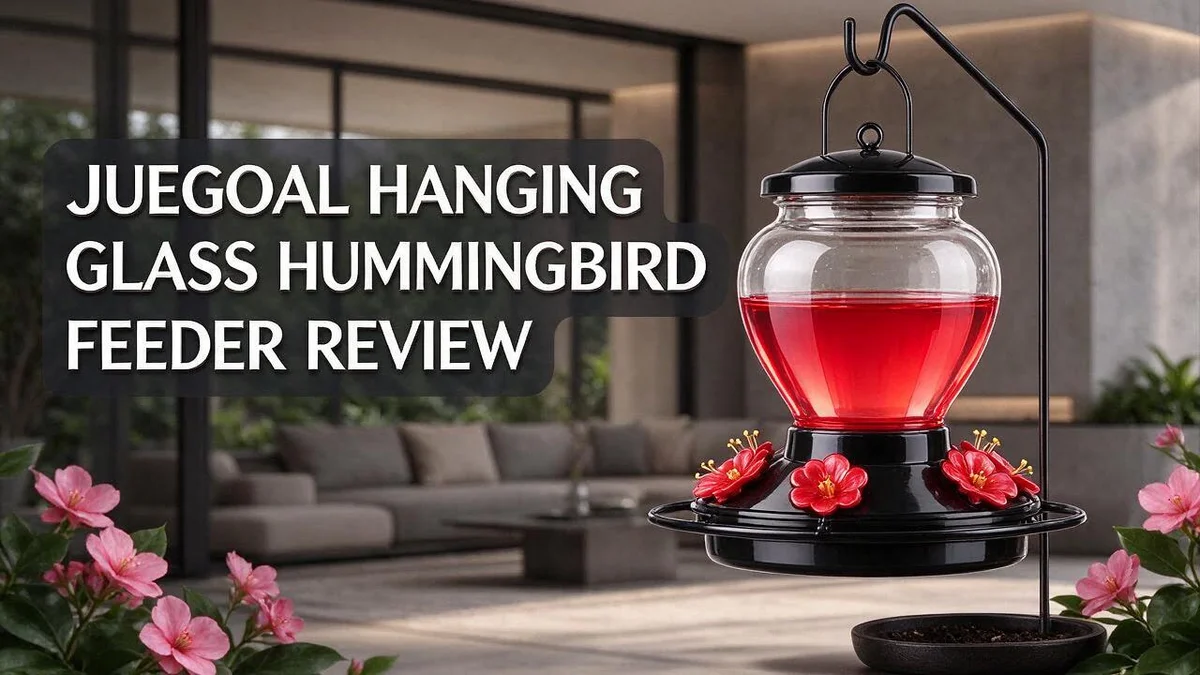
The Juegoal Hanging Glass Hummingbird Feeder aims to do that job well. It has a glass body and a metal handle for hanging from trees, hooks, or garden poles.
Most listings show 5 feeding ports. A moat on top holds water, and the top lifts off easily for filling and cleaning.
You can pick from several sizes, including 8, 12, 22, 26, and 37 oz.
Glass can break, so you need to handle it with care. Still, many reviewers say they stay happy and keep using it.
Let’s look at how this feeder performs.
In a Nutshell
- Easy upkeep: The top lifts off easily, so you can fill and clean the feeder without a struggle.
- Moat on top: The built in moat holds water. It gives the feeder a smart, practical feature that many basic feeders skip.
- Flexible hanging: The metal handle lets you hang it from a tree, a hook, or a garden pole. It suits yards, patios, and gardens.
- Happy users: Reviewers report satisfaction and continued use. That suggests the feeder holds up well in daily routines.
- Glass or plastic: Glass looks classic and feels sturdy. Plastic models do not break, so careless hands may prefer them.
- Other choices: Rivals include a 20 oz blue glass and metal feeder and a 24 oz glass feeder with 6 ports. Some shoppers also like hand blown glass styles.
Glass Construction and Design

Last update on 2026-10-31 / Affiliate links / Images from Amazon Product Advertising API Some of the links on this website are affiliate links, which means that at no additional cost to you, I earn a commission if you click through and make a purchase. I only recommend products and services that I believe will add value to my readers. Thank you for your support!
Glass gives this feeder a clean and classic look. Many people choose it because it fits almost any garden style.
You can see the nectar level at a glance. That helps you know when to refill without opening the feeder every day.
Glass also feels solid in your hand. The weight gives the feeder a steady feel when you hang it from a branch or hook.
Safe placement matters most. Hang the feeder away from paths where kids or pets often run, and check the glass for small cracks.
The metal handle carries the weight of the full glass body. This helps the feeder stay balanced and secure in windy spots.
Glass does not hold onto smells the way some plastics can. Still, rinse it well with hot water after each refill.
A bottle brush helps you reach the inner curves of the glass. Use a mild cleaner and rinse until no soap remains.
Overall, the glass build suits people who want a simple and attractive feeder. With gentle care, it can serve your yard for seasons to come.
Sun exposure also matters for the nectar. Place the feeder in partial shade so the sugar water stays fresher for longer.
Glass sits well with other garden decor, from stone planters to wooden fences. Its clear look blends in rather than stands out.
Think about the height too. Hanging the feeder at eye level lets you watch hummingbirds up close from a porch or window seat.
Clear glass also lets you watch feeding activity from indoors. Many birders enjoy this simple view from a kitchen window.
Sizes, Capacity and Feeding Ports
Capacity plays a big role in how often you refill. A larger reservoir means fewer trips outside with a pitcher. Smaller feeders need attention more often, especially in hot weather.
The 12 oz model gets special attention in one video description, which lists eight feeding ports instead of the usual five. More ports let several birds eat at the same time. This helps a lot when a busy yard has hummingbirds waiting in line.
Think about your visitors before you choose a size. A quiet yard with one or two birds may only need a smaller feeder. A garden that draws a crowd calls for a larger option, such as the 37 oz model.
Port count also shapes bird behavior. Fewer ports mean fewer spots to feed, so birds may guard them more closely. More ports spread the activity around and can calm things down.
Nectar does not last forever. Only fill what your birds drink within a few days. Old sugar water can spoil, especially when temperatures climb. A smaller reservoir keeps the nectar fresher in warm weather.
Watch the feeder after each refill. If birds leave a lot of nectar behind, try a smaller size. If the feeder empties fast and birds keep returning, a bigger one may save you time.
Starting small is a smart move for new bird watchers. You can always move up later once you see how many visitors show up. This approach keeps waste low and helps you learn their feeding habits.
Keep in mind that hummingbird activity changes with the seasons. Spring and late summer often bring the most visitors. Plan your refill routine around those busy weeks so the feeder never runs dry.
Ease of Filling and Cleaning
Keeping your nectar fresh depends on how easily you can reach the inside of the feeder. This model makes that part simpler than many people expect.
Refilling takes only a minute. Start by removing the top and setting it on a clean towel. Hold the feeder steady while you pour.
Pour the sugar water into the glass body until it reaches the level you want. Because the glass is clear, you never guess how much is left.
Next, pour slowly so the water does not splash. Fill only to a point just below the top rim. This leaves room for air and keeps the top sealing well.
Cleaning is the part that matters most. Rinse the glass with hot water after every refill. Avoid soap, because leftover residue can harm birds.
If you must scrub, use a little vinegar solution. Rinse it away thoroughly. Gentle cleaning keeps the glass clear for years.
Mold can grow fast in warm weather. Check the inside of the glass every few days for cloudy spots or dark specks. Clean it right away if you see any.
Clear glass makes these problems easy to spot early. You can catch trouble before your visitors notice anything wrong.
Drying matters too. Let every part air dry completely before you add fresh nectar. Wet parts can cause sugar water to spoil sooner than you expect.
Set the pieces upside down on a rack for the fastest results. A quick check of each part helps too.
Finally, plan your cleaning schedule. Many owners clean the feeder on the same day each week. A simple calendar reminder keeps the habit going. Over time, this routine saves you effort and keeps your visitors healthy.
Top 3 Alternatives
Perky-Pet Hummingbird Feeder
No products found.
The Perky-Pet feeder is a great pick for beginners. It has bright red flowers that attract tiny visitors.
The feeder hangs easily from a simple hook. Several feeding ports let more than one bird sip at a time.
Aspects HummZinger

Last update on 2026-08-26 / Affiliate links / Images from Amazon Product Advertising API Some of the links on this website are affiliate links, which means that at no additional cost to you, I earn a commission if you click through and make a purchase. I only recommend products and services that I believe will add value to my readers. Thank you for your support!
The HummZinger stands out for its clean and simple design. Its clear reservoir lets you check the nectar level at a glance.
A built-in ant moat helps keep pesky insects away. The feeder also comes apart into a few easy pieces for quick cleaning.
Droll Yankees Hummingbird Feeder


Last update on 2026-09-13 / Affiliate links / Images from Amazon Product Advertising API Some of the links on this website are affiliate links, which means that at no additional cost to you, I earn a commission if you click through and make a purchase. I only recommend products and services that I believe will add value to my readers. Thank you for your support!
This feeder has a sturdy build that can handle many seasons outside. Its large reservoir holds plenty of nectar, so you refill it less often.
*Many people love its bright colors and clever perch design. The ports are easy to reach, and the feeder stays steady even in windy spots.
Ant Moat and Hanging Setup
Ants can ruin a hummingbird feeder fast. The moat on top solves this problem. It holds water that blocks ants from reaching the nectar.
Fill the moat with plain water until it sits full. Ants cannot swim across it, so they stop at the edge. Check the moat every few days because hot weather dries it out.
Hang the feeder from a sturdy branch or hook. Choose a spot that sits clear of nearby leaves. Leaves and twigs give ants a bridge to the feeder.
Keep the feeder away from fences, walls, and low limbs. Ants often travel along these surfaces. A clear path of open air makes the moat work better.
Make sure the feeder hangs level. A tilted feeder can spill nectar or leave one side dry. Adjust the chain or wire until the glass sits straight.
Some people add a little extra water during dry spells. Never add soap or oil to the moat, because it can harm birds.
Check the moat before every visit. Look for dead insects or leaves that float on top. Clean the moat with hot water when you refill the feeder. A clean moat keeps ants from finding an easy way in.
Test the setup after a rainstorm. Heavy rain can fill the moat to the brim. Extra water may then overflow and dilute the nectar. Pour out the extra water and refill with fresh water.
Finally, look at the hanging point each month. Rust, loose screws, or frayed cord can cause the feeder to drop. Replace weak parts before they fail. A secure hook keeps your birds safe and your feeder steady.
Durability and Breakage Risk
Glass is the main concern with this feeder. Glass can crack or shatter. A single drop onto stone or concrete can end its life.
Juegoal uses a glass body with a metal handle. The handle carries the full weight, so check it often. Loose screws or bent metal can make the feeder fall.
Plastic does not break, and many people choose it for that reason. Glass still offers a clear view of the nectar level. Just handle it with extra care around kids and pets.
Wind and storms add more risk. A strong gust can swing the feeder into a branch or fence. Use a strong hook and keep the cord tight. Check the hook for rust every spring.
Sudden temperature changes can stress glass. Avoid pouring icy water into a warm feeder on a hot day. Let the glass settle to room temperature first.
Curious animals also cause trouble. Squirrels and raccoons may climb or yank the feeder down. Hang it high and away from climbing routes.
Inspect the glass every week. Look for tiny chips, hairline cracks, or cloudy spots. Small damage can grow quickly, so replace the feeder when you spot a crack. Pick up any broken pieces at once so birds stay safe.
Gentle handling makes a big difference. Lift the feeder by the handle, not the glass body. Set it down on a soft towel during refills.
Careful habits protect the feeder and your birds. A sturdy feeder kept in good shape can serve visitors for many seasons. Plan to check the feeder before each busy season, like spring migration. Good habits also keep your feeding routine calm and simple.
Glass vs Plastic Feeders: How Juegoal Compares
Glass and plastic each bring their own strengths to a backyard. The Juegoal feeder uses a glass body, so material traits matter most.
Glass keeps its shine for years. It does not hold scratches or cloudy film like many plastic models do.
Clear glass also lets you see inside. You can check the nectar level at a glance without lifting the top.
Plastic has one clear advantage. It handles a bump from a ladder or a stray ball with less worry.
Juegoal sits between these two choices. Its sturdy glass body still needs a safe and steady spot.
Competitors take similar routes. A 24 oz glass feeder with 6 ports and a 20 oz blue glass model with a metal loop share the same material.
Handmade glass feeders add another option. These pieces often differ in shape and thickness, so each one looks unique.
Weight matters more than many buyers expect. Glass feels heavier in the hand, so it sits steady on the hook.
Sun exposure also plays a role. Glass handles direct light well, while some plastics can fade or turn cloudy over time.
Your yard decides the winner. Strong storms or curious cats may lead you to plastic. A clear view and a classic look favor glass.
Look for a feeder that fits your routine. A simple design makes every visit faster and easier to manage.
Each material has trade offs. Glass offers beauty and clarity, while plastic offers toughness and lighter weight. Birds do not care about the material, but they do care about fresh nectar.
Pros and Cons
Pros
- The top lifts off easily for filling.
- Cleaning goes faster because the top comes off with little effort.
- Five feeding ports let several hummingbirds eat at once.
- Reviewers report steady satisfaction and continued use.
- Several sizes give you options for different yards.
Cons
- Few independent reviews exist, so long-term data is limited.
- Port counts vary, and one listing shows 8 ports for the 12 oz model.
- Specs differ across sellers, so confirm the exact size before you order.
- Product details are hard to verify, since no Juegoal-specific cons appear in most sources.
Who Should Buy It
Some people will enjoy this hummingbird feeder more than others. Here is a closer look at who should consider it.
New bird lovers often want a simple start. This glass hummingbird feeder gives a gentle entry into backyard birdwatching.
Families with curious children also benefit. Kids can watch hummingbirds feed from a window or porch. Tiny visitors make a fun lesson about nature and patience.
Gardeners who want a focal point will like the classic look. The feeder hangs well from a tree branch, a porch hook, or a garden stand. It brings color and motion to flower beds.
Owners of sunny patios may enjoy seeing the glass catch the light. Morning sun turns the feeder into a small sparkle near the seating area.
Renters with a small balcony can still enjoy hummingbirds. A hanging design saves floor space and fits many railings.
Busy people should think carefully. Those who rarely visit the yard may prefer a feeder that needs less daily care. This model still suits people who can check it often.
Birders who like to track activity can keep a notebook beside the feeder. Note the visit times each morning. Patterns often show up within a few weeks.
Shoppers who want a gift may find this feeder a thoughtful pick. Friends who love nature often enjoy a fresh feeder for the season. Wrap it with a bag of nectar mix for a complete present.
Anyone who wants a feeder for camping or travel should look elsewhere. This model is made for a fixed spot in the yard.
The bottom line is simple. If you have a sunny spot and want a classic glass feeder, this model fits well. Check your space first, then decide.
Final Verdict
The Juegoal Hanging Glass Hummingbird Feeder earns a solid recommendation for most backyard bird fans. It offers a clean look, a simple routine, and a friendly setup for beginners and experienced watchers alike.
The moat on top gives you an easy way to slow down ants. You fill it with water and check it now and then. This small feature saves you from sticky surprises.
Placement matters as much as the feeder itself. Hang it in partial shade so the nectar stays fresh longer. Put it near flowers, and hummingbirds will find it faster.
Plan a steady care routine. Change the nectar every few days in warm weather. Rinse the glass with hot water and a soft brush each time.
Handle the glass with care. Hang it from a sturdy hook away from strong wind. A stable spot protects the feeder and keeps visits calm.
Think about your daily habits too. If you enjoy a short morning routine with coffee, this feeder fits well. You can refill, watch, and relax in the same few minutes.
Some things remain unconfirmed. Independent testing is thin, so we cannot promise years of flawless use. Treat this as a promising pick rather than a proven champion.
Our overall view is positive. The Juegoal feeder suits people who want a pretty, practical way to welcome hummingbirds. It rewards a little attention with lively visits.
Our advice is to choose the size that fits your yard and set it up in a quiet corner. Give the birds a few days to notice it. Patience pays off with hummingbirds, and the first visitor makes the wait worthwhile.
Frequently Asked Questions
How often should you refill the feeder?
In warm weather, refill it every two or three days. Change the nectar sooner if it looks cloudy. Fresh nectar keeps visiting birds healthy and gives them a safe place to feed.
Do you need red dye in the nectar?
No, you do not need red dye. Plain, clear nectar works well. Mix four parts water with one part white sugar, then stir until the sugar fully dissolves before you fill the feeder.
Will bees and wasps visit this feeder?
Yes, they sometimes drink from the open ports. Check the ports often and wipe up any spills quickly. This simple habit keeps stinging pests away and helps the hummingbirds feel welcome.
Can you leave the feeder outside in winter?
Many people keep their feeders up all year. Bring it indoors on freezing nights so the nectar does not turn to ice. Hang it back up each morning with fresh nectar, and the birds will keep returning.
How do you know the feeder is working?
Watch for visitors within one or two weeks. Hummingbirds often find a new feeder faster when it hangs near flowers or other feeding spots. Patience is the key, so give the birds time to discover it.

Hello, I’m Emily Price, the founder of Birds Affection. As a passionate bird enthusiast and spiritual seeker, I’ve always been fascinated by the symbolic meanings and mystical connections between birds and our lives. On this website, I share my knowledge and insights on the spiritual significance of various bird species, exploring their roles as messengers, guides, and teachers. Through my writing, I aim to inspire and educate others on the profound wisdom and beauty that birds bring to our world. Join me on this journey as we delve into the enchanting realm of bird symbolism and discover the hidden meanings behind these magnificent creatures.