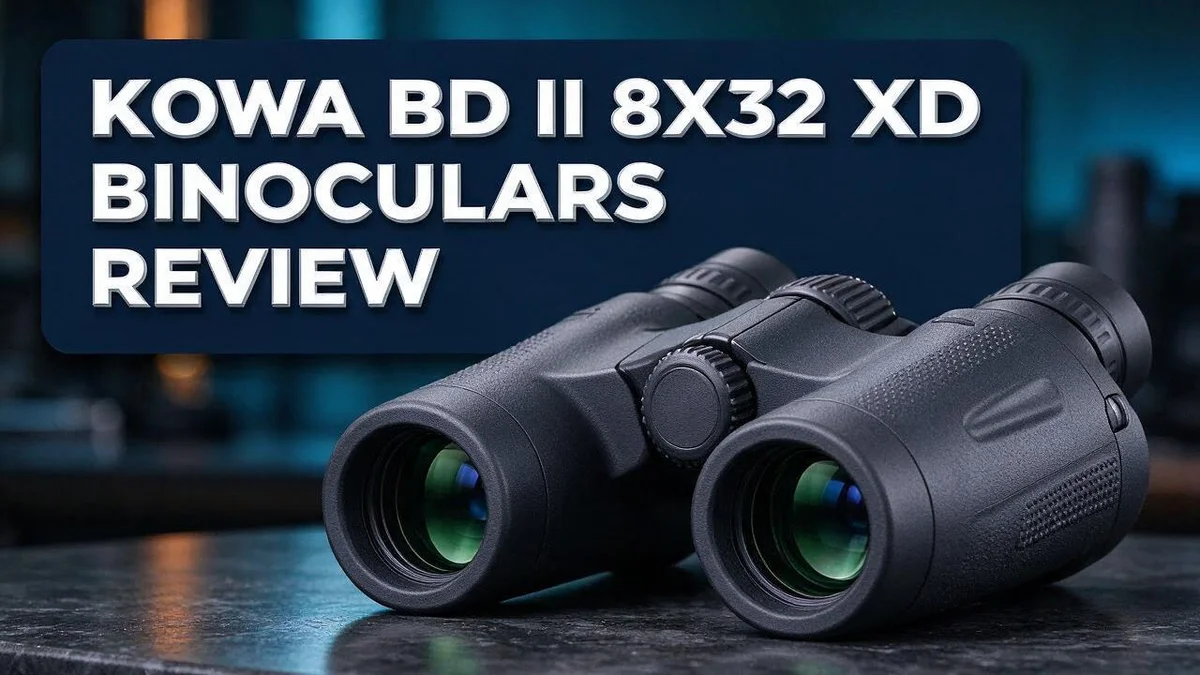
Kowa BD II 8×32 XD Binoculars Review: The Ultimate Guide
Want a compact binocular that feels bright and open? The Kowa BD II 8×32 XD aims to give you that experience.
This model offers 8x magnification and a 32mm objective lens. It uses a wide angle design. That design shows you a larger slice of the scene.
One user compared it with a Leupold 8×32 and a Vortex Raptor 6.5×32 porro. The wider field of view was very noticeable. The sweet spot also looked very sharp.
This review covers what the Kowa does well. We also look at rivals like the Kowa 8×42 BD II XD, the Vortex Viper HD 8×42, and the ZEISS Terra ED 10×42. Let’s see if it fits your next outing.
In a Nutshell
- Wide field of view: One user found the extra width very noticeable. That helps you spot and follow birds or animals more easily.
- Sharp sweet spot: The centre of the image looks very sharp. Fine detail stands out clearly in that area.
- Open, natural feel: The wide angle design gives you a roomy view. Scenes feel less like you are looking through a tube.
- Rival options: You can compare it with the Kowa 8×42 BD II XD, the Vortex 8×42 Viper HD (2018 Edition), and the ZEISS 10×42 Terra ED. These suit you if you want a larger lens or more power.
- Missing details: The research lists no weight, eye relief, close focus, or long term durability data. Check these points before you decide.
- Bottom line: The Kowa is a strong choice if you value a wide, sharp view in a compact binocular.
Optical Quality and Sweet Spot Sharpness

Last update on 2026-10-31 / Affiliate links / Images from Amazon Product Advertising API Some of the links on this website are affiliate links, which means that at no additional cost to you, I earn a commission if you click through and make a purchase. I only recommend products and services that I believe will add value to my readers. Thank you for your support!
Sharpness is the first thing you notice when you lift binoculars to your eyes. With the Kowa, the centre of the view does most of the work. The research describes the sweet spot as very sharp. That matters for birdwatching and scanning wide landscapes.
Most of the time, you keep a bird or a distant tree near the middle of the frame. That means the sweet spot gets the most use. A small area of crisp detail often feels better than a large area of soft detail.
The 32mm objective lens also plays a role. It gathers more light than a smaller lens would. In dim woodland or at dusk, that extra light helps the image look clean. Colours appear more natural in these conditions.
The research does not show how sharp the edges stay. Edge clarity varies across many models, so this detail is worth checking yourself. Try focusing on a flat object, like a fence post or a window frame. Move the image slowly and watch whether the outer edges stay clear or blur.
Focus speed is another useful test. A binocular that snaps into focus feels easier to use on fast moving birds. The research has no data on this point. Your own trial will answer the question.
Finally, pay attention to your eyes. Clear optics should feel relaxed after several minutes of use. If your eyes tire quickly, the view may not suit you, even if the centre looks sharp.
Wide Field of View in Real-World Use
Wide field of view matters most when things move. Think about a hawk gliding over a hillside or a deer stepping out of the trees. A wider view keeps the subject in sight for longer.
Finding your target also gets easier. You can scan a patch of woodland before you zero in on one branch. Less searching means you miss fewer moments.
Tracking fast movement is another strength. Birds in flight stay inside the frame as you pan. You do not need jerky hand movements to follow them.
Wide views also help you stay oriented. You can see the surrounding landscape, so you always know where your subject sits. This helps when you walk with friends and point out wildlife.
Your neck may feel more relaxed, too. You turn your head less often during a long watch. Smaller movements often mean steadier scanning.
Low light shows the benefit clearly. At dusk, you often search wide areas for movement. A broader view helps you cover more ground before the light fades.
Try a simple test at home. Pick a fence post or a tall tree. Pan slowly across it.
Watch how long the post stays in view before it slides out of the frame.
Practice makes the difference. Spend a few minutes each day sweeping across open ground. You will learn how to move smoothly. Smooth sweeps feel natural after a short time.
Overall, the wide view suits anyone who likes to watch moving subjects. It rewards slow scanning and smooth panning. Good habits build over time, so keep practicing on different subjects.
Design, Build and Handling
Holding the binocular feels like the first real test. Your hands tell you a lot. Pick it up with both hands and notice the balance. A compact body often feels light and easy to carry on a long walk.
Think about your fingers too. Check where your thumb and index finger rest. A good grip keeps the view steady and stops your arms from getting tired. Relax your shoulders while you hold it.
Focus control matters every day. Feel the central knob with your fingertips. Can you turn it smoothly without fumbling? Smooth movement helps you lock onto a bird in seconds. A quick check at the store can save frustration later.
Next, look at the lens caps and body finish. Strong caps protect the glass when you toss the binocular into a bag. Rubber or textured surfaces can also help when your hands feel damp or cold.
Carrying comfort counts for more than many people expect. Use a strap or harness that spreads the load across your shoulders. Short trips may feel fine, but a full day outside tests every detail. Test the strap length before you leave home.
Adjustments for your eyes also matter. Set the eyecups and the distance between the barrels until the image merges into one clear circle. Take a few minutes to do this before each outing. Write down your settings so you can repeat them quickly.
Finally, handle the binocular in different spots. Try it while standing, sitting, and leaning on a fence. You will soon see whether the design suits your style of watching. Your own habits will shape what feels right for you.
Top 3 Alternatives
If you want another option, these three binoculars are worth a look. Each one offers clear views and comfortable handling. Pick the one that fits your style.
Vortex Diamondback HD

Last update on 2026-10-31 / Affiliate links / Images from Amazon Product Advertising API Some of the links on this website are affiliate links, which means that at no additional cost to you, I earn a commission if you click through and make a purchase. I only recommend products and services that I believe will add value to my readers. Thank you for your support!
The Vortex Diamondback HD delivers bright, clear views in many light conditions. Its wide field of view makes it easy to follow birds and other fast movers. The grip feels comfortable, even on long hikes.
Best for: Hikers and wildlife fans who want quality without a heavy load.
Nikon Monarch 5

Last update on 2026-08-28 / Affiliate links / Images from Amazon Product Advertising API Some of the links on this website are affiliate links, which means that at no additional cost to you, I earn a commission if you click through and make a purchase. I only recommend products and services that I believe will add value to my readers. Thank you for your support!
The Nikon Monarch 5 shines when the light fades. Its lenses gather light well, so dawn and dusk scenes look rich and natural. The eyecups fold down, which helps people who wear glasses.
Best for: Early morning birdwatching and relaxed dusk walks.
Celestron Nature DX


Last update on 2026-10-28 / Affiliate links / Images from Amazon Product Advertising API Some of the links on this website are affiliate links, which means that at no additional cost to you, I earn a commission if you click through and make a purchase. I only recommend products and services that I believe will add value to my readers. Thank you for your support!
The Celestron Nature DX is a friendly pick for new users. It focuses quickly, so you can catch sudden movement without fuss. The body stays light, which makes it easy to carry all day.
Best for: Beginners who want a simple, dependable pair.
8×32 vs 8×42: Choosing the Right Size
Choosing between 8×32 and 8×42 starts with one simple question. Where will you use your binoculars most? The answer shapes which size fits your life.
The 32mm lens lets in less light than a 42mm lens. That difference matters most at dusk. The 42mm model gathers more light, so you may see a little more detail in dim conditions.
Still, the 8×32 gives a lighter, more compact feel. You can slip it into a jacket pocket or a small daypack. Many people carry it all day without tiring.
The 8×42 suits people who spend long hours still. Think of a hide, a boat, or a bench by a lake. A larger objective can feel steadier once your arms rest on something.
Here is where the research stops. It does not list weight or exact dimensions for either model. So compare the two in your own hands before you buy.
Try this at a shop. Hold each binocular for a minute. Notice how the weight sits in your palms. Does your neck feel relaxed or strained after a few minutes? Your answer tells you more than any chart.
Think about your usual outings too. Hikers and walkers often prefer the smaller body. Wildlife watchers who sit still for long periods may favour the larger lens.
Glasses wearers should also check eye relief before they choose. The research does not give that number for either size, so ask the seller. Ask for a demo if you can.
Bottom line: If you move a lot, the 8×32 keeps things simple. If you sit and wait, the 8×42 may reward you with brighter views.
Price and Value for Money in the UK
When you weigh up the Kowa BD II 8×32 XD, look at the whole package. Think about the optics, the feel, and how well it suits your days outdoors.
Many buyers compare it with the Leupold BX-4 8×32. Others look at the Vortex Raptor 6.5×32 porro, which is a different style of binocular altogether.
The Kowa 8×42 BD II XD, Vortex 8×42 Viper HD, and ZEISS 10×42 Terra ED are also worth a look. Each one offers a different balance of size, power, and light gathering.
Here is the key point. A binocular only earns its place if it fits your habits. A birder who walks long trails may choose differently from someone who watches wildlife from a car.
Where you plan to use the binoculars also matters. Coastal walks, garden birds, and night time sky views ask different things from a pair. Match the pair to the place, not the other way around.
Ask these questions before you commit. Does the body sit well in your hands? Can you hold it steady for an hour?
Do you wear glasses? Can you return it if it does not suit you?
Check the warranty and return terms. These details matter more than many shoppers expect, especially for a product you plan to use for years.
The research behind this review has gaps. It does not include review scores, weight, close focus distance, or durability data over the years. Treat these as open questions, not as strengths or weaknesses.
Bottom line: The Kowa BD II 8×32 XD suits people who want a clear, sharp view in a familiar size. Test it yourself, read independent reviews, and check the seller terms before you decide.
What We Still Need to Verify
The research leaves several gaps. We know the basic specs. The Kowa BD II 8×32 XD has 8x magnification and a 32mm objective lens. The rest is thin.
Review scores are missing too. We found no professional review scores for this model. Without them, it is hard to judge how it ranks against its rivals. One user comment about the field of view is not enough on its own.
Weight is another open question. No weight figure appears in our notes. Weight affects how long you can hold the binocular before your arms tire. Check the manufacturer sheet for the exact figure.
Close focus is unknown. We have no data on the nearest distance the binocular can focus. This matters for insects, flowers, or a map held up close. Look for this number before you decide.
Eye relief needs a clear number. The notes do not list a measurement. An exact value tells you how far your eye can sit from the eyepiece and still see the full image.
Long term durability needs more proof. Our research has no feedback on how the body or hinge handles years of use. Look for owner reports that cover two or three seasons outdoors.
Here is how to close the gaps. Start with the official Kowa product page. Then read independent lab tests and detailed owner forums. Compare the numbers with the Leupold BX-4 8×32 and the Vortex Raptor 6.5×32. Write each figure in a simple list. This gives you a clear picture before you buy.
Until then, treat the praise with care. The wide view stands out in the notes, but one report cannot cover every case. Gather more facts first. A clear set of numbers makes the final choice much easier.
Pros and Cons
Pros
-
- Wide field of view that one user found very noticeable.
-
- The sweet spot delivers a very sharp image.
-
- Wide angle design shows more of the scene at once.
-
- One user saw a clear gap in view next to the Leupold BX4 8×32.
-
- The view felt much wider than the Vortex Raptor 6.5×32 porro.
Cons
-
- No professional review scores are available yet.
-
- Weight is not listed in our notes.
-
- Eye relief and close focus figures are missing.
-
- Long term durability has no user feedback yet.
Who Should Buy It
This binocular suits people who love scanning big scenes. Think of birdwatchers, wildlife fans, and hikers who look across open land. A wide view helps them spot movement quickly.
Sports fans may enjoy it too. Following a football match or a fast race takes steady tracking. A wide view keeps players or cars in frame for longer.
Birdwatching in woodland is a strong match. Dense trees hide birds, so a wide view helps you track them through branches. Quick scanning saves time and keeps the moment alive.
Casual sky watchers may find it fun. A quick look at the moon or a bright star field feels rewarding. Keep expectations realistic, since the small lens limits light gathering.
Beginners often benefit from a simple, all round pick. This model handles many daily tasks with one pair. You do not need a separate set for each activity.
Some buyers need more reach. People who watch distant animals may prefer higher magnification. A 10x option, such as the ZEISS 10×42 Terra ED, suits that need.
Light conditions also shape the choice. Dawn and dusk viewing rewards brighter optics. If you mostly watch in dim woodland, compare objective sizes before you decide.
Shared use works well when everyone can focus quickly. Families often pass one pair around on trips. Let each person test the focus before you commit.
Carry habits matter more than specs. A binocular only helps when it leaves the house with you. Choose a pair you will grab for every walk, match, or trip.
Here is a simple rule to follow. List your top three activities. If this model fits most of them, it likely suits you well.
Final thought for shoppers. Ask whether your favorite activity needs wide, fast viewing. If yes, this model deserves a close look.
Final Verdict
The Kowa BD II 8×32 XD earns a cautious yes from us. It offers a wide view and a very sharp sweet spot. Those two strengths matter most in the field.
The 8x magnification keeps the image steady. The 32mm objective suggests a compact pair for day trips. We like that mix for relaxed, active viewing.
Our view in short: this is a promising pick, not a proven champion. The praise is real, but the evidence is still thin. We prefer to say that plainly.
Buy it if you want to see a big slice of the scene at once. It suits walkers and nature fans who enjoy an open, easy view. It also works for anyone who wants one pair for many outings.
Think twice if you need hard numbers before you commit. Check the official specs first. A hands on test in a shop would help even more.
Compare before you decide. The Kowa 8×42 BD II XD Wide Angle and the Vortex 8×42 Viper HD offer a larger front lens. The ZEISS 10×42 Terra ED gives you more reach. The Leupold BX4 8×32 sits closest in size.
Test them side by side if you can. Check edge sharpness, comfort, and how fast your eyes settle into the view. Your own eyes give the best answer.
Bottom line: the Kowa BD II 8×32 XD looks like a smart choice for wide view lovers. Confirm the missing details, then buy with confidence. We think many viewers will enjoy it.
Frequently Asked Questions
Should I choose the 32mm or the 42mm model?
The 42mm version has a larger front lens, which can gather more light in dim conditions. The 32mm model suits people who want a smaller pair to carry, though our notes list no weight figures.
What should I test in person before buying?
Try the binoculars in a shop if you can. Check how easily your eyes move across the view. Make sure the eyecups feel comfortable on your face. These hands-on checks can answer questions our research cannot.
Does the smaller 32mm size help on long walks?
A compact body often feels lighter on a neck strap. This can matter on long hikes or day trips. Still, hold a pair for a few minutes to judge the comfort for yourself.
Can I use it for stargazing on clear nights?
The wide view makes star fields feel open and easy to scan. A steady hold helps you spot faint objects. Sit in a chair with back support, since long sky sessions can cause neck strain.

Hello, I’m Emily Price, the founder of Birds Affection. As a passionate bird enthusiast and spiritual seeker, I’ve always been fascinated by the symbolic meanings and mystical connections between birds and our lives. On this website, I share my knowledge and insights on the spiritual significance of various bird species, exploring their roles as messengers, guides, and teachers. Through my writing, I aim to inspire and educate others on the profound wisdom and beauty that birds bring to our world. Join me on this journey as we delve into the enchanting realm of bird symbolism and discover the hidden meanings behind these magnificent creatures.