
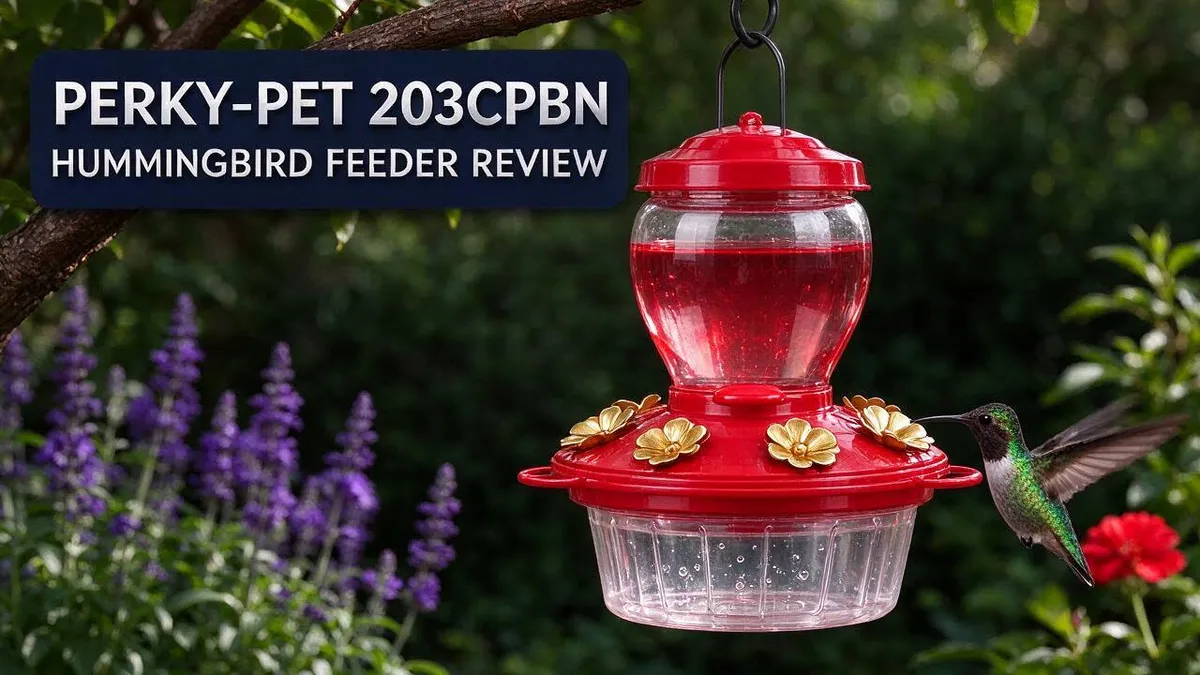
Perky-Pet 203CPBN Hummingbird Feeder Review: Worth Buying?
Do you want more hummingbirds in your yard? The Perky-Pet 203CPBN Hummingbird Feeder might help you get there.
This glass feeder includes perches, an ant moat, and bee guards. Those features keep your visitors comfortable and keep pests away.
Five flower shaped ports circle the feeder. Hummingbirds can sip from every side.
The wide mouth makes cleaning easier. The top fill design makes refills simple too.
Reviewers say it draws hummingbirds and other birds. Some users report leaks, though. Wind can also move the feeder around.
In this review, I cover the features, the strengths, and the weak spots. You will know if this feeder fits your backyard.
In a Nutshell
-
Easy refills: The top fill design adds convenience. One user says the nectar lasts all day.
-
Leaking risk: Some reviewers report leaks. A few say the feeder started dripping within hours.
-
Mold watch: The ridges can trap mold. You should scrub the feeder often to keep the nectar fresh.
-
Setup takes care: Leveling the feeder can be tricky. Filling it without spills takes a steady hand.
-
Wind trouble: Strong wind can disrupt the feeder. A sheltered hanging spot works best.
-
Small flaws: The copper look flowers may rust and fall off over time. Some models in this family also lack a perch, so check the listing details before you buy.
-
My take: This feeder suits people who want a simple glass option and don’t mind regular upkeep. Expect to monitor it closely in the first few days to catch any leaks.
Glass Build and Design


Last update on 2026-07-02 / Affiliate links / Images from Amazon Product Advertising API Some of the links on this website are affiliate links, which means that at no additional cost to you, I earn a commission if you click through and make a purchase. I only recommend products and services that I believe will add value to my readers. Thank you for your support!
Glass gives this feeder a clean and classic look. It fits well in a garden or on a patio. Many people enjoy how it blends with natural surroundings.
The clear body lets you check the nectar level at a glance. You can spot low food before the birds arrive. This saves you from frequent trips outside.
Glass does not soak up smells the way some plastics can. That helps keep the nectar tasting fresh between refills.
Clear glass also lets sunlight reach the nectar. Hang the feeder in partial shade to slow spoiling on hot days.
Glass adds some heft, so the feeder feels solid in your hand.
Handle it with care, though. A fall onto a hard patio can crack the glass. Hang it away from play areas and busy walkways.
Think about your yard layout before you hang it. Choose a spot you can see from a window or porch. Watching the feeder up close makes the glass design even more enjoyable.
Glass also suits a mix of décor styles. It looks right at home beside metal chairs or wooden fences. Its clean lines keep the focus on the birds.
Many owners like to watch the feeder during morning coffee. Clear glass makes the activity easy to follow from a distance. Sitting near the feeder also helps you notice new visitors.
Overall, the glass build suits anyone who values a simple and attractive look. It shows the nectar clearly and looks good all season long.
Nectar Capacity and Feeding Ports
The feeder holds about 8 ounces of nectar. That amount gives hummingbirds plenty to drink.
Bigger capacity means fewer refills. Busy yards with several birds can empty small feeders fast.
One reviewer says the nectar lasts all day. That suggests the capacity works well for light to moderate traffic. Weather and bird numbers still change the results.
Five feeding ports give each bird its own spot.
Multiple ports can ease bird squabbles. Hummingbirds often guard their territory. Several feeding spots let more birds eat at once.
The circular perch lets birds approach from any side. This layout gives shy birds an easier way in.
Small ports can clog over time. Nectar residue sticks inside the openings and slows the flow.
Use a thin brush to clear them. A pipe cleaner or small bottle brush works well. Check the ports each time you refill.
Keep an eye on flow rate too. If birds visit but nectar drains slowly, a port may be blocked.
The feeder works best when you match its capacity to your yard. A small flock needs fewer refills than a crowd of birds. Watch how fast the nectar drops and adjust your schedule.
Nectar should stay fresh in warm weather. Replace it every two days when temperatures climb. Fresh nectar keeps birds coming back.
Ports also show you which birds visit most. Notice which ports stay empty and move the feeder if needed.
Leak Resistance and Spill-Free Filling
Test it before the birds arrive. Fill the feeder over a sink or bowl. Wait a few minutes and watch for drips around the base and flower ports.
Pour slowly and steadily, because a fast pour can push nectar past the seal. Stop well below the top rim so the lid has room.
Dry the rim before you close the lid. A damp rim can cause the lid to sit unevenly, which invites drips to run down the outside of the glass.
Place a drip tray under the feeder. A tray catches small drips, so your deck or patio stays clean. Empty the tray after each refill and wipe it clean.
Make a weekly check part of your routine. Look for hairline cracks near the glass edges, loose flower ports, and sticky film. Catching these signs early keeps small leaks from growing into bigger problems.
Wipe up spills right away. Dried sugar water leaves a sticky ring that attracts ants and makes the feeder harder to clean. Keep a damp cloth near the hanging spot for quick cleanups each time.
Check the hanging hook too. A loose hook can tilt the feeder, and a tilted feeder pours nectar out of the ports. Tighten the hanger before each busy season.
Finally, a small leak is often a fit issue, not a broken feeder. Reassemble the parts carefully and test again before you walk away. Give it a second test after any repair.
Top 3 Alternatives
Aspects HummZinger

Last update on 2026-08-26 / Affiliate links / Images from Amazon Product Advertising API Some of the links on this website are affiliate links, which means that at no additional cost to you, I earn a commission if you click through and make a purchase. I only recommend products and services that I believe will add value to my readers. Thank you for your support!
The Aspects HummZinger is a simple choice for anyone who loves watching hummingbirds. It has a clear nectar reservoir, so you can check the food level with one quick glance. The bright red feeding ports draw hummingbirds in fast.
Cleaning is easy because the parts come apart with little effort. Many people also like the built-in ant moat. It helps keep crawling pests away from the sweet nectar. You can hang it on a porch hook or a tree branch.
First Nature Hummingbird

Last update on 2026-10-31 / Affiliate links / Images from Amazon Product Advertising API Some of the links on this website are affiliate links, which means that at no additional cost to you, I earn a commission if you click through and make a purchase. I only recommend products and services that I believe will add value to my readers. Thank you for your support!
The First Nature Hummingbird feeder keeps things calm and steady. Its clear design lets you see how much nectar is left at any time. It hangs well and sits firmly on a standard hook.
Ants can be a problem, but the moat gives good protection. Refilling takes only a minute, so it fits easily into a busy day. Many beginners choose this feeder because it feels straightforward to use. Clean it every few days to keep the nectar fresh.
Droll Yankees Flasher

Last update on 2026-10-31 / Affiliate links / Images from Amazon Product Advertising API Some of the links on this website are affiliate links, which means that at no additional cost to you, I earn a commission if you click through and make a purchase. I only recommend products and services that I believe will add value to my readers. Thank you for your support!
The Droll Yankees Flasher adds a fun twist to backyard feeding. Its reflective parts catch sunlight, so the feeder sparkles in the yard. This flash can attract hummingbirds from farther away.
It is a good pick for people who want a bright, eye-catching feeder. Watching hummingbirds dart in for a drink is a joy for the whole family. Clean the feeder often, and replace the nectar regularly so the birds stay healthy.
Ease of Cleaning and Mold Prevention
Clean the feeder every two or three days in hot weather. Warm nectar spoils fast, and mold can grow in just a few days.
Ridges and grooves hold tiny drops of nectar. These spots become a home for mold if you skip them. Use a soft brush to scrub every ridge.
Mold often hides in the tiny feeding ports too. Check them each time you clean. Look for dark spots or slimy film near the openings.
Warm water and a little white vinegar work well. Mix one part vinegar with four parts water. Soak the parts for a few minutes, then rinse them well.
Rinse every part until the water runs clear. A vinegar taste can linger, so take your time with this step.
Pay attention to the ant moat and bee guards too. Pull out dead bugs, dust, and leftover nectar crust. A clogged moat stops working as it should.
Let every piece dry in open air before refilling. Trapped water breeds mold quickly. Lay the parts on a clean towel in the sun for a while.
Check the copper colored flowers for rust or flaking. Rust can spread to the perch area. Replace worn parts quickly.
Watch for signs of spoiled nectar too. Cloudy liquid, floating specks, or a sour smell mean it is time to dump the batch.
Keep a simple cleaning log on your fridge. Writing dates helps you stay on track. Consistent care keeps birds healthy all season long.
Ant Moat, Bee Guards and Pest Protection
Ants love sweet nectar, and they can ruin a feeder fast. The ant moat sits between the hanging hook and the feeder. It holds a small pool of water that works as a barrier.
Ants stop at the water line and cannot reach the nectar. Fill the moat with plain water every day, because heat and rain can dry it out. A dry moat offers no protection at all, so this quick habit matters most in summer.
Keep leaves and branches away from the moat. A leaf or twig that touches the moat becomes a bridge for ants. Trim nearby branches so insects cannot drop onto the feeder from above.
Bees bring a different problem. Bee guards are small caps that fit over the feeding ports. They let the thin hummingbird beak slide in while blocking larger bees and wasps.
Check the guards often. A bent or missing guard lets bees drink freely. Bees may also crowd the ports if a guard does not sit flush. Replace a lost guard quickly so the hummingbirds still get their fair turn.
Pests can also drop dead insects into the nectar. Bits of debris float in the liquid and spoil it faster than you expect. Skim the surface each time you refill, and dump any nectar that looks cloudy.
Good pest control is simple. Keep the moat full, trim the branches, and check the guards regularly. Your hummingbirds will feel safe, and your nectar will stay fresh for longer.
Attracting Hummingbirds and Perch Use
Hummingbirds need a clear place to land. Most hummingbirds hover while they drink, but they also rest between feeding trips. A good perch gives them a safe spot to pause.
The Perky Pet 203CPBN has five flower shaped feeding ports. Each port sits within easy reach of a perched bird. The circular perch lets birds feed from many sides, so one feeder can serve more visitors. Birds can drink while they sit, which feels calmer for them.
Perch use depends on the model you pick. Some Perky Pet versions lack a perch. Check the product details before you buy. A feeder without a perch may still attract hummingbirds, but fewer birds will stay to rest.
Placement changes how birds see the feeder. Hang it where birds can spot it from a distance. Bright flowers and open space help. Place it near a shrub or tree, so birds have a resting spot nearby.
Wind can rock the feeder and make perching hard. Hang the feeder in a calm spot. A sheltered corner of the yard often works well.
Watch what the birds do. Hummingbirds that perch and feed slowly often feel safe. Quick visits may mean the feeder sits in a risky spot. Move it closer to cover and see if visits improve. Birds may also perch longer when cover sits nearby.
Patience pays off. New feeders can take a few days to draw attention. Keep the nectar fresh and give birds time to find it. A calm feeder becomes a daily stop.
Durability, Wind Stability and Hanging Setup
Glass gives this feeder a solid feel, but a hard fall can crack it. Hang it where branches and stray balls cannot strike it. Check the glass for tiny cracks often.
Check the seal before every refill. Some owners report leaks that start within hours. Look for loose lids and worn gaskets, and fill slowly so nectar does not overflow.
Leveling matters more than many people expect. A tilted feeder pushes nectar toward one side. That side may leak, and birds may struggle to feed.
Choose a strong hook. Nectar adds weight fast, so a flimsy hanger can bend. A swivel with a locking clip adds extra safety.
Wind needs a plan. Gusts can shake the feeder hard during storms. Pick a sheltered spot near a fence or wall, and keep the hanger short so it sways less.
Direct sun heats the glass and speeds up spoiling. Partial shade keeps nectar cooler and protects the flowers from fading. Shade also keeps the feeder steadier on hot, breezy afternoons.
Inspect the hardware every few weeks. Rust or wear on the hook can cause a sudden drop. Tighten screws and replace any bent parts right away.
Test the setup before adding nectar. Hang the empty feeder, give it a gentle push, and watch how it moves. If it swings wildly, move it to a calmer spot.
A stable feeder also gives hummingbirds a safer place to feed. Nervous birds return more often when the feeder stays still.
Pros and Cons
Pros
– Wide mouth glass makes cleaning easier.
– The top fill design makes refilling quick.
– Five flower feeding ports give hummingbirds plenty of room.
– The circular perch lets birds feed from many angles.
– Nectar can last all day, according to one user.
Cons
– Ridges on the glass can trap mold.
– Filling can cause spills if you pour too fast.
– Only Perky Pet models show up as alternatives, so comparing other brands takes extra research.
Who Should Buy It
New backyard bird watchers may find this feeder a good first pick. It gives a clear view of the nectar, so you always know when to refill.
Families with children can enjoy it too. Kids get a close look at hummingbirds feeding from the flowers. Parents should hang it higher than little hands can reach.
People with small yards or patios also benefit. One feeder can bring colorful visitors near a seating area or window. Even a compact space can attract visiting birds.
Gardeners who love bold color will appreciate the flower shapes. The feeder adds a cheerful touch to trees, porches, and fences.
Teachers and nature clubs may also find it useful. It offers an easy way to teach kids about pollinators and bird behavior. Students can record their visits in a simple journal.
Retirees and people who work from home often spend time near windows. A feeder in view can bring daily joy and calm moments.
Anyone who wants a no fuss feeder may want to look elsewhere. Regular checks and gentle handling keep this model working well.
Patient owners tend to enjoy this feeder most. Watching birds slowly discover the feeder can be very rewarding.
In short, this feeder suits curious beginners, families, and garden lovers. It works best for people who can spare a few minutes each week for care.
Final Verdict
The Perky Pet 203CPBN is a charming feeder with a few clear flaws. It draws hummingbirds and adds color to a garden. It also asks for steady care from its owner.
We rate it a good pick with conditions. The glass body feels classy, and the ant moat and bee guards keep pests away from the nectar. Those extras save you small daily headaches.
The weak spots still matter. Leaks, rust on the flower trim, and mold in tight spots can frustrate you. These problems seem to vary from one unit to the next.
Our advice is simple. Test the feeder for a few days before you pick its permanent spot. Fill it over a sink, check for drips, and then hang it. A short trial saves nectar and stress.
Build a basic cleaning habit. Swap the nectar every few days and rinse every part with hot water. A small bottle brush reaches the ridges where mold likes to hide. Clean parts also keep the birds healthy.
Keep your expectations realistic as well. One feeder rarely satisfies a busy hummingbird yard. Many owners add a second feeder to ease crowding and keep the peace.
If your unit seals well, it can become a lovely part of your yard. If it leaks right away, ask for a replacement quickly. A good unit is worth the effort.
Our final call: recommended, with careful setup and regular cleaning.
Frequently Asked Questions
Does this feeder attract hummingbirds?
Yes, it does. The feeder attracts hummingbirds and other birds to your yard. Its flower-shaped design helps it stand out.
What comes in the box?
The package holds one feeder. It includes perches, an ant moat, and bee guards. Listings cite an 8 oz nectar capacity, so you fill it less often.
Do the flowers hold their color?
Not always. The copper look flowers may rust over time and fall off. Check them often so you can spot loose parts early.
Do all models come with a perch?
No. Some models lack a perch. Read the listing details to confirm the version you want includes one.

Hello, I’m Emily Price, the founder of Birds Affection. As a passionate bird enthusiast and spiritual seeker, I’ve always been fascinated by the symbolic meanings and mystical connections between birds and our lives. On this website, I share my knowledge and insights on the spiritual significance of various bird species, exploring their roles as messengers, guides, and teachers. Through my writing, I aim to inspire and educate others on the profound wisdom and beauty that birds bring to our world. Join me on this journey as we delve into the enchanting realm of bird symbolism and discover the hidden meanings behind these magnificent creatures.


