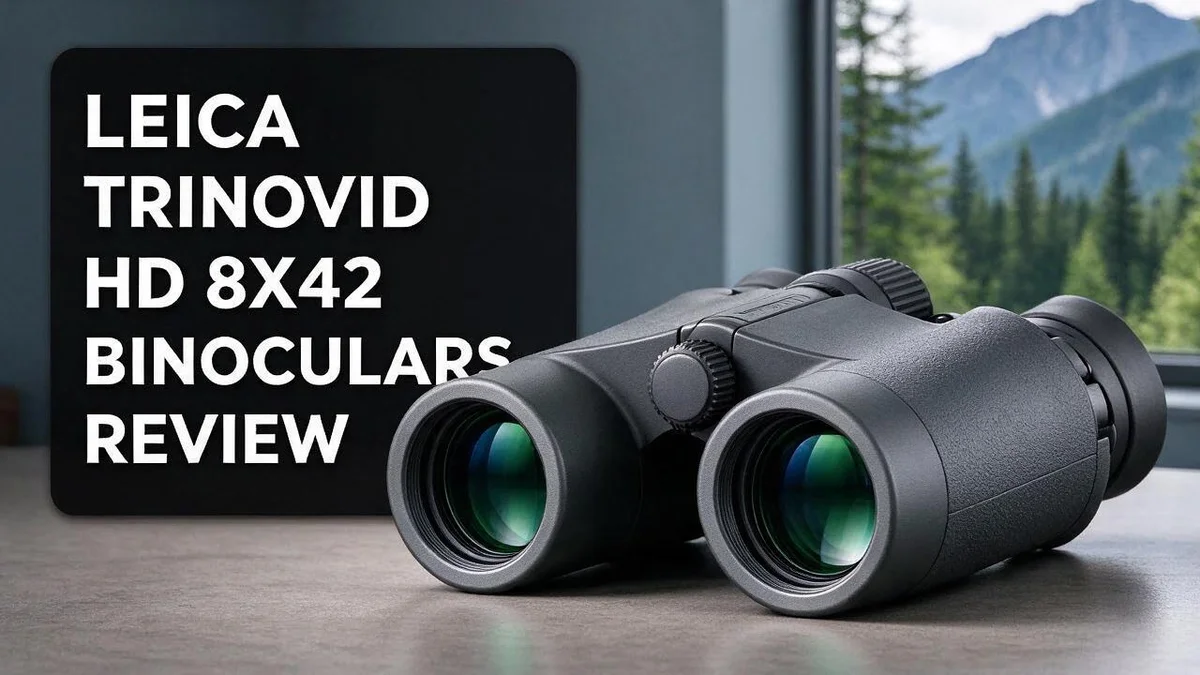
Leica Trinovid HD 8×42 Binoculars Review: Optics, Build and Real-World Performance
Do you want binoculars that feel solid in your hands and deliver sharp views? The Leica Trinovid HD 8×42 aims to do exactly that.
This model offers 8x magnification and 42mm objective lenses in a compact roof prism body. P40 phase corrected coatings give images good color and contrast.
The magnesium housing and rubber shell make it feel tough and reliable. It also performs well in low light.
Some owners notice chromatic aberration near bright edges. Others find the weight tiring on the neck and shoulders. We cover these points in detail.
Let’s see if this Leica fits your birding, hiking, or wildlife trips.
In a Nutshell
-
Sharp, reliable images: The view shows good color and contrast. The P40 phase corrected coatings keep details crisp. Everything looks clean and natural.
-
Strong in low light: Resolution stays excellent at dawn and dusk. Dim forest edges are no problem. Birders and wildlife watchers will notice this right away.
-
Close focus under 6 feet: You can study butterflies and small details up close. The stainless steel focus feels precise and smooth.
-
Focus speed is average: The focus wheel is not fast. Quick moving targets may need a little practice. Most users adapt after a few outings.
-
Weight is a factor: Some users find these binoculars heavy and bulky. Long days can cause neck and shoulder strain. The innovative carrying system helps ease the load.
-
Worth comparing: The Zeiss Conquest HD 8×42 and Swarovision are close rivals. Leica’s own Ultravid and Noctivid also come up often in comparisons.
Optical Quality and Image Sharpness
The P40 phase corrected coatings work quietly behind the scenes. They help more light reach your eyes, which keeps the view bright.
Brightness is only half the story. Colors look true to life, and fine details stand out without looking washed out.
Contrast plays a big role when you scan a tree line. Dark feathers against a bright sky show up clearly, so spotting birds feels easier.
Leica fans often compare this model with the Ultravid and Noctivid. Those higher lines are often praised for even finer optics. Next to them, the Trinovid can feel like a simpler, more focused choice.
Sharpness also depends on how you use the binoculars. Keep your eyes centered on the lenses and adjust the eyecups for a full view.
Clean lenses make a big difference too. A soft cloth removes dust and fingerprints that can blur the picture.
Steady hands add to the effect. Brace your elbows against your chest when you watch wildlife. A calm grip keeps the view crisp for longer periods.
Think about your viewing habits before you decide. If you watch birds in open fields, this model shines. Patient scanning rewards you with sharp, natural views.
Here is the key takeaway. The Trinovid delivers a clean, natural image for most daytime and twilight outings. You get reliable sharpness without needing to chase perfect views.
Many buyers appreciate that the view feels calm and easy on the eyes after long sessions. Relaxed viewing helps you notice subtle movement over time.
Build Quality and Housing
Build quality shapes how you feel about binoculars every day. The Trinovid feels planned from top to bottom. Every part fits with care, so nothing feels loose in your hands.
Stainless steel parts play a quiet role. They help the focus mechanism resist wear over many seasons. Strong metal parts often last longer than plastic ones.
The grip deserves a closer look. The rubber covering gives your fingers a firm hold, even when your hands feel damp from morning dew. Fewer slips mean safer handling on steep trails.
The carrying system adds a thoughtful touch. Leica included an innovative carrying system. It keeps the binoculars close, so you can lift them fast when a bird appears in the branches.
Consider your outdoor routine too. A rainy forest walk puts more stress on the housing than a sunny lakeside visit.
Simple care keeps the body in top shape. Wipe off dust and moisture after each trip. Store the binoculars in a dry case when you finish your day outdoors.
Good care helps the metal and rubber parts last. A quick check after rain or fog can stop grime from building up near the focus wheel and hinge areas.
The housing also feels reassuring in the field. You can hold steady without fussing over loose parts. That peace of mind matters when you travel far from home.
Overall, the build supports the optics well. A strong housing protects the prisms and lenses from everyday bumps.
Build quality matters most on long days. A sturdy body gives you confidence on rough ground. You can focus on the view instead of worrying about your gear.
Low-Light Performance and Coatings
Low light tests every pair of binoculars. The Trinovid HD uses a 42mm objective lens, which gathers plenty of light for evening walks.
Exit pupil matters too. At 8x, the exit pupil measures about 5.25mm, so your eye receives a bright, even image. Younger eyes with wide pupils often gain the most.
Lower magnification also helps. An 8x view stays steady in dim light. Hand shake shows less than it would at 10x, so faint shapes stay easier to track.
Chromatic aberration is the main tradeoff. Some owners see color fringes near bright edges. A street lamp against a dark sky shows it best.
Test the pair before you commit. Point them at a streetlight after sunset. Check for halos, soft edges, and how quickly the dark areas show detail.
Shadow detail is where this model shines. Dark tree trunks and forest floors show texture rather than a flat black mass. Your eyes rest longer on the scene.
Eye comfort adds to the experience. A bright, even view means less strain. You can watch longer as the light fades.
A quick warm up helps too. Give your eyes five to ten minutes in the dark before you judge detail. Your view sharpens as your pupils open.
Cool evening air can fog the lenses when you move from warm rooms. Let them adjust outside for a few minutes first.
Night owls get a real advantage. Owl watchers and stargazers often pick binoculars that handle faint light well. This model fits that need with a compact frame.
Pick a viewing spot with a clear sky. Trees and buildings block the faint light you need. Open ground works best for dusk scanning.
Top 3 Alternatives
Vortex Diamondback HD

Last update on 2026-08-28 / Affiliate links / Images from Amazon Product Advertising API Some of the links on this website are affiliate links, which means that at no additional cost to you, I earn a commission if you click through and make a purchase. I only recommend products and services that I believe will add value to my readers. Thank you for your support!
The Vortex Diamondback HD suits everyday birders and hikers. It gives bright, clear views with sharp edges.
Many users like its comfortable grip. The focus wheel turns smoothly, so you can find details fast.
It also offers strong value. The body feels solid in the hand and handles light rain well. Its eye relief works well for people who wear glasses. It is a simple, reliable pick for beginners.
Nikon Monarch 5

Last update on 2026-08-28 / Affiliate links / Images from Amazon Product Advertising API Some of the links on this website are affiliate links, which means that at no additional cost to you, I earn a commission if you click through and make a purchase. I only recommend products and services that I believe will add value to my readers. Thank you for your support!
The Nikon Monarch 5 brings high contrast and natural color. Its wide field of view makes it easy to follow moving birds.
The lenses use multilayer coatings. This helps light pass through with less glare.
Many people choose it for long days outdoors. The eyecups are easy to adjust, which helps glasses wearers. The build feels sturdy and light enough for long walks. It works well for both beginners and experienced watchers.
Zeiss Conquest HD

Last update on 2026-10-28 / Affiliate links / Images from Amazon Product Advertising API Some of the links on this website are affiliate links, which means that at no additional cost to you, I earn a commission if you click through and make a purchase. I only recommend products and services that I believe will add value to my readers. Thank you for your support!
The Zeiss Conquest HD shines in low light. Its sharp central image stays crisp from edge to edge.
Hunters and stargazers often pick it for dawn and dusk trips. The housing is watertight and fog resistant.
Users say the focus feels smooth and precise. The optics show fine detail in shade and at dusk. It is a smart choice for serious observers who value sharp views.
Focus Mechanism and Close-Focus Ability
Focus is the first thing your hands touch. The Trinovid uses a central focus wheel that rests under your fingers. You can adjust it without looking down at the controls.
The wheel turns in a smooth, steady way. However, it is not the quickest option around. Fast moving birds may leave you waiting for a sharp image. Practice helps you predict their path.
Close focus is a real strength. This model focuses down to under six feet. That range opens up small subjects near home, such as dragonflies on a reed or bees in a flower bed.
Close focus works best when you slow down. Move your eyes first, then turn the wheel gently. Quick jerks can throw the image out of place.
Your eyes also play a part. Set the diopter ring once for each eye. After that, you rarely need to refocus when you switch between near and far subjects.
Think about your subjects first. If you watch distant hawks, the slower focus may test your patience. If you study insects or close flowers, the near range will feel handy.
Cold weather changes the feel of the wheel. Gloves can make a small wheel harder to turn. Try the focus with the gloves you wear most often before you head out.
Good focus habits pay off on every trip. Take a few minutes at home to practice with the wheel. Smooth motions become second nature after a few outings.
Weight, Ergonomics and Carrying Comfort
Some owners say the Trinovid feels heavy in the hand. Over a long day, that extra load can start to tire your arms and back. Weight feels different for every person, so judge it for yourself.
Body size plays a big role here. A smaller frame may feel the load sooner than a broad one. Think about your own build before you commit.
A good strap makes a real difference. Wide straps spread pressure across the shoulders. Thin straps can dig in, so swap them if they feel harsh.
A chest harness can shift weight away from the neck. Many birders and hunters use this style on long walks.
Keep your elbows relaxed at your sides when you raise the glasses. Relaxed arms hold the view steadier and reduce fatigue. Small habits like this add up over a full day.
Test the pair before a big trip. Carry it around the house or on a short walk. Note where you feel pressure first.
Where the glasses sit matters too. Keep the binoculars high on your chest rather than low on your hip. Low hanging weight pulls harder on your neck over time.
Take short breaks on long outings. Rest the glasses in a pocket or set them on a stump. Small pauses keep your shoulders loose and your view sharp.
Walk with a steady pace when you carry them. Quick jerks make the weight bounce against your chest. A smooth stride feels lighter.
Cold weather adds bulk to your clothes. A thick jacket can change how the strap sits. Adjust the strap until it sits level across your back, then check the fit again when you dress for the season.
Value and Pricing
Think about how long you plan to use them. A pair that serves you for many seasons offers steady returns. Every outing adds to that use.
The Trinovid sits in a strong class of roof prism binoculars. Its main rivals include the Leica Ultravid and Noctivid, the Zeiss Conquest HD, and the Swarovision. Each one brings a different mix of sharpness and feel.
Compare the image side by side. If crisp detail across the whole view matters most, the Ultravid line sets a high bar. The Zeiss Conquest HD offers a similar 8×42 size with its own character.
Let your main activity guide the choice. Birders who sit in one spot may prefer a view that stays clean at dusk. Hikers who cover many miles may focus on how the glasses feel over the whole day.
Check the seller’s return rules before you order. Good sellers make it easy to send back a pair that does not fit your needs.
Plan for a few helpful extras. A soft case, lens cloths, and a rain cover keep your glasses safe. These small items help the binoculars last through rough weather and frequent travel.
A new birder may grow into a pair like this over time. Someone who watches the occasional game or concert may want a simpler option. Honest needs make the decision easier.
The Trinovid HD suits people who want a dependable tool for years. Choose it when image quality and a solid feel matter more than frequent gear swaps.
Pros and Cons
Pros
– Sharp images show good color and strong contrast.
– The glasses perform well in dim light at dusk.
– The compact body packs easily into a daypack.
– Solid construction feels reliable on rough outdoor trips.
– Owners often praise the view for steady, clean detail.
Cons
– Some owners notice color fringing near bright edges.
– The focus wheel feels slow when tracking fast moving birds.
– The overall weight can tire the neck on long days.
Who Should Buy It
The Trinovid HD suits people who care most about image quality. Sharp views and natural color make every outing rewarding. Nature lovers who want clear detail will feel right at home.
Travelers who visit new wildlife areas should consider this model. One pair can handle coastal walks, mountain lookouts, and open plains. Packing one good set also saves room for other gear.
Families who share gear will find it easy to use. Adults and older kids can learn the basics fast. Shared use works well when everyone takes turns.
People who want a classic feel should look closer. Roof prism designs offer a slim, traditional shape. Many buyers enjoy the familiar shape in their hands.
Photographers who pair optics with cameras may find it useful. Some people use binoculars to scout subjects before grabbing a camera. A steady view helps them pick the right moment.
Hunters who scout land before a season can benefit too. The 8x power helps them study terrain from a distance. Clear detail makes it easier to spot movement on far ridges.
Boaters who scan shorelines will find the view useful. Spotting buoys and coastlines becomes easier with clear optics.
Readers who want one dependable pair should keep this model on their list. It fits many outdoor habits in one package. Read the list of needs first, then decide.
Shoppers who read reviews before buying should compare models. Look at the strengths and limits before you commit. Match those traits to your daily plans.
Every pair has limits. Honest expectations lead to happier owners. A good match brings lasting enjoyment. Take your time before you decide.
Final Verdict
The Leica Trinovid HD 8×42 earns a strong recommendation from me. It delivers the image quality that Leica fans expect. It also has a few small quirks to accept before you commit.
The P40 phase corrected coatings keep the view crisp and natural. Branch edges and feather patterns stay clean. That gives you confidence during long observation sessions.
The magnesium housing and stainless steel focus parts add a sturdy feel. The rubber shell grips well in wet hands. These details point to a pair that will last for years.
The close focus under 6 feet is a nice bonus. You can enjoy butterflies, dragonflies, and flowers up close. Few binoculars in this class stretch so far into nature study.
The carrying system also deserves praise. It spreads the load in a smart way. Many wearers find it more comfortable than a plain strap.
Now for the honest part. Fans of fast action may want a quicker focus. Anyone who dislikes fringing should test a pair first.
Those buyers could also try the Zeiss Conquest HD 8×42 or the Swarovision line. Both offer a different feel in the hand. Comparing them in person helps you decide.
Still, the Trinovid HD hits a happy balance. It gives you a bright view, a solid body, and a classic Leica badge. Few rivals mix those traits so smoothly.
My verdict: Choose it if you want a dependable pair for steady, thoughtful watching. It rewards patient observers with clear and honest images. Skip it only if speed matters more than refinement.
Give yourself a week of regular use. Your eyes will adapt, and the focus rhythm will feel natural. Most owners then see why this model keeps a loyal following.
Frequently Asked Questions
Is the Leica Trinovid HD 8×42 still sold new?
Most listings today are pre-owned. Check the seller’s condition notes before you buy. Certified resellers often describe the condition in detail.
Does 8x power suit shaky hands?
Yes, 8x power gives a steadier view than higher magnifications. The image shakes less in your hands. This makes it easier to follow a bird or scan a ridge line.
How does it compare with other Leica models?
Leica’s Ultravid and Noctivid lines are often compared favorably with the Trinovid HD. They sit in the same family of premium optics. Many buyers choose the Trinovid when they want a classic roof prism shape.
Is this a good first pair for a beginner?
It can be. Beginners often enjoy the clear image and solid feel. Just remember the weight. Try a short walk with the binoculars around your neck before you commit to a long day in the field.

Hello, I’m Emily Price, the founder of Birds Affection. As a passionate bird enthusiast and spiritual seeker, I’ve always been fascinated by the symbolic meanings and mystical connections between birds and our lives. On this website, I share my knowledge and insights on the spiritual significance of various bird species, exploring their roles as messengers, guides, and teachers. Through my writing, I aim to inspire and educate others on the profound wisdom and beauty that birds bring to our world. Join me on this journey as we delve into the enchanting realm of bird symbolism and discover the hidden meanings behind these magnificent creatures.