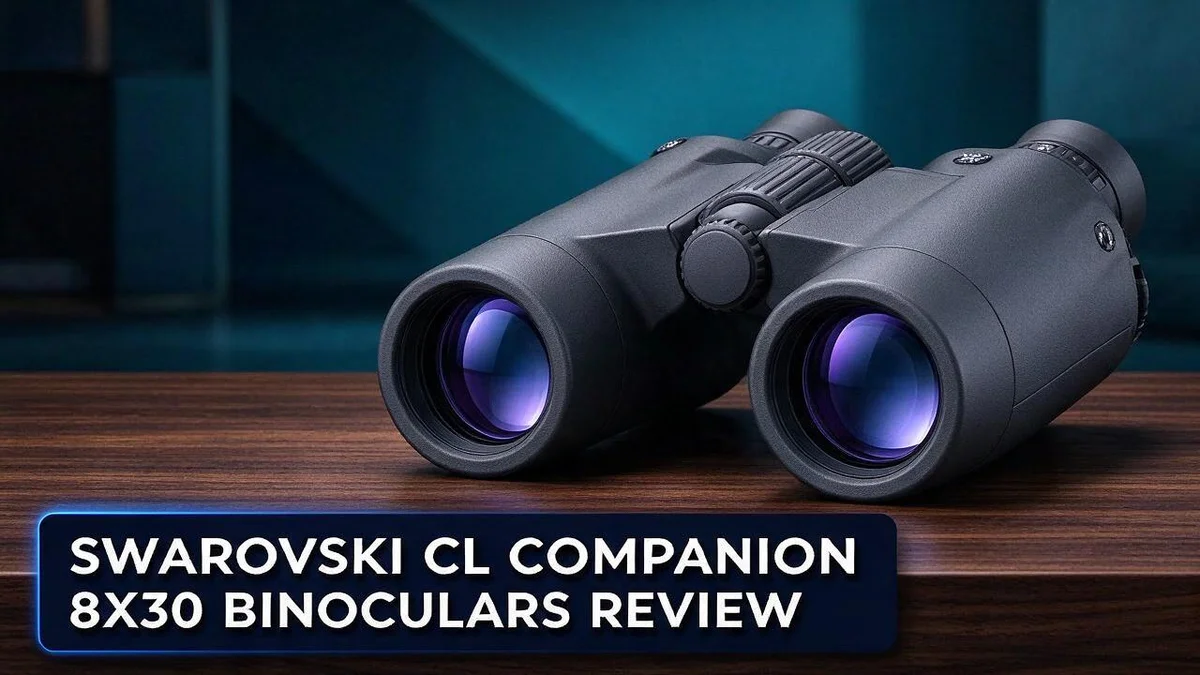
Swarovski CL Companion 8×30 Binoculars Review: Worth Buying?
Do you want binoculars that slip into a jacket pocket? The Swarovski CL Companion 8×30 aims to be that pair.
It weighs about 19 oz. It is noticeably smaller than Swarovski’s own 8×32 SE and EII models.
This model offers 8x magnification and a 30 mm objective lens. The field of view is 7.6°, or 132 m at 1000 m.
The eye relief is 16 mm. The exit pupil is 3.8 mm.
Swarovski says the body is waterproof, dustproof, and fogproof. One BirdForum user calls the view bright and sharp almost to the edges.
Still, no pair is perfect. Some users report softer edges at the top and bottom. One owner also saw liquid near the focuser.
Let’s look at what you can expect.
In a Nutshell
- Compact build: The body is significantly smaller than Swarovski’s own 8×32 SE and EII models. It suits hikers and travelers who pack light.
- Wide view: You get a 7.6° angular field of view. That equals 132 m at 1000 m, so you can find birds and moving subjects quickly.
- Bright image: The 3.8 mm exit pupil gives a bright view in good light. One BirdForum user describes the image as sharp almost to the edges.
- Edge softness: That same user notes the top and bottom of the view look softer. Keep this in mind if you want edge to edge sharpness.
- Possible concern: One owner in a Facebook group reported white liquid around the focuser after one month. The research gives no answer on whether this is normal. Contact Swarovski support if you spot the same thing.
- Best fit: Choose this pair if you value portability and a crisp center view. Look elsewhere if perfect edges matter most to you.
Optical Performance and Image Quality

Last update on 2026-10-28 / Affiliate links / Images from Amazon Product Advertising API Some of the links on this website are affiliate links, which means that at no additional cost to you, I earn a commission if you click through and make a purchase. I only recommend products and services that I believe will add value to my readers. Thank you for your support!
Image quality matters most when you choose binoculars. Most buyers want a view that feels clear from the first glance.
One BirdForum user says the center looks sharp and clean.
Edge sharpness tells a slightly different story. The same reviewer notes that the view stays sharp almost to the edges. Still, the top and bottom areas can look a bit softer.
Keep your eye near the middle for the best detail.
Magnification affects steadiness too. An 8x power keeps the scene calm in your hands. Small hand movements cause less shake than they would at higher power.
This helps when you follow a bird in flight.
Light gathering deserves a closer look. A 30 mm objective lens takes in less light than a 32 mm lens. Expect a slightly dimmer view at dusk compared with larger models.
Dim conditions reveal the limits of any small lens. In bright daylight, the image still looks clear and easy on the eyes.
Color accuracy is another key factor. Good optics show natural greens and blues without a strange tint. Research on this model does not report a clear finding on color fidelity.
Test a pair in person. Look at a tree line or a sign with bold colors.
Focus habits also shape what you see. Adjust the focus wheel slowly until distant trees look crisp. Then check each eyepiece setting so both sides match.
A good setup makes the image feel sharper with less effort.
In short, this model suits people who want a sharp center view. Expect strong daytime clarity and a few soft spots near the edges. That balance fits casual birders, hikers, and wildlife fans well.
Field of View, Exit Pupil and Eye Relief
Field of view tells you how much scene you can take in at once. This model shows 132 meters of width at 1000 meters away. That number helps you judge how easily you can track a moving bird across open ground.
Exit pupil describes the beam of light that reaches your eye. Your pupil opens wider in dim light, often to around 5 to 7 mm for younger eyes. A 3.8 mm exit pupil may feel less bright at dusk than in daylight.
Eye relief matters most if you wear glasses. The 16 mm eye relief gives you space to keep your glasses on. You can see the full image without pressing your eye against the eyecup.
Eye position changes what you see, too. Move your eye closer or farther until the whole circle lights up. Shadows at the edges often mean your eye sits too far away.
Scanning becomes easier with a steady view. You can sweep across a tree line and spot movement fast. Keep both eyes open to reduce strain. Small pairs like this one suit quick searches more than long hunts.
Tip: Try the pair on a distant target first. Notice whether the edges feel too narrow for your style of viewing. Your answer helps you decide if this field suits you.
Cold weather and hats can shift your eye position. Plan a quick check at home before a trip so you know what to expect.
Sunglasses can also sit against the eyecups. Take them off for the best view or test the fit with them on. Practice makes the view feel more natural over time.
Size, Weight and Portability
Size and weight often decide which binoculars you actually take outside. The Swarovski CL Companion 8×30 weighs about 19 ounces, based on its Amazon listing. That figure feels light for a pair with a 30 mm objective.
Carrying comfort matters on long hikes. A light pair hangs easily around your neck for hours. Many people forget it is there until a bird appears.
Portability also helps when space is tight. You can slip the binoculars into a jacket pocket or a small daypack. The body fits into a bag without much effort.
Think about your plans before you buy. A short walk in the park needs less gear than a full day on a mountain trail. Lighter optics reduce neck strain and tired arms during those longer outings.
Hand fit also shapes daily use. Your hands can hold this model steady for longer stretches. Smooth handling makes scanning feel easy when you search for movement in the trees.
A pair this size suits people who like to travel light. You can pack it with a phone, a snack, and a notebook. Everything fits into one small bag without crowding the rest of your gear.
Storage and transport need a little planning too. Keep the lens caps on while you walk.
Store the pair in a padded case when you travel by car or plane. Simple habits protect the optics and keep the body in good shape.
Weight also matters for children and older users. A lighter pair can feel less tiring over time. Check the weight yourself before you commit to any model. Holding it in person gives you the clearest answer.
Top 3 Alternatives
Vortex Diamondback HD

Last update on 2026-08-28 / Affiliate links / Images from Amazon Product Advertising API Some of the links on this website are affiliate links, which means that at no additional cost to you, I earn a commission if you click through and make a purchase. I only recommend products and services that I believe will add value to my readers. Thank you for your support!
The Vortex Diamondback HD offers clear, bright views for everyday use. Its fully multi-coated lenses reduce glare and boost contrast.
Many hikers and bird watchers choose this model for daily outings. The rubber armor grips well in wet hands. It stays waterproof and fog proof in tough weather.
Eye relief suits people who wear glasses. Focus stays quick and simple. Buyers who want a reliable pair will feel at home with it.
Nikon Monarch 5

Last update on 2026-08-28 / Affiliate links / Images from Amazon Product Advertising API Some of the links on this website are affiliate links, which means that at no additional cost to you, I earn a commission if you click through and make a purchase. I only recommend products and services that I believe will add value to my readers. Thank you for your support!
The Nikon Monarch 5 brings bright images even in low light. Its extra low dispersion glass keeps colors natural and true.
You get sharp edges across most of the view. Users often praise the smooth center focus wheel. The rugged body handles bumps, dust, and moisture with ease. Hunters and wildlife watchers trust it at dawn and dusk.
Leica Trinovid HD

Last update on 2026-10-28 / Affiliate links / Images from Amazon Product Advertising API Some of the links on this website are affiliate links, which means that at no additional cost to you, I earn a commission if you click through and make a purchase. I only recommend products and services that I believe will add value to my readers. Thank you for your support!
The Leica Trinovid HD delivers premium clarity and fine detail. Its lenses produce crisp, lifelike colors across the whole image.
Many observers praise its wide field of view. The compact frame slips easily into a jacket pocket.
Its rugged build stands up to hard field use. Sports fans and nature lovers both find it useful for close action and distant scenes. Each lens receives careful coating for strong light transmission.
Build Quality and Weather Protection
When you check build quality, start with how the pair handles daily carrying. This model is compact, so it fits in a small bag or jacket pocket.
Weather protection matters most when skies turn grey. The press materials say this pair is fully waterproof, dustproof, and fogproof. That means rain and dusty trails should not stop your view.
Many people search for waterproof binoculars for rainy hikes. This model answers that need with clear sealing and simple care.
Waterproof claims matter for more than rain. Morning dew, sea spray, and wet grass can all reach your binoculars during a day outside.
Fogproof design helps when the weather changes fast. Warm air can meet a cold barrel and cloud the optics. A fogproof build helps keep your view clear as temperatures shift.
Dust is a quiet threat on sandy paths or dry fields. Fine grit can work into moving parts over time, so a dustproof seal gives extra peace of mind.
Still, good habits extend any pair’s life. Wipe off rain with a soft cloth and let the body dry at room temperature. Avoid leaving the pair in a hot car.
Storage also plays a role. Keep lens caps on when you pack the binoculars, and carry them in a bag that stays dry on the inside.
Build quality also means the pair holds its shape after years of use. Check the housing and seals after each trip to catch small issues early. Small checks save time later.
Overall, the weather protection gives you confidence outdoors. You can focus on wildlife instead of worrying about every drop of rain. Simple habits keep the view bright for years.
Focusing and Handling in the Field
Focusing becomes quicker with practice. Pick a distant target first, such as a tree line or a roofline. Turn the center focuser slowly until the edges look clear. Small turns work better than big jumps.
Your hands do most of the work in the field. Hold the pair with both hands and keep your elbows close to your body. This stance reduces shake and keeps the image calmer.
Rest your elbows on a fence post, a tree trunk, or a rock when you can. A steady base helps you find a small bird in a bush. Move slowly when you pan across an open field.
When a bird flies, find it with your eyes first. Then lift the pair and bring it into view. This method saves time and cuts down on frustration.
Keep an eye on the area around the focuser. One owner reported white liquid near the focuser after about one month of use. The research did not show a clear answer, so check this spot after each outing.
If you see any residue, wipe it with a soft cloth. Then contact the seller or Swarovski for guidance. Small problems can grow over time, so act early.
If you wear gloves, practice focusing with them on. Thin gloves usually allow better control than thick ones. Test this at home before your trip.
Quick focus and steady hands make a big difference. Practice these habits before your next outing. You will feel more confident once the motions feel natural.
Long-Term Durability and Reported Issues
Durability shows up over years, not weeks. This section looks at what owners have reported so far. It also explains what you can check yourself.
The most talked about concern is the white liquid near the focuser. One owner noticed it after about one month of use. That owner asked if this is normal. The research does not show a clear answer.
Many buyers want to know if one report signals a wider problem. The answer is not clear from the available information. Still, a single report should not scare you away.
Your best move is to document everything early. Take clear photos with dates. Write down when you first saw any change. This record helps if you need support.
Contact the manufacturer before you try repairs. Opening or cleaning inside the optics may affect the warranty. Ask the support team what they recommend for your situation.
The softer top and bottom edges of the view raise a different question. Some users notice this in the field. It affects the view, not the body or seals.
Think about how you will use the pair over time. Regular cleaning, dry storage, and gentle handling may help. These steps matter more for lasting confidence than any single report.
Check the pair after each trip. Look for moisture inside the eyepieces. Notice any stiffness in the focus wheel. Early signs often appear before bigger problems.
Overall, the research shows strong protection claims and a small set of concerns. Behavior over many years still needs more owner reports. Read recent reviews before you decide.
Pros and Cons
Pros
- Compact body that fits a smaller pocket than the 8×32 SE or EII.
- Bright, sharp view that stays clear almost to the edges.
- 16 mm eye relief gives eyeglass wearers room to see the full view.
- 3.8 mm exit pupil keeps images bright in dim light.
Cons
- The 7.6 degree field of view shows only a narrow slice of the scene.
- Tracking fast birds in a narrow view takes extra practice.
- Few independent reviews exist, so the long-term picture stays limited.
Who Should Buy It
This pair suits people who want a light companion for everyday outings. It fits a morning walk, a park visit, or a short hike where every ounce counts.
Beginners often find 8x magnification easy to manage. The image stays steady in the hand, so new bird watchers can learn without strain.
Hikers who carry binoculars all day will notice the difference. At about 19 ounces, the pair sits easily on a neck strap.
Travelers heading to humid or dusty places may also appreciate the sealed body. Long bus rides and damp trails feel less risky with gear like this.
Garden watchers who study songbirds at feeders will enjoy the crisp center of the view. Small birds stay clear when they perch close by.
Students and nature club members often share gear. A compact pair makes passing it around simple, and kids can handle the smaller body with ease.
Wildlife lovers who spend hours scanning open land may want a second look. Your eyes need to move across a wide area, so try the pair in person before you decide.
Careful shoppers who want proof of long-term performance should weigh the open questions. The research leaves the focuser issue unresolved, so ask the seller about return options first.
Your best fit depends on how you plan to use the pair. A light, sealed design serves casual birders and hikers well. Heavy field work or wide scanning may call for a different choice.
Final Verdict
The Swarovski CL Companion 8×30 is a small, friendly pair of binoculars that earns a solid recommendation.
It gives you a bright, sharp picture in a body that is easy to carry. Most people will enjoy that mix.
The strengths are clear. The sealed build handles rain, dust, and fog. The center of the view looks crisp and pleasant.
The weak spots are clear too. One owner reported white liquid near the focuser. Others noticed softer top and bottom edges.
These points do not ruin the pair. They do mean you should buy with open eyes.
Our verdict: Buy it if you value comfort and portability over a wide view. It rewards casual birders, walkers, and travelers.
Think twice if you scan large landscapes or follow fast flyers all day. A wider view may serve you better.
Test the focuser as soon as the box arrives. Check the edges in good light. Keep your purchase records safe.
Buy from a seller with a clear return policy. That gives you a safety net if anything feels off.
Swarovski built a reputation on clear optics, and this model carries that spirit in a small frame. Limited independent feedback means patience is wise.
Think of it as a pair for relaxed outings. You spend less effort carrying it and more time looking. That trade suits many nature lovers.
If you value a wide field and rugged peace of mind above all, compare other options first. If you value a light, clear companion, this pair deserves a place on your shortlist.
Final take: a warm thumbs up for the right user. The CL Companion 8×30 feels like a trusted walking partner, and it will likely earn a spot in your daily bag.
Frequently Asked Questions
Can kids use the Swarovski CL Companion 8×30?
Yes, kids can use this pair. The light body fits smaller hands and sits easily on a neck strap. An adult should set the focus at first. After that, a child can scan trees, lawns, and bird feeders on their own. Keep an eye on the strap so the binoculars do not swing and bump into things.
How do I clean the lenses safely?
Blow off loose dirt and grit first. Grit can scratch the glass when you wipe it. Then use a soft microfiber cloth in small circles. Avoid paper towels and rough fabric, because they can scratch the lens coating. A drop of lens cleaner on the cloth works well if the smudges stay.
Can I use these binoculars from a window at home?
Yes, a window works well for bird watching. Sit close to the glass and rest your elbows on a table. This keeps the view steady. Clean the window first, since dust and streaks can blur the picture. Many birds visit feeders in the morning, so early hours often bring the best results.
Do I need to adjust the eyepieces for each eye?
Yes, a quick setup gives the sharpest image. Close your left eye and turn the center wheel until the view looks clear. Then open your left eye, close your right eye, and turn the diopter ring on the right eyepiece until that view looks sharp too. Write down the setting so you can repeat it next time.

Hello, I’m Emily Price, the founder of Birds Affection. As a passionate bird enthusiast and spiritual seeker, I’ve always been fascinated by the symbolic meanings and mystical connections between birds and our lives. On this website, I share my knowledge and insights on the spiritual significance of various bird species, exploring their roles as messengers, guides, and teachers. Through my writing, I aim to inspire and educate others on the profound wisdom and beauty that birds bring to our world. Join me on this journey as we delve into the enchanting realm of bird symbolism and discover the hidden meanings behind these magnificent creatures.