Celestron Nature DX ED 8×42 Binoculars Review: Are They Worth It for Birding?
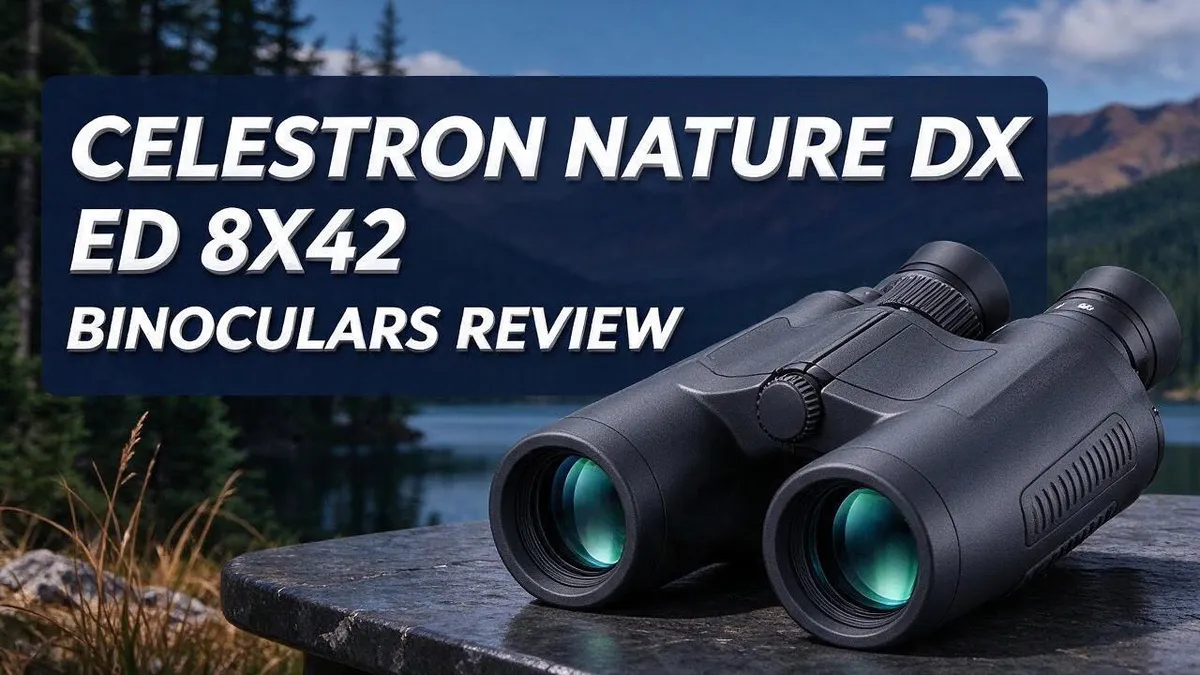
Do you want to spot the small details on a bird’s feathers? The Celestron Nature DX ED 8×42 aims to help you do that.
These binoculars use ED glass. This glass helps show subtle field markings with sharper color and detail. Birders often care about that most.
The body has an open bridge aluminum design. Rubber armor covers it, and the binoculars are fog proof and waterproof. You can take them out in damp weather with confidence.
Many owners report high satisfaction. Beginners also find them easy to use.
In this review, I look at the optics, build, and comfort. I also compare them with other popular 8×42 models. Let’s find out if they fit your outdoor adventures.
In a Nutshell
-
Best for: Beginners and casual birders who want clear, readable views of subtle field markings.
-
Weather ready: The rubber armor is fogproof and waterproof. Damp mornings and light rain should not cut your outing short.
-
Close focus: These binoculars let you study nearby subjects, such as butterflies and garden visitors. That makes them useful in a backyard as well as on the trail.
-
Easy to use: New users can pick them up and start watching right away. The learning curve is gentle.
-
Things to watch: One owner reported that their pair failed after extended use. This is a single anecdotal report, but it is worth knowing before you buy.
-
Other options: The Celestron Regal ED is a higher end favorite among birders. The Nikon Monarch M5 is another popular comparison, so check both if you want to weigh your choices.
Optical Quality and ED Glass Performance


Last update on 2026-08-27 / Affiliate links / Images from Amazon Product Advertising API Some of the links on this website are affiliate links, which means that at no additional cost to you, I earn a commission if you click through and make a purchase. I only recommend products and services that I believe will add value to my readers. Thank you for your support!
The optics are where this pair really shows its strength. Good glass decides whether a view feels crisp or soft. Here, the lenses work together to deliver a clean image.
The biggest benefit of ED glass is color control. Lower color fringing means less purple or green halo around bright edges. Branches against a bright sky look cleaner.
Edge sharpness matters too. Many binoculars look sharp in the center but blur near the edges. When you scan a tree line, watch whether the outer area stays clear. A good pair keeps the edges steady as you pan.
Contrast is another key point. Good contrast helps you pick out a dark bird against shady leaves. Colors look rich without looking fake. Try this test in your yard during the morning light.
Here is a simple field check. Pick a sign or fence post across your yard. Focus on it, then look at its edges. Notice whether you see any rainbow outline.
The 42 mm objective lenses gather good light. That helps at dawn and dusk when birds move most. This matters when birds move quickly.
The 8x power also helps. It keeps the view steady in your hands. Beginners often find this makes tracking birds easier.
A clean view may also mean less eye strain. You can watch for longer stretches. Long sessions feel more comfortable.
Test them in different light too. Bright noon sun shows the sharpest colors. Dusk tests how well the lenses gather light.
Some birders may want to compare them with a step up model before deciding. Try them in a shop or with a friend’s pair when you can. Take your time with this choice.
Build, Body Design and Weather Resistance
Solid build matters when you spend long hours outdoors. The Celestron Nature DX ED 8×42 feels sturdy in your hands.
The rubber covering gives a firm grip that does not slip. Your fingers stay put, even when your hands get cold or damp. A secure hold means fewer drops and less worry on the trail.
Check the center hinge next. It controls the eyecup and barrel spacing, so a smooth hinge helps you set the fit fast. A snug fit blocks stray light and keeps your view steady.
Balance is another key point. A well balanced body feels easier to hold for long periods. Your neck and wrists will thank you during a slow morning of watching birds.
Focus control also plays a role in daily use. The focus wheel turns with a steady, even motion. You can shift from a close flower to a distant tree without fumbling.
Weather resistance goes beyond the listed rubber armor. After rain or mist, wipe the lenses with a soft cloth. Then let the body air dry in a shaded spot.
Fast temperature shifts can still cause fogging inside the barrels. Warm breath may condense on cold glass. Give the binoculars time to match the outside air before you start watching.
Storage also protects the build over time. Keep them in a padded case or a dry bag. Avoid leaving them in a hot car or on a wet deck. A protective case also keeps dust off the lenses.
Simple habits keep this pair working well for years. Good care helps the hinge, focus wheel, and rubber armor stay in top shape.
Handling, Focus and Close Focus Range
Handling starts the moment you lift them. Rest your thumbs under the central hinge and let your fingers curl around the barrels. Most people find this grip steady after a few minutes.
Try a short walk with the pair hanging from your neck. A good strap setup keeps them close and stops sudden bumps. Note how the weight feels on your neck after twenty minutes.
Focus wheel speed matters more than many buyers expect. The wheel lets you shift from a distant tree to a nearby bird with ease. Practice this move a few times to learn its rhythm.
Close focus is the next part to test. Pick a flower or feeder that sits close to you. Then turn the wheel slowly until the edges sharpen. Note whether the image still looks clear.
Close focus helps with butterflies and insects. Move a leaf or petal slowly toward the lenses and check the blur. If the view stays fuzzy, the subject may sit below the minimum distance.
Use one hand to focus when you can. Many birders keep the other hand on a branch or a fence post. This habit reduces shake and keeps the image still.
Eyecups play a role too. Twist them up or down until the full field fills your view. Glasses wearers should roll them down and check the edges again.
Diopter setting needs a quick check. Cover the left lens and focus on a distant sign with the center wheel. Then cover the right lens and turn the diopter ring until it looks sharp.
Finally, keep your focus habits steady each day. Clean spots off the lenses before you start, since dust can blur the image.
Top 3 Alternatives
Vortex Diamondback HD

Last update on 2026-08-28 / Affiliate links / Images from Amazon Product Advertising API Some of the links on this website are affiliate links, which means that at no additional cost to you, I earn a commission if you click through and make a purchase. I only recommend products and services that I believe will add value to my readers. Thank you for your support!
The Vortex Diamondback HD is a solid choice for new birders. It uses high-density glass that keeps edges sharp across the view. Its phase-corrected roof prisms show fine details clearly.
The body is waterproof and filled with nitrogen. Fog stays away on cold mornings. Many buyers also like the long warranty that Vortex offers.
Nikon Monarch 5

Last update on 2026-08-28 / Affiliate links / Images from Amazon Product Advertising API Some of the links on this website are affiliate links, which means that at no additional cost to you, I earn a commission if you click through and make a purchase. I only recommend products and services that I believe will add value to my readers. Thank you for your support!
The Nikon Monarch 5 is known for bright, true colors. Its extra-low dispersion glass reduces color fringing. The image stays clear from the center to the edges.
It is also waterproof and fogproof. You can use it in rain or humid weather. Hikers often pick it for long days outdoors.
Athlon Midas G2

Last update on 2026-08-28 / Affiliate links / Images from Amazon Product Advertising API Some of the links on this website are affiliate links, which means that at no additional cost to you, I earn a commission if you click through and make a purchase. I only recommend products and services that I believe will add value to my readers. Thank you for your support!
The Athlon Midas G2 gives you a wide field of view. Its ED glass helps keep images sharp and bright. Low light performance is strong, so dawn and dusk viewing feels easy.
The body feels sturdy in your hands. It handles bumps on trails well. Sports fans and stargazers who want big views often enjoy this model.
Birding and Wildlife Field Performance
Birds rarely wait for you to get ready. A pair that finds targets fast helps you catch a warbler before it slips away. Scanning a whole tree at once keeps the search simple.
Tracking birds in flight is another real test. Hawks and swallows change direction in a blink. Smooth motion keeps the bird in view, so you can see its wing shape and tail pattern.
Good performance also shows at dawn and dusk. Many songbirds and owls stay active during low light. A bright, clear image helps you judge size and shape when color fades.
Wildlife watching goes beyond birds. Deer, squirrels, and otters often appear at the edge of a meadow or lake. You can enjoy these animals without getting too close and scaring them off.
Waterfowl on open water show another side of the pair. Ducks and geese sit far from shore. A steady image makes it easier to compare head patterns and bill shapes in a group.
Sitting quietly in a blind pays off. Let birds come to you instead of chasing them. Slow movement keeps nervous animals calm and gives you longer, closer views.
Keep a short field log. Note the habitat, time, and behavior you see. Over time, these notes build your skill and help you learn local species faster.
Pack light for long walks. Carry a small case and a few spare lens wipes in your pocket. A light load helps you stay out longer, and more time outside means more birds seen.
Pick a spot near water or feeders for steady action. Good spots often repeat, so you can learn daily routines.
Durability and Long-Term Reliability
Long term reliability depends on a few simple checks. Owners report high satisfaction, which is a good sign. One owner did report that their pair failed after extended use, so buyers should know what to watch for.
Test the alignment every few months. Pick a far edge, like a roof line or a power pole. Look at it with one eye, then the other. The image should stay sharp and level in both views.
Rubber armor can change over time. Sunscreen, insect spray, and salty sea air may soften or peel it. Wipe the surface with a damp cloth after trips, and keep harsh chemicals away from it.
Eyecups also wear down. Fold them down for glasses wearers, then raise them for a clean view. Check that they still lock in place without wobbling.
The diopter ring needs attention too. Set it once for each eye, then mark its position with a small dot of paint or tape. A ring that slips often points to loose parts inside.
Keep the lens caps and a soft pouch close by. Grit can scratch the coatings over the years. Clean the lenses with a blower brush first, then use a cloth.
Watch for these warning signs: a grinding feel, a gap along the body seam, or fogging that returns after drying. Stop using the pair and contact the manufacturer for support.
Read the warranty terms before you buy. Save your receipt in a safe place. Support teams often ask for proof of purchase when repairs are needed.
Writing a short maintenance log helps as well. Note cleaning dates, drops, and any changes you see. Over time, that record shows whether the pair stays solid. A steady routine helps these binoculars serve you for many seasons.
Price and Value for Money
Think about what the pair delivers day after day. The Nature DX ED 8×42 suits beginners who want sharp views without a steep learning curve. Its ED glass adds color clarity that many newcomers notice right away.
Compare it with close rivals. The Celestron Regal ED 8×42 sits higher in the lineup and attracts serious birders. The Nikon Monarch M5 also uses an 8×42 layout, so it makes a fair side by side test.
Shuntu and SBBONY models appear in many searches, but they use different sizes and build plans.
Ask what you want from the glass. Casual wildlife watchers may not need top tier optics. Serious birders often look for top tier optics that handle low light with more polish.
Match the pair to your habits. People who walk trails, visit parks, or watch backyard feeders get the most from 8x magnification. The 8x power keeps the image steady for handheld use.
Look at the full package. ED glass, a rugged open bridge body, and rubber armor combine into one solid kit. Many owners report high satisfaction, which signals that the design holds up for everyday use.
Read owner feedback with care. One owner reports that their pair failed after extended use. Single reports do not define a product, but they remind buyers to test the pair closely before the return window closes.
Decide based on your goals. Choose this model if you want a dependable companion for learning birds. Pick a higher tier option if you need the sharpest image in dim light or plan to spend long hours in the field. Test the pair in a shop or with a friend first if you can.
Pros and Cons
Pros
- ED glass cuts down on color fringing around bright edges.
- Beginners often find the views easy to learn and use.
- Owners report high satisfaction with their pair.
- The 8x magnification gives a wide view that is easy to steady.
- The ED model shows subtle markings that help with bird identification.
Cons
- The research does not list specific cons for this model.
- One owner reports their pair failed after extended use.
- The exact close focus distance is not stated, so check it before you buy.
- Some listings use the non-ED name, so confirm you get the ED version.
Who Should Buy It
This pair suits people who want one set of binoculars for many outdoor jobs. A weekend hike, a lakeside picnic, and a quick look at a bird on the fence all work well with it. The Nature DX ED 8×42 handles each task with ease.
Gift givers can also find it a smart choice. A new nature fan may not know which features matter most. This model offers a clear starting point, so the present feels thoughtful and useful.
Families can share it too. Kids often ask to look through binoculars at the zoo or the beach. The rubber armor gives a firm grip, which helps little hands hold on. Adults can then watch the same spot together.
Travelers make another good match. Sightseeing trips often bring surprises, such as a hawk over a canyon or dolphins near the shore. A dependable pair lets you enjoy these moments without setting up a tripod.
Photographers can use it as a scouting tool. Spotting animals before setting up a camera saves time and keeps wildlife calm. A quick scan from a distance shows where the action is.
Sports fans at outdoor events may enjoy it as well. Stadium seats can feel far away. Binoculars bring players and small details closer, even from the upper rows.
Some buyers should look elsewhere. People who plan deep sky astronomy need a different tool. Serious birders who want the highest level of glass may prefer a more advanced model. Think about your main goal before you decide.
Final Verdict
The Celestron Nature DX ED 8×42 earns a confident recommendation from me. It gives you a clear step up from basic binoculars. It also keeps the learning curve gentle.
The standout feature is the ED glass. It sharpens edges and helps you read small details on feathers, fur, and leaves. That detail keeps the hobby fun for new users.
The large lenses also gather plenty of light. Early morning and late evening sessions look brighter and calmer. Wildlife often moves at those hours, so this matters.
My overall rating: four and a half stars out of five for its target audience. This pair does its main job very well. It brings you closer to nature without fuss.
Here is how I would apply the verdict:
- Buy it if you want a dependable first step into birding or wildlife watching.
- Wait if you already own premium glass and want a big jump in image quality.
- Compare the Regal ED if you want to reach for a higher tier.
A good pair becomes a habit. You carry it more, look more, and learn more. The Nature DX ED 8×42 encourages that habit through comfortable, clear viewing.
Even after an upgrade, this model stays useful. Keep it by a window or in the car for quick looks. Guests can borrow it, and you will still have a trusted spare.
Final thought: pick this pair, head outside, and let your first sighting do the convincing.
Frequently Asked Questions
How do I focus these binoculars?
Start with the center focus wheel. Look at a far object and turn the wheel until it looks sharp. Then check the right eyepiece. Many people need a small adjustment there, so turn it slowly until both views match.
Can people who wear glasses use them?
Yes, many glasses wearers can. Fold down the eyecups if you need to see the full field of view. If you can, try them in person first, so you know the fit feels comfortable.
How should I clean and store them?
Blow off any dust or grit before you touch the lenses. This step helps prevent tiny scratches. Then wipe the glass with a soft microfiber cloth. Keep them in a case or bag when you hike, travel, or leave them in a car.
What should I check before I buy from a seller?
Read the return policy first. Look for warranty details, too. Keep your receipt and the box, since both help if you need a repair or exchange later.

Hello, I’m Emily Price, the founder of Birds Affection. As a passionate bird enthusiast and spiritual seeker, I’ve always been fascinated by the symbolic meanings and mystical connections between birds and our lives. On this website, I share my knowledge and insights on the spiritual significance of various bird species, exploring their roles as messengers, guides, and teachers. Through my writing, I aim to inspire and educate others on the profound wisdom and beauty that birds bring to our world. Join me on this journey as we delve into the enchanting realm of bird symbolism and discover the hidden meanings behind these magnificent creatures.