Handrong Bluebird Houses Review 2026: Worth Buying?
If you love watching bluebirds nest in your backyard, you already know the joy they bring. But finding the right birdhouse can feel like a guessing game. That is exactly why so many bird lovers have turned to Handrong Bluebird Houses in recent years.
These birdhouses have earned thousands of positive reviews on Amazon. They promise easy installation, solid construction, and a design that bluebirds actually prefer. But do they really live up to the hype in 2026?
I spent hours researching this product. I read hundreds of customer reviews, compared specs, and looked at how it stacks up against the competition.
Key Takeaways:
- Handrong Bluebird Houses are made from natural cedarwood, which resists rot and insects without the need for chemical treatments. This makes them safe for nesting birds and long lasting in outdoor conditions.
- The 1.5 inch entry hole is perfectly sized for Eastern Bluebirds. It keeps larger, aggressive species like starlings out while giving bluebirds easy access to the nesting chamber.
- Installation is simple and beginner friendly. Each house comes with pre drilled holes and mounting hardware. You can attach it to a pole, post, or tree in minutes.
- The front panel swings open for cleaning. This feature makes it easy to remove old nests at the end of each breeding season, which is important for attracting birds year after year.
- Drainage holes and ventilation slots are built in. These small but important details help keep the interior dry and comfortable for eggs and chicks during wet or hot weather.
- The price point remains very affordable in 2026. You can often buy a two pack for under $30, which makes it one of the best value bluebird houses on the market today.

Last update on 2026-10-13 / Affiliate links / Images from Amazon Product Advertising API Some of the links on this website are affiliate links, which means that at no additional cost to you, I earn a commission if you click through and make a purchase. I only recommend products and services that I believe will add value to my readers. Thank you for your support!
What Is the Handrong Bluebird House?
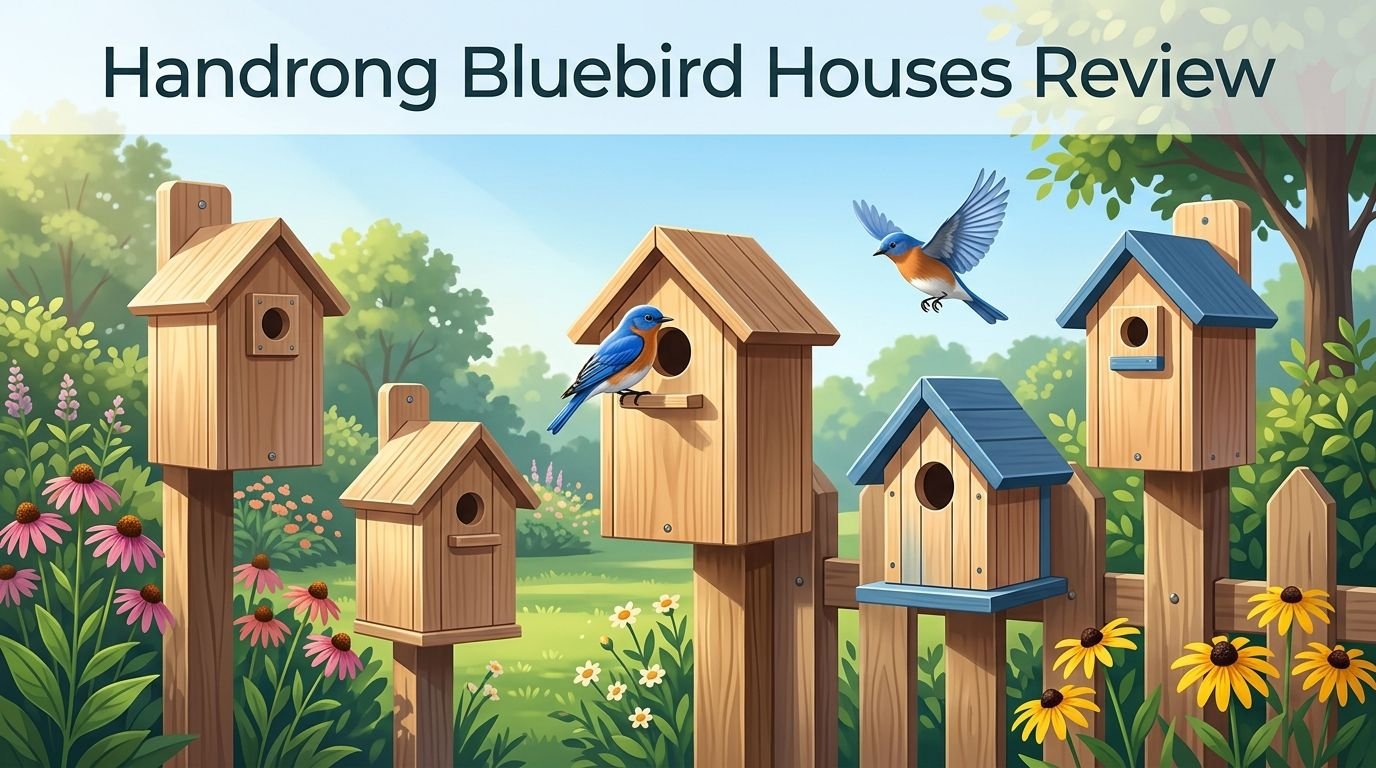
The Handrong Bluebird House is a natural cedarwood nesting box designed specifically for Eastern Bluebirds. It is sold on Amazon and has become one of the best selling bluebird houses on the platform. The brand focuses on simple, functional birdhouse designs that work right out of the box.
Each house measures roughly 9.5 x 6.5 x 6 inches, providing enough interior space for a bluebird family to nest comfortably. The cedarwood construction gives it a rustic, natural look that blends well in gardens, fields, and backyards.
Handrong sells these birdhouses in single and multi pack options. The two pack is especially popular among buyers who want to place multiple houses along a bluebird trail. This is a proven strategy for attracting more nesting pairs to your property.
The brand has maintained strong ratings on Amazon, consistently earning 4.5 stars or higher from thousands of verified buyers. Many customers praise its easy setup and the fact that bluebirds move in quickly. Others appreciate the affordable price, which makes it accessible for hobbyists and serious birders alike.
Overall, the Handrong Bluebird House is a no frills, purpose built nesting box. It does not try to be decorative or fancy. Instead, it focuses on giving bluebirds exactly what they need to raise a healthy brood.
Build Quality and Materials
The Handrong Bluebird House uses 100% natural cedarwood as its primary building material. Cedar is a top choice for outdoor birdhouses because it naturally resists moisture, decay, and insect damage. You do not need to paint or seal it.
The wood feels solid and well cut. Joints are tight, and the overall construction holds up well in rain, wind, and sun. Several long term users report that their Handrong houses have lasted three or more seasons without significant wear.
The interior walls are intentionally left rough. This is not a flaw. Rough interior surfaces help fledgling bluebirds grip the walls and climb toward the entry hole when they are ready to leave the nest. Smooth walls can trap young birds inside.
Hardware included with the house is basic but functional. You get screws for mounting and a simple latch system for the front panel. The latch keeps the door secure during storms and prevents raccoons or other predators from prying it open.
One minor concern some buyers mention is slight size variations between units. Since the wood is natural and not machine finished to tight tolerances, you may notice small differences. However, these variations do not affect the birdhouse’s performance or safety for nesting bluebirds.
Design Features That Attract Bluebirds
The 1.5 inch entry hole is the single most important design feature of this birdhouse. Eastern Bluebirds prefer this exact size. It allows them easy entry while blocking larger cavity nesters like European Starlings, which need at least 1.75 inches.
The entry hole is positioned near the top of the front panel. This placement creates a deep nesting chamber below the hole, which protects eggs and chicks from predators that might reach inside. A deeper box means longer arms would be needed to reach the nest.
Ventilation is another smart feature. Small gaps near the roofline allow hot air to escape. During summer months, interior temperatures can climb dangerously high in poorly ventilated boxes. The Handrong design addresses this problem effectively.
Drainage holes on the bottom prevent water from pooling inside the nesting chamber. Rain can blow in through the entry hole during storms. Without drainage, standing water could chill or drown nestlings. These small holes solve that issue.
The overhanging roof also provides a bit of rain protection over the entry hole. It is not a large overhang, but it helps deflect direct rainfall. Some birders add a small predator guard above the hole for extra protection, though this is optional.
Top 3 Alternatives for Handrong Bluebird House
If you want to explore other options before deciding, here are three excellent alternatives available on Amazon right now.
1. Kingsyard Cedar Bluebird House

Last update on 2026-07-11 / Affiliate links / Images from Amazon Product Advertising API Some of the links on this website are affiliate links, which means that at no additional cost to you, I earn a commission if you click through and make a purchase. I only recommend products and services that I believe will add value to my readers. Thank you for your support!
2. Nature’s Way Cedar Bluebird Box

Last update on 2026-08-27 / Affiliate links / Images from Amazon Product Advertising API Some of the links on this website are affiliate links, which means that at no additional cost to you, I earn a commission if you click through and make a purchase. I only recommend products and services that I believe will add value to my readers. Thank you for your support!
3. Woodlink Audubon Series Bluebird House

Last update on 2026-10-13 / Affiliate links / Images from Amazon Product Advertising API Some of the links on this website are affiliate links, which means that at no additional cost to you, I earn a commission if you click through and make a purchase. I only recommend products and services that I believe will add value to my readers. Thank you for your support!
Each of these alternatives offers solid cedarwood construction and bluebird specific entry hole sizes. They vary in price, design details, and mounting options. Compare them with the Handrong to find your best fit.
How to Install Your Handrong Bluebird House
Installation takes about 10 to 15 minutes with basic tools. The house comes with pre drilled mounting holes on the back panel, so you do not need to modify anything. A drill or screwdriver and a few screws are all you need.
Mount the house on a metal pole or wooden post between 4 and 6 feet off the ground. This height range is ideal for bluebirds. It keeps the nest above most ground predators while remaining low enough for you to monitor and clean.
Face the entry hole away from prevailing winds. In most areas, this means pointing the hole east or southeast. This orientation also gives the morning sun a chance to warm the box early in the day, which nesting bluebirds appreciate.
Avoid mounting on trees if possible. Trees give predators like snakes and cats easy climbing access. A standalone metal pole with a cone shaped baffle underneath is the safest mounting setup for any bluebird house.
Space multiple houses at least 100 yards apart. Bluebirds are territorial and will not nest close to another bluebird pair. If you want to attract more pairs, spread your houses across a wider area. Open fields, meadows, and large yards work best.
Where to Place Your Bluebird House for Best Results
Location matters just as much as the house itself. Bluebirds prefer open, grassy areas with scattered trees or fence lines nearby. They hunt insects by scanning the ground from a perch, so they need clear sightlines.
Avoid placing your Handrong house in dense woods, heavy shade, or urban areas. Bluebirds are grassland birds. They avoid cluttered landscapes where House Sparrows and wrens tend to dominate nesting cavities.
The ideal spot has short grass or mowed lawn within 50 to 75 feet of the house. This gives bluebirds a clear hunting ground. Tall weeds and thick brush reduce their visibility and make the location less attractive.
Nearby perches are helpful but not required. A fence post, low branch, or utility wire within 25 feet gives bluebirds a convenient spot to watch over their nest box. They often perch near the house to guard against intruders.
If you live in a suburban area, you can still attract bluebirds. Place the house at the edge of your yard near an open field, park, or golf course. Bluebirds are surprisingly adaptable as long as they have open space and insects to eat.
Cleaning and Maintenance Tips
Clean your Handrong Bluebird House at least once per year. The best time is late fall or early winter, after the last brood has fledged. Removing old nesting material reduces parasites and makes the box fresh for spring arrivals.
The front panel swing open design makes this job easy. Simply unlatch the front door and pull out the old nest. You can use a stiff brush to scrub the interior walls. Avoid chemical cleaners. A mild bleach solution (one part bleach to nine parts water) works if needed.
Check the drainage holes during cleaning. They can become clogged with dirt or nesting debris. A quick poke with a small stick clears them out. Good drainage is critical for keeping future nests dry and healthy.
Inspect the house for cracks, loose joints, or damage from weather and woodpeckers. Cedarwood is durable, but years of sun and rain can take a toll. Tighten any loose screws and replace the house if structural integrity is compromised.
Some birders do a mid season cleaning between the first and second brood. Bluebirds often raise two broods per year in warmer regions. Removing the first nest encourages them to build a fresh one for the second clutch.
Predator Protection Strategies
Predators are the biggest threat to nesting bluebirds. Raccoons, snakes, cats, and House Sparrows can destroy eggs, kill chicks, or evict adult bluebirds. Your Handrong house needs additional protection to keep families safe.
A metal pole with a stovepipe or cone baffle is the most effective predator deterrent. Mount the baffle below the house on the pole. It prevents raccoons and snakes from climbing up to reach the nest. This single step dramatically improves nest survival rates.
House Sparrows are a serious problem. These aggressive birds will enter bluebird boxes, destroy eggs, and kill adult bluebirds. If you see House Sparrows showing interest in your box, take action immediately. Sparrow spookers, which are simple devices with hanging streamers, can help.
Never use pesticides or sticky traps near your birdhouse. These can harm bluebirds and their food sources. Instead, rely on physical barriers and deterrents that target predators without introducing toxins to the environment.
The deep nesting chamber in the Handrong design offers some built in predator resistance. A cat or raccoon reaching through the entry hole cannot touch eggs at the bottom. This depth is one reason bird experts recommend boxes with at least 5 inches of interior depth below the hole.
Handrong Bluebird House vs. Competitors
The biggest advantage of the Handrong house is its price to quality ratio. At roughly $15 for a single unit or $25 to $30 for a two pack, it undercuts many competitors while offering comparable construction and features.
Compared to the Kingsyard Cedar Bluebird House, the Handrong has a similar material quality and entry hole size. Kingsyard often includes a slightly more polished finish, but functionally the two perform almost identically. Kingsyard tends to cost a few dollars more.
The Nature’s Way Cedar Bluebird Box is another popular choice. It features a slightly different latch system and a more pronounced roof overhang. Some birders prefer its look, but performance differences are minimal. Both attract bluebirds equally well.
Woodlink’s Audubon Series carries the brand recognition of the National Audubon Society. It is well made and widely recommended. However, it typically costs more than the Handrong for a similar feature set. The Audubon name adds trust but not necessarily better results.
For budget conscious birders who want to set up multiple houses along a trail, the Handrong multi packs offer the best value. You get solid cedar construction, proper entry hole sizing, and functional design at a price that makes scaling up affordable.
What Real Buyers Are Saying in 2026
Customer reviews on Amazon remain overwhelmingly positive for the Handrong Bluebird House. Most buyers rate it 4 or 5 stars. Common praise focuses on its easy assembly, natural cedar smell, and how quickly bluebirds discover and use it.
Many reviewers report bluebirds moving in within the first week of installation. This speaks to the correct entry hole size and the natural wood material. Bluebirds seem to trust cedarwood houses more than painted or plastic alternatives.
A few negative reviews mention minor cosmetic issues. Some buyers received houses with rough edges, slightly uneven cuts, or wood knots near the entry hole. These are cosmetic concerns that do not affect nesting success, but they are worth noting.
Repeat buyers are common. Several reviewers mention purchasing additional units after their first house attracted a nesting pair. This repeat purchase pattern is a strong signal of product satisfaction.
The most helpful reviews come from experienced birders who have used multiple brands. Many of them confirm that the Handrong performs on par with houses costing two to three times more. Value for money is a consistent theme across feedback.
Best Time to Put Up Your Bluebird House
February through early March is the ideal window in most of the United States. Bluebirds begin scouting for nesting sites in late winter, well before they actually start building nests. Having your house up early gives you the best chance of attracting a pair.
In southern states, you may want to install your house as early as January. Bluebird breeding seasons start earlier in warmer climates. In northern states, mid March is typically early enough.
Leaving your house up year round is also fine. Bluebirds sometimes use nest boxes as winter roosting shelters. Multiple bluebirds may huddle together inside a box on cold nights to share body heat. Your Handrong house serves double duty this way.
If you miss the early spring window, do not give up. Bluebirds often raise a second or even third brood later in the season. A house installed in May or June can still attract a pair looking for a second nesting site.
The key is to have the house clean, mounted, and ready before scouts arrive. A dirty or poorly placed house will be ignored. Follow the installation and placement tips above to give yourself the best odds.
How Long Does the Handrong Bluebird House Last?
With basic care, a Handrong cedarwood birdhouse lasts 3 to 5 years or more. Cedar is naturally resistant to rot and insect damage, which gives it a significant lifespan advantage over pine or plywood alternatives.
Sun exposure is the biggest aging factor. UV rays break down the wood surface over time, causing it to turn gray and eventually soften. A house mounted in partial shade will last longer than one in full sun all day.
Annual cleaning and inspection extend the life of your house significantly. Tightening loose screws, clearing drainage holes, and brushing out old nests all prevent premature deterioration. A well maintained house can easily exceed the five year mark.
Some buyers apply a thin coat of linseed oil to the exterior once a year. This treatment protects the wood without introducing harmful chemicals. Never use paint, stain, or varnish on the interior. These can off gas fumes that harm nesting birds.
When the house finally reaches the end of its life, replacement is affordable. At its price point, the Handrong is practically disposable compared to premium houses costing $40 or more. Many birders simply buy a new one every few years.
Is the Handrong Bluebird House Worth Buying in 2026?
No products found.
Yes, the Handrong Bluebird House remains one of the best values in 2026. It checks every box that matters for bluebird nesting: correct entry hole size, cedar construction, proper ventilation, drainage, and easy cleaning access.
It is not a luxury product. You will not find decorative carvings or fancy finishes. But bluebirds do not care about aesthetics. They care about safety, size, and location. The Handrong delivers on all three.
For anyone setting up their first birdhouse or expanding an existing bluebird trail, this product makes financial sense. The multi pack options let you scale up without breaking your budget. And the consistent customer satisfaction scores confirm that it works.
If you want a proven, affordable, and functional bluebird house, the Handrong is a smart choice. Pair it with a good mounting pole, a predator baffle, and the right location. You will have bluebirds nesting in your yard before you know it.
Frequently Asked Questions
What size hole does the Handrong Bluebird House have?
The entry hole measures 1.5 inches in diameter. This is the standard recommended size for Eastern Bluebirds. It allows bluebirds to enter while keeping out larger species like starlings. Western and Mountain Bluebirds also use this hole size, though a 1 9/16 inch hole is sometimes preferred for those species.
Can I paint or stain my Handrong Bluebird House?
You can apply a light, water based exterior stain to the outside if you wish. Earth tones like tan, gray, or light green work best. Never paint or stain the interior. Chemical fumes inside the nesting chamber can harm eggs and chicks. The natural cedar finish works perfectly fine without any treatment.
How do I keep House Sparrows out of my bluebird house?
House Sparrows are persistent competitors. Use a sparrow spooker after the first egg is laid. This is a simple device with reflective streamers mounted above the house. You can also monitor the box regularly and remove House Sparrow nests before they are completed.
How far apart should I place multiple bluebird houses?
Space bluebird houses at least 100 to 150 yards apart. Bluebirds are territorial and will not tolerate another pair nesting nearby. However, you can place a bluebird house and a Tree Swallow house on the same pole or close together, as these species generally coexist peacefully.
Do bluebirds come back to the same house every year?
Yes, bluebirds often return to the same nesting site year after year. This is called site fidelity. If a pair successfully raises chicks in your Handrong house, there is a strong chance they will return the following spring. Keeping the house clean and in good condition increases the likelihood of their return.

Hello, I’m Emily Price, the founder of Birds Affection. As a passionate bird enthusiast and spiritual seeker, I’ve always been fascinated by the symbolic meanings and mystical connections between birds and our lives. On this website, I share my knowledge and insights on the spiritual significance of various bird species, exploring their roles as messengers, guides, and teachers. Through my writing, I aim to inspire and educate others on the profound wisdom and beauty that birds bring to our world. Join me on this journey as we delve into the enchanting realm of bird symbolism and discover the hidden meanings behind these magnificent creatures.