Bushnell H2O 8×42 Binoculars Review: Worth the Price?
Do you need binoculars that handle rain, mud, and fog? The Bushnell H2O 8×42 aims to do exactly that.
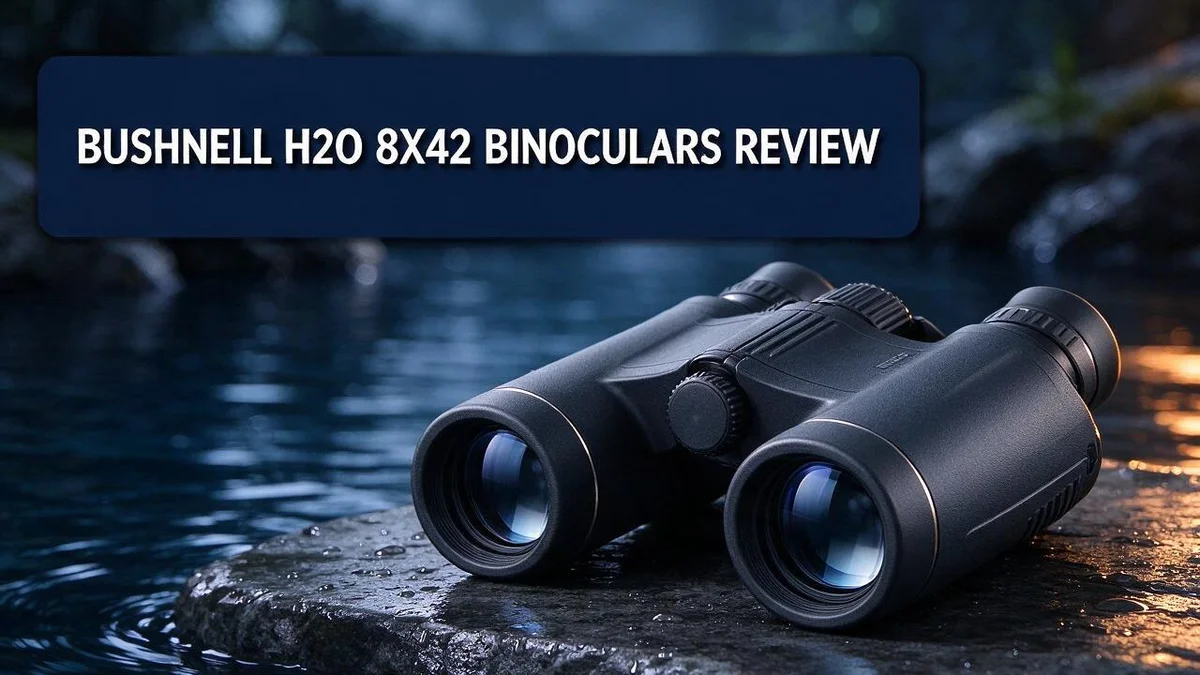
This model uses a roof prism design. That makes it more compact than many Porro prism binoculars. It also has BaK-4 prisms and multi coated optics for bright, clear views.
The body is 100% waterproof. Makers sealed it with O rings and purged it with nitrogen. It resists fogging, and the rubber armor gives your hands a secure grip.
One reviewer found it lighter, brighter, and clearer than the larger Bushnell Trophy. Still, no independent lab tests exist. This review draws on retailer listings, forum posts, and user feedback.
Let’s see how the H2O 8×42 performs for birding, hunting, and outdoor trips.
In a Nutshell
• Fog protection: Nitrogen purging and O ring seals keep the inside of the lenses clear when temperatures drop. That helps during early morning scans.
• Image quality: BaK4 prisms and multicoated lenses help deliver bright, sharp views in daylight.
• Handling: The grippy rubber armor feels secure in wet hands. The listing also claims a wider field of view and easier steadiness.
• Portability: The compact body fits easily in a small pack. Your neck will thank you after a full day on the trail.
• Watch out: One user reported focus and collimation problems on the 10×42 version. That report does not cover the 8×42, but it is worth knowing.
• Alternatives and limits: The Bushnell Trophy and the Powerview 8×42 are the main comparisons. Our sources are listings, forum posts, and one personal review, so no independent lab testing backs these claims.
Optical Quality and Brightness

Last update on 2026-10-28 / Affiliate links / Images from Amazon Product Advertising API Some of the links on this website are affiliate links, which means that at no additional cost to you, I earn a commission if you click through and make a purchase. I only recommend products and services that I believe will add value to my readers. Thank you for your support!
Light sits at the core of any good optic. Bright views matter most when the sun is low.
The 8×42 size offers an exit pupil of about 5.25 millimeters. Your eye pupil opens wide in dim light. That match helps the image look bright at dusk.
The listing also claims a wider field of view. A wider view helps you track birds in flight. You can also follow a deer through brush.
You see more of the scene without moving your head. Keep that claim in mind, though. The source is a retailer listing.
Steadiness matters for clarity too. The listing says the 8×42 is easier to hold steady. A steadier image looks sharper and easier to study.
Eight power is a common choice for this reason. Shake stays low for most hands at this magnification.
Edge sharpness is another point to check. Many buyers look at how clear the image stays near the edges.
No independent lab tests of this model were found. That means field checks matter. Try a few targets, like tree lines or fence posts.
Color is also worth a look. A good optic shows true greens and browns in a forest. Sun glare on water can wash out detail.
Test the glasses in both bright sun and shade. This shows how they handle each condition.
One user reported focus and collimation trouble on the 10×42 model. That issue does not apply to the 8×42 directly. It does show why checking alignment matters.
Look for double images or eye strain during your first few minutes of use.
Overall, the 8×42 seems well suited to daylight watching and dawn trips. Test it in your own conditions before you rely on it. Real use tells you more than any spec sheet.
Build Quality and Waterproofing
Build quality decides how long your binoculars last outdoors. A solid body handles bumps from rocks, branches, and the occasional drop. Good construction also keeps the optics aligned over many seasons.
The balance matters as much as the materials. Hold the binoculars at arm’s length for a few seconds. If the front feels heavy, your wrists may tire on long hikes.
Check the focus wheel first. A smooth wheel should turn without grit after a rainy day. Rotate it from close range to far range several times. Stiffness or looseness can signal a problem.
Mud and sand can work into the hinge area. Wipe the barrels with a soft cloth after each trip. Blow loose dirt from the eyecups and lens edges before you wipe.
Use the lens caps every time. They protect glass from scratches when the binoculars sit in a bag. Keep the caps on their strap so you never lose them in the field.
Storage habits affect long term health. Keep the binoculars somewhere dry at room temperature. Avoid leaving them in a hot car, since heat can stress seals and adhesives.
Watch for loose parts. Tighten any screws you can reach with a small tool. Look for play between the two barrels, since that may point to a hinge issue. Catch small problems early.
Test the body after each trip. Shake the binoculars gently and listen for rattles. Check that the eyecups lock at each setting you use.
The research found no independent durability tests for this model. Most evidence comes from listings, forum posts, and one personal review. Your own checks after each trip will give the clearest answer.
Size, Weight and Handling
Size and weight shape how often you actually use binoculars. A heavy pair often stays at home, while a lighter pair goes everywhere. The Bushnell H2O 8×42 aims for that easy carry feeling.
One reviewer says this model feels lighter and more compact than the larger Bushnell Trophy. That matters on long hikes. Neck strain builds up fast with heavy optics.
The roof prism design keeps the body slim. The barrels line up in a straight tube, so the frame stays narrow. Porro prism models often look wider and feel bulkier in the hand.
Handling starts with your grip. Rest your thumbs on the central hinge and let your fingers cradle the barrels. Keep your elbows tucked in so your hands stay steady during a long watch.
Hold still for a few seconds before you judge the view. Small shakes make any pair feel heavier. Brace your arms against your chest or lean on a tree trunk when you need extra support.
Test the balance before you head out. Hang the binoculars from your neck and walk for ten minutes. Notice whether the front tips down or the eyecups press into your face.
No exact weight figure appeared in the research sources. Check the listed weight before you buy, and compare it with the load you already carry. Weigh your daily pack first if every ounce counts on your trips.
Smaller hands and older adults may find the body easier to hold. Try a few sample views to see if the eyecups and barrels fit comfortably. A good fit makes every outing more enjoyable.
Top 3 Alternatives
Nikon Monarch 5

Last update on 2026-08-28 / Affiliate links / Images from Amazon Product Advertising API Some of the links on this website are affiliate links, which means that at no additional cost to you, I earn a commission if you click through and make a purchase. I only recommend products and services that I believe will add value to my readers. Thank you for your support!
The Nikon Monarch 5 delivers bright, sharp views in its 8×42 form. It uses ED glass to reduce color fringing.
The body is waterproof and fogproof. It handles rain and cool mornings well.
Its wide field of view makes it easy to follow moving birds. The eyecups fold down for eyeglass wearers, which adds comfort on long walks.
Who it suits: Hikers and bird watchers who want clear images without a heavy frame.
Vortex Diamondback HD

Last update on 2026-08-28 / Affiliate links / Images from Amazon Product Advertising API Some of the links on this website are affiliate links, which means that at no additional cost to you, I earn a commission if you click through and make a purchase. I only recommend products and services that I believe will add value to my readers. Thank you for your support!
The Vortex Diamondback HD brings high definition glass into a simple roof prism design. Its fully multicoated lenses deliver crisp color in lower light.
The housing is waterproof and nitrogen filled. This keeps moisture out during damp trips.
The focus wheel turns smoothly, so you can find details fast. A simple design keeps the setup easy for new users.
Many buyers also appreciate the strong warranty. It feels comfortable in the hand for long outings.
Celestron Nature DX


Last update on 2026-10-28 / Affiliate links / Images from Amazon Product Advertising API Some of the links on this website are affiliate links, which means that at no additional cost to you, I earn a commission if you click through and make a purchase. I only recommend products and services that I believe will add value to my readers. Thank you for your support!
The Celestron Nature DX focuses on easy use and steady performance. It includes ED glass and phase coated roof prisms for good detail.
The binoculars stay waterproof and fogproof, so they suit wet trips. Their compact body fits easily in a daypack.
The grip feels light in your hands during a full day of use. A clear view of wildlife rewards every early start.
Why pick it: You get solid optics at a friendly size for beginners and families.
Field of View and Focus Performance
Field of view tells you how much scene fits inside the circle you see. A wider view helps you follow a bird as it hops from branch to branch.
Try a simple test at home. Pick a fence line or a row of posts. Count how many posts fit across the view. Then repeat the count with another pair of binoculars.
Focus performance matters just as much. A good focus system locks onto a subject quickly. Slow focusing can make fast action hard to catch.
Turn the center focus wheel on a distant object. Notice whether the image snaps into sharp detail or hunts back and forth. A smooth response gives you more time to watch wildlife.
Next, check the diopter setting. Close your right eye and focus with the center wheel. Then close your left eye and adjust the diopter ring. This step keeps both eyes sharp.
Focus at near and far ranges. Look at something about ten yards away, then at a distant ridge. Watch how quickly the image changes. Close focus matters when you watch insects or flowers up close.
The earlier focus complaint involved the 10×42 version. Do not assume the same result applies to this size. Test your own unit before you trust it.
Pan slowly across a tree line and watch the edges. A steady view across the whole circle shows good field performance.
Take your time with each test. Rushing hides small flaws. A calm, careful check tells you more than a quick glance. Write down what you notice after each step. Simple notes make later comparisons easier. Good habits make every outing more enjoyable.
Durability and Reliability Concerns
Reliability is the big question mark for this model. The research found no independent durability tests, so the evidence comes from retailer listings, forum posts, and one personal review. Read those reports with care.
The one serious complaint points to alignment trouble on the 10×42 model, not the 8×42. Still, products in the same line often share parts and factory processes. That makes alignment worth watching.
Collimation means both barrels point at the same spot. Years of bumps and temperature swings can cause that alignment to drift. You can spot drift by viewing one distant target with both eyes open. If the two images stay split or shift as you move, the barrels may be out of line.
Here is a simple check. Pick a sign or a roofline far away. Close one eye, then the other. If the target jumps sideways or up and down, get the binoculars looked at.
Read the warranty terms before you commit. Look for how long coverage lasts and whether it includes both optics and mechanical parts. Find out how repairs work, too. Keep your receipt and the original box so shipping a unit back is easy.
Your habits matter as much as the design. Heavy field use, long hikes in cold weather, and trips to the coast put more stress on any optic. Light birdwatching from a porch faces much less strain.
Finally, notice any change over time. A softer image after a drop, or a view that looks different in one eye, can signal a deeper issue. Catching problems early can protect your binoculars for many seasons.
Value for Money
Good value means more than a quick win. It means gear that performs well for years. The Bushnell H2O 8×42 packs several useful features into one body.
Waterproof and fogproof design matters most outdoors. Rain, mist, and sudden temperature shifts can ruin lesser optics. This model handles those conditions well.
A sealed body filled with nitrogen keeps moisture out of the lenses. That seal protects the optics during sudden weather changes.
Multicoated lenses help too. Coatings cut glare and reduce light loss.
The BaK4 prisms deliver bright, sharp images in dim light. Dawn and dusk walks reward that extra brightness.
One reviewer found this model brighter and clearer than the larger Trophy. That edge comes without adding bulk to your pack.
Casual birders, hikers, and families get the most from it. One pair can handle many trips and many settings.
Compare it with the Bushnell Powerview 8×42 too. Write down the features you need most. Then check each model against that short list.
The research relied on retailer listings, forum posts, and one individual review. No independent lab tests confirmed these claims. Treat the praise as a starting point, not a final verdict.
Long term value grows when gear fits your habits. Choose the pair you will actually carry on every trip.
Your viewing style shapes the return you get. Frequent users gain the most from sealed, well built optics. Occasional users can still enjoy a clear view on sunny trips.
Plan to use it often, and the features will pay off. Store it in a dry case between trips to protect the seals.
Pros and Cons
Pros
- The compact roof prism body fits easily in a jacket pocket or small daypack.
- It feels lighter than the larger Bushnell Trophy for longer walks.
- The 8x magnification keeps the image steady for handheld viewing.
- Rubber armor gives a grippy feel in wet or cold hands.
- It suits quick outings to parks, trails, or backyard feeders.
Cons
- Eight power offers less zoom than 10x models for distant wildlife.
- Many performance claims come from seller listings rather than lab tests.
- Limited retailer options make it harder to compare sellers.
- The only reported focus and alignment problems involved the 10×42 model.
Who Should Buy It
First time buyers often find this model a gentle starting point. It keeps things simple. An 8x magnification and a compact body make learning easier.
Travelers also gain a lot from it. Someone packing a suitcase needs gear that fits in a bag without taking much space. The roof prism design helps here, since it stays slim.
Damp climates call for extra care, and this sealed build can help. Rain and sudden mist can cloud lenses quickly. A nitrogen filled body keeps moisture out, so views stay clear on wet trails.
Anyone who needs long range zoom should look elsewhere. Eight power shows less detail on distant animals than 10x models. Shore birders or wildlife watchers who scan wide landscapes may want more reach.
Careful shoppers should read recent owner feedback before they decide. Reviews often reveal how a pair handles daily use over time. Look for comments about focus and alignment, since those topics matter most.
Short trips show its strengths best. Think of a morning walk, a park visit, or a quick hike. Bring it along and it will feel light in the hand.
Hobbyists who already own large binoculars may use this as a backup. A compact pair fits in a glove box or a pocket for spontaneous sightings. It also lets them keep a second set nearby on trips.
Shoppers who dislike fiddly controls will likely appreciate the straightforward design. Less to adjust means more time spotting birds.
Think about your viewing habits before you buy. Ask where you plan to use them and how far you need to see. Answering those questions makes the choice much clearer.
In short, this pair suits everyday explorers who want a simple, weather ready companion.
Final Verdict
The Bushnell H2O 8×42 earns a solid recommendation for everyday outdoor viewing. It keeps the experience simple. That simplicity is its best quality.
Our verdict rests on a clear pattern. Sources praise its brightness, its light feel, and its sealed build. Few sources raise real complaints about the 8×42 version.
We stay honest about the limits. No independent lab tested this pair. So treat the praise as a strong signal, not a guarantee.
Buy it if you want a dependable pair that you grab without thinking. It rewards people who value comfort and ease over extreme reach. You will likely use it often.
Skip it if you need heavy zoom or professional grade glass. Serious wildlife photographers who scan distant ridgelines need different tools.
A smart move is to test it right after it arrives. Check that both barrels focus sharply. Look at a distant tree line and see if the two views merge into one clean circle. Do this within the return window.
Also set the eyecups and the diopter before you judge the view. Many people skip this step. A proper setup makes the image look sharper and eases eye strain.
Our final take is that this pair is easy to like and easy to trust. Its clear strengths outweigh its small drawbacks. It will not dazzle spec chasers. It will quietly win over anyone who just wants a good view.
If that sounds like you, the H2O 8×42 deserves a spot in your gear bag. Pick it up and head outside. Your next sunrise walk will thank you.
Frequently Asked Questions
Can people who wear glasses use this pair?
Many eyeglass wearers can use it comfortably. Check the eye relief details in the product listing before you buy. Then test the view with your glasses on to see if the image fills your sight.
Does the wider view help track flying birds?
The listing claims a wider field of view, which can make moving birds easier to follow. Sweep slowly across the sky and keep the bird near the center. Smooth movement takes a few minutes to learn.
How does it perform at dusk?
The 42mm lenses gather more light than smaller models. Multi-coated optics also help images look brighter in dim conditions. Early morning and late evening walks show this benefit best.
Is it suitable for children?
The lighter build can suit younger hands. An adult should still supervise and help with focusing. Teach every child never to look at the sun through any binoculars.
How should I clean it after a muddy hike?
Rinse off mud with fresh water, then pat the body dry. Use a soft lens cloth to wipe the glass. Store it in a dry case so moisture does not build up between trips.

Hello, I’m Emily Price, the founder of Birds Affection. As a passionate bird enthusiast and spiritual seeker, I’ve always been fascinated by the symbolic meanings and mystical connections between birds and our lives. On this website, I share my knowledge and insights on the spiritual significance of various bird species, exploring their roles as messengers, guides, and teachers. Through my writing, I aim to inspire and educate others on the profound wisdom and beauty that birds bring to our world. Join me on this journey as we delve into the enchanting realm of bird symbolism and discover the hidden meanings behind these magnificent creatures.