Leupold SX2 Alpine Spotting Scope Review 2026: Still Worth It?
Spotting scopes fall into two camps. Some look great on a shelf. Others survive a rainy elk hunt at 9,000 feet. The Leupold SX2 Alpine HD sits firmly in the second camp, and that is why it keeps showing up in truck beds, range bags, and backpacks year after year.
This review covers the real experience of using the SX2 Alpine HD. You will read about the unboxing, the glass quality, the focus feel, the tripod setup, and the things this scope genuinely struggles with. No marketing fluff. Just what happens when you put your eye behind it at 60x on a windy morning.
Leupold released a Gen 2 version of this scope, so 2026 buyers now face a choice between two generations at two different prices. That choice matters more than most people realize. Keep reading, because the differences are small on paper and noticeable in the field.
In a Nutshell:
- The SX2 Alpine HD delivers sharp, usable images for the money. Most owners report crisp resolution from 20x through about 45x. Above that, image quality softens, which is normal for scopes in this price bracket.
- Build quality is the strongest selling point. The body is fully waterproof and fogproof. Leupold tests these scopes in extreme heat and extreme cold. The rubber armor takes abuse without complaint.
- The lifetime guarantee removes most buying risk. Leupold repairs or replaces the scope for free if it fails. You do not need a receipt, and the coverage follows the product rather than the original buyer.
- Chromatic aberration exists. The name says HD, but the original model does not advertise ED glass. You will see purple or blue fringing on high contrast edges at maximum zoom.
- Gen 2 adds an Arca Swiss base and swappable eyecups. These upgrades save real setup time in the field. The 60mm Gen 2 sells near $399 and the 80mm Gen 2 sits around $499.
- Best suited to hunters and range shooters, not serious birders. Color fidelity is good but not elite. Birders who chase exact plumage detail should spend more or look at ED alternatives.
What Is the Leupold SX2 Alpine HD Spotting Scope?

Last update on 2026-09-24 / Affiliate links / Images from Amazon Product Advertising API Some of the links on this website are affiliate links, which means that at no additional cost to you, I earn a commission if you click through and make a purchase. I only recommend products and services that I believe will add value to my readers. Thank you for your support!
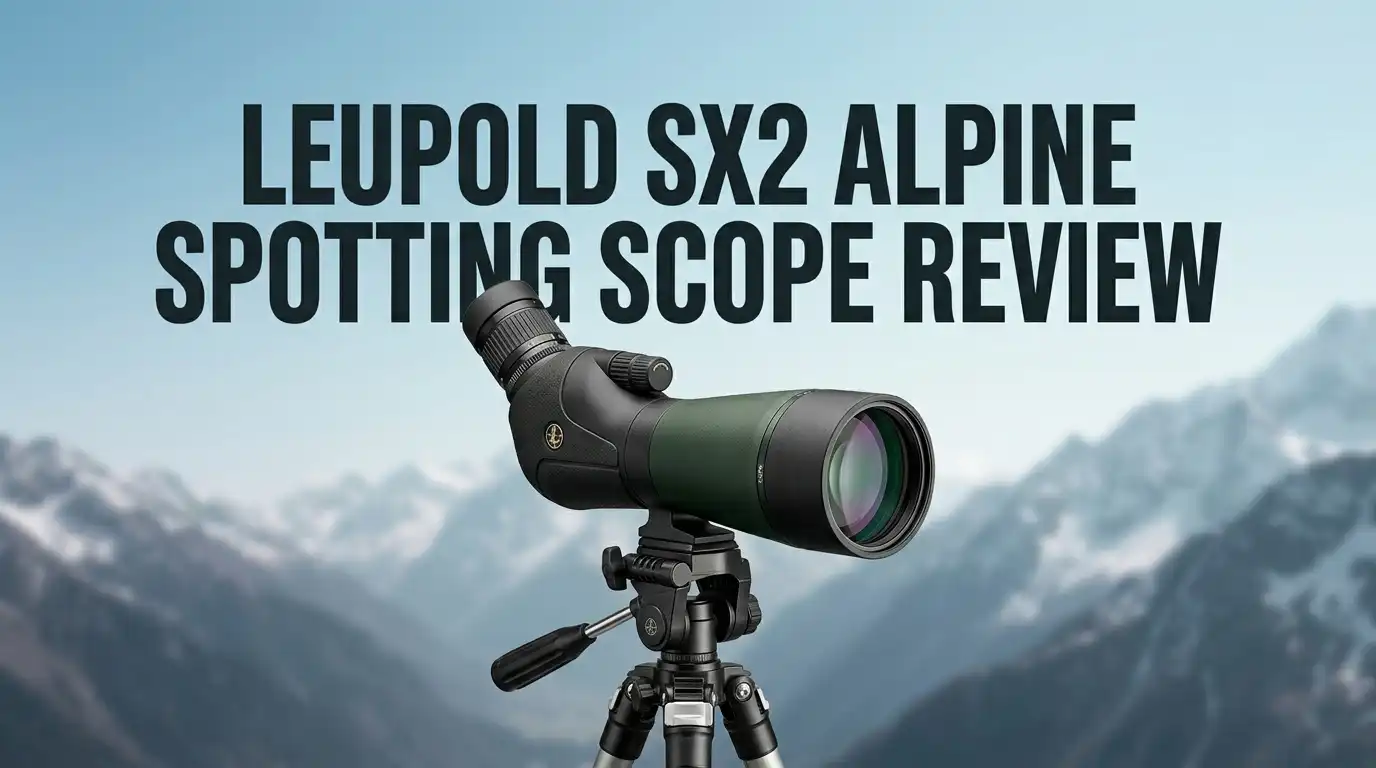
The SX2 Alpine HD is Leupold’s entry into affordable full size spotting scopes. It replaced the older SX2 Kenai line. Leupold built it for hunters who need long range detail without carrying a premium spotter worth two thousand dollars.
You can buy it in two objective sizes. The 60mm version weighs about 60 ounces and measures 14.4 inches long. The 80mm version weighs 67 ounces and measures 16.8 inches. Both versions zoom from 20x to 60x through a fixed eyepiece.
The scope uses Leupold’s Advanced Optical System in Gen 2 models and the Twilight Max Light Management System in earlier units. Both systems aim at the same target, which is cutting glare and squeezing more usable minutes out of dawn and dusk.
Angled and straight body styles exist. Angled works better for sharing a scope and for uphill glassing. Straight works better from a truck window and packs slightly flatter.
Unboxing Experience: What Actually Comes in the Box
The packaging is plain. Leupold ships the scope in a simple cardboard box with molded foam. No premium presentation, no magnetic flap, no glossy brochure. That is fine, because the money clearly went into the optic.
Lift the scope out and the weight registers immediately. Four pounds feels substantial in your hands. The rubber armor grips your palm even with cold fingers. The finish is a matte shadow gray that does not shine in sunlight.
Inside you also find a soft side carry case, front and rear lens caps, and a short manual. The case stays on the scope during use. You unzip flaps to expose the objective and eyepiece. Some owners love this design. Others find the flaps flap around in wind.
Gen 2 buyers get a second set of eyecups in the box. Swapping them takes about ten seconds. Winged eyecups block side light, and the low profile cups suit eyeglass wearers.
Full Specifications and What They Mean
Numbers tell part of the story, so here is the important data without the marketing language wrapped around it.
The 80mm Gen 2 offers a field of view of 102 feet at 1,000 yards at 20x, dropping to 48 feet at 60x. Eye relief runs 19.5mm at low power and 18mm at high power. Exit pupil measures 4mm wide open and 1.3mm at maximum zoom. Close focus sits at 39.4 feet.
The 60mm Gen 2 gives a slightly wider view of 106.8 feet at 20x and 50.8 feet at 60x. Eye relief measures 19.5mm and 16.7mm. Exit pupil drops to just 1mm at 60x, which explains why the smaller scope dims faster at high zoom.
Here is the practical translation. The 80mm gathers more light and holds brightness better at 50x and above. The 60mm packs easier and costs one hundred dollars less. Choose the 80mm if you glass at dusk. Choose the 60mm if you hike far.
Top 3 Alternative for Leupold SX2 Alpine HD Spotting Scope

Last update on 2026-09-13 / Affiliate links / Images from Amazon Product Advertising API Some of the links on this website are affiliate links, which means that at no additional cost to you, I earn a commission if you click through and make a purchase. I only recommend products and services that I believe will add value to my readers. Thank you for your support!
Vortex Diamondback HD Spotting Scope 20-60×85 Angled

Last update on 2026-09-24 / Affiliate links / Images from Amazon Product Advertising API Some of the links on this website are affiliate links, which means that at no additional cost to you, I earn a commission if you click through and make a purchase. I only recommend products and services that I believe will add value to my readers. Thank you for your support!
Athlon Optics Argos HD 20-60×85 Spotting Scope


Last update on 2026-09-17 / Affiliate links / Images from Amazon Product Advertising API Some of the links on this website are affiliate links, which means that at no additional cost to you, I earn a commission if you click through and make a purchase. I only recommend products and services that I believe will add value to my readers. Thank you for your support!
Celestron Regal M2 80ED Spotting Scope
Optical Performance in Daylight
Daylight is where this scope earns its reputation. Point it at a hillside at 20x and the image snaps into place with good contrast and neutral color. Detail holds well across most of the view, with mild softening near the outer edge.
Push to 40x and the image stays useful. You can count points on a distant buck and read terrain features that binoculars flatten out. Many users describe the Leupold glass as sharper than similarly priced competitors they compared it against.
Then comes 60x. Image quality drops here. Brightness falls, contrast thins, and any heat mirage becomes brutal. This is not a Leupold flaw alone. Almost every spotting scope under $600 behaves this way at maximum magnification.
Treat 60x as an occasional tool rather than a default setting. Most experienced users park the zoom between 30x and 45x and only crank up for a final identification.
Low Light and Dusk Performance
Hunters care about the last twenty minutes of legal shooting light. The SX2 Alpine HD handles that window better than its price suggests, especially in the 80mm body.
At 20x the 80mm produces a 4mm exit pupil. That matches your dilated eye reasonably well and keeps the image bright. Dial down to lower power as the sun drops and you will keep seeing detail long after a cheap scope goes gray.
Leupold’s coatings reduce glare aggressively. Glassing into a setting sun causes less washout than expected. The integrated sunshade helps here and slides out with one hand.
The honest limitation shows at high zoom in low light. At 60x on the 60mm model, the exit pupil shrinks to 1mm. The image goes dim and grainy fast. Low light and high magnification do not mix on this scope. Plan your glassing around that reality and you will rarely feel shortchanged.
Build Quality and Weather Resistance
This scope feels overbuilt in the best way. Gen 2 uses a magnesium chassis. Earlier models use a polycarbonate frame with reinforced stress points. Both wear a thick rubber armor jacket.
Leupold seals the scope with inert gas and tested gaskets. It is 100 percent waterproof and fogproof. Owners have glassed through steady rain, snow squalls, and heavy fog without internal condensation.
The lens coatings deserve a mention. DiamondCoat adds scratch resistance to exterior surfaces. Guard ion sheds water, oil, and fingerprints. Rain beads up and rolls off instead of smearing across your view.
Drops happen in the field. This body handles bumps against rocks and truck tailgates without losing collimation. Leupold subjects these scopes to punishing temperature and impact cycles before release. That testing shows in daily use. The scope simply keeps working, which is exactly what you want from equipment you carry into remote country.
Focus System and Ergonomics
The SX2 Alpine HD uses a helical focus collar. You rotate a wide ring around the scope body instead of turning a small knob on top. This design has become standard on mid range spotters for good reason.
Focusing feels smooth and predictable. Travel from close focus to infinity takes roughly one full turn. You can find sharp focus quickly and make fine corrections with light pressure. Gloved hands work fine because the ring is large and textured.
The zoom ring sits near the eyepiece and turns with slightly more resistance. That resistance is intentional. It stops accidental magnification changes when you bump the scope.
The oversized eyepiece is genuinely comfortable. Long eye relief means eyeglass wearers see the full field. Extended glassing sessions cause less eye strain than with narrow eyepiece designs. The single criticism is that no dual focus system exists, so astronomy users who want ultra fine adjustment will notice the omission.
Tripod Mounting and Setup Speed
Gen 2 brings the most meaningful upgrade here. Leupold integrated an Arca Swiss compatible base directly into the scope foot. You clamp it onto a compatible tripod head in about two seconds with no adapter plate.
That base also includes standard 1/4 20 threads. Older tripods without Arca clamps still work. The mount rotates, so you can shift the eyepiece to any angle for prone shooting, seated glassing, or window mount use.
Original SX2 Alpine models use only the rotating 1/4 20 port. It works, but you must attach a plate first. Anyone who has fumbled with a loose plate in the dark understands why the Gen 2 change matters.
No tripod comes in the box. Budget an extra $100 to $300 for a stable tripod. A wobbly tripod ruins good glass instantly, so do not pair this scope with a lightweight camera tripod and expect clean images at 60x.
Digiscoping and Phone Photos
Plenty of buyers want to record what they see. The SX2 Alpine HD supports digiscoping through third party phone adapters, though Leupold does not include one.
Results are decent at moderate zoom. Set the scope around 20x to 30x, clamp your phone over the eyepiece, and you can capture recognizable images of game animals and shooting targets. The generous eyepiece diameter makes alignment easier than on narrow eyepieces.
At high magnification, digiscoping gets frustrating. Vignetting appears, focus becomes twitchy, and any tripod vibration shows up in the footage. Video at 60x through a budget adapter usually looks worse than what your eye sees.
Bring a solid tripod and use a timer or remote shutter. Touching the phone screen introduces enough shake to blur the shot. Serious photographers should look at scopes with dedicated camera adapters, but casual users will get shareable photos from this setup with a little patience.
Field Testing for Hunters
Hunting is the natural home for this scope. Weight matters, and 60 to 67 ounces sits in acceptable territory for a full size spotter. It rides on a pack frame without dominating your load.
Western hunters use it to sort bulls and bucks at a mile. At 40x you can judge antler mass and count points on animals that binoculars only reveal as brown shapes. That capability saves miles of unnecessary hiking.
The angled body helps when you glass uphill for hours. Your neck stays neutral instead of craning. Two hunters can share one scope without adjusting tripod height between turns.
Cold weather performance holds up. The focus ring does not stiffen badly in freezing temperatures. Battery free optics never fail at the worst moment, which is part of why spotters remain relevant next to thermal devices. Rain and snow bead off the objective and a quick wipe restores the view.
Range Use and Bullet Hole Spotting
Shooters ask one question about any spotting scope. Can it see bullet holes at distance? The answer depends on conditions more than on the scope itself.
On a clear morning with no mirage, the 80mm resolves .30 caliber holes on white paper out to about 300 yards. Some users report success further with good targets and steady air. Splash and impact on steel reads clearly out to 1,000 yards.
Mirage destroys those numbers. On a hot afternoon, heat waves turn 60x into soup. Dropping to 25x often reveals more than cranking to maximum power. That advice applies to every scope at every price.
Contrast matters too. Black holes on white paper read far better than holes in tan cardboard. Use quality targets and you will get more out of this optic. For competition shooters who need to see small holes at long range in bad air, an ED glass scope remains the better tool.
Birdwatching Performance and Limits
Birders can use the SX2 Alpine HD successfully, with caveats. The close focus distance of 32.8 feet on the 60mm and 39.4 feet on the 80mm limits how near you can observe. Backyard feeder watching is out of range.
For open water, shorelines, and raptor watching, the scope performs well. Brightness and resolution are good enough to identify most species confidently at moderate distance.
The sticking point is color fringing. Without ED glass, high contrast subjects show purple or green edges. A dark bird against a bright sky highlights this clearly. Serious birders who document subtle plumage detail will find that distracting.
The fixed eyepiece adds another limit. You cannot swap in a wide angle eyepiece for scanning. Dedicated birders should consider an ED scope such as the Celestron Regal M2 80ED instead. Casual nature watchers will not mind and will appreciate the durability.
What the SX2 Alpine HD Does Not Do Well
Honest reviews list failures, so here are the real ones. First, chromatic aberration appears at high magnification on high contrast edges. Leupold markets HD lenses, not ED lenses, and the difference is visible.
Second, the top end of the zoom range disappoints. Images at 60x lose brightness and sharpness enough that many owners rarely use it. You are effectively buying a 20x to 45x scope with a bonus setting.
Third, the eyepiece does not come off. No Barlow lens, no filters, no alternative magnification. Astronomy users will feel boxed in.
Fourth, the included soft case flaps annoy some users in wind, and no hard case exists in the box. Fifth, no tripod is included, which adds real cost. Sixth, the scope is heavy for long backcountry hikes. Ultralight hunters often choose a smaller 50mm or 65mm spotter instead.
Pros and Cons
Pros
- Sharp, high contrast images through the 20x to 45x range that beat many same price competitors
- Fully waterproof and fogproof construction with magnesium body on Gen 2 models
- Leupold lifetime guarantee covering free repair or replacement with no receipt required
- Smooth helical focus collar that works well with gloves and allows fine adjustment
- Long eye relief of 18mm to 19.5mm that suits eyeglass wearers comfortably
- Arca Swiss integrated base on Gen 2 for fast tripod mounting without plates
- Two swappable eyecup styles included with Gen 2 for different lighting conditions
- Extendable sunshade and glare reducing coatings that help in harsh light
- Strong low light performance on the 80mm model during dawn and dusk
Cons
- Visible chromatic aberration on high contrast subjects at high magnification
- Image quality and brightness fall off noticeably at 60x
- No ED glass despite the HD naming
- Eyepiece is fixed and cannot be swapped for other magnifications or filters
- Tripod not included, adding meaningful cost to the total setup
- Heavy at 60 to 67 ounces for long distance backpack hunts
- Close focus distance too long for backyard or close range birding
- Soft case flaps can catch wind and irritate during use
Price and Value in 2026
Pricing shifted when Gen 2 arrived. The Gen 2 60mm lists at $399.99 and the Gen 2 80mm lists at $499.99 through Leupold. Original generation models frequently appear discounted, sometimes near $350 for the 60mm.
That original generation discount represents strong value. Optically the two generations perform similarly. Gen 2 improvements center on the Arca Swiss base, the eyecups, and the magnesium housing rather than the glass itself.
Ask yourself one question. Do you value faster tripod mounting and eyecup options enough to pay the difference? If you already own an Arca compatible head, Gen 2 makes daily use smoother. If you use an older tripod with plates, the savings may serve you better.
Factor the lifetime guarantee into value. A scope you never replace costs less over a decade than two cheaper scopes that fail. That math favors Leupold clearly.
Who Should Buy the Leupold SX2 Alpine HD?
Last update on 2026-09-24 / Affiliate links / Images from Amazon Product Advertising API Some of the links on this website are affiliate links, which means that at no additional cost to you, I earn a commission if you click through and make a purchase. I only recommend products and services that I believe will add value to my readers. Thank you for your support!
Buy this scope if you hunt western terrain and need reliable long range glassing in bad weather. It handles rain, snow, dust, and rough handling better than most competitors at this price.
Buy it if you shoot at a range and want to see impacts on steel and paper without spending premium money. The 80mm version handles most range distances well in decent conditions.
Buy it if you want one durable optic that will last decades and stay covered by a lifetime guarantee.
Skip it if you are a serious birder chasing exact color accuracy. Skip it if you need frequent 60x performance for competition scoring. Skip it if ounces matter more than anything on long backpack trips.
The SX2 Alpine HD is not a premium alpha scope and never pretended to be. It is a tough, sharp, sensibly priced tool that does the important work well. For most hunters and shooters in 2026, that combination makes it an easy recommendation.
Frequently Asked Questions
Does the Leupold SX2 Alpine HD come with a tripod?
No. Leupold sells the scope on its own. You receive the scope, a soft side case, and lens caps. Gen 2 models add a second set of eyecups. Plan to buy a stable tripod separately, and choose one rated well above the scope weight for steady high magnification views.
Is the SX2 Alpine HD good for stargazing?
It works for casual stargazing. You can view the moon clearly, spot Jupiter’s moons, and pick out bright star clusters. Serious astronomy needs a telescope. The fixed eyepiece prevents you from adding astronomy specific eyepieces or filters, and chromatic aberration shows on bright objects against dark sky.
What is the difference between Gen 1 and Gen 2?
Gen 2 adds an integrated Arca Swiss tripod base, two interchangeable eyecup styles, a magnesium body, and updated coatings under the Advanced Optical System name. Optical performance is broadly similar between generations. Gen 2 focuses on handling improvements and setup speed rather than a major glass upgrade.
Can you see bullet holes at 1000 yards?
Not reliably on paper. You can see splash and impacts on steel at 1,000 yards in good conditions. Paper hole visibility depends heavily on caliber, target contrast, and mirage. Expect confident .30 caliber hole spotting on white paper out to roughly 300 yards in clean air.
Should I choose 60mm or 80mm?
Choose the 80mm if you glass at dawn and dusk or use high magnification often. It gathers more light and stays brighter at 60x. Choose the 60mm if you hike long distances or want to save money. The 60mm is about 7 ounces lighter and 2.4 inches shorter.
How good is the Leupold warranty?
Very good. Leupold guarantees the SX2 Alpine HD for life. If it fails to perform, Leupold repairs it or replaces it free. You do not need a receipt or warranty registration. Coverage transfers with the product, which protects you even when buying used from another owner.

Hello, I’m Emily Price, the founder of Birds Affection. As a passionate bird enthusiast and spiritual seeker, I’ve always been fascinated by the symbolic meanings and mystical connections between birds and our lives. On this website, I share my knowledge and insights on the spiritual significance of various bird species, exploring their roles as messengers, guides, and teachers. Through my writing, I aim to inspire and educate others on the profound wisdom and beauty that birds bring to our world. Join me on this journey as we delve into the enchanting realm of bird symbolism and discover the hidden meanings behind these magnificent creatures.