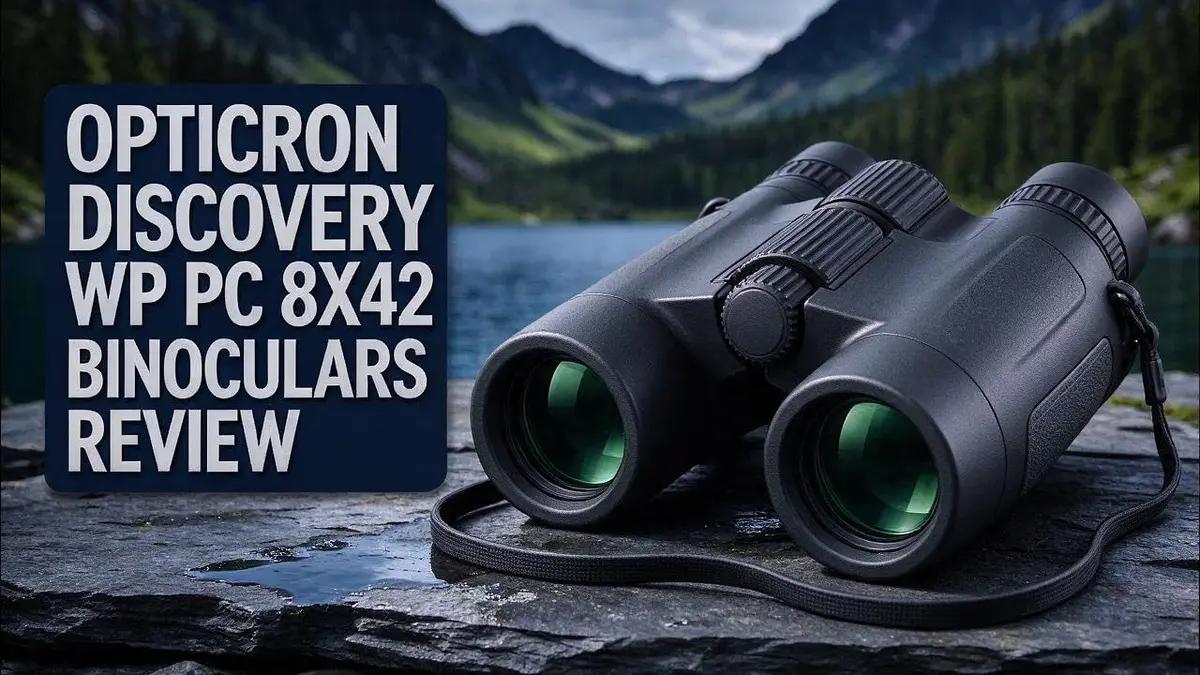
Opticron Discovery WP PC 8×42 Binoculars Review: Value for Money?
Do you want binoculars that fit your bag and your hike? The Opticron Discovery WP PC 8×42 aims to do exactly that.
This model uses a roof prism design with an ultra compact body. Opticron says it ranks among the smallest waterproof roof prism binoculars.
The body uses magnesium alloy and weighs 703 g. Nitrogen filling keeps the optics fogproof, so damp mornings will not ruin your view.
You get 8x magnification and a 42 mm objective lens. That mix suits birding, hiking, and general nature watching.
In this review, we look at the specs and the strengths. We also compare it with the Celestron Nature DX. Let’s see if it earns a place in your pack.
In a Nutshell
-
Weather ready: The binoculars are waterproof and fogproof. Nitrogen filling keeps the inside clear, so you can use them in rain, mist, and sudden temperature changes.
-
Small footprint: Opticron says this is among the smallest waterproof roof prism binoculars available. They slip easily into a jacket pocket or a small daypack.
-
Clear framing: The actual angle of view is 8°. That gives you a steady, focused view of birds, hills, and wide landscapes.
-
Strong reviewer verdict: The reviewer calls it an excellent choice for what you get. The praise centers on the mix of portability and protection.
-
Competitor check: The review compares it directly with the Celestron Nature DX. Shoppers who want a close rival can use that model as a reference point.
-
No major flaws noted: The research lists no stated cons. Still, test the fit in your own hands before you decide.
Optical Specifications and Field of View

Last update on 2026-10-31 / Affiliate links / Images from Amazon Product Advertising API Some of the links on this website are affiliate links, which means that at no additional cost to you, I earn a commission if you click through and make a purchase. I only recommend products and services that I believe will add value to my readers. Thank you for your support!
Optics decide how much you see and how sharp the view looks. This section breaks down the numbers that matter most in the field.
Magnification explained: An 8x power makes distant birds look eight times closer. Higher powers can make the image shake more, so 8x feels steady for most users.
Light gathering: The 42 mm objective lens collects plenty of light. Shaded forests and early morning trails look brighter because of this lens size.
Exit pupil: Divide the lens size by the magnification to find the exit pupil. For this model, that comes to about 5.25 mm. A larger exit pupil makes it easier to line up your eyes quickly.
Daylight and dusk performance: Brightness depends on the exit pupil and the size of your eyes. In bright sun, a smaller exit pupil can look sharper. At dusk, a larger exit pupil helps your eyes take in more light.
Field of view: The source lists a number starting with 408, but the unit is cut off. Check the full spec sheet to confirm the figure at 1,000 yards. A wider view helps you track moving animals and find subjects fast.
Eye relief and glasses: Eye relief matters if you wear glasses. The research does not list this figure, so check the manufacturer details before you decide.
Keep the optics clean: Wipe both lens surfaces with a soft cloth. Dust and fingerprints can reduce contrast more than you might expect.
Good optics make every outing more enjoyable. Read the numbers, then compare them with how you plan to use your binoculars.
Build Quality and Magnesium Alloy Body
Build quality starts with the outer shell. The magnesium alloy body feels firm in your hands. Yet it stays light enough for a full day of carrying.
Metal bodies often handle bumps better than thin plastic. A dropped pair on a rocky trail is less likely to lose alignment.
Why does the frame matter? Binoculars rely on precise alignment between two barrels. A sturdy frame keeps those barrels locked in place. Over years of use, that stability protects your view.
Feel matters too. Hold the binoculars for a few minutes and notice the balance. A well balanced body reduces neck strain during long birding sessions.
Cold weather changes how a grip feels. Gloves can make small controls hard to reach. Test the focus wheel and eyecups while wearing gloves before a trip.
Check the hinge and eyecups after each outing. Look for loose parts, dust, or sand near the joints. A quick wipe with a dry cloth keeps the mechanism moving smoothly.
Rain and salt spray are common on coastal trips. Dry the body right after exposure. Gentle drying prevents water marks on the metal and helps the seals last longer.
Wipe down the outer shell with a soft cloth. Avoid harsh cleaners that could dull the finish. A simple routine takes only a minute.
Store the binoculars in a padded case when you travel. Keep them away from hot car dashboards. Heat can stress seals and coatings over time.
Simple care keeps the build strong. Treat the body with respect and it will last many seasons. Good habits protect your gear on every outing, from short walks to long mountain expeditions.
Image Quality and Optical Performance
Sharp images matter most when you watch birds in the field. Clear detail helps you spot markings and small movements. Good optics make this possible.
Contrast helps you separate a bird from its background. Dark feathers should stand out against bright sky or pale branches. Look for clean lines around leaves and fence wires.
Natural color is another key part of the view. Try looking at a green hedge and a blue sky. If the tones look washed out or tinted, the view may tire your eyes over time.
Edge sharpness shows how the image holds up away from the center. Slowly pan across a tree line. Notice whether the trunks stay crisp or blur near the sides.
Test the view at home before you head out. Look at a window frame or a fence post. Straight lines should look straight across the whole picture.
Smooth focusing also shapes your experience. Focus on a distant object first. Then focus on something closer. You want the change to feel quick and easy.
Close focus matters if you enjoy insects or flowers. Check how near you can focus before the image turns soft. The product page or manual lists this number.
Light conditions change the picture too. Early morning and late evening light test brightness and clarity. Deep shadows can hide detail, so judge the view in mixed light.
Tip: Compare two pairs side by side when you can. Small differences in sharpness and color are easier to spot that way. Your own eyes make the final call.
Good image quality turns a simple walk into a rewarding trip. Take time to test the view before you head out. You will enjoy every sighting more.
Top 3 Alternatives
Nikon Monarch 5

Last update on 2026-08-28 / Affiliate links / Images from Amazon Product Advertising API Some of the links on this website are affiliate links, which means that at no additional cost to you, I earn a commission if you click through and make a purchase. I only recommend products and services that I believe will add value to my readers. Thank you for your support!
The Nikon Monarch 5 gives bright and sharp views. It uses ED glass to reduce color fringing, so details look clean. Many birders like it for early morning and evening walks because it handles low light well.
It is waterproof and fog proof. The rubber armor grips well, even with wet hands. Users often say it feels solid and dependable in the field.
Vortex Diamondback HD

Last update on 2026-10-31 / Affiliate links / Images from Amazon Product Advertising API Some of the links on this website are affiliate links, which means that at no additional cost to you, I earn a commission if you click through and make a purchase. I only recommend products and services that I believe will add value to my readers. Thank you for your support!
The Vortex Diamondback HD is a great choice for beginners. It features HD glass and fully multi-coated lenses. This means the image stays clear from edge to edge.
Vortex backs this model with a strong warranty. That gives buyers peace of mind for years of use. It works well for hiking, sports, and wildlife watching.
Celestron Nature DX


Last update on 2026-08-27 / Affiliate links / Images from Amazon Product Advertising API Some of the links on this website are affiliate links, which means that at no additional cost to you, I earn a commission if you click through and make a purchase. I only recommend products and services that I believe will add value to my readers. Thank you for your support!
The Celestron Nature DX is light and easy to carry. It also uses ED glass, so colors look natural and true. Hikers who walk long distances often pick it for comfort.
It is waterproof and has a smooth focus wheel. The eyecups fold down for people who wear eyeglasses. It is a solid pick for nature lovers who want simple, reliable performance.
Weatherproofing and Fogproof Reliability
Weather can change fast when you spend time outdoors. Rain, mist, and sudden cold can test any pair of binoculars. The Opticron Discovery WP PC 8×42 handles these conditions well.
The waterproof build keeps light rain away from the inner optics. Good seals block water, so you can keep watching even on a wet morning.
Fogproof performance solves a different problem. Warm breath and damp air can cloud the inside of the lenses. This model is nitrogen filled, which keeps moisture from forming inside the barrels.
Internal fog can appear during a chilly walk and linger for hours. Nitrogen filling helps stop that issue before it starts.
Temperature shifts pose the biggest risk. Moving from a warm car into cold air can cause condensation on the outer surfaces. Give the binoculars a few minutes to adjust before you lift them to your eyes.
After heavy rain, shake off excess water and let the outer surface dry in a shaded spot. Store the binoculars in a dry place rather than a sealed bag.
Wet gear can trap moisture for days. Dry it fully before you pack it away. This habit protects the seals and keeps the view clear.
Seals and gaskets deserve a quick look now and then. Check for cracks or loose fittings, since small gaps let moisture enter. A simple inspection takes only a minute, and early fixes keep the unit protected for years.
Reliable weather protection means fewer surprises. You can focus on birds, not on rain or fog. Test the fog resistance at home before a long trip, so you know what to expect.
Handling, Weight and Portability
At 703 g, the Opticron Discovery WP PC 8×42 feels light enough for long days in the field. Most hikers can carry it all day without strain.
The compact size makes a big difference on the trail. Its slim profile slips into a jacket pocket or a small daypack. You can keep it ready for a quick glance at a bird on a fence.
Portability also helps during travel. Airport security checks and train rides become easier when the binoculars fit a small bag. You spend less time fussing with bulky gear.
Strap choice matters for comfort. A soft neck strap spreads the load across your shoulders. Many people prefer a harness style strap for hikes that last several hours. Check the strap clips before every trip.
Easy one hand use comes with this size. You can hold the binoculars steady while you open a map or drink water. Quick handling helps you catch fast movement, like a songbird darting between branches.
Think about your usual outings before you choose a strap or case. Short park walks need less gear than mountain trips. Test how the weight feels around your neck during a short walk at home.
Pack them last in your bag. Place them near the top so you can grab them fast. Keep the lens caps on while moving to protect the front glass from dust.
Many people with smaller hands find this model easy to hold. Your fingers can reach the focus wheel without much stretch. Kids and older adults may also enjoy the light feel. Try them out before you buy.
Value for Money Compared with the Celestron Nature DX
Side by side comparisons give the clearest answer. Many birders shortlist the Celestron Nature DX before they choose. This section shows how the Opticron Discovery WP PC 8×42 compares on the points that matter most.
Start with your main activity. Think about where you use binoculars most. Some people watch birds from one spot. Others hike long distances. A compact pair suits walkers, while a different model may suit someone who stays in one place.
Check the eye relief if you wear glasses. Eye relief is the distance your eye can sit from the eyepiece and still see the full view. Glasses wearers should compare this number on both spec sheets before they decide.
Look at the grip and balance together. Hold each pair for several minutes. Notice whether the weight sits evenly in your hands. A pair that feels steady on a short test often feels steady on a full day outside.
Visit a shop that stocks both models. If a local store carries both pairs, ask to try them. Look through each one at a distant tree or fence post. Compare the edges of the view and the brightness of the image.
Read the warranty terms carefully. A clear warranty shows that the maker stands behind its product. Look for coverage on moisture damage and drops. Compare the length of coverage and the steps needed to make a claim.
Read more than one review. Opticron describes its model as one of the smallest waterproof roof prism binoculars. Independent reviewers can confirm or challenge that claim. Read at least two sources before you decide.
Make the choice that fits your plans. The Opticron suits walkers who want a small and waterproof pair. The Celestron may suit a different style of outing. Match the features to your plans, and the right pick becomes clear.
Pros and Cons
Pros
- Among the smallest waterproof roof prism binoculars.
- Magnesium alloy body keeps the frame light.
- Nitrogen filled, so it resists fogging.
- Compact frame fits easily in a daypack.
Cons
- The 8x magnification may feel modest for distant wildlife.
- The exact field of view is unclear, so confirm it before you buy.
- No drawbacks appear in the research, so try the feel in person.
Who Should Buy It
This model suits people who are just starting their outdoor viewing hobby. A simple 8x magnification keeps the view steady and easy to follow. New users can focus on spotting birds and wildlife instead of fiddling with complex settings.
Casual walkers and nature lovers gain a lot here. They can enjoy deer in a meadow or boats on a lake during a weekend stroll. A pair like this fits easily into park visits and local trail walks.
Backyard birdwatchers also find it useful. Sharp, steady views help them catch a finch or sparrow as it lands on a feeder. Families who share one pair will appreciate the easy handling. Parents can hand the binoculars to kids without worrying about heavy gear.
Travelers form another strong group. Sightseeing tours, coastal trips, and mountain hikes all call for gear that handles changing weather. Hiking groups can also pass one pair along a long route without slowing anyone down.
Some people should look elsewhere, though. Those who need high magnification for distant hawks or faraway ships may find 8x too modest. Stargazers and long range spotters often prefer tools with stronger magnification. It helps to know your main goal before you commit.
Think about the place you will use them most. Ask yourself which sights you want to see most often. A clear answer makes your choice much easier.
Final Verdict
The Opticron Discovery WP PC 8×42 earns a confident recommendation from me. It does the everyday jobs well. It feels ready whenever you step outside.
The research lists no stated drawbacks, and that is a good sign. A reviewer also praised the pair warmly. Still, every viewer has different habits, so a short test in your own hands is wise.
Buy it if you want a dependable partner for walks, trips, and garden watching. It rewards people who like comfort and easy handling. It also suits anyone who wants a pair they will actually carry.
Look elsewhere if you plan to study very distant targets for hours. A higher magnification pair may please you more. Also pause if you need a confirmed field of view before you commit.
Here is a quick way to decide. Picture your next three outings. If the Discovery fits most of them, it deserves a place in your bag.
Take your time with the choice. Look through the lenses in bright light and in shade. Notice how quickly your eyes settle on a clear view.
Think about the long term too. A pair you enjoy using will come out more often. More use means more sightings, more practice, and more fun.
The Celestron Nature DX remains a fair rival to check, so compare them if you can. A fair comparison builds confidence in your choice. Your own eyes will give the final answer.
My verdict is simple. The Opticron Discovery WP PC 8×42 is a smart, friendly, and capable choice for casual and growing enthusiasts. Try it, trust your comfort, and enjoy the view.
Frequently Asked Questions
Do these binoculars work well in low light?
The 42 mm objective lens gathers more light than smaller models. This helps you spot birds and deer at dawn or dusk. Bright views are easier to enjoy when the sun is low. Your eyes will also feel less strain during long evening walks.
How should I clean the lenses?
Use a soft microfiber cloth or a lens brush. Blow off loose grit first so it does not scratch the glass. Then wipe the lenses in small circles. Only use a cleaner made for optics. Household sprays can damage the coatings.
Can children use these binoculars?
Older children can use them with adult help. Let the child hold the pair first to test the weight. Adjust the eyecups and the center focus so the image looks clear for their eyes. Supervise them near water or steep paths.
Where should I keep them between outings?
Store them in a dry case away from heat and moisture. Keep the lens caps on to protect the glass from dust. Never leave them on a car seat in direct sun, because high heat can harm the seals over time.
Do I need a strap for hiking?
A strap keeps the binoculars close during long walks. Choose one with padding so your neck stays comfortable. Test the strap at home before a long trip. This small step helps you focus on the view instead of the gear.

Hello, I’m Emily Price, the founder of Birds Affection. As a passionate bird enthusiast and spiritual seeker, I’ve always been fascinated by the symbolic meanings and mystical connections between birds and our lives. On this website, I share my knowledge and insights on the spiritual significance of various bird species, exploring their roles as messengers, guides, and teachers. Through my writing, I aim to inspire and educate others on the profound wisdom and beauty that birds bring to our world. Join me on this journey as we delve into the enchanting realm of bird symbolism and discover the hidden meanings behind these magnificent creatures.