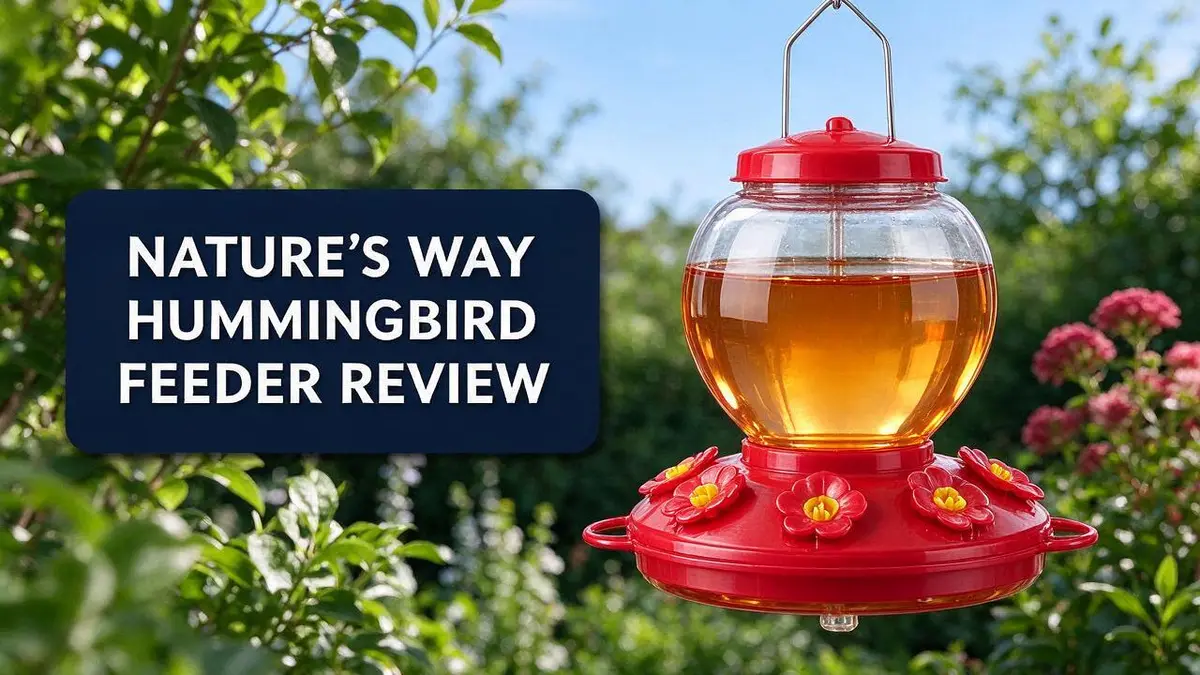
Nature’s Way Hummingbird Feeder Review 2026: Complete Guide
Do you want more hummingbirds in your yard? The Nature’s Way Hummingbird Feeder line may help you get there.
This brand offers several styles. You can choose glass gravity feeders in 20, 26, or 28 ounce sizes.
The Perfect Pitcher holds 29 ounces and has six flower shaped ports. A small mason jar model holds 6 ounces. A red plastic version adds an ant moat.
Reviewers call these feeders high quality and easy to maintain. The wide fill opening makes refills simple. Many parts are dishwasher safe.
A few things deserve a closer look. Some deep containers need almost two cups of sugar water. The mason jar holds only 6 ounces.
Let’s see how each feeder performs.
In a Nutshell
-
Glass gravity feeders come in 20, 26, and 28 ounce sizes. You can pick the size that fits your yard and your hummingbird traffic.
-
The Mason jar model holds 6 ounces and has four flexible ports. The ports resist leaks and drips. The stainless steel lid and hanger add a rustic look.
-
The red plastic feeder works as a hanging or window mount unit. Its built in ant moat keeps ants away from the nectar.
-
Special ports also help keep bees out of the nectar. Hummingbirds can still sip with ease.
-
The extra wide opening makes refills simple. Many models are dishwasher safe, so cleaning takes little effort.
-
A few drawbacks exist. The deep glass container needs almost two cups of sugar water. The small Mason jar means more frequent refills.
-
Overall verdict: This line suits backyard birdwatchers who want easy upkeep and flexible styles.
Feeder Models and Capacity Options


Last update on 2026-10-31 / Affiliate links / Images from Amazon Product Advertising API Some of the links on this website are affiliate links, which means that at no additional cost to you, I earn a commission if you click through and make a purchase. I only recommend products and services that I believe will add value to my readers. Thank you for your support!
Capacity is the first thing to think about. Your hummingbird count should shape your choice. A busy yard can empty a small feeder fast, so larger glass models often make more sense.
Fewer refills mean less work. A bigger reservoir lasts longer between fills. Busy weeks still call for regular checks, though. Warm weather can also spoil nectar, so watch the level closely.
Small batches keep birds healthy. Fresh nectar matters more than most people expect. Mix plain white sugar with water, and skip honey, brown sugar, or red dye. Only prepare what your birds drink within a few days.
Your space matters too. Balconies and small patios need a lighter unit that is easy to lift. A large, heavy feeder on a thin branch can cause trouble. Choose a size your support can handle.
Full feeders weigh more. Glass models hold a lot of liquid, so the weight adds up quickly. Use a sturdy hook or a strong window mount. Hang the feeder in partial shade to slow spoilage in the heat.
Households with children may prefer a feeder that is simple to fill and clean. Smaller sizes mean fewer messy spills. Larger sizes suit families who enjoy watching birds all day from a porch.
Start small and observe. Track how fast the nectar disappears for one week. Then move up or down in size. This simple habit helps you match the feeder to your actual visitors.
Your yard will tell you what works best. Watch the feeder each morning and note the activity. Soon you will know exactly which capacity fits your garden.
Build Quality and Materials
Materials matter more than many shoppers expect. The glass models give your yard a clear, classic look. You can see the nectar level at a glance.
The handblown glass option, the Spring Rain, adds a touch of art. Each piece has slight variations in color and shape. No two feeders look exactly alike.
Glass feels solid, but it can break if it drops onto stone. Keep that in mind when you hang it near a patio. Store it carefully during winter.
The red plastic model takes a different approach. Its lightweight body resists cracks and survives a rough day outside. It also suits windy spots where a heavy glass jar might swing hard.
The Mason jar model uses a simple glass jar with a stainless steel lid and hanger. Metal parts resist rust and hold up well in damp weather. This pairing feels rustic and practical.
Flexible ports deserve a closer look too. Rubber parts bend and seal tightly, so nectar stays inside. They also make the feeder easier to clean because you can pull them free.
Many owners appreciate that the parts are dishwasher safe. Run them through a hot cycle once a week. This habit keeps mold and residue away from the sugar water.
Solid construction also means fewer surprises. A feeder that holds its shape keeps nectar stable through hot afternoons. Look for thick walls and firm hangers when you shop.
Good materials help the feeder last for many seasons. Check the seals and hanger every spring. A quick inspection catches small wear before it becomes a problem.
Feeding Ports and Bee Resistance
Bees can crowd out hummingbirds fast. Open nectar pools invite bees, wasps, and other insects. The right port design solves much of this problem.
The Perfect Pitcher uses six rubber ports shaped like flowers. Each port hides its sugar water deep inside a narrow opening. Bees struggle to reach the liquid this way. Hummingbirds, with their long slender beaks, can still feed with ease.
Think about the feeding angle. A bird must hover close and push its beak into the port. Bees usually land on flat surfaces, so they often give up quickly. This simple shape gives hummingbirds the upper hand.
The Mason jar model takes a smaller approach. Its four ports sit close together on a compact jar. Fewer openings mean fewer places for bees to gather.
Clean ports matter too. Sugar water can leave a sticky film inside small openings. Check each port after every refill. A pipe cleaner or small brush clears blockages fast. Sticky residue also draws insects. Clean ports keep the feeder focused on hummingbirds.
Watch the visitors closely. Note which creatures arrive during the first week. If bees keep returning, move the feeder to a new spot. Try a shaded location away from flowers.
Ports also shape feeding time. Birds learn the layout quickly. A consistent spot helps them return each day. Keep the feeder in the same place. Routine feeding helps birds trust the spot, and trusting birds visit more often.
Simple habits keep the feeder working well. Inspect ports weekly. Adjust the setup when needed. Your hummingbirds will reward the effort with steady visits. Good habits make a real difference over time. Small changes add up quickly.
Top 3 Alternatives
Perky-Pet Hummingbird Feeder
No products found.
This feeder is a popular choice for many backyards. It holds a good amount of nectar, so you refill it less often. The feeding ports sit at a comfortable height for small birds. Cleaning is simple because the parts come apart easily.
Aspects HummZinger Feeder

Last update on 2026-10-31 / Affiliate links / Images from Amazon Product Advertising API Some of the links on this website are affiliate links, which means that at no additional cost to you, I earn a commission if you click through and make a purchase. I only recommend products and services that I believe will add value to my readers. Thank you for your support!
This feeder suits people who want a clear view of the nectar level. Its design helps keep ants and bees away from the sweet liquid. Many birders also like how steady it stays when the wind picks up.
First Nature Hummingbird Feeder

Last update on 2026-10-31 / Affiliate links / Images from Amazon Product Advertising API Some of the links on this website are affiliate links, which means that at no additional cost to you, I earn a commission if you click through and make a purchase. I only recommend products and services that I believe will add value to my readers. Thank you for your support!
This option works well for beginners. It is lightweight and easy to hang near a window. The feeding ports are simple to reach, so filling it takes only a minute.
Each of these feeders has its own strengths. Think about your yard, how often you can clean, and which features matter most to you. With the right choice, you will enjoy watching hummingbirds visit all season long.
Filling, Cleaning and Maintenance
Filling the feeder takes only a minute. Use a clean funnel or a spoon to guide the liquid. Pour slowly so the nectar does not splash down the sides.
Mix sugar and water at a ratio of one part white sugar to four parts water. Never use honey, brown sugar, or red dye. These can harm tiny birds and spoil fast. Stir until the sugar fully dissolves.
Let the nectar cool to room temperature before filling. Hot liquid can warp plastic parts and loosen the seals. Warm nectar also spoils faster in the feeder.
Clean the feeder every few days during hot weather. Heat speeds up spoilage, so the schedule may need to be shorter. In cool weather, a weekly cleaning usually works well.
Scrub the feeder with a bottle brush and hot water. Add a small amount of mild soap if needed. Rinse well because leftover soap can keep birds away.
Take the feeder apart before washing. Separate the base, the ports, and the lid. Wash each part on its own to reach hidden corners.
Let every part dry completely before refilling. Trapped moisture can grow mold inside the glass. Set the parts upside down on a clean towel.
Check the hanger and lid every month. Look for rust on metal parts and cracks in the glass. Replace any damaged piece right away.
Store extra nectar in the refrigerator for up to one week. Label the container with the date. Throw away any mix that looks cloudy or smells sour.
Empty leftover nectar before adding new sugar water. Old liquid mixed with fresh mix spoils faster. Tighten the Mason jar lid firmly after each fill.
Leak Prevention and Ant Protection
Leaks make a mess and waste sweet nectar. A dripping feeder also draws pests to the same spot. Choosing the right design solves much of this problem.
The Mason jar model stands out for leak control. Its ports won’t leak or drip, so the nectar stays where the birds can reach it.
Ants are a common problem for hummingbird feeders. They climb the hanger and slip right into the sugar water. The red plastic model includes a moat that keeps ants away.
Filling the moat takes only seconds. Pour plain water into the moat until it stays full. The water forms a barrier that most ants cannot cross.
Check the moat every few days, especially in hot or dry weather. Water evaporates fast, and an empty moat lets ants march right in.
Dead insects can also float in the moat and block the water. Scoop them out with a spoon or small brush.
Placement matters too. Hang the feeder away from tree branches, fences, and railings. Leaves and twigs act as bridges for ants and other insects.
Leak prevention starts with proper filling. Fill the feeder only to the recommended level, since overfilling pushes liquid out through the ports. Tighten the lid firmly after every refill.
Hang the feeder on a level hook so the nectar does not tilt toward one side. If drips still appear, look at the lid first, since a loose lid causes most leaks.
Wipe up spills right away. Sticky nectar on the outside of the glass attracts insects that then crawl toward the ports. A damp cloth and warm water do the job quickly.
Hanging, Mounting and Placement
Choose a spot with some shade. Strong afternoon sun heats the nectar fast. Warm sugar water spoils sooner. A location with morning light and afternoon shade keeps the nectar fresher.
Keep the feeder away from windows. Birds can fly into glass because they move quickly and may miss reflections. Place the feeder at least a few feet from any window. The red plastic combo model also offers a window mount for close viewing.
Hang the feeder where birds can spot it. Hummingbirds search for bright color from the air. Open spots near flowers or trees help them find the feeder. Position it where you can watch from a window or porch.
Shelter the feeder from strong wind. Gusts can swing the feeder and spill nectar. A spot near a fence, wall, or tree keeps it steady. Rain also runs off the roof more easily when the feeder sits under an eave.
Give the feeder space from other feeders. Hummingbirds guard their feeding area. Keep the feeder several feet away from seed feeders. Seed feeders draw birds and bees that crowd the nectar station.
Hang the feeder at a comfortable height. Eye level or slightly higher works well for most yards. This height lets you watch the visitors. It also keeps the feeder out of reach of curious pets.
Watch for animals near the feeder. Cats can climb trees or fences to reach a hanging feeder. Choose a hook far from branches and rails.
Check the spot each season. Sun angles change over time. A shady spot in spring may turn hot in summer. Move the feeder if the nectar warms up too much.
Pros and Cons
Pros
– Rubber flower ports keep bees away from the nectar on the Perfect Pitcher.
– Reviewers call these feeders high quality and well made.
– The extra wide top opening makes filling simple.
– Parts are dishwasher safe, so cleanup takes less effort.
– The Mason jar model has a stainless steel lid and hanger.
Cons
– The deep container needs almost 2 cups of sugar water.
– The Mason jar holds only 6 oz, so it needs frequent refills.
– The Mason jar model has just 4 ports for hummingbirds to feed from.
Who Should Buy It
This feeder suits many backyard bird lovers. It works well for people who want a simple way to watch hummingbirds up close. First time owners often feel comfortable with it right away.
Busy families can also find this design helpful. Adults can fill it fast, and kids can watch the birds from a nearby window. It makes a fun hobby for everyone at home.
Gardeners who want more color on the patio will enjoy this choice. Hummingbirds visit flowers and feeders in the same space. A glass model adds a bright focal point to a porch or deck.
Owners of small balconies should look at the Mason jar model. Its compact frame fits tight spaces easily. It suits yards with only a few visitors.
Busy yards with many hummingbirds call for a larger glass feeder. These models hold more nectar, so they need fewer refills. Frequent visitors can keep the feeder full for longer stretches.
Wildlife fans who watch closely will appreciate the view. Glass models let people check the nectar level at a glance. No guessing is needed during a busy morning.
Teachers and nature clubs also make good use of this feeder. A clear view helps groups learn about bird behavior. Shared learning turns a backyard into a classroom.
People who enjoy photography may like the spot too. Hummingbirds often pause near the ports for a moment. Steady light and a clear view make shots easier.
Anyone who wants a steady hobby will find a good match here. Hummingbirds reward patient watchers with fast, colorful visits. Even new fans can enjoy the daily activity. Pick the size that fits your yard and enjoy the show.
Final Verdict
Nature’s Way earns a confident recommendation from us. These feeders bring hummingbirds close with very little fuss. Most backyard owners will find a model that fits.
The range gives you real choice. Ribbed Rose, Crimson Corsage, and Spring Rain each add a different look to your garden. The handblown Spring Rain model works like a small piece of garden art.
The red plastic model also deserves a mention. It has a built in ant moat, which keeps crawling pests away from the nectar. It also offers flexible setup, since you can hang it or mount it on a window.
Here is a quick way to choose:
- Pick the Perfect Pitcher if bees keep bothering your feeders.
- Pick the Mason jar if you want a neat feeder that stays drip free.
- Pick a glass gravity model if you want a classic look and a larger nectar supply.
- Pick the red plastic model if ants are your biggest problem.
The drawbacks are small and easy to manage. Check the nectar every few days. Swap in fresh sugar water often during hot weather. A clean feeder keeps hummingbirds safe and returning.
Our final call: buy it. The quality feels dependable, and the designs solve real feeder problems. Cleaning is simple, and the styles suit many gardens.
Choose the size that matches your yard, hang it in a good spot, and enjoy the show. Hummingbirds will likely find it within days.
Frequently Asked Questions
Can hummingbirds feed from every model?
Yes, every style gives hummingbirds an easy way to drink. The Perfect Pitcher uses rubber flower shaped ports, while the Mason jar uses flexible ports. Both designs help small birds feed with less effort.
How often should I clean the feeder?
Clean it every two or three days in warm weather. Nectar spoils quickly when the sun heats it. Rinse each part well after washing so no soap remains.
Where is the best place to hang it?
Choose a shady spot near trees or shrubs. Hummingbirds like a nearby perch to rest between sips. Keep the feeder away from large windows, or use the window mount on the red plastic model.
Can I leave the feeder out in cold weather?
Nectar can freeze on chilly nights. Bring the feeder inside during hard freezes. On milder days, hang it back up so hummingbirds have a steady food source.
What sugar water should I make?
Mix one part white sugar with four parts water. Boil the water first, then let it cool before filling. Never add red dye, because it can harm the birds.

Hello, I’m Emily Price, the founder of Birds Affection. As a passionate bird enthusiast and spiritual seeker, I’ve always been fascinated by the symbolic meanings and mystical connections between birds and our lives. On this website, I share my knowledge and insights on the spiritual significance of various bird species, exploring their roles as messengers, guides, and teachers. Through my writing, I aim to inspire and educate others on the profound wisdom and beauty that birds bring to our world. Join me on this journey as we delve into the enchanting realm of bird symbolism and discover the hidden meanings behind these magnificent creatures.