andwe Coconut Bird Nest Review 2026: Worth Buying?
Your budgie stares at the cage bars all day. You want to give it a hideout that feels natural, safe, and a little bit fun. That is usually the moment shoppers land on the andwe Coconut Bird Nest Hut with Ladder.
This little coconut shell hut costs less than a bag of premium seed. It carries a 4.5 star average from more than 2,100 shoppers on Amazon. It also carries some honest complaints about durability and size that most review posts quietly skip.
I bought one, hung it, watched a pair of parakeets treat it like a jungle gym, and tracked what happened over several weeks. This review covers the unboxing, the real measurements, the chewing damage, the cleaning problems, and the birds that ignored it completely.
In a Nutshell:
- Price and value: The andwe Coconut Bird Nest sits around $13.99 on Amazon. That price buys one real coconut shell, one apple stick ladder, and a hanging hook. It feels like fair value for a natural cage accessory, though bundled two packs from other brands cost less per piece.
- Best fit: The hut suits parakeets, budgies, lovebirds, finches, canaries, and small conures. It also works well as a gecko hide or hamster hideout. Cockatiels and anything larger will find the opening tight.
- Real size: Amazon lists the dimensions as 2.2 inches deep by 4.9 inches wide by 5.7 inches tall. The shell is smaller in person than product photos suggest, so measure your cage first.
- Main weakness: Durability is the top complaint. Some owners report the shell cracking or the ladder loosening within two months of heavy chewing. Strong beaks shorten its life fast.
- Cleaning reality: The rough inner shell traps droppings and coconut fiber dust. You cannot soak it in water without risking mold. Plan on spot cleaning and eventual replacement.
- Bird behavior: Many birds nap inside within days. Others never enter it at all. No hut guarantees interest, and this one is no exception.
andwe Coconut Bird Nest Hut with Ladder

Last update on 2026-07-01 / Affiliate links / Images from Amazon Product Advertising API Some of the links on this website are affiliate links, which means that at no additional cost to you, I earn a commission if you click through and make a purchase. I only recommend products and services that I believe will add value to my readers. Thank you for your support!
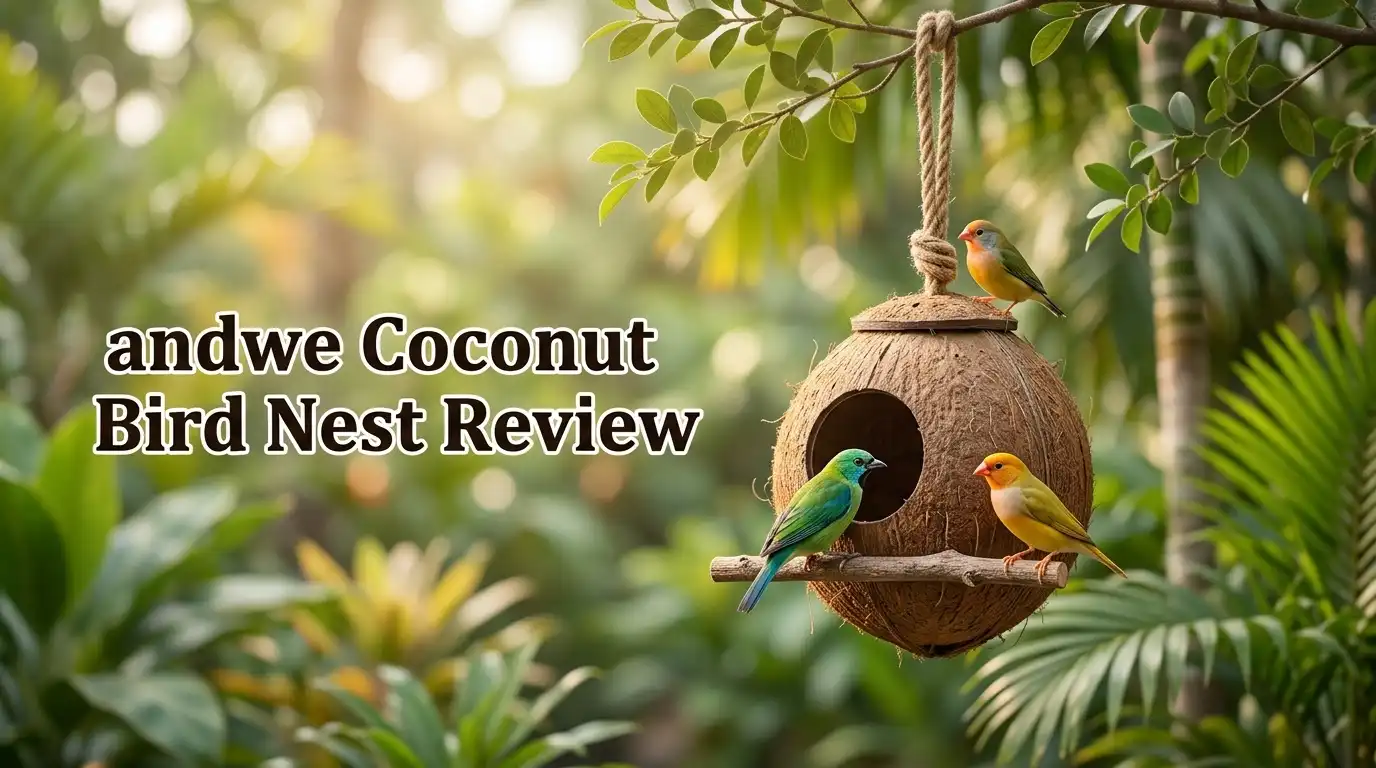
The andwe Coconut Bird Nest is a hollowed real coconut shell with a round entry hole cut into the front. A small apple wood stick ladder hangs below the opening. A metal hook and screw assembly sits on top for mounting to cage bars or a branch.
Brand listed specs describe the material as pure coconut shell with a natural fiber exterior. The product weighs roughly 0.36 kg with packaging. The listing markets it for parrots, parakeets, conures, cockatiels, and small animals.
In plain language, it is a nap cave with a ladder. Birds climb the rungs, hop through the hole, and sit in a dark, curved space that feels enclosed and safe.
The appeal is the material. Coconut shell is hard, chewable, and free of paint or plastic. Birds gnaw the rim without swallowing anything synthetic. The fibrous outside gives their feet grip and their beaks something to shred.
The design also doubles as enrichment. The ladder encourages climbing. The rough exterior invites preening and pulling. Many owners report their birds destroying the fiber coating slowly over weeks, which is exactly what a foraging toy should allow.
Each coconut is a natural product, so shape and size vary between units. Two buyers can receive noticeably different huts. That variation explains a chunk of the mixed size feedback in the review section.
Unboxing Experience and First Impressions
The hut arrived in a plain brown box with minimal padding. Mine came wrapped in a thin plastic sleeve with the ladder already attached to the shell. Nothing was broken, though the light packaging made me nervous.
The first thing I noticed was the smell. Fresh coconut husk carries a faint sweet, woody scent. It is pleasant and fades within a few days indoors.
The second thing I noticed was the loose fiber. Shredded coconut hair shed onto my table the moment I lifted the hut. Expect a small pile of brown fluff during setup, and expect more later once your bird starts pulling.
Assembly took under two minutes. The screw and hook came preinstalled on top of the shell. I tightened the nut with my fingers, checked the ladder rungs, and hung it inside the cage.
The shell felt lighter than expected. It is thin coconut, not a thick log. A gentle squeeze produced a slight flex, which hinted at the durability complaints I later confirmed.
Build details looked handmade. The entry hole edges were sanded but slightly uneven. The ladder strings were tied by hand and one knot sat crooked. These are cosmetic quirks, not defects, and they suit a natural product at this price.
Overall the unboxing felt honest. No inflated packaging, no marketing inserts, just a coconut with a ladder ready to hang.
Design and Build Quality
The build quality is decent for the price and inconsistent by nature. Coconut is a plant, so every shell has its own thickness and grain.
The strongest part of the design is the shape. The curved interior wraps around a small bird and blocks light from three sides. That enclosure creates the safe, cave like feeling that budgies and finches naturally seek at bedtime.
The apple stick ladder is the second highlight. The rungs are untreated wood, thin enough for small feet to grip. Birds use it as a perch even when they refuse to enter the hut. The ladder alone adds real play value.
The hanging hardware is where quality drops. The metal hook and washer setup works, but the screw can loosen as birds swing on the shell. I retightened mine twice in the first month.
The fiber coating is glued and wrapped rather than woven tightly. Determined chewers peel it off in strips. Some owners like this because it becomes a shredding toy. Others find the constant mess annoying.
The shell wall thickness varies from unit to unit. Thicker coconuts survive months of pecking. Thinner ones crack near the opening where beaks apply the most pressure. This lottery explains why reviews swing between “super sturdy” and “broke in two months.”
Top 3 Alternative for andwe Coconut Bird Nest

Last update on 2026-09-09 / Affiliate links / Images from Amazon Product Advertising API Some of the links on this website are affiliate links, which means that at no additional cost to you, I earn a commission if you click through and make a purchase. I only recommend products and services that I believe will add value to my readers. Thank you for your support!
Tfwadmx Coconut Hide with Ladder, 2 Pieces

Last update on 2026-07-01 / Affiliate links / Images from Amazon Product Advertising API Some of the links on this website are affiliate links, which means that at no additional cost to you, I earn a commission if you click through and make a purchase. I only recommend products and services that I believe will add value to my readers. Thank you for your support!
VTurboWay 2 Pack Natural Coconut Shell Bird Nest with Pads

Last update on 2026-09-09 / Affiliate links / Images from Amazon Product Advertising API Some of the links on this website are affiliate links, which means that at no additional cost to you, I earn a commission if you click through and make a purchase. I only recommend products and services that I believe will add value to my readers. Thank you for your support!
Hamiledyi Bird Hides Coconut Nest with Wood Ladder
Size and Fit Inside the Cage
Size drives most of the disappointment in this product. Read the numbers before you buy.
The Amazon listing gives dimensions of 2.2 inches deep by 4.9 inches wide by 5.7 inches tall. The overall height includes the ladder and hook, not just the shell. The usable interior is closer to a 4 inch bowl.
That space fits one budgie comfortably. It fits two small finches if they like each other. A cockatiel can squeeze its head and chest inside but will not sit fully enclosed.
The entry hole is the real limit. It measures roughly two inches across on most units. Larger birds cannot pass through, and heavier birds widen the hole by chewing.
Cage width matters too. My 18 inch wide flight cage lost noticeable open space once the hut hung inside. In a small starter cage the hut can block flight paths and crowd perches.
Reptile keepers report better luck with fit. Leopard gecko and crested gecko owners use it as a humid hide, and the small opening suits them well. Hamsters and small rats also use it as a tunnel hideout.
My advice is simple. Measure your bird from beak to tail, then measure your free cage space. If your bird is longer than seven inches, choose a wooden nesting box instead.
Installation and Setup Guide
Setup is genuinely easy, and that is one of this product’s quiet wins.
Start by unscrewing the top nut slightly. Slide the hook over a horizontal cage bar near the upper third of the cage. Birds prefer height, and a high hut gets used more often.
Tighten the nut until the shell stops rotating. A wobbling hut scares nervous birds and they will refuse to enter it. Stability matters more than position.
Next, check ladder clearance. The rungs should hang free without touching the cage floor or a food dish. Droppings land under the ladder, so avoid placing it above water.
Then remove any perch that sits directly above the hut. Birds poop from the perch above, and the coconut fiber soaks it up like a sponge.
Give your bird time. Most birds investigate within three days, and many nap inside within a week. Some need a nudge, so drop a millet spray or a favorite treat inside the opening.
Do not force your bird in. Handling stress teaches avoidance and the hut becomes a permanent decoration.
For outdoor use, hang it under cover. Rain soaks the fiber and the shell grows mold quickly. This hut is built for indoor cages, not open weather.
How Birds Actually Respond to It
Bird reaction is the most unpredictable part of this purchase.
My two parakeets responded differently. The bolder hen climbed the ladder on day one and slept inside by day four. The timid male never entered, though he perched on the ladder daily for months.
Amazon feedback follows the same split. Many owners describe parakeets loving the hut and using it as a nightly bed. Others report their birds ignoring it completely for weeks.
Chewers treat it as a toy first and a house second. Lovebirds and conures shred the fiber, gnaw the rim, and widen the door. That behavior is healthy beak maintenance, but it destroys the product faster.
Breeding behavior deserves a caution. Enclosed dark spaces trigger nesting hormones in female birds. Hens may become territorial, lay unfertilized eggs, or guard the hut aggressively.
If you do not want eggs, watch for warning signs. Constant hut sitting, shredding paper, and hostility near the opening all signal hormonal behavior. Remove the hut if that starts.
Reptile and small pet owners report the most consistent success. Geckos hide in it without hesitation, and hamsters nest inside almost immediately. The hut is a reliable hide and a hit or miss bird bed.
Durability After Weeks of Chewing
Durability is the honest weak point, and pretending otherwise would be dishonest.
The coconut shell resists casual pecking well. It survived daily nibbling from my budgies with only cosmetic scratches on the rim after eight weeks.
Heavy chewers write a different story. Multiple owners report the shell splitting or the entry hole crumbling within two months. Conures and lovebirds cause the most damage because their beaks apply real force.
The fiber coating goes first. Birds pull strips within days and the hut looks bald within a month. That is expected wear, not a defect.
The ladder is the second failure point. Hand tied strings loosen as birds swing on them. One rung on my unit slipped free and I retied it with cotton twine.
The metal hook holds up well. Its weakness is the loosening nut, and one minute of tightening each week solves that.
Water is the true enemy. A soaked shell softens, warps, and grows mold in the fiber. Never wash this hut under a tap.
Set your expectations correctly. Treat the andwe Coconut Bird Nest as a consumable enrichment item with a life of three to twelve months, not a permanent fixture. At $13.99, that math still works for most owners.
Cleaning and Maintenance
Cleaning is the chore this hut does worst.
The inner shell is rough and porous. Droppings dry into the surface and refuse to wipe away cleanly. The coconut fiber outside traps dust, seed hulls, and feather debris.
My routine settled into three steps. First, I tapped loose debris out weekly. Second, I wiped the interior with a dry paper towel. Third, I brushed the exterior fiber with a stiff toothbrush.
For deeper cleaning, use a barely damp cloth with diluted white vinegar. Wipe, then dry the shell immediately in open air or direct sunlight. Moisture left inside invites mold, and mold in a cage is a genuine health risk.
Skip soap. Coconut absorbs residue and birds chew the shell later.
Check the interior monthly for dark spots or a musty smell. Both mean mold, and a molded hut goes in the bin, not back in the cage.
Replace the hut when the rim crumbles, the shell cracks through, or the interior stains permanently. Most owners replace it once or twice a year.
Compared with plush hammocks that go in the washing machine, this coconut hut demands more effort and lasts less time. Compared with a wooden nesting box, it cleans about the same. Convenience is not why you buy coconut.
Safety Concerns Every Owner Should Check
Coconut huts are generally safe, but three risks deserve your attention.
The first risk is loose fiber. Long coconut strands can wrap around toes and legs. Trim any strand longer than an inch as soon as you spot it. Check your bird’s feet weekly.
The second risk is mold. A damp shell breeds fungus that irritates avian lungs. Birds have sensitive respiratory systems, so keep the hut dry and inspect it often.
The third risk is hormonal behavior. Enclosed huts encourage egg laying in females and aggression in bonded pairs. Chronic egg laying drains calcium and can cause serious illness.
Also inspect the hardware. The metal screw and washer should stay tight and free of sharp edges. Retighten the nut when the hut spins freely.
The apple stick ladder is bird safe wood. Apple is on standard safe wood lists, and the sticks come untreated. Small splinters can form as birds chew, so smooth rough rungs with your fingers.
Swallowing small coconut flakes is generally harmless. Large chunks are not, so remove the hut once the rim starts flaking heavily.
Finally, supervise new introductions. Watch your bird use the hut for the first few days. Most problems appear early, and early removal prevents injury.
What This Coconut Nest Does Not Do Well
Authentic reviews name the flaws plainly, so here they are.
It does not survive strong beaks. Conures, cockatiels, and lovebirds chew through the shell far faster than the listing suggests. This is not a chew proof product despite the anti pecking marketing language.
It does not fit medium birds. Anything larger than a small conure cannot use the interior. The entry hole is the hard limit.
It does not clean easily. The porous shell holds droppings and the fiber holds dust. You cannot wash it properly, and you cannot machine clean anything.
It does not arrive identical. Coconuts vary, so your unit may be smaller, thinner, or oddly shaped compared with photos.
It does not guarantee use. Plenty of birds ignore huts entirely, and no product can force interest.
It does not work outdoors. Rain ruins the shell and the fiber molds within weeks.
It does not include instructions worth reading. Setup is obvious, but there is no guidance on hormonal risks or cleaning, which new owners genuinely need.
Set expectations at “affordable natural enrichment that needs replacing” and you will be satisfied. Set them at “durable permanent bird house” and you will feel let down.
Pros and Cons
Here is the balanced breakdown after weeks of real use.
Pros
- Real coconut shell with no paint, plastic, or synthetic coating, so chewing stays safe
- Apple wood ladder included, which adds climbing enrichment even when birds skip the hut
- Setup takes two minutes with a preinstalled hook and simple screw mount
- Low price near $13.99, which makes replacement affordable
- Dark enclosed interior helps nervous birds feel secure at night
- Doubles as a gecko, hamster, and small rodent hide with consistent success
- Natural look blends into planted cages and terrariums nicely
Cons
- Durability is inconsistent, and some shells crack or crumble within two months
- Small interior and narrow entry hole exclude cockatiels and larger parrots
- Cleaning is difficult because the porous shell traps droppings and cannot be washed
- Mold risk rises fast if the shell ever gets wet
- Loose coconut fiber sheds constantly and can tangle around toes
- May trigger hormonal egg laying in female birds
- Ladder knots loosen over time and need retying
- Every coconut differs, so size and thickness are a gamble
Price and Value for Money
At roughly $13.99, this hut sits mid pack among coconut hides.
Two pack competitors often cost the same or less. Tfwadmx sells two coconut hides with ladders near $11.99. VTurboWay offers two shells with nesting pads around $16.99. Per piece, the andwe hut is the pricier choice.
So what does the extra money buy? Mostly consistency and support. The andwe listing carries over 2,100 ratings at 4.5 stars, which is a stronger track record than most rivals. Amazon’s Choice status also signals reliable fulfillment and easy returns.
Value depends entirely on your bird. A gentle budgie may use this hut for a year, which works out to about a dollar a month for a bed and a toy. That is excellent value.
A determined lovebird may destroy it in six weeks. At that rate the cost per month triples, and a two pack becomes the smarter buy.
Compare it with alternatives too. A wooden nesting box costs $12 to $16 and lasts far longer. A washable plush hammock costs $15 to $17 and cleans in a machine.
Coconut wins on natural material and chewability, not on longevity. Buy it for enrichment value, and buy a spare if your bird is a heavy chewer.
Who Should Buy It and Who Should Skip It
Buy this coconut nest if you own budgies, parakeets, finches, canaries, lovebirds, or parrotlets. The size fits them and the ladder entertains them.
Buy it if you want natural materials in the cage. No plastic, no dye, no glued fabric that frays into loose threads.
Buy it if you keep leopard geckos, crested geckos, hamsters, or small rats. Reptile and rodent owners report the highest satisfaction with this product.
Buy it if you accept replaceable enrichment. Owners who treat toys as consumables stay happy with coconut huts.
Skip it if you own a cockatiel, larger conure, African grey, or any medium parrot. Your bird cannot fit and will simply destroy it.
Skip it if you want one purchase to last for years. Coconut shells wear out, and this one wears out faster than wood.
Skip it if your hen already shows hormonal behavior. Adding a dark cave makes egg laying more likely.
Skip it if you plan to hang it outdoors. Weather ruins coconut quickly.
Skip it if easy cleaning is your priority. A washable fleece hut serves you better.
Final Verdict on the andwe Coconut Bird Nest
Last update on 2026-07-01 / Affiliate links / Images from Amazon Product Advertising API Some of the links on this website are affiliate links, which means that at no additional cost to you, I earn a commission if you click through and make a purchase. I only recommend products and services that I believe will add value to my readers. Thank you for your support!
The andwe Coconut Bird Nest Hut with Ladder earns a solid recommendation with clear conditions.
It does the core job well. Small birds get a dark, enclosed hideout made from a safe natural material. The apple wood ladder adds climbing fun that many huts skip. Setup takes two minutes and the price stays low.
The flaws are real and worth repeating. Durability varies by shell. Cleaning is awkward. The interior is small. Strong beaks can wreck it within two months.
My score is 4 out of 5 for small birds and 2 out of 5 for medium parrots. That gap comes entirely from size and chewing strength, not build quality.
If you own a budgie, finch, or lovebird and want affordable natural enrichment, this hut delivers good value. Hang it high, keep it dry, check the fiber weekly, and plan to replace it eventually.
If you own a cockatiel or anything bigger, spend your money on a wooden nesting box instead. You will get more months of use and a proper fit.
The 4.5 star average across thousands of buyers reflects genuine satisfaction. Just buy it knowing what it is: a cheap, natural, chewable bird cave that will not last forever.
Frequently Asked Questions
Is the andwe Coconut Bird Nest safe for parakeets?
Yes, it is safe for parakeets when maintained properly. The shell is untreated coconut and the ladder is apple wood, both accepted as bird safe. Trim loose fibers weekly to prevent toe tangling, keep the shell completely dry to stop mold, and remove it if the rim starts flaking into large pieces.
What size birds fit inside this coconut hut?
The hut suits budgies, parakeets, finches, canaries, lovebirds, parrotlets, and very small conures. The entry hole measures about two inches across and the interior holds one small bird comfortably. Cockatiels and larger parrots cannot fit through the opening and will chew it apart instead of using it.
How do you clean a coconut bird nest?
Tap out loose debris weekly, then wipe the interior with a dry paper towel. For deeper cleaning, use a barely damp cloth with diluted white vinegar and dry the shell immediately in open air. Never soak it or wash it under a tap, because trapped moisture creates mold inside the fiber.
Will my bird actually use it?
Some birds use it within days and others ignore it entirely. Hang the hut high in the cage, keep it stable so it does not wobble, and place a millet spray inside to encourage the first visit. Give your bird one to two weeks before deciding it has no interest.
How long does the andwe coconut nest last?
Lifespan ranges from about two months to over a year. Gentle chewers like budgies and finches get the longest use. Lovebirds, conures, and other strong beaked birds often crack the shell within two months. Expect to replace it once or twice per year with average use.
Can this coconut hut cause egg laying?
Yes, enclosed dark spaces can trigger nesting hormones in female birds. Watch for constant hut sitting, paper shredding, and territorial aggression near the opening. Remove the hut immediately if those behaviors appear, because repeated egg laying drains calcium and creates real health risks.
Does it work for geckos and hamsters?
Yes, and reptile and rodent owners report strong results. Leopard geckos and crested geckos use it as a hide, and hamsters nest inside quickly. Place it on the substrate rather than hanging it for ground dwelling pets, and keep the interior dry to avoid mold.

Hello, I’m Emily Price, the founder of Birds Affection. As a passionate bird enthusiast and spiritual seeker, I’ve always been fascinated by the symbolic meanings and mystical connections between birds and our lives. On this website, I share my knowledge and insights on the spiritual significance of various bird species, exploring their roles as messengers, guides, and teachers. Through my writing, I aim to inspire and educate others on the profound wisdom and beauty that birds bring to our world. Join me on this journey as we delve into the enchanting realm of bird symbolism and discover the hidden meanings behind these magnificent creatures.