Bushnell Core DS-4K Trail Camera for Bird Feeders Review: Is It Worth It?
Ever wonder who visits your bird feeder when you are not looking? A trail camera can show you. The Bushnell Core DS-4K aims to do that job well.
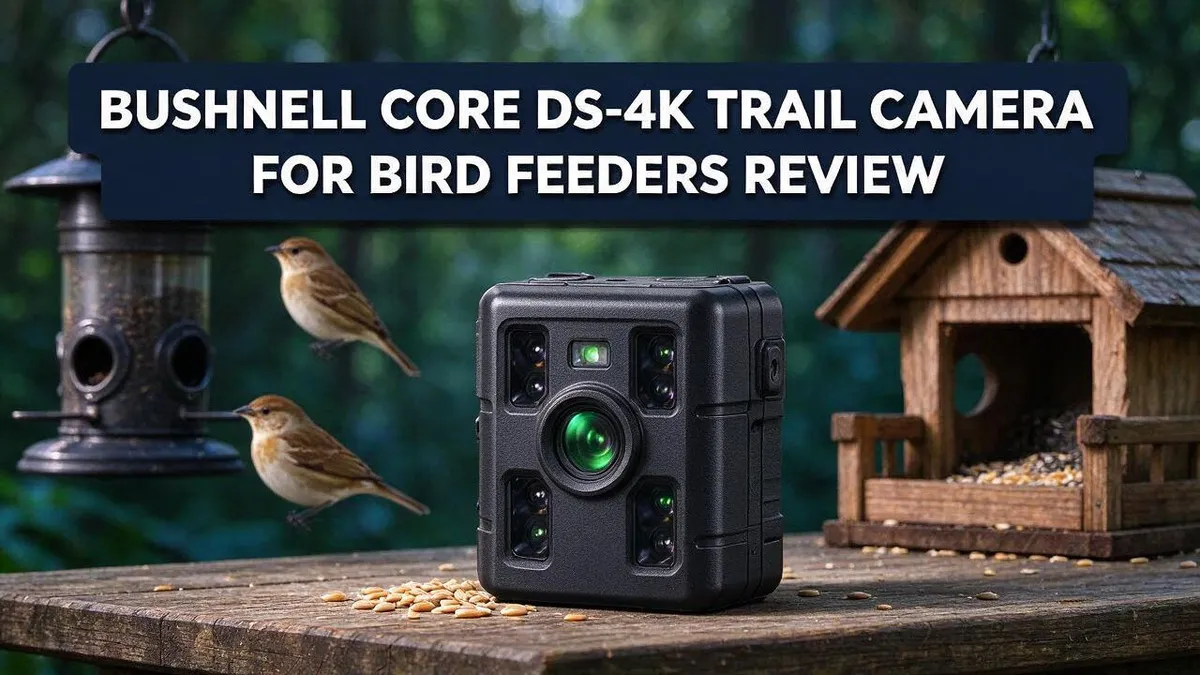
This camera offers 32MP resolution and a No Glow infrared flash. The flash stays hidden, so it should not spook shy birds. The Treebark camo finish helps it blend into a tree or post.
One January 2025 review calls it professional grade, easy to use, and consistent. Bushnell cameras also have a reputation for lasting years in harsh weather.
Some users report problems, but the details are unclear. In this review, we look at how the DS-4K fits bird feeder watching. Let’s dive in.
In a Nutshell
-
Best fit: This camera suits backyard birders who want to watch feeder visitors without scaring them away.
-
Easy blending: The Treebark camo finish helps the camera match a tree trunk or wooden post near your feeder.
-
Long term outlook: Bushnell trail cameras are often reported to last 10+ years in harsh conditions. That claim covers the brand, so it does not prove anything about this exact model.
-
Simple setup: Reviewers describe the camera as easy to use. Beginners should feel comfortable mounting it and checking photos.
-
Missing details: The research does not list battery life, storage, or trigger speed. Check those points on the product page before you decide.
-
Our take: The Bushnell Core DS-4K looks like a promising choice for feeder watching. Start with a close mount and a clear view of your perches.
Key Features and Specs


Last update on 2026-10-12 / Affiliate links / Images from Amazon Product Advertising API Some of the links on this website are affiliate links, which means that at no additional cost to you, I earn a commission if you click through and make a purchase. I only recommend products and services that I believe will add value to my readers. Thank you for your support!
The Bushnell Core DS-4K offers features that help you learn about your feeder guests. Its sharp images make it easier to tell similar birds apart. You can spot small markings like wing bars and beak shape.
Placement makes a big difference. Aim the lens at the feeder from about six to ten feet away. This distance keeps birds in frame without crowding the shot.
Branches can cause extra photos. Wind can make nearby limbs sway and trigger the sensor. Trim a few twigs near the camera to cut down on empty frames.
Night visits often reveal surprises. Raccoons, opossums, and mice sometimes stop by after dark. The camera captures these guests while they go about their routine.
Think about seasons too. Winter feeders often draw a different crowd than summer ones. A camera helps you track which species stay all year and which only visit in cold months.
Plan for regular checks. Busy feeders attract many visitors each day. Visit the camera often to swap cards and see what has appeared.
Privacy matters near neighbors. Point the lens at your feeder rather than nearby windows or yards. Respecting neighbors keeps your hobby friendly.
Kids often love this setup. Young learners can match photos to a field guide and build their own bird list. The camera turns a simple feeder into a classroom.
Overall, this camera suits anyone who wants a closer look at backyard life. Pair it with a sturdy mount and regular checks, and you will gather steady photos through every season.
Image and Video Quality at Bird Feeders
Image quality matters a lot when you check your feeder. A sharp photo helps you spot tiny details that separate one species from another.
Sharp detail shows wing bars, eye rings, and beak shape. Those features often make identification much easier.
Bird feeders present a fast target. Small birds hop, flutter, and dart in and out in a split second.
The camera needs to catch that quick movement. Blurry shots happen when a bird moves faster than the camera can capture it.
Lighting changes everything. Bright midday sun can create harsh shadows under the feeder roof. Early morning light often gives softer, more even color.
Glare from shiny feeder parts or metal poles can wash out details. Shifting the camera slightly often fixes this problem.
After dark, the camera switches to infrared. Colors disappear, so your photos show mostly gray shapes and outlines.
Video clips add another layer. They show how birds move, feed, and interact with each other.
Short clips often reveal behavior that single photos miss. Watching a few seconds can show a bird’s full routine.
Rain, fog, and dust can cover the lens. A quick wipe with a soft cloth keeps your images clear.
Dust and pollen can also build up during spring. Check the lens often so every photo stays sharp.
The research does not list video resolution or frame rate. Test a few clips yourself before you decide.
Your own footage tells the real story. Compare a few days of photos to see how well the camera performs.
Detection and Trigger Performance for Fast-Moving Birds
Birds move fast, so the sensor must react quickly. A bird can land, grab a seed, and leave in only a few seconds. If the camera waits too long, you miss the best shot.
The research does not list exact trigger speed or detection range. We cannot confirm how quickly the DS-4K wakes up. Still, you can judge detection by watching your own results over a few weeks.
Start with a simple test. Walk past the feeder, then count how many clips capture the full bird. Note how often only a wing or tail appears.
Motion sensors work best when a bird crosses the detection zone in a steady path. Birds that dart straight in and out may slip past. Birds that perch and hop often trigger the camera more reliably.
Heat also plays a role. Passive infrared sensors respond to body heat against a background. On a warm afternoon, a bird may blend with sunny surroundings, so detection can weaken.
Small birds like finches and chickadees test any camera. Their bodies are light, and they move in quick bursts. If your camera offers a burst mode, use it for a better chance at a sharp frame.
Keep a simple log. Note the time, weather, and species for each trigger. Patterns will show whether the camera misses certain birds or certain times of day.
Missed triggers do not always mean a weak camera. Feeder height, lens angle, and perch placement also shape results. Moving a perch closer to the sensor zone can help. Check the view after each test day, and small changes often bring big gains.
Top 3 Alternatives
Here are three strong alternatives for watching birds at your feeder.
Browning Strike Force

Last update on 2026-11-19 / Affiliate links / Images from Amazon Product Advertising API Some of the links on this website are affiliate links, which means that at no additional cost to you, I earn a commission if you click through and make a purchase. I only recommend products and services that I believe will add value to my readers. Thank you for your support!
The Browning Strike Force is a good choice for outdoor watchers who want fast triggers.
It uses motion detection to capture birds as they land on the feeder. Its night vision helps you spot visitors after dark.
The weatherproof body handles rain, snow, and heat. Many bird fans like its long battery life, so you can leave it in place for weeks.
Campark T80

Last update on 2026-11-19 / Affiliate links / Images from Amazon Product Advertising API Some of the links on this website are affiliate links, which means that at no additional cost to you, I earn a commission if you click through and make a purchase. I only recommend products and services that I believe will add value to my readers. Thank you for your support!
The Campark T80 works well for beginners who want a simple setup.
It offers clear photos in a small, lightweight body. You can mount it on a fence post or a nearby branch.
Its easy menu helps you change settings in just a few taps. This makes it a helpful pick for first-time bird camera users.
Wingscapes BirdCam Pro

Last update on 2026-07-13 / Affiliate links / Images from Amazon Product Advertising API Some of the links on this website are affiliate links, which means that at no additional cost to you, I earn a commission if you click through and make a purchase. I only recommend products and services that I believe will add value to my readers. Thank you for your support!
The Wingscapes BirdCam Pro is built with bird lovers in mind.
It captures sharp images of small songbirds at close range. The camera triggers quickly when a bird lands on the perch.
Many people choose it for its easy feeder mounting and reliable performance. It also stores your photos on a standard SD card for simple review.
Design, Build and Weather Durability
The Bushnell Core DS-4K wears a Treebark camo pattern. This look helps it blend into the trunks and branches around your feeder. Birds feel safer when a camera does not stand out.
The product title also names a No Glow feature. This matters because birds notice unfamiliar objects quickly.
Bushnell says its trail cameras often last 10 years or more in harsh conditions. This claim comes from the brand, not from this model alone. Treat it as a good sign, not a guarantee.
Outdoor gear faces sun, heat, cold, and daily handling. Check the mounts and housing when you first set up the camera. Tight, secure hardware helps the camera stay put through each season.
Sun can fade camo finishes over several seasons. Check the color each spring and note any wear. A faded pattern may not blend as well with the bark.
Some user reports mention problems with the camera. The text in the sources cuts off, so the exact issues stay unknown. Read recent owner reviews for build complaints before you commit.
Storm season tests every outdoor setup. Recheck the mount after heavy wind or ice. A quick look can prevent a fall that damages the camera.
Simple habits protect your setup over time. Clean the lens gently with a soft cloth each month. Keep a short maintenance log. Write down the date of each mount check and lens cleaning. This habit helps you spot patterns in wear.
Overall, the design suits anyone who wants a discreet camera that can handle outdoor seasons. Good build and camo work together for a natural look at your feeder.
Setup and Mounting Near Feeders
Setting up the camera near your feeder takes a little planning. Start by choosing a spot that gives a clear view of the perches. A good placement saves time later and keeps your photos useful.
Mount the camera on a sturdy post, tree trunk, or fence rail. A wobbly mount can shift the view and blur every shot. Tighten all straps before you walk away.
Aim for a distance that fills the frame with the feeder and nearby perches. Too far away and birds look tiny. Too close and the frame cuts off their bodies.
Set the camera at a slight downward angle. Try a height close to where your own eyes would see the feeder. Many backyard birds perch at about that level, so the view feels natural.
Keep branches and tall grass out of the frame. Moving leaves can trigger the sensor again and again. That habit fills your memory card with empty shots.
Check the mount from the side too. A camera that tilts sideways can cut off the top of the feeder.
Run a quick walk test before you leave. Stand where a bird would land and walk slowly through the detection zone. Then check the preview on your phone or viewer to confirm the framing.
Mark the mount position once you find the best spot. Note the height and angle. You can return the camera to the same place after cleaning.
Plan for feeder moves. If you shift the feeder, adjust the camera too. Birds follow the food, so the frame should follow them.
Check your memory card and battery before you walk away. A full card or flat battery can stop the setup before the first visitor arrives.
No Glow Flash and Wildlife Disturbance
Many birds and small mammals visit feeders after dark. A sudden flash can send them fleeing.
The Bushnell Core DS-4K lists a No Glow feature in its title. This matters because visible light often startles wildlife.
Low glow designs use infrared light that many animals see poorly or not at all. Your nighttime photos can still look clear.
Quiet operation keeps visits natural. Shy species like nuthatches and doves often return sooner when nothing flashes.
The research does not give the exact light output or infrared range. Testing is the only way to see how your birds react.
Watch the feeder area for a few nights. Note whether birds freeze, leave, or ignore the camera. Behavior tells you more than any spec sheet.
Aim the lens away from windows and porch lights. Glass and bright fixtures can bounce light back and cause glare.
People also disturb wildlife. Check the camera in daylight when possible. Keep each visit short and quiet, so birds stay relaxed.
Wear gloves when you touch the mount. Human scent can linger on the bark and may make cautious birds avoid the spot.
Calm feeding areas help your camera capture natural behavior. Calm birds make better footage.
Night routines also matter. Feed at consistent times so birds know when to visit. Regular schedules reduce stress and help you plan camera checks.
If a species seems to avoid the feeder after setup, move the camera a few feet. Small changes can ease their worry.
Remember that wildlife needs a safe place to rest too. Keep the area around the feeder clear of clutter. Respect those limits and your photos will improve.
Pros and Cons
Pros
- Clear 32MP resolution shows fine feather detail at the feeder.
- Reviewers call it professional-grade in a January 2025 review.
- One reviewer found it easy to use from setup onward.
- The same review reports consistent performance across visits.
- The DS-4K model name makes it easy to find the exact version.
Cons
- The sources do not say what problems some users report.
- Only resolution, model, camo, and the No Glow feature are confirmed.
- The praise comes from a single review, so more opinions help.
- Rival trail cameras are not named for a side by side check.
Who Should Buy It
The Bushnell Core DS-4K suits curious backyard birders who want to learn more about their feeder guests. It works well for people who enjoy watching visitors from a kitchen window. It also helps anyone who wants a record of who comes and goes.
Families with children often enjoy this kind of setup. Kids can check the footage each morning and guess which birds came overnight. Teachers may also find it useful for simple lessons about local wildlife.
Photographers who study bird behavior may appreciate the camera too. Frequent visitors like jays, finches, and woodpeckers show habits over days. Patient observers can spot patterns that a quick glance would miss.
Gardeners and nature fans might like the Treebark finish. It blends into trunks and fences, so it stays less noticeable to passersby.
Long term planners may like the brand reputation. Bushnell trail cameras are often reported to last more than ten years in harsh weather. This claim applies to the brand, so it is not a model promise.
This camera may not suit everyone, though. Some users report problems, but the sources do not say what those issues are. Anyone who needs a clear fault history should read more reviews first.
Shoppers who want a wide range of options should compare rival models. The research names no competitors, so a side by side check is wise. Compare image quality, mounting options, and owner ratings for a fuller picture of daily use.
In short, this camera fits people who want a calm, hidden window into feeder life. It works best for patient watchers who enjoy slow discoveries. Others may want more information before deciding.
Final Verdict
The Bushnell Core DS-4K earns a positive verdict for feeder watching. It looks like a smart pick for people who want simple, quiet monitoring. The evidence is still thin, so I stay cautiously optimistic.
Why I lean yes
The strongest signals point to ease and reliability. A reviewer describes smooth use and steady results. Those two traits matter most at a feeder, where you want to set the camera and then leave it alone.
Bushnell also has a name that many outdoor fans trust. Brand reports say its cameras survive harsh weather for many years. That claim covers the brand, not this exact model, so treat it as a hopeful sign.
What still needs proof
One question stays open. Some users mention problems, but the details are missing. I cannot tell you what those problems are, and I will not guess.
My simple advice
Buy it if you want a low fuss camera for your yard. It fits a patient birder who enjoys reviewing clips after a quiet week.
Wait if you need many reviews before you commit. More owner feedback will give you a clearer picture.
Your next steps
- Read the seller’s return policy before you order.
- Test the camera at your feeder for one full week.
- Review your first clips and adjust the angle.
These steps protect your time and your enjoyment. A short trial shows you quickly whether the camera matches your yard.
Final thought: The DS-4K looks like a promising and friendly way to meet your backyard visitors. Give it a fair trial, and let your own clips make the final call.
Frequently Asked Questions
Does the No Glow feature matter for bird photos?
The listing names a No Glow feature. This may keep the scene calm at night. Birds may then ignore the camera more easily.
Can the camera capture birds after dark?
Most feeder birds rest at night, so daytime shots matter most. The sources do not explain how night images look, so check the product page for details.
How can I keep my feeder clean while using a camera?
Clean your feeder every week or two. Old seed can grow mold, which can make birds sick. A clean feeder keeps your visitors healthy.
How do I keep the camera safe from theft?
Use a strong cable lock or a small security box. Place the camera where passersby cannot easily reach it. This keeps your setup secure.
How can I make the most of my photos?
Create one folder for each week. Write down the bird species you see. Over time, you learn which birds visit most often and when they arrive.

Hello, I’m Emily Price, the founder of Birds Affection. As a passionate bird enthusiast and spiritual seeker, I’ve always been fascinated by the symbolic meanings and mystical connections between birds and our lives. On this website, I share my knowledge and insights on the spiritual significance of various bird species, exploring their roles as messengers, guides, and teachers. Through my writing, I aim to inspire and educate others on the profound wisdom and beauty that birds bring to our world. Join me on this journey as we delve into the enchanting realm of bird symbolism and discover the hidden meanings behind these magnificent creatures.