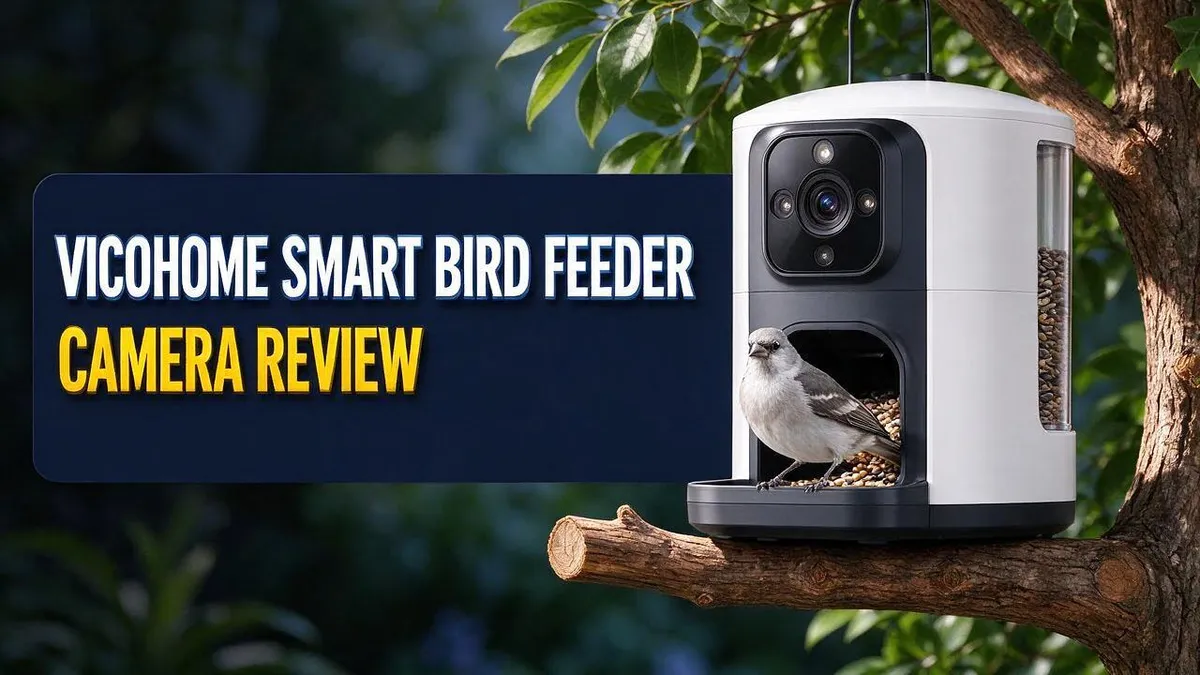
Vicohome Smart Bird Feeder Camera Review 2026: Features, Setup and Verdict
Do you love watching birds visit your yard? A smart bird feeder camera lets you see every visitor, even when you are away from home.
The Vicohome Smart Bird Feeder Camera offers that experience. It works with the Vicohome app, so you can watch live video right on your phone.
Setup looks simple. You open the app, tap Add Device, and follow the prompts. Your home network must use 2.4GHz WiFi, so check that first.
In this review, we look at how the Vicohome feeder works and who it suits. We also compare it with rivals like the Kiwibit Beako 4K, Onlyfly, and NETVUE Birdfy. Let’s get started.
In a Nutshell
-
Live viewing in the app: The Vicohome app shows live video from your feeder camera. It also controls other Vicohome wireless cameras, so you can manage everything in one place.
-
2.4GHz WiFi only: The camera needs a 2.4GHz WiFi network. Check your router first, because a 5GHz only setup may cause trouble.
-
Specs need a quick check: Our research did not confirm resolution, power source, storage, or size. Read the product page before you decide.
-
Strong rivals exist: The Kiwibit Beako 4K earned a “best overall” label in a 2026 roundup. The Onlyfly feeder uses solar power. The NETVUE Birdfy also needs 2.4GHz WiFi.
-
Best for phone based bird watching: This camera fits people who want to watch their yard birds from a screen. It also suits current Vicohome users.
-
Watch the naming: One source mentions a “BirdsView” camera. That may be a different model, so confirm the exact product name before you buy.
Key Features and Camera Capabilities


Last update on 2026-11-19 / Affiliate links / Images from Amazon Product Advertising API Some of the links on this website are affiliate links, which means that at no additional cost to you, I earn a commission if you click through and make a purchase. I only recommend products and services that I believe will add value to my readers. Thank you for your support!
Key features shape how much you enjoy your feeder. A good camera should show birds clearly, stay steady, and fit your yard. This section explains what to check with the Vicohome model.
Clear image quality matters most. Sharp video helps you spot feather patterns and bright colors. Our research did not list the exact sensor size, so test the feed in daylight first.
Camera placement changes the view a lot. Mount the feeder so the lens faces the perch at a slight downward angle. Keep the perch inside the frame so birds stay visible longer.
Feeder design and camera fit. Smart feeder cameras usually pair the lens with the feeder body. Check that the perch sits at a comfortable height for small songbirds. Place the feeder near shrubs so birds feel safe while they eat.
Night and low light views. Many birds visit early in the morning or near dusk. Check how the picture looks in dim light, since shadows can hide small details.
Recording habits. Many owners want to review visits they missed. Ask whether the app saves clips or only streams live video. Our research did not confirm this, so check the app listing before you rely on it.
Identifying species gets easier with close views. You can compare sizes, beak shapes, and markings in real time. Keep a notebook nearby to log each new visitor you spot.
Seed tray access. Easy refilling keeps birds coming back. A wide tray or simple lid saves time on busy days.
Weather and daily upkeep. Outdoor cameras face rain, dust, and temperature swings. Look for a sturdy housing and a simple cleaning routine. Wipe the lens after heavy rain to keep the picture bright.
Good features make the feeder fun to use. Test each one during the first week. Then you know whether this camera fits your backyard routine.
Design, Build and Feeder Function
A feeder does more than hold seed. Its design shapes how birds feel, how long they stay, and how well your camera captures them.
Build quality matters outdoors. Your feeder faces rain, wind, and sun all year. Look for sturdy parts that can handle changing weather.
Our research did not describe the materials. We cannot confirm the plastic, metal, or coating used on the Vicohome model. Check the product details before you decide.
Perch size changes who visits. Small songbirds like chickadees need slim perches. Larger birds may prefer wider platforms or open trays.
Squirrels test every feeder. Many backyard feeders get raided by squirrels. A baffle, a cage, or a higher hanging point can slow them down.
Mounting options add flexibility. You can hang the feeder from a hook, a pole, or a deck rail. Pick a spot that offers shelter from strong wind.
Cleaning keeps birds healthy. Old seed and droppings can spread disease. Plan to wash the tray and perches every couple of weeks.
Seed capacity affects your routine. A larger reservoir means fewer refills. Choose a size that fits how often you can check the yard.
Weather protection keeps seed dry. Wet seed can grow mold fast. Look for a roof or covered design that shelters the seed well.
Think about your yard layout. Trees, fences, and open lawns change which birds show up. Watch your yard for a week to find the busiest spot.
Drainage helps the base stay dry. Small holes in the tray let rain run off. Dry trays reduce spoiled seed and keep birds safer.
Feeder function depends on simple steps. Fill the feeder, mount it, and confirm the camera turns on. Then wait for the first visitors to arrive.
In short, good design balances bird comfort, easy care, and steady performance. Test your setup for a few days and adjust it as needed.
Vicohome App and Live Video Experience
Setting up the Vicohome app is simple. Open the app, tap “Add Device,” and follow the prompts on your screen.
Before you start, know your network. The camera only connects to a 2.4GHz WiFi network. If your router uses only a 5GHz band, setup can stall. Check your router settings first.
Keep your WiFi password close. You will need it during the prompts. Place your phone near the feeder during setup so the connection stays steady.
One app can manage several devices. The Vicohome app also controls other VicoHome wireless security cameras. You can check your front door and your feeder from the same screen. This saves time when you move between devices.
Quick checks fit into busy days. You can glance at the feeder during coffee or lunch. Short looks help you spot a visiting blue jay before it leaves.
Give the camera a minute to join your network. Once connected, the live feed should load in the app. If the feed stalls, move your phone closer to the router and try again.
Some features need a closer look. Our research did not confirm extra app options such as alerts, zoom controls, or sharing tools. Check the app store listing for the full feature list.
Test the connection before you mount it. Hang the feeder in its planned spot first. Then open the live view on your phone.
A steady picture means your location works well. Weak signal means you should pick a spot nearer the router.
Keep the app updated. Updates often fix bugs and improve stability. Check your app store for new versions every few weeks.
If setup fails twice, restart the camera and the router. Then repeat the prompts from the beginning. Restarting often clears small glitches.
Enjoy the view every day. Once the setup works, the app becomes part of your morning routine. Watching birds can slow your day and lift your mood.
Top 3 Alternatives
Bird Buddy Smart Feeder

Last update on 2026-08-27 / Affiliate links / Images from Amazon Product Advertising API Some of the links on this website are affiliate links, which means that at no additional cost to you, I earn a commission if you click through and make a purchase. I only recommend products and services that I believe will add value to my readers. Thank you for your support!
The Bird Buddy Smart Feeder is a great pick for bird lovers. Its built-in camera takes sharp photos when a bird lands. The app sends you alerts, so you never miss a visit.
Setup is simple. You fill the feeder, charge the solar panel, and connect the app. Many people enjoy building a photo gallery of their favorite visitors over time.
Netvue Birdfy Smart Feeder

Last update on 2026-10-12 / Affiliate links / Images from Amazon Product Advertising API Some of the links on this website are affiliate links, which means that at no additional cost to you, I earn a commission if you click through and make a purchase. I only recommend products and services that I believe will add value to my readers. Thank you for your support!
The Netvue Birdfy Smart Feeder gives you a clear view of your backyard guests. It records high definition video and lets you watch live from your phone.
This model also uses AI features to recognize birds and send a notification with the species name. Night vision helps you spot visitors even after sunset. Cleaning the seed tray takes only a few minutes.
Aura Smart Bird Feeder

Last update on 2026-11-19 / Affiliate links / Images from Amazon Product Advertising API Some of the links on this website are affiliate links, which means that at no additional cost to you, I earn a commission if you click through and make a purchase. I only recommend products and services that I believe will add value to my readers. Thank you for your support!
The Aura Smart Bird Feeder focuses on easy daily use. It captures photos and video, then stores clips in the cloud. You can share your favorite moments with family and friends.
Aura fits well in most gardens and works best with a steady internet connection. Choose this model if you want simple controls and a friendly app.
Setup and 2.4GHz Wi-Fi Requirements
The camera only joins 2.4GHz networks. Most homes have a router that sends out two signals at once. The 2.4GHz signal is the one this camera can use.
Why does this band matter? The 2.4GHz signal reaches farther across a yard. It also passes through walls and fences more easily. That helps when your feeder sits at the far end of the garden.
Many routers combine both bands under one network name. This is a common trap. The camera may not find the network at all, even though your phone connects without trouble.
Check your router settings first. Log in to your router page or open its app. Look for a band setting or a separate network name. Some routers label the 2.4GHz option clearly, which makes the job easy.
Your phone can also switch bands without warning. Phones often prefer 5GHz when that signal feels strong. Setup can fail for this reason alone. Keep your phone on the same 2.4GHz network during the entire process.
Some owners create a second network just for smart devices. This keeps the camera on 2.4GHz while the main network stays unchanged. It also keeps your laptop and streaming devices on faster settings.
Signal strength at the feeder spot matters too. Walk outside with your phone and check the bars where the feeder will hang. A weak signal can cause choppy live video, which spoils the fun of watching birds.
Our research did not list a minimum signal number. Instead, use a simple test. If your phone streams a video smoothly at the feeder spot, the camera will likely have a fair chance.
Other smart feeder cameras share this need. The NETVUE Birdfy model also works only on 2.4GHz, so checking your band now helps no matter which model you choose.
A little prep saves real time. Confirm the band, keep your phone on the right network, and check the signal outside. Your setup will often go smoothly from the start.
Power Options and Placement Tips
Power is the first thing to check. Our research did not confirm how the Vicohome camera gets its electricity. Read the box or the user manual before you choose a spot.
Plug in models need an outlet within easy reach. Pick a spot where the cord reaches without stretching. Keep the cord away from the feeder and out of reach of curious pets.
If your unit uses batteries, check the charge every few weeks. A low battery can interrupt the view. Keep a spare set nearby so you never miss a morning visit.
Solar models need open sky. Competitors like the Onlyfly feeder use solar power. If your Vicohome model has a solar panel, place it where it gets direct sun for most of the day.
Trees and fences can block sunlight. Trim nearby branches or move the feeder to a brighter corner of the yard.
Avoid glare on the lens. Face the camera away from a low sun. Glare makes birds look dark and hard to identify, so test the angle at different times of day.
Keep the feeder away from windows. Birds can strike glass when they fly off in a hurry. Place the feeder a few feet from glass, or far away from it.
Choose a spot you can see from indoors. A kitchen or living room window gives you a clear view. You will enjoy visits more often when the feeder sits in sight.
Plan for the seasons. Summer leaves can block sunlight for a solar panel. Winter snow can cover the lens or the panel. Brush off snow after storms to keep the view clear.
Check the view at dusk. Low light changes how the picture looks. Watch the feed for a few evening minutes to see if it still shows clearly.
Take your time with placement. A good spot protects your camera and your bird visitors. Test each option before you finish the mount.
Pros and Cons
Pros
- Live video lets you watch visitors from your phone.
- Setup starts with a clear “Add Device” option in the app.
- Step-by-step prompts guide you through each part of setup.
- The camera belongs to the VicoHome smart bird feeder camera line.
Cons
- Resolution, storage, and size are not confirmed in our research.
- Vicohome-specific pros and cons were not found in our research.
- Some sources call it “BirdsView,” so check the exact model name.
Who Should Buy It
If you love birds but dislike standing outside in cold weather, this camera may suit you well. It brings the feeder straight to your phone screen.
Families with children often enjoy this kind of setup. Kids can spot cardinals, finches, and blue jays from the kitchen table. Nature lessons happen right at home.
Remote workers can also get good use from it. A quick glance at the yard during a break can refresh your mind. Seeing a visitor on the screen may brighten a long workday.
Older adults and people with limited mobility can enjoy birds without much effort. Watching from a comfortable chair may be easier than walking to a garden. Live video keeps the hobby close at hand.
First time bird feeder owners may gain the most. The setup suits people who already feel comfortable using a phone app. Over time, you will learn which seeds attract the most visitors.
Some buyers should slow down first. Anyone who needs confirmed specifications should check the product listing carefully. Our research did not list resolution, storage, or dimensions for this model.
People who depend on proven feedback from many owners may also want to wait. Our research did not find Vicohome-specific pros or cons. Comparing it with options like the Kiwibit Beako 4K can help you decide.
Renters should review their rules before mounting anything. Some spaces limit drilling into walls, fences, or railings. A clamp or freestanding pole may offer a practical alternative.
Bottom line: This camera fits casual bird watchers who want easy live views. Detail-focused shoppers may prefer a model with fully published specifications.
Final Verdict
The Vicohome Smart Bird Feeder Camera looks like a friendly pick for casual bird watchers. It runs on a known app that handles live video and guided setup. That gives you a clear starting point.
Our research still has gaps. We could not confirm specs or owner feedback. So our verdict is positive but careful.
Who should buy it
Choose it if you want a simple, phone based way to watch birds. It also fits you well if you already use the Vicohome app for other cameras. One app for many devices keeps your routine easy.
Who should compare first
Shoppers who want sharp detail should look at the Kiwibit Beako 4K Smart Bird Feeder. A 2026 roundup named it best overall.
Buyers who prefer solar power may like the Onlyfly Bird Feeder With Camera. The NETVUE Birdfy Smart Bird Feeder Camera is another option. It also needs 2.4GHz WiFi, and it may call for some setup knowledge.
A quick checklist before you order
Run through four simple checks:
- Confirm the exact model name on the listing.
- Read the full spec sheet for resolution, storage, and power.
- Make sure your router offers a 2.4GHz band.
- Check the return policy in case the camera does not suit you.
Each step takes only a minute. Together they protect you from surprises.
Our final take
The Vicohome camera earns a spot on your shortlist. It offers easy app control and a clear setup path. Those points matter for beginners.
Wait for more detail if you need proven specs. Pick it up if you value simplicity and want to start watching birds soon.
Good bird cameras bring joy to ordinary days. Pick the one that matches your space, your WiFi, and your habits. Then enjoy every feathered visitor that stops by.
Frequently Asked Questions
Does the Vicohome camera work on any Wi-Fi network?
No. The research says it needs a 2.4GHz network. Check your router settings before you buy so setup goes smoothly at your feeder.
What if my router only uses a 5GHz network?
Many routers broadcast two bands at once. Log in to your router settings and turn on the 2.4GHz band. Look for a label that includes “2.4” so you connect to the right network.
Can one app manage more than one camera?
Yes. The Vicohome app controls VicoHome wireless security cameras as well as smart bird feeder cameras. You can keep all of your devices in the same app.
How does it compare with the NETVUE Birdfy camera?
Both cameras need a 2.4GHz network. The NETVUE model also needs some setup knowledge. If you are new to smart devices, the Vicohome setup may feel like the easier starting point.

Hello, I’m Emily Price, the founder of Birds Affection. As a passionate bird enthusiast and spiritual seeker, I’ve always been fascinated by the symbolic meanings and mystical connections between birds and our lives. On this website, I share my knowledge and insights on the spiritual significance of various bird species, exploring their roles as messengers, guides, and teachers. Through my writing, I aim to inspire and educate others on the profound wisdom and beauty that birds bring to our world. Join me on this journey as we delve into the enchanting realm of bird symbolism and discover the hidden meanings behind these magnificent creatures.