Occer 12×25 Compact Binoculars Review: Should You Buy It?
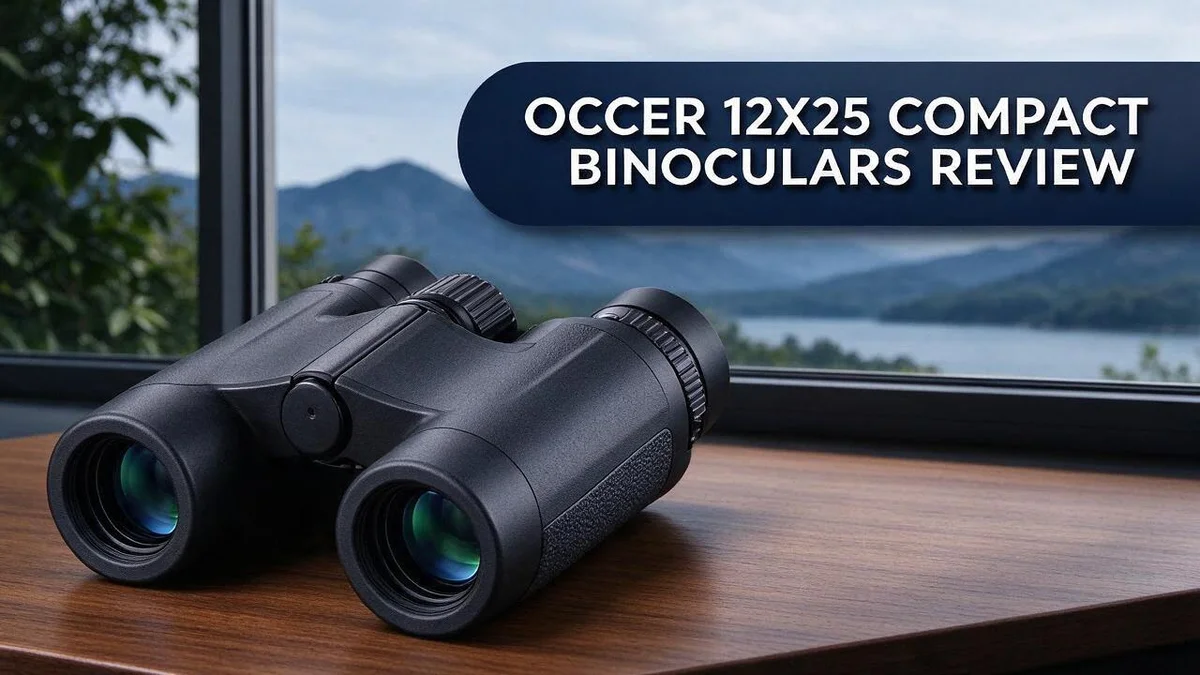
Do you want a pocket sized pair of binoculars that still pulls distant scenes close? The Occer 12×25 Compact Binoculars aim to do exactly that.
These binoculars offer 12x magnification and a 25mm objective lens. The field of view reaches 273 feet at 1000 yards.
Occer uses Eco Glass optics with an anti reflection coating. The brand also lists waterproof protection and a shock absorber.
You can take them hunting, camping, sightseeing, or bird watching. They also fit easily into a travel bag.
Still, a few questions matter. Does 12x feel steady in such a small body? Night vision needs some ambient light, so it won’t work in total darkness. This review looks closely at each point.
In a Nutshell
- Wide view: The field of view reaches 273 feet at 1000 yards. That helps you follow moving birds and animals across open land.
- Weather ready: The listing says these binoculars are waterproof. A shock absorber also adds some protection against bumps on the trail.
- Low light help: Occer claims brighter images with less eye strain. That could help you at dawn and dusk.
- Night limits: The night vision claim needs some ambient light. These binoculars will not show you much in complete darkness.
- Shake concern: The listing mentions image stabilization. Still, one forum user wonders if high power feels shaky in a small body. That point is unverified for this model, so hold them steady with both hands.
- Seller feedback: The eBay listing shows 4.8 for accurate description and 4.7 for reasonable shipping. Those ratings suggest buyers got what the seller described.
Overall, these binoculars suit casual outdoor fans who want light gear and a wide view.
Optics and Image Quality

Last update on 2026-07-11 / Affiliate links / Images from Amazon Product Advertising API Some of the links on this website are affiliate links, which means that at no additional cost to you, I earn a commission if you click through and make a purchase. I only recommend products and services that I believe will add value to my readers. Thank you for your support!
Clear optics decide how much detail you actually see. Image quality matters just as much as zoom power. Many buyers focus only on magnification, but that misses the bigger picture. A sharp view keeps you focused on the bird, deer, or trail ahead.
Exit pupil is the small beam of light that reaches your eye. This model measures about 2 mm. That size suits daylight viewing well.
Your pupil opens wider in dim light. Dusk views may therefore look darker than daytime views.
Edge sharpness shows how clear the image stays near the sides. Compact designs can show softer edges. Keep the subject near the center for the best detail.
Eye relief is the distance your eye sits from the eyepiece. Glasses wearers should check this before buying. It matters for sunglasses users, too.
Longer eye relief lets you see the full view without pressing against the lens. This comfort matters on long hikes.
Focus speed affects how quickly you lock onto moving targets. A smooth center wheel helps you track birds in flight. Smooth action also reduces shake when you turn the wheel.
Color accuracy matters on cloudy days. Good coatings reduce glare and keep greens and browns natural.
Dirty lenses scatter light. Fog can also cloud the view on cool mornings. Wipe the glass with a soft cloth before each outing.
Stability plays a role too. Even small binoculars can wobble at high zoom. Brace your elbows against your chest and breathe slowly to steady the image.
Clear optics combine light, edges, and steadiness. Practice these habits to get the most from every view.
Magnification and Handheld Stability
Twelve times magnification brings distant birds very close. It also magnifies every tiny hand movement. Even a slight tremor can make the view jump.
Your heartbeat and breathing move the binoculars more than you think. Learn to hold still before you judge the image.
Start with a firm grip. Hold the barrels with both hands. Pull them gently against your face so your brow rests on the eyecups.
Tuck your elbows into your ribs. This turns your arms into a stable frame. Keep your feet apart for better balance.
Breathe out slowly before you look. Pause at the end of the breath. Your view will settle within a second.
Find something to lean on. A tree, fence post, or car roof works well. Rest your elbows on the surface for extra support.
Scan in short sweeps. Move your whole body instead of just your wrists. Quick jerks make the picture blur and tire your eyes.
Watch for the natural pause. The image often settles at the top of a breath. Wait for that moment before you study a bird or distant trail.
If steadiness matters more than zoom, consider a lower power model. Lower magnification gives a wider and calmer view. Many hikers trade a bit of zoom for comfort.
Your choice depends on your activities. Bird watchers often like higher power, while campers may prefer ease.
Plan a test run at home. Look at a power line or street sign from across the yard. Notice how long the image takes to settle.
Check the eyecups and focus before you head out. A snug fit blocks side glare and helps your head stay still. A few minutes of practice builds steady habits fast.
Low-Light Performance
Many people use binoculars most at dawn and dusk. Animals move then, and the light fades fast. Good low light performance matters more during these hours than bright midday sharpness. Plan your outings around these hours.
Moonlit nights offer a different challenge. A bright moon adds enough glow to show shapes and movement. However, colors look muted, and shadows hide details near tree lines.
Forest shade works differently from open fields. Under dense canopy, light drops quickly, even at midday. Step into the shade slowly so your eyes can adjust before you raise the binoculars.
Dew and fog cause trouble too. Moisture can cloud the lens surface and dull the image. Wipe both lenses with a soft cloth before each outing, since a damp film steals light. Dry them before you pack them away.
Your own habits also count. A bright phone screen or porch light ruins night adaptation. Keep your phone away and let your eyes settle for several minutes before you start scanning.
Try a simple check at home. At dusk, point them at a street lamp or a house number. Note whether you can read small details and judge colors. This test shows how the claims hold up in your yard.
Color also changes as light drops. Greens and browns blend together at dusk, so birds can look grayer than they are. Pay attention to shape and movement instead, since those cues stay clear longer.
Expect the best results when light fades slowly rather than all at once. The Occer 12×25 suits relaxed evening walks, quiet wildlife watching, and casual birding. For deep night work, a dedicated night optic gives better results.
Top 3 Alternatives
Nikon Aculon A30

Last update on 2026-10-31 / Affiliate links / Images from Amazon Product Advertising API Some of the links on this website are affiliate links, which means that at no additional cost to you, I earn a commission if you click through and make a purchase. I only recommend products and services that I believe will add value to my readers. Thank you for your support!
Looking for a simple pair of compact binoculars? The Nikon Aculon A30 is a great pick. It feels light in your hands and fits easily in a jacket pocket or small bag.
Its wide field of view helps you track birds, sports, and scenery. The eyecups fold down, so eyeglass wearers can see the full image. It works well for beginners who want easy handling.
Bushnell PowerView 2


Last update on 2026-10-31 / Affiliate links / Images from Amazon Product Advertising API Some of the links on this website are affiliate links, which means that at no additional cost to you, I earn a commission if you click through and make a purchase. I only recommend products and services that I believe will add value to my readers. Thank you for your support!
The Bushnell PowerView 2 offers a compact build with a classic feel. It sits comfortably around your neck on long hikes. Its simple layout means you spend less time fiddling and more time watching.
Its sharp optics give clear views in daylight. Many users like the center focus wheel. It is easy to use, even with gloves on. This model suits kids, families, and casual trail walkers.
Celestron Upclose G2

Last update on 2026-10-31 / Affiliate links / Images from Amazon Product Advertising API Some of the links on this website are affiliate links, which means that at no additional cost to you, I earn a commission if you click through and make a purchase. I only recommend products and services that I believe will add value to my readers. Thank you for your support!
The Celestron Upclose G2 brings bright, clear views in a small frame. It fits well in a backpack or glove box. Its compact size also makes it a handy choice for trips abroad.
Its rubber armor protects the body from bumps and drops. The lenses use multicoated glass for better contrast. Stargazers and day trip explorers both find it useful. Pick this model if you want a rugged everyday companion.
Build, Waterproofing and Portability
The Occer 12×25 lists a shock absorber and a waterproof body. These features matter when you carry binoculars through rain, mud, or rough trails.
Waterproofing protects the inside. Moisture can fog the lenses and damage internal parts over time. A sealed body keeps dust and water out, so the optics stay clear for longer.
Check the seals before every trip. Look at the eyecups, the focus knob, and the area around the hinge. Loose parts let in water faster than you expect.
Shock absorbers help during daily carry. A bump against a tree or a fall onto grass can knock the optics out of line. Padding on the body soaks up some of that force.
Compact models like this one keep the size small. They slip into a jacket pocket or a daypack without much fuss. Light gear also reduces neck strain on long walks.
Carry them with a strap. A neck strap spreads the weight across your shoulders. A wrist strap keeps them close when you climb or scramble over rocks.
Rinse off salt, sand, or mud after a trip. Use a soft cloth on the lenses. Let the body dry in open air, away from direct heat.
Weight adds up over a full day. Hold them for a few minutes in your hands. Notice whether your arms tire or your neck aches. Comfort often decides whether you keep using them.
Waterproof does not mean you can soak them. Keep them away from deep water and long submersion. Light rain and splashes are fine, but dunk tests are a bad idea.
Storage matters too. Keep the binoculars in the case when you finish outdoors. A dry bag or padded pouch protects the lenses on the drive home.
Best Uses: Hunting, Birding, Travel and Camping
Hunters often use these binoculars to scout before the hunt begins. A quick look across a ridge can reveal where deer feed or travel. Slow scanning helps you spot movement from a safe distance.
Birding rewards patience more than speed. Sit near a feeder, pond, or tree line and let the birds come to you. Stay quiet and move slowly. Look for field marks like wing bars, eye rings, and tail shapes. These details help you name a bird quickly.
Travel days move fast. Use these binoculars to see street signs, rooftops, and far city views before you reach them. A quick glance at a distant landmark can shape your whole plan for the day. Keep them in a daypack so they stay close and ready.
Camping brings you close to nature all day long. Lake edges, meadows, and forest clearings hold plenty of wildlife. Many campers spot otters, herons, or hawks without leaving their chairs. Scan from your seat and enjoy the quiet.
Repeat scans also help hunters. Glass the same field every hour. Animals that stayed still before may move into view later. Write down what you see each time.
Birders also love long trips. Pack a small notebook with your binoculars. Jot down species, times, and places. Over time, you build a record of the birds you saw. Many people enjoy this habit for years.
Choose the right tool for your plans. These binoculars fit many outdoor days. Think about where you will use them most. A clear plan helps you pick the best view for each adventure you take. Try them on each trip to learn their strengths and limits.
Seller Ratings and Value Considerations
Seller ratings tell you a lot about the people behind a listing. Before you buy, look at how other shoppers rated their experience.
Check the accuracy score first. The Occer 12×25 listing shows an accurate description rating of 4.8. That score suggests the photos and details match what arrives at your door.
Shipping ratings matter too. The shipping score of 4.7 points to a smooth delivery process. Fast, clear shipping helps you test your binoculars sooner.
Read recent reviews as well. Older feedback may not reflect how a seller handles today’s orders. Look for comments about packaging, lens condition, and return help.
Ratings also show patterns. One bad review rarely tells the full story. A steady mix of good comments points to a reliable seller.
Remember that ratings describe the seller, not the optics. A seller can ship quickly while the binoculars still fall short for your needs. Compare the listing specs with your plans.
Think about your own use too. If you plan night trips, remember that low light vision works only with some ambient light. A seller rating cannot change that fact.
Keep your receipt and original box. Store them for at least a few weeks. This habit makes returns easier if the product arrives damaged.
Watch how sellers reply to complaints. Quick, polite answers show care for buyers. Silence or rude replies are a warning sign.
Also check how long the seller has been active. A longer record often means more completed orders. Still, new sellers can earn good scores too.
In short, treat ratings as one tool. Combine them with product details, your needs, and your own checks.
Pros and Cons
Pros
- The strong 12x zoom pulls distant deer, birds, and trail details close.
- The 25mm lens lets in more light for a brighter view.
- An anti-reflection coating cuts glare on sunny days.
- The wide 273 ft view at 1000 yards makes it easier to follow moving targets.
- One pair covers many outdoor plans in a single bag.
Cons
- Night vision works only when some ambient light is present.
- In total darkness, you may see very little.
- Some users question whether 12x feels too shaky in such a small frame.
- The small 25mm lens gathers less light than larger models at dusk.
Who Should Buy It
First time buyers should look at these closely. New users often feel lost in technical specs. This pair offers a straightforward design that gets the job done.
Hikers who carry a daypack will appreciate the compact size. A small frame slides into a jacket pocket or side pocket. Less weight means less strain on the neck during long walks.
Young explorers may enjoy them too. Kids who love nature walks can get good use from this pair. A parent should still check the fit and supervise use near water.
Sports fans and concert goers may also enjoy them. Seats in large venues sit far from the action. A compact pair brings players and stage details closer without filling a bag.
Waterproof build matters for rainy days. Hunters, campers, and boaters often face damp weather. The waterproof design helps the binoculars handle light rain and splashes.
Evening walkers can spot wildlife near streetlights or in twilight. This gives them a useful tool for early and late outings. Walkers who like early mornings will find them handy.
Stargazers and night sky fans should look elsewhere. Astronomy needs larger lenses and strong dark sky performance. This pair is built for daytime and dusk use.
Buyers who want a steady image for long sessions may hesitate. Some people prefer a tripod or a heavier body for stable views. Test the feel in hand before committing. Those who need top zoom power may want a higher magnification model.
Casual explorers form the ideal audience. Anyone who wants one easy tool for many small adventures will feel at home. Read the rest of this guide to see if this pair fits your plans.
Final Verdict
The Occer 12×25 is a solid pick for casual outdoor fans. It gives you a close view in a small package. It suits people who value light gear over big glass.
Our verdict is simple. This pair works best as a daytime companion for trips, walks, and weekend plans. It handles damp weather well. It also slips into a pocket with ease.
Be realistic about the limits. The listing mentions image stabilization, but we found no proof of how well it works. Treat that claim with care until you test it yourself.
Here is a quick tip for steadier views. Tuck your elbows against your chest. Lean on a fence post, a tree, or a car roof. Small binoculars at high zoom reward a steady stance.
Test them soon after they arrive. Look at a distant sign in daylight. Check the edges for blur. Then try them at dusk near a light source. This shows you how they perform in your own backyard.
Who should buy them? Casual bird watchers, travelers, and campers will likely feel happy. People who want quick looks, not hours of viewing, fit well here.
Who should skip them? Anyone who needs a rock steady image or viewing in true darkness should look at larger models.
Our final take is a good, practical choice with clear limits. Know what you need, test the pair early, and enjoy the extra reach on your next outing. A light carry makes every trip more fun.
Frequently Asked Questions
What does Eco-Glass mean for the view?
The listing names Eco-Glass optics as part of the build. It does not explain the lens details, so check clear photos or buyer comments to judge the image quality for yourself.
Does the shock absorber protect the binoculars?
Yes, the listing includes a shock absorber. It can soften small bumps when you carry the binoculars on a trail or toss them in a bag. For longer trips, store them in a padded bag to add extra protection.
What do the seller ratings show?
The eBay listing shows a 4.8 score for accurate description and a 4.7 score for shipping. These numbers suggest the seller describes items clearly. Still, read recent comments, because ratings can shift over time.
Is image stabilization proven?
The listing includes image stabilization as a feature. However, a user forum post questions whether 12x is too shaky for small binoculars, and that claim is unverified for this model. Treat stabilization as a listed feature, not a guaranteed result.
How should I clean the lenses?
Blow off loose dust first to avoid scratches. Then wipe the lenses gently with a soft microfiber cloth. Skip harsh cleaners, since they can damage the anti-reflection coating.

Hello, I’m Emily Price, the founder of Birds Affection. As a passionate bird enthusiast and spiritual seeker, I’ve always been fascinated by the symbolic meanings and mystical connections between birds and our lives. On this website, I share my knowledge and insights on the spiritual significance of various bird species, exploring their roles as messengers, guides, and teachers. Through my writing, I aim to inspire and educate others on the profound wisdom and beauty that birds bring to our world. Join me on this journey as we delve into the enchanting realm of bird symbolism and discover the hidden meanings behind these magnificent creatures.