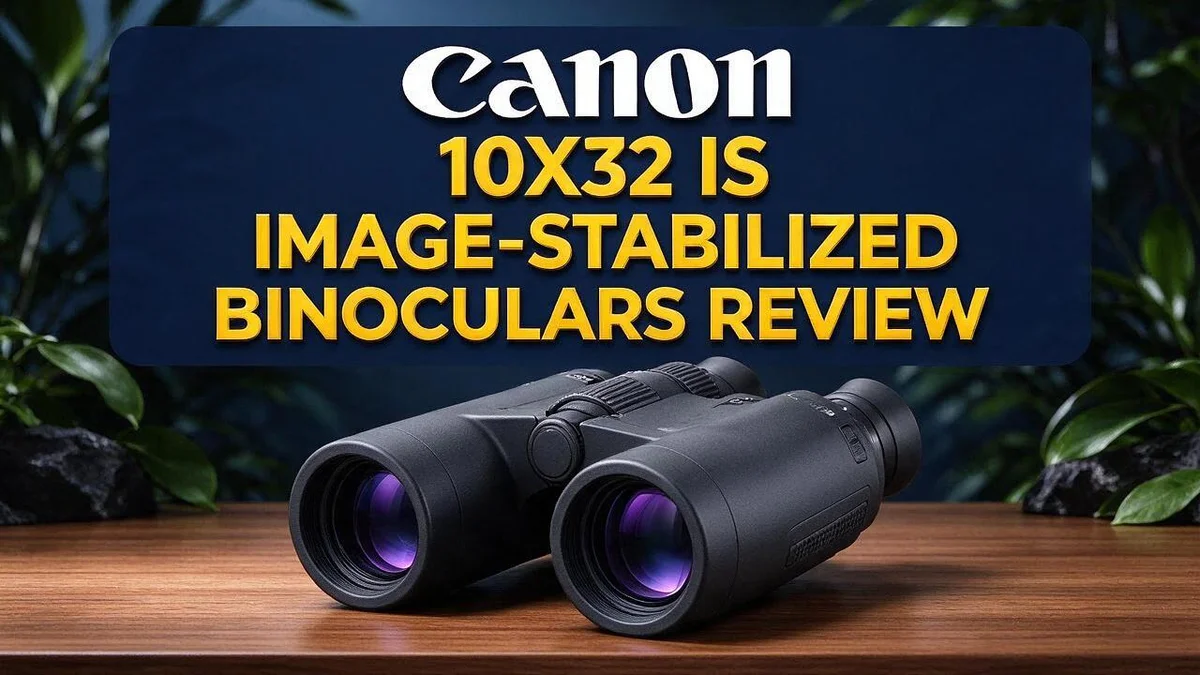
Canon 10×32 IS Image-Stabilized Binoculars Review: Is Stabilization Worth It?
Shaky hands can ruin a great view. You raise your binoculars, and the image jumps around. The Canon 10×32 IS Image Stabilized Binoculars aim to fix that problem.
These binoculars use lens shift stabilization to calm the view at 10x magnification. The 32mm objective lenses gather plenty of light in a compact body.
Reviewers praise the very good image quality and the very effective stabilization. The sealed objectives also help keep out moisture and dust.
One small flaw exists. Chromatic aberration shows up a little more because the stabilizer makes the view so steady.
This review covers what works, what falls short, and how these Canons compare with rivals. Let’s dive in.
In a Nutshell
- Sealed objectives keep dust and moisture away from the front lenses. These binoculars suit wet and dusty outdoor conditions better than many unsealed models.
- One reviewer found field curvature and astigmatism well corrected. That means the view stays sharp across more of the frame.
- Chromatic aberration shows up as slight color fringing. The stabilization makes it more noticeable than it would be on standard binoculars.
- The Canon 10×30 is the closest rival in the lineup. The full review compares the two side by side.
- Bigger rivals include the Vortex 10×50 Razor UHD, the Kowa 10.5×44 Genesis XD44, and the Pentax 10×50 Z Series ZD ED. Each offers larger lenses, so the comparison section looks at what you gain and lose.
- The bottom line is simple. These Canons suit anyone who wants steady 10x views in changing weather and can live with a little color fringing.
Optical Quality and Image Sharpness

Last update on 2026-10-31 / Affiliate links / Images from Amazon Product Advertising API Some of the links on this website are affiliate links, which means that at no additional cost to you, I earn a commission if you click through and make a purchase. I only recommend products and services that I believe will add value to my readers. Thank you for your support!
Sharp detail helps you spot a bird in the branches or read a sign far away. The Canon 10×32 IS gives a clear view that holds up well for most daytime use.
Eye position makes a real difference. Place your eyes straight behind the eyecups and keep them still. Small shifts can blur the edges of the view, so steady positioning pays off.
Focusing also shapes sharpness. Set the diopter for your own eyesight first. Then adjust the center focus wheel slowly until a distant object looks crisp. Revisit focus when you switch between near and far targets.
The stabilizer changes how you judge detail. With the image held steady, your eyes can study fine lines and textures for longer. This calm view helps you notice subtle differences that shaky binoculars would hide.
Chromatic aberration becomes easier to notice in strong contrast. Bright sky meeting dark branches may show a faint purple or green edge. Try to watch for this when you test the binoculars in the late afternoon sun.
Low light is another test. The 32mm objective lenses gather a fair amount of light for dusk viewing. Details stay visible longer as the sun drops, though a larger model would gather more light.
A simple test helps you judge sharpness. Pick a sign or roofline with fine lines. Look at the center first, then move your gaze outward. Note any softness or color fringes you see.
Moving subjects offer another check. Follow a flying bird for a few seconds. Notice whether feathers and wing edges stay crisp while you pan. The stabilizer should keep the image steady during smooth movement.
Image Stabilization Performance
Image stabilization does more than help you hold steady. It also affects how long you can comfortably look through the binoculars.
Many people feel eye strain after long sessions. A calm image lets your eyes relax, so you can scan a ridge line for an hour without feeling worn out.
Boat and vehicle viewing is a strong use case. On a rocking deck or a bumpy truck, the view can bounce. The stabilizer keeps the scene calmer so you can track a distant buoy or a soaring hawk.
Walking while you look also tests the system. Movement on a trail often blurs the view. Stabilization helps you spot wildlife as you move, but you should still stop when you can.
Give the stabilizer a moment. After you switch it on, most people find the image settles within a short wait. Pause before you judge detail, so you do not mistake the settling for a flaw.
Battery life deserves a quick check. The stabilizer draws power, so pack spare batteries for long trips. A dead battery leaves you with a standard view, which is useful to know before a hike.
Stabilization also works as a learning tool. Beginners often compare the view with the stabilizer on and off. That quick comparison shows how much the system smooths small movements.
Use it with a steady rhythm. Keep your elbows close to your body and breathe out before you focus. The stabilizer then does its job without extra effort from you.
It also helps during a long day outdoors. You might pick out a bird, then follow it as it flies between branches. The steady view makes that tracking feel natural rather than frustrating.
Keep expectations realistic, though. The stabilizer calms small movements, but it cannot fix a poor stance or a dirty lens.
Build Quality and Weather Resistance
Build quality shows up the moment you pick up the binoculars. The Canon 10×32 IS feels compact and solid in the hand. Its light weight helps during long days in the field.
The body feels stable when you hold it steady. A good grip matters most when you track a moving bird. Your fingers should rest in a natural spot without slipping.
Weather performance is the next question. Wet trips and dusty trails test any pair of glasses.
Plan your gear around the conditions you expect. A light drizzle on a morning walk is very different from a long day on a dusty ridge.
Wet hands can make controls slip. Keep a cloth in your pocket for quick wipes. A small towel in your pack helps during long rain days. Dry your hands before you adjust the focus.
Build quality shows up in daily use. Focus action should feel smooth and steady. Hinges and eyecups should move without wobble. Check these parts during a short test in a shop or on a trusted site.
Weather resistance does not mean the binoculars can handle anything. Avoid dunking them in water or leaving them in a hot car. Gentle care keeps the seals working well for years.
Dry the body after a wet hike. Wipe off salt spray near the coast. Store the binoculars in a cool, dry bag at home.
Good build means less worry on the trail. You can focus on birds, views, and the path ahead.
Top 3 Alternatives
Nikon Monarch 5

Last update on 2026-08-28 / Affiliate links / Images from Amazon Product Advertising API Some of the links on this website are affiliate links, which means that at no additional cost to you, I earn a commission if you click through and make a purchase. I only recommend products and services that I believe will add value to my readers. Thank you for your support!
Want clear views without bulky gear? The Nikon Monarch 5 gives sharp, bright images.
Its roof prisms and multi-coated lenses help you see fine detail in many light conditions. The body is waterproof and fogproof, so it works well on rainy hikes. Many bird watchers also like its smooth focus wheel.
Vortex Diamondback HD

Last update on 2026-10-31 / Affiliate links / Images from Amazon Product Advertising API Some of the links on this website are affiliate links, which means that at no additional cost to you, I earn a commission if you click through and make a purchase. I only recommend products and services that I believe will add value to my readers. Thank you for your support!
The Vortex Diamondback HD is a strong choice for everyday use. Its HD glass delivers crisp edges and natural color.
Vortex also backs this model with a solid warranty. The binoculars feel comfortable in your hands and fit easily in a bag. Many people pick them for sports, travel, and wildlife trips.
Celestron Nature DX


Last update on 2026-08-27 / Affiliate links / Images from Amazon Product Advertising API Some of the links on this website are affiliate links, which means that at no additional cost to you, I earn a commission if you click through and make a purchase. I only recommend products and services that I believe will add value to my readers. Thank you for your support!
The Celestron Nature DX suits people who love nature. It comes in larger sizes, including a 10×50 option that gathers more light.
Its lenses are fully multi-coated for bright, clear views. The body is waterproof and nitrogen filled, so it handles moisture well. Beginners find it easy to use right away. It is a good pick for backyard birding and evening stargazing.
Chromatic Aberration and Optical Limitations
Chromatic aberration is a common optical limit in binoculars. It happens when the lens bends different colors of light by slightly different amounts. As a result, the colors do not land on the same point.
Color fringes are the main sign. You may see a faint purple or green edge around bright objects. These fringes appear most often where a dark area meets a bright one.
The Canon 10×32 IS shows some chromatic aberration. The research notes that it reduces image quality somewhat. Many people will notice it only when they look for it.
Why does this matter more here? The image stabilization keeps the view steady. Your eyes can study the edges for longer, so the fringes become easier to spot.
Sealed objectives protect the optics from dust and moisture, but they do not correct color errors.
Field curvature and astigmatism look well corrected, according to one reviewer. That means the edges of the view often stay sharp. Good edge control helps the image feel more natural.
The 32mm objectives are slightly larger than the 30mm models in the Canon lineup. Larger lenses can gather more light, which helps in dim conditions. Still, size alone does not solve color problems.
How can you test it? Point the binoculars at a tree branch against a bright sky. Look for colored halos around the twigs. Small traces at the outer edge are normal.
Keep your expectations realistic. Chromatic aberration is the main optical limit here. Most viewers still find the image useful for wildlife, hiking, and sports.
Handling, Size and Ease of Use
Size matters more than most people expect. The Canon 10×32 IS has a compact body that fits easily in a daypack. You can carry it all day without feeling weighed down.
Your hands decide how comfortable the binoculars feel. The barrels sit in a natural position, so your fingers rest where they should. Most adults can hold them with one hand for short periods.
The center hinge adjusts for different face widths. Open or close the barrels until both circles of light merge into one view. Set this once, then note the setting for next time.
Controls sit where your thumbs and fingers expect them. The stabilizer control is easy to reach by feel. You can switch it on before you raise the glasses to your eyes.
Focus takes little effort. Turn the central knob until the view looks sharp. Then use the right eyepiece diopter setting to adjust the view for your other eye.
A neck strap keeps the binoculars close when you need both hands. Attach it to the strap lugs before your trip so you can pull the glasses up quickly. Keep the lens caps on a cord or in a pocket, because they tend to get lost.
Practice the setup at home first. Adjust the hinge, diopter, and focus while you sit in a chair. This saves time when a bird flies past or a new view opens up.
Check the fit before you head out. Look at a distant sign and make sure the edges of the view stay round and clear. A quick check now prevents frustration later. Your eyes will thank you for the small effort.
Best Uses: Birding, Travel and Astronomy
Birding is where this model shines most. Birds rarely hold still, but a perched songbird or wading heron often does. The stabilizer keeps that small target steady. You can study plumage details without bracing your elbows on a rail.
Travel is another strong fit. You can carry these binoculars on a day hike, a boat ride, or a city tour.
They help you read signs on distant towers. They also show wildlife across a lake. Pack them in a daypack and they still feel light.
Astronomy works, but expect limits. At 10x, the view shows the Moon in sharp detail. Star clusters like the Pleiades fill the field with bright points. Faint galaxies stay out of reach, so use these for big, bright targets.
Tips for night viewing. Let your eyes adjust for about twenty minutes. Lean against a wall or sit in a reclining chair. The stabilizer helps you hold steady on a star cluster.
Stargazing from a balcony works too. You do not need a dark field to enjoy the Moon. City light still lets you see the brightest star patterns.
Daylight scenes look bright and clear. Sunny trails and open fields suit this design well. The view stays calm while you scan a meadow for movement. Fast action like flying birds still takes practice.
Choose these if you want one pair for many tasks. Birders, hikers, and casual stargazers gain the most. They also make a helpful gift for a new nature fan. Those who need deep sky views should look at larger models.
Pros and Cons
Pros
- Image quality is very good across the whole view.
- The stabilizer smooths out small hand tremors well.
- Shaky hands get far less blur on distant subjects.
- The view stays crisp when you scan across a scene.
- It suits people who want a sharp view with less effort.
Cons
- The stabilizer needs batteries, so pack spares for long trips.
- Some users need a few minutes to get used to the stabilized view.
- It is not the best choice if you want the smallest pair to carry.
Who Should Buy It
Outdoor lovers who explore damp or dusty places should take a close look. The sealed objectives help keep moisture and grit away from the glass. Coastal walks, rainy forest trails, and dusty safari drives all suit this design.
Boat owners and road trip fans gain a clear benefit too. The stabilizer keeps the view steady when the ground or deck moves. Fewer blurry moments mean more time enjoying the scene.
Some older adults notice hand tremors after long hours of watching. This model can offer real comfort for people with mild shakes. Anyone with a medical condition should still speak with a doctor first.
Picky viewers who care most about crisp detail will feel at home. Reviews rate the image quality as very good. Still, chromatic aberration shows more clearly with stabilization on, so color fringes may bother some people.
Shoppers can compare this model with the Canon 10×30 before they decide. That side by side check shows which model suits your eyes. Smart buyers also read recent reviews for the latest feedback.
Bird photographers who look through the glass before they shoot may enjoy the steady view too. A calm image helps them spot small details and track subjects. Such viewers can scan a scene without losing focus on the target.
Relaxed viewers who sit on a porch can also enjoy this model. Stabilization matters less when the body stays still, yet the sealed build still adds protection. It suits anyone who wants one pair for many outdoor hobbies.
In short, this pair suits people who value steady, sharp views in tough outdoor settings. Read the cons, compare the alternatives, and choose the setup that fits your habits.
Final Verdict
The Canon 10×32 IS earns my strong recommendation. It gives you a very good image and a very effective stabilizer in one body.
Optical quality is the main reason to buy. One reviewer found that field curvature and astigmatism are well corrected. That means the view stays clean toward the edges, and details look natural.
Chromatic aberration is the one real flaw. It softens the image a little. The stabilizer makes it easier to see, because the steady view gives your eye time to catch color fringes on bright edges.
The sealed objectives add real value. Dust and moisture have a harder time reaching the inner glass. That gives you extra confidence on rough days outdoors.
Competitors give you plenty of choices. The Canon 10×30 is the closest match. The 12×36 IS and 18×50 IS bring more reach, but they ask for more weight in your hands.
Models like the Vortex 10×50 Razor UHD, Kowa 10.5×44 Genesis XD44, and Pentax 10×50 Z Series ZD ED offer large, bright glass. None of them includes stabilization. That feature sets Canon apart.
My final score is simple. The image is sharp, the steadiness is impressive, and the build handles tough conditions. The minor color fringing is a small trade.
Pick this pair if you want clear, calm views without fuss. Skip it only if you need the lightest model possible or a fully color-free image.
For most buyers, the Canon 10×32 IS is a smart, confident choice.
Frequently Asked Questions
What makes the 10×32 IS different from the regular 10×30?
The 10×32 IS uses 32mm objective lenses, while the standard 10×30 uses 30mm lenses. The extra lens width lets in a little more light. The IS model also adds image stabilization, which the regular 10×30 does not have.
Can I use these binoculars in dim light?
They handle dim scenes better than many small pairs. The 32mm lenses help at dusk. For serious night viewing, a larger model with bigger lenses will show more detail.
Are these binoculars good for long nature walks?
Yes, they suit everyday outdoor use. The sealed objectives help keep moisture and dust out on muddy trails or dusty paths. Keep the case handy so the lenses stay clean.
Which option is better for stargazing?
Choose a larger pair if stargazing is your main goal. Models like the Vortex 10×50 Razor UHD have bigger lenses that gather more light. They weigh more, but they reveal more in the night sky.

Hello, I’m Emily Price, the founder of Birds Affection. As a passionate bird enthusiast and spiritual seeker, I’ve always been fascinated by the symbolic meanings and mystical connections between birds and our lives. On this website, I share my knowledge and insights on the spiritual significance of various bird species, exploring their roles as messengers, guides, and teachers. Through my writing, I aim to inspire and educate others on the profound wisdom and beauty that birds bring to our world. Join me on this journey as we delve into the enchanting realm of bird symbolism and discover the hidden meanings behind these magnificent creatures.