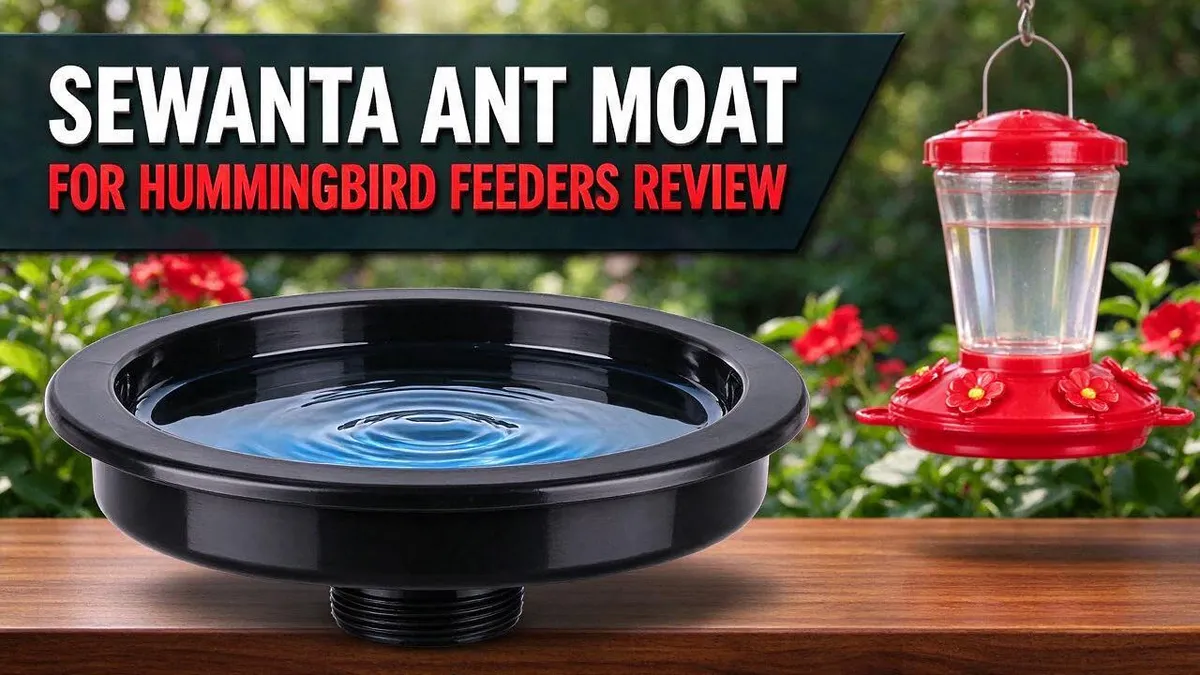
Sewanta Ant Moat for Hummingbird Feeders Review 2026
Ants love sweet nectar. Your hummingbird feeder is their favorite target. One tiny trail can ruin a whole feeder in a day.
The Sewanta Ant Moat offers a simple fix. This 4.2 oz metal cup wraps around your feeder hanger and holds water. Ants reach the water and stop. They cannot cross it to reach the nectar.
We looked at the specs and what real users say. The moat uses no chemicals, so your hummingbirds stay safe. It also comes in a red and green finish that looks cheerful in any yard.
In a Nutshell
- Who it suits: Backyard bird fans who want a simple, spray free way to protect nectar will like this moat. It works with any feeder that hangs from a hook or hanger.
- How it works: You fill the cup with water. The water forms a barrier, and ants cannot cross it to reach the feeder. The setup takes only a minute.
- Safe for birds: The moat uses no chemicals, so the nectar stays clean. Hummingbirds never come near an insecticide, and that gives you peace of mind.
- Bonus use: Birds may sip from the water if you keep it fresh. That turns the cup into a small drinking spot for your yard.
- Upkeep matters: You must refill and clean the cup often. Hot days dry the water fast, and an empty moat stops nothing. Dirt and debris can also build a bridge for ants.
- Our take: The Sewanta moat makes a smart first line of defense. Check it every few days, and keep leaves, strings, and branches away from the hanger.
Design and Build Quality

Last update on 2026-10-31 / Affiliate links / Images from Amazon Product Advertising API Some of the links on this website are affiliate links, which means that at no additional cost to you, I earn a commission if you click through and make a purchase. I only recommend products and services that I believe will add value to my readers. Thank you for your support!
The Sewanta Ant Moat feels solid the moment you pick it up. Its metal body weighs about 4.2 oz, which gives it a sturdy feel. That weight also helps it stay steady on a hook.
Makers describe this moat as heavy duty and rustproof. These traits matter because feeders hang outside in rain, sun, and wind. A metal part that resists rust can serve you through many seasons.
The finish comes in red and green. These bright shades look cheerful against leafy branches. They also suit the classic look of most garden feeders.
The compact size measures about 2.3 inches long and 2.3 inches wide. That small footprint takes up very little room on a porch or patio. You can hang it on a crowded hook without fuss.
The hanging design follows a simple order. You hang the moat from a sturdy hook first. Then the feeder hangs from the moat’s own hanger, with the water cup wrapped around it.
Cleaning is also easier with a smooth metal surface. Textured parts can trap grime, but smooth finishes wipe down quickly. A quick rinse keeps the moat looking neat between seasons.
Overall, the build feels practical and straightforward for everyday use. Few parts mean fewer things can go wrong over time. Gardeners who like simple tools will appreciate this approach.
Even so, the metal stays light enough for easy handling. You can move it between feeders without strain.
Its size also keeps it from looking bulky on a hook. Anyone can lift it and reattach it after cleaning in seconds.
How the Water Moat Works
Ants reach nectar by crawling along the hanger. The moat blocks that route with a simple ring of water.
Here is how the setup works, step by step. First, you hang the metal cup from a sturdy branch or bracket. Next, you fill the cup with water. Then you attach the feeder hook to the moat.
Think of the water as a wall that ants do not cross easily. Ants stop at the edge, and the water does most of the work.
The water level matters a lot. A low level lets ants wade across or build a bridge. Keep the cup full so the water stays deep enough.
Placement counts too. Keep leaves, twigs, and nearby railings away from the hanger. Any touching object gives ants a dry path around the water.
Floating debris can cause trouble as well. Dead bugs or bits of leaves can drift onto the surface and form a bridge. Skim the water when you see them.
Wind can disturb the setup. Strong gusts may splash water onto the feeder or spill the cup. A calm, shady spot helps the moat stay steady, and shade slows evaporation.
Build a quick daily check into your routine. Look at the water level, scan for floating debris, and confirm nothing touches the hanger. This short habit keeps the barrier working well.
Ant Protection Effectiveness
Ant protection is the main job of this moat. Real results depend on your yard, your feeder, and how often you check it. Think of it as a strong helper, not a perfect guard.
Ants can be stubborn. Some scouts travel along fences, leaves, and nearby plants. If a leaf or twig touches the hanger, ants may sneak across. Trim branches away from the hook so nothing creates a bridge. Check the hanger each morning for small ant trails.
Ant pressure changes through the year. Warm weather and dry spells bring more ants to the feeder area. Dry weather can push ants toward sugar sources quickly. During these months, you may need to look at the moat more often than usual.
Ant protection also depends on what you feed. Nectar with a strong sugar smell draws ants fast. Keep the mix fresh and clean, and wash the feeder ports whenever you refill. Ants often find spilled nectar on the feeder base first.
If ants still reach the nectar, do not panic. Empty the feeder, rinse it with hot water, and check the moat for debris. Then refill both with fresh supplies. A quick reset often solves the problem.
Compared with other options, this moat stays simple. Some people use ant deterrent products, such as Swat, which appear in older online discussions. Generic ant moats sold online also exist, though their fit may vary. Each option has its own pros and cons.
Expect some ants, but expect fewer. A well kept moat can cut ant visits. Birds still get their nectar, and you avoid harsh chemicals near your feeder. Keep your expectations realistic, and the moat becomes a helpful tool.
Top 3 Alternatives
Perky-Pet Ant Moat

Last update on 2026-08-27 / Affiliate links / Images from Amazon Product Advertising API Some of the links on this website are affiliate links, which means that at no additional cost to you, I earn a commission if you click through and make a purchase. I only recommend products and services that I believe will add value to my readers. Thank you for your support!
Perky-Pet Ant Moat is a simple choice for hummingbird lovers. It hangs above your feeder and holds water that stops ants from climbing down to the nectar. It is easy to set up and fits most standard hooks.
Check the water level each week. Ants can still find a way across if the moat runs dry.
Aspects Ant Moat

Last update on 2026-11-05 / Affiliate links / Images from Amazon Product Advertising API Some of the links on this website are affiliate links, which means that at no additional cost to you, I earn a commission if you click through and make a purchase. I only recommend products and services that I believe will add value to my readers. Thank you for your support!
Aspects Ant Moat offers a clean way to protect your nectar. The moat sits between the feeder and the hanging hook, so ants must cross water to reach the sweet liquid. Many birdwatchers like its sturdy build.
It also helps keep bees and wasps away from the feeding area. Rinse the moat often to prevent algae.
Woodlink Ant Moat

Last update on 2026-11-05 / Affiliate links / Images from Amazon Product Advertising API Some of the links on this website are affiliate links, which means that at no additional cost to you, I earn a commission if you click through and make a purchase. I only recommend products and services that I believe will add value to my readers. Thank you for your support!
Woodlink Ant Moat brings a practical design to your garden. It uses a water reservoir that keeps crawling insects out of the feeding zone. The lid helps reduce dust and debris from falling into the water.
Hummingbirds can still reach the feeder with ease. Clean the moat every few days for the best results.
Installation and Compatibility with Feeders
Compatibility starts with your feeder hanger. Measure the wire or chain before you set up the moat. Most standard nectar feeders with a simple loop or hook fit without trouble.
The moat works best on a single hanging point. Feeders with multiple hangers or pole mounts need extra planning. Check whether the hook above your feeder can hold the weight of the moat plus the feeder.
Think about your feeder shape too. Keep the feeder hanging freely below the cup so it does not touch the sides. A feeder that brushes the cup can give ants a bridge.
Mount the moat at eye level. You can read the water line and clean the cup without a ladder. Easy access also helps when you refill the cup on hot days.
Watch for bridges. Leaves, vines, and nearby branches can give ants a path onto the feeder. Trim growth so it stays at least a foot away from the hook.
Glass and plastic feeders both fit. The metal cup does not care what the feeder is made of. Just make sure the feeder has a sturdy top ring that will not bend.
Sun and shade change the setup. Water in full sun can heat up and evaporate fast. Hang the moat in partial shade when you can, and plan to top it off more often on hot afternoons.
Keep the hanger level. A tilted hanger can spill water from the cup. Check the level after you hang the moat and again after a storm.
Finally, test the setup before you leave it alone. Watch the feeder for a day or two. If ants still get through, look for a gap, a leaf, or a drip of nectar on the hanger.
Cleaning, Refilling and Maintenance
Refilling the cup should become a regular habit. Fresh water keeps the moat working the way it should.
Use clean tap water or filtered water. Keep soap, oil, and sprays away from the cup, since residue can end up in the water birds drink.
Never add sugar or dye to the moat water. Sugar attracts ants and other pests, which defeats the purpose.
Make fresh nectar in a separate batch. Mix one part plain white sugar with four parts water, and stir until the liquid runs clear.
Store leftover nectar in the fridge for up to one week. Throw out any nectar that looks cloudy or smells sour.
Scrub the cup every week with a small brush. Bottle brushes reach the corners where slime and mold like to hide.
Clean the feeder ports too, since they are the entry point ants love most. Use a thin brush to clear dried nectar from the openings.
Check the metal for rust spots or sharp edges. Rustproof metal still benefits from a look after rough weather or heavy bumps.
Give the hanger a gentle tug each month. This confirms that the hook still holds firm.
Keep a small log near the feeder. Note the date you refill the cup and the date you change the nectar. Patterns show up fast when you write them down.
Watch how the birds use the feeder. A sudden drop in visitors can signal spoiled nectar, so refresh it right away.
Winter care is simple. Take the moat down, empty it, and store it indoors until spring.
Let the cup dry fully before storing it. Damp metal invites dust, grime, and musty odors.
Mark your calendar for the big clean. A set schedule makes the job easy to remember.
Safety for Birds and Chemical-Free Benefits
Hummingbirds visit feeders many times each day. Their health depends on clean food and clean water. That is why safety matters so much.
Many ant killers and sprays contain insecticides. Birds can pick up these chemicals from feeder parts or nearby plants. The Sewanta moat avoids this risk. It uses only water to block ants.
Water is the only barrier here. Ants cannot cross the water line, so no poison drips into the nectar. Nothing sprayed sits near the feeder either.
Metal tends to hold up well outdoors. A rustproof cup is less likely to break into small pieces that could fall into the feeder.
Some owners let the moat double as a small drinking spot for birds. This works only when the water stays clean and plain. Birds should drink plain water, never water mixed with anything else.
Pets and children also share the yard. A chemical free setup means less worry about accidental contact. Your garden stays safer for everyone who visits.
The moat stops ants, but it cannot block every visitor. Wasps and bees may still come to the nectar. Watch the feeder during warm months and act fast if a pest gathers.
Chemical free does not mean risk free. Still, skipping poisons removes one major danger. Birds gain a cleaner space to feed, and you gain peace of mind.
Wildlife lovers often choose simple tools first. Water barriers fit that goal well. They work quietly without harming the yard’s other residents.
Think about the plants nearby too. Sprays used on roses or shrubs can drift toward feeders. A chemical free moat keeps that drift out of your nectar, so birds sip only what you prepared.
Pros and Cons
Pros
- Simple design with no batteries or moving parts.
- The bright red and green finish adds color to the yard.
- Its small size keeps the feeder area looking tidy.
- You can fill it and check the water level at a glance.
- Sturdy build suits daily use outdoors.
Cons
- Ants can still reach the feeder by another route.
- One user reported ants filling the feeder tubes.
- The small cup can run dry between checks.
- Regular upkeep can feel like a chore for busy owners.
Who Should Buy It
Who should buy it
This ant moat suits people who hang one or two feeders near a porch or patio. A small setup means less upkeep and a quick check each morning.
Beginners often feel lost when ants show up. This simple tool gives a clear first step without learning complex products.
Apartment balcony owners may also like it. Balcony space is limited, and a compact hanger fits well without taking up much room.
Renters who cannot use strong products outdoors often prefer this option. It works on a simple hook without digging or permanent mounting.
Gardeners who prefer a natural approach will appreciate this option. It keeps pest control away from flowers and soil nearby.
Bird watchers who sit near a window get a clear view of visitors. Fewer ants mean hummingbirds spend more time at the nectar.
Summer ant season brings the biggest problems. Buyers who face swarms in warm months may find the moat helpful right away.
Shoppers who want to test ant control first can start small. A single moat shows whether ants give up before you buy more gear.
On the other hand, this product may not fit everyone. People with large ant colonies or heavy trails may need a second layer of defense.
Hands off shoppers should think twice before buying. Even a simple moat asks for attention each week.
In short, the moat works best for small, active feeding areas. Match your setup to your yard and your schedule, and think about your routine before you order.
Final Verdict
The Sewanta Ant Moat is a practical answer to a common feeder problem. Most backyard bird fans will find it a smart addition.
The moat does its main job well. It places a water barrier between ants and nectar. That one step keeps the sugar water cleaner for longer.
Ants are clever, though. A moat cannot fix every entry point. Treat it as one layer of defense, not a complete shield.
Pair it with a few good habits. Hang the feeder away from branches, fences, and walls. Ants love a shortcut, so give them none.
Wipe sticky drips off the feeder ports after each refill. Ants follow sugar trails. A clean feeder gives them fewer reasons to explore.
Keep the water level full. A dry cup lets ants walk straight across. A quick check during your morning routine solves this.
Other deterrents exist, such as Swat. Generic moats from craft sellers also appear online. Each option has its own tradeoffs, but this moat keeps the process simple and clear.
Think of it as a helpful tool that rewards steady attention. You give it a little care, and it protects your nectar in return.
Our verdict: The Sewanta Ant Moat earns a friendly thumbs up. It works best for owners who enjoy a quick daily check and want a natural way to guard their hummingbird feeder.
If you accept the small upkeep, you will likely enjoy fewer ants and more happy hummingbirds. That outcome makes this moat a worthy choice for your yard.
Frequently Asked Questions
Does the moat fit every feeder?
The moat hangs from the feeder hook, so it works best with lightweight nectar feeders. Measure your hook before you buy. Heavy feeders can tip the cup and spill the water.
Which ants does it stop best?
Most common nectar-seeking ants struggle to cross water. Some ant types are more persistent than others. Watch your feeder for a day to see which ants show up. This helps you judge how well the moat will work in your yard.
Can bees and wasps still reach the nectar?
The moat only blocks crawling insects. Flying insects can still reach the nectar from above. Keep an eye on the feeder during busy afternoons, since bees often arrive when the sugar water is fresh.
Where should I hang the moat for best results?
Hang the feeder where the cup stays level. A tilted cup lets water spill, and ants can cross the gap. Keep the hook away from leaves or branches that touch the ground. Leaves act as natural bridges for ants.
Does heavy rain affect the moat?
Heavy rain can overfill the cup and dilute the water barrier. Check the water level after every storm. Empty any extra water so the moat stays effective.

Hello, I’m Emily Price, the founder of Birds Affection. As a passionate bird enthusiast and spiritual seeker, I’ve always been fascinated by the symbolic meanings and mystical connections between birds and our lives. On this website, I share my knowledge and insights on the spiritual significance of various bird species, exploring their roles as messengers, guides, and teachers. Through my writing, I aim to inspire and educate others on the profound wisdom and beauty that birds bring to our world. Join me on this journey as we delve into the enchanting realm of bird symbolism and discover the hidden meanings behind these magnificent creatures.