Bushnell Engage DX 10×42 Review: Buyer’s Guide
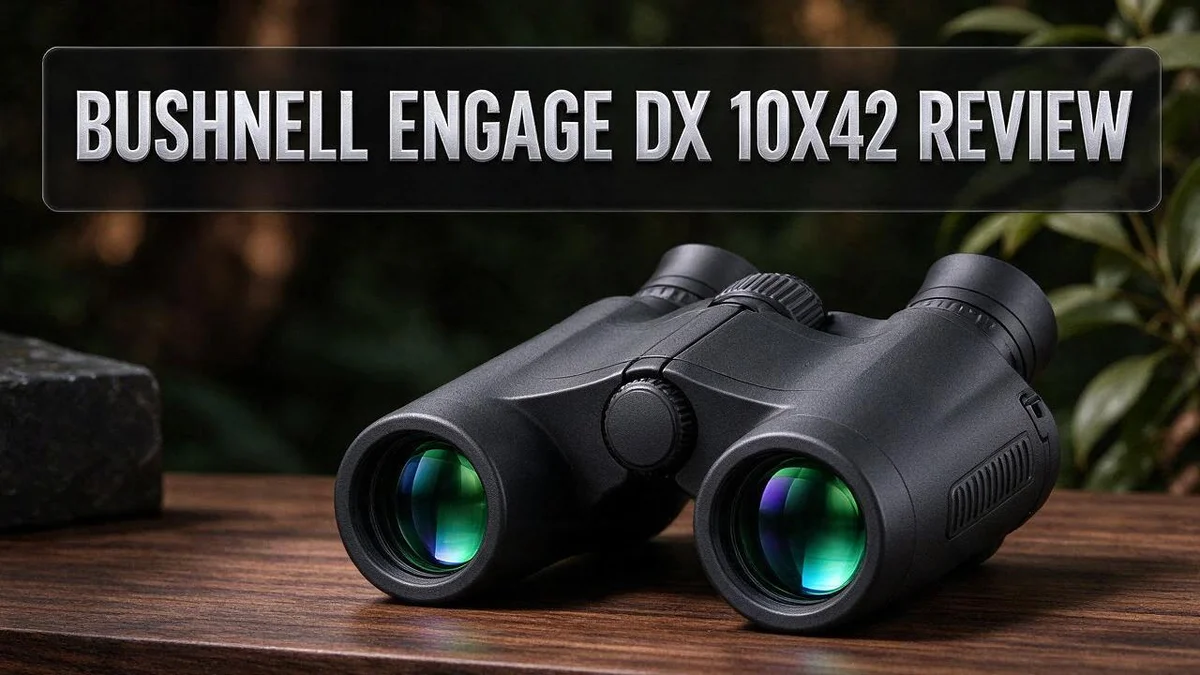
Do you want binoculars that feel solid and show a bright, clear view? The Bushnell Engage DX 10×42 aims to deliver exactly that.
This model uses roof prism optics with 10x magnification and 42mm objective lenses. You get a close view and strong light gathering for birding, hunting, and hiking.
Fully multicoated lenses help reduce glare. The glass also repels water, oil, dust, and debris. A locking diopter keeps your focus setting in place.
In a Nutshell
- Best for: Hikers, birders, and hunters who want a sturdy pair of binoculars for daily outdoor use.
- Image quality: The Engage DX delivers bright, clear images. Users get a clean view in many outdoor settings.
- Weather protection: The glass repels water, oil, dust, and debris. That coating keeps the lenses easier to clean in the field.
- Handling: The frame feels firm in your hands. A locking diopter holds your focus setting, so it won’t shift while you glass.
- Rating status: The DX has no user ratings yet. I found no clear drawbacks in the listings, but long term feedback is still missing.
- Alternatives: The Bushnell Engage EDX 10×42 adds an EXO barrier coating. The Vortex Diamondback HD is another strong option to compare.
Bottom line: The DX looks like a solid, practical pick for anyone who values a durable build and a sharp view.
Optical Performance and Image Clarity

Last update on 2026-11-24 / Affiliate links / Images from Amazon Product Advertising API Some of the links on this website are affiliate links, which means that at no additional cost to you, I earn a commission if you click through and make a purchase. I only recommend products and services that I believe will add value to my readers. Thank you for your support!
Optical performance decides whether binoculars earn a spot in your pack. This section looks at how the Bushnell Engage DX 10×42 handles light, detail, and focus.
Start with the exit pupil. Divide the 42mm objective lens by the 10x magnification and you get about 4.2mm.
That number matters at dawn and dusk. A larger exit pupil lets more light reach your eyes, so low light scenes look easier to read.
Eye relief matters if you wear glasses. Check the listed eye relief before you buy so you can see the full view without squinting.
The locking diopter adjusts one eyepiece to match your vision. Set it once for your weaker eye so both images line up with less strain.
Higher magnification also shows more movement. At 10x, shaky hands blur the view faster than lower power does, so brace against a tree or rest your elbows.
Lens coatings on each surface cut light loss. Less lost light supports true colors and crisp edges on branches, feathers, and distant ridgelines.
Test the view in person before you head out. Find a tree line or building edge, then pan slowly. Watch for color fringes or soft blur near the edges of the view.
Bring the binoculars into dim light too. Compare how bark texture and shadows look as the sun drops. This shows how the optics handle contrast when the light fades.
Overall, the DX offers a clear, bright picture for most outdoor needs. Pair it with your own eyesight test and you will know if it fits your style.
Lens Coatings and Weather Protection
Lens coatings do more than shape the view. They also help the glass handle rough trips. Think about a day on a trail with rain, dust, and dirty hands.
The DX glass lets beaded water slide off instead of smearing. This helps when you need a quick look at a bird or trail sign.
Still, repellent glass does not mean you can skip care. Wipe the lenses with a soft microfiber cloth after each outing. Use a small brush first to lift grit, so it does not scratch the surface.
Never rub dry grit across the glass. Dust acts like sandpaper on coatings and can wear them down over time.
Lens caps are easy to lose. Attach them to the strap or keep them in a pocket with a cloth. A loose cap can collect grit in your pack. Store the binoculars with the caps closed to keep the glass clean between trips.
Coatings also matter in fading light. When the sun drops, you want every bit of light reaching your eyes. Clean lenses keep that light flowing, so test the view at dusk before a big hunt or birding walk.
Check the lenses before every hike or hunt. Look for smudges, fingerprints, or dust films. A quick wipe takes only a few seconds, yet it keeps the image crisp from the first step to the last.
Simple habits protect the coatings for years. A clean lens, a sealed case, and a quick check after each trip keep the DX ready for the next adventure.
Build Quality and Grip
A pair of binoculars takes a beating in the field. Build quality shows how well the body handles bumps, rain, and daily use. Grip decides how steady your view stays.
Hold the DX in your hands before you head out. Check whether your fingers rest naturally on the barrel. A good fit cuts down on shake when you scan a ridge line.
Pay attention to edges and corners too. Rounded edges usually feel kinder in the palm. Sharp ridges can cause soreness after a long day of glassing.
Weight matters more than most buyers expect. Carry the binoculars around your neck for an hour. If the pull feels heavy, the view may wobble on longer glassing sessions.
Look at the focus wheel and the hinge next. Both should turn smoothly with no gritty feel. Smooth movement signals solid assembly and helps you find focus fast in low light.
Try the eyecups too. Twist them up and down. They should lock in place and hold their setting when you lift the binoculars to your face.
Sweaty hands and wet surfaces make grip harder. Test the feel with gloves on if you hunt in cold weather. Thick gloves can change how the body sits in your palms.
A neck strap adds security. Choose one with wide padding so the weight spreads across your shoulders. Good accessories help protect the binoculars during long days outside.
In short, the DX suits people who want a steady hold and a body that handles daily trips. Test it in person before you commit.
Top 3 Alternatives
Looking for a different pair of binoculars? These three options deliver strong views and solid build quality for outdoor use.
Vortex Diamondback HD

Last update on 2026-11-24 / Affiliate links / Images from Amazon Product Advertising API Some of the links on this website are affiliate links, which means that at no additional cost to you, I earn a commission if you click through and make a purchase. I only recommend products and services that I believe will add value to my readers. Thank you for your support!
The Vortex Diamondback HD is a great pick for birding and hiking. Its fully multi-coated lenses keep images bright and clear. You can spot details even at dusk.
The body is waterproof and fogproof. Nitrogen filling stops internal fogging in wet or cold weather. Many buyers also love the comfortable grip for long viewing sessions.
Nikon Monarch 5

Last update on 2026-08-28 / Affiliate links / Images from Amazon Product Advertising API Some of the links on this website are affiliate links, which means that at no additional cost to you, I earn a commission if you click through and make a purchase. I only recommend products and services that I believe will add value to my readers. Thank you for your support!
The Nikon Monarch 5 offers sharp views across the whole image. It uses ED glass to reduce color fringing. Colors look natural and rich.
This model handles rain and fog with ease. The smooth focus wheel makes quick adjustments simple. Wildlife watchers often choose it for its clear, steady image.
Celestron Nature DX


Last update on 2026-08-27 / Affiliate links / Images from Amazon Product Advertising API Some of the links on this website are affiliate links, which means that at no additional cost to you, I earn a commission if you click through and make a purchase. I only recommend products and services that I believe will add value to my readers. Thank you for your support!
The Celestron Nature DX is a lightweight option for outdoor fans. It includes ED glass and a roof prism design. Views stay bright and crisp from edge to edge.
It is waterproof and fogproof, so it works well in wet weather. The body feels light around the neck during long hikes. It is a smart choice for new birdwatchers who want good value.
Focus, Diopter and Ease of Use
Focus is where the DX earns its place in your daily routine. A smooth focus wheel helps you lock onto a bird or a deer in seconds. Quick focus matters most when wildlife moves fast.
Set the diopter first for the best results. Close your right eye and look through the left eyepiece. Turn the center wheel until the image looks sharp. Then lock the diopter ring so it stays put.
Next, check focus at different distances. Pick a tree close by, then a ridge far away. The wheel should move without jumping or sticking. Smooth travel helps you track shifting targets. Pay attention to how the wheel responds after a long pause, too.
Feel matters as much as the movement itself. Turn the wheel with light pressure and notice how much effort it takes. Stiff wheels slow you down when you wear thick gloves.
Damp fingers can slide on the wheel. Test it on a rainy day if you can.
Glasses wearers should test focus with their glasses on. Your eye position changes the view, so a quick check at home helps. Look at the edges of the frame, too. Blur there often means the setup needs a small adjustment.
Think about how you will use the focus in the field. Hunters often refocus after a sudden movement. Hikers usually scan a wide view and pause on landmarks. Both groups benefit from a wheel that responds without delay.
Ease of use also comes from habit. Practice the focus steps at home before a trip so you never fumble in the dark. Muscle memory makes the DX feel natural in the field.
Magnification, Field Use and Portability
Ten power magnification strikes a useful balance. It brings distant trees, birds, and trail markers closer. Most people find this level easy to handle for long stretches.
The 42mm objective lenses gather plenty of light. That wide opening creates an exit pupil of about 4.2mm. Your eyes receive a bright image during daytime hikes.
Your favorite spots shape how you use them. Open meadows reward a slow sweep across the scene. Dense woods call for quick scanning, so you need a view that finds movement fast.
Ten power stays steady in your hands. Most adults can hold this magnification without a tripod on typical trips. Tuck your elbows close to your ribs for a calmer view.
Size decides how often you carry them. The body usually slides into a daypack with room to spare. Many people leave bulky optics at home, so a smaller pair gets used more often.
Storage keeps the view ready. Use a padded case or a top pocket to avoid bumps. Quick access helps you catch a bird before it flies away.
Portability also means quick setup. Pull them from the pack and start looking within seconds. This simple routine saves time on busy trails and at crowded events.
Value Compared to the Engage EDX
Many shoppers compare the Bushnell Engage DX 10×42 with the Engage EDX 10×42. Both models share the same 10×42 size and roof prism design. That makes the differences easy to spot.
The biggest difference is the lens coating. The EDX uses an EXO barrier coating. The DX glass is described as glare reducing and repellent to water, oil, dust, and debris, but it does not mention that special coating.
An EXO barrier coating can help lenses stay clean on wet or muddy trips. Wiping off rain, dirt, or fingerprints may take less effort.
According to listings, the DX offers bright, clear images and a durable frame with a firm grip. Those strengths make it a solid pick on its own.
User feedback is another gap. The DX has no user ratings yet. New buyers have fewer reviews to guide them, so hands-on testing matters more.
Choose the DX if you want a solid everyday pair without the extra coating. It suits people who mostly watch birds, trails, and sports in dry or mild conditions.
Choose the EDX if you often head out in rain, dust, or mud. The EXO coating is the main reason to look at that model.
Check the model name on the box before you buy. Similar names can confuse shoppers, so confirm you have the 10×42 version with the right features.
If you plan to use them for years in harsh weather, the coating may matter more over time. Long term needs should guide your decision.
Either way, test both in person when possible. Check the focus, grip, and clarity before you decide which features matter most to you.
Pros and Cons
Pros
- Fully multicoated lenses let more light reach your eyes.
- Glare reducing glass cuts shine off water and snow.
- The locking diopter keeps your focus setting in place.
- A magnesium alloy frame gives the body a sturdy base.
- Water and oil repellent glass helps shed light splashes.
Cons
- No DX-specific drawbacks show up in current listings.
- Listings say little about how the frame handles hard drops.
- Durability claims come only from product listings, not independent tests.
Who Should Buy It
This pair fits people who want one set for many outings. Weekend walkers, casual birders, and parents at local parks all find it useful.
First time buyers often feel lost in technical jargon. This model keeps things simple. You lift the binoculars, adjust the focus, and start looking.
Sports fans can also gain from it. Lakeside games and open stadium seats call for quick scans across a crowd. A 10x view helps you follow the action.
Families who share gear will appreciate the simple design. Several people can pass one pair around a campsite. The firm grip helps younger users hold steady.
Gift buyers may also find it a good pick. A pair for a nature loving friend or a curious teen gives them a strong start.
Boat riders and ferry passengers can enjoy it too. Shore wildlife often appears for only a moment. A ready pair lets you catch it fast.
Road trip travelers gain from it too. A quick scan from a scenic overlook feels easy and fun. Keep it within reach in the front seat.
Beginners who plan to upgrade later can use it as a training pair. It teaches the basics of scanning, focusing, and holding steady. Then they can compare other models with real experience.
Buyers who need extreme zoom should look elsewhere. Ten power sits in the middle range, not at the top.
Choose it if you want a dependable everyday pair. It suits buyers who want simple use and steady views over extra features. Start with a short trip to learn your style. Most first time buyers feel ready after a few outings.
Final Verdict
The Bushnell Engage DX 10×42 earns a confident recommendation from us. It gives most buyers what they want from a 10×42 pair. You get a bright view, a firm body, and simple controls.
Our verdict: a dependable all rounder. It handles birds, trails, games, and travel without fuss. You pick it up, set the focus, and enjoy the scene.
Its biggest strength is ease of use. The 10x power brings distant subjects close. The 42mm lenses collect plenty of light for early mornings and late evenings.
One honest caution remains. Independent reviews are still missing for this model. You must trust the listing details for now. We see that as a small unknown, not a red flag.
Here is a quick checklist before you decide:
- Do you want a pair for dry or mild weather outings?
- Do you value a steady grip over fancy extras?
- Do you prefer a simple setup you can trust?
If you answered yes, the DX fits you well.
Test the fit if you can. Hold the binoculars up and check how they feel in your hands. Turn the focus wheel and look for smooth movement. Make sure the view feels comfortable for your eyes.
Think of the DX as a strong starting point. It lets you enjoy nature, sports, and travel right away. It also leaves room to grow your skills before you chase a more specialized model.
The bottom line: The Bushnell Engage DX 10×42 is a smart, friendly choice for everyday observers. It keeps things clear and comfortable. We would happily pack it for our next outing, and we think you will enjoy it too.
Frequently Asked Questions
What does 10×42 mean on these binoculars?
The 10 means objects look ten times closer. The 42 refers to the lens width in millimeters. Wider lenses gather more light, which helps you see clearly at dawn or dusk.
Does the Bushnell Engage DX have user ratings yet?
Not yet. Current listings show “Not Yet Rated.” Check the seller page for new feedback before you buy.
What is the main difference between the DX and the EDX?
The EDX adds an EXO barrier coating. This coating helps the lens shed dirt and moisture. The DX skips that extra layer, so it suits people who want core optics without the added coating.
Can I compare the DX with the Vortex Diamondback HD?
Yes, the Vortex Diamondback HD is a popular option to check. Compare the feel, weight, and focus action in person. Your own hands will tell you more than a spec sheet can.

Hello, I’m Emily Price, the founder of Birds Affection. As a passionate bird enthusiast and spiritual seeker, I’ve always been fascinated by the symbolic meanings and mystical connections between birds and our lives. On this website, I share my knowledge and insights on the spiritual significance of various bird species, exploring their roles as messengers, guides, and teachers. Through my writing, I aim to inspire and educate others on the profound wisdom and beauty that birds bring to our world. Join me on this journey as we delve into the enchanting realm of bird symbolism and discover the hidden meanings behind these magnificent creatures.