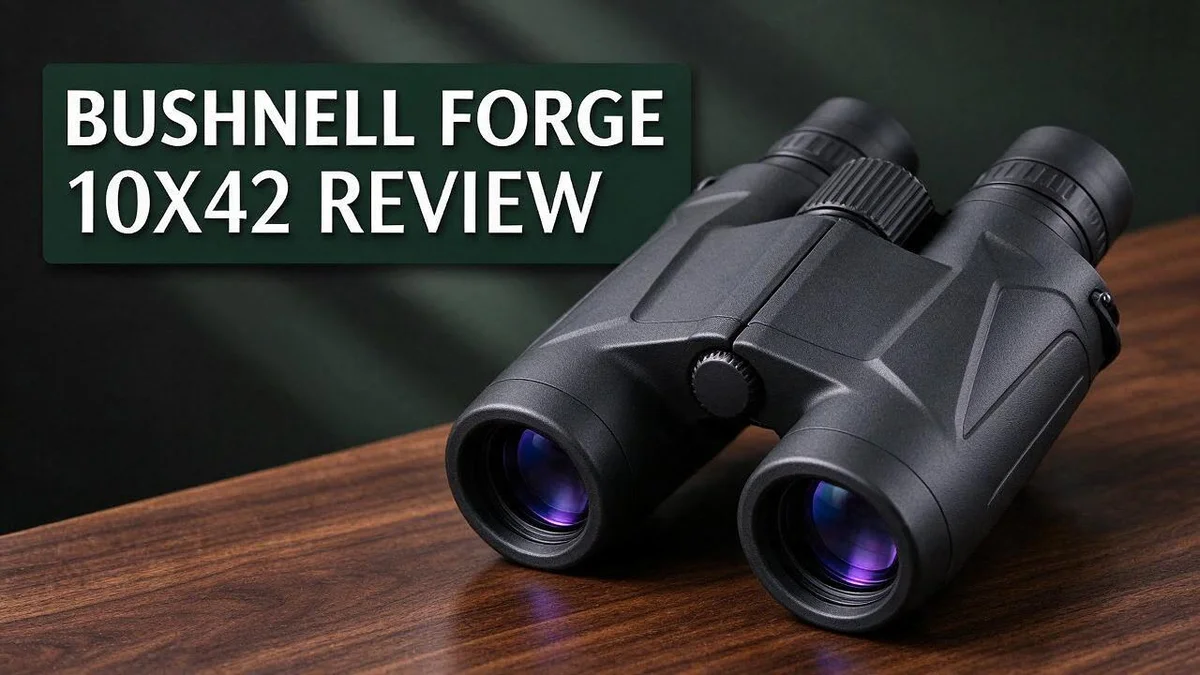
Bushnell Forge 10×42 Review: Worth the Splurge?
Do you want sharp, bright views on your next hike or birding trip? The Bushnell Forge 10×42 aims to deliver exactly that.
This binocular uses ED Prime glass and PC3 phase coating to boost clarity and color. Dielectric coated BaK4 prisms add more brightness to every view.
Ultrawide Band coatings reduce glare. The EXO Barrier coating helps stop external fogging, and nitrogen purging removes moisture from inside the barrels.
In a Nutshell
- Best for: Hikers, birders, and wildlife watchers who want a 10×42 binocular with strong magnification and a bright view.
- Brighter, sharper edges: Dielectric coated BaK4 prisms pass more light through the optics. This helps contrast and detail in dim light at dawn and dusk.
- Fog protection inside and out: The EXO Barrier coating stops fogging on the outer lenses. Nitrogen purging removes moisture inside the barrels.
- Weather ready, with one caveat: One listing calls it waterproof and lightweight. That claim is not confirmed for the Forge itself, so check the official specs before you buy.
- A fair comparison point: The Bushnell Pacifica 10×42 is a listed alternative. Compare the two if you want a similar size and magnification from the same brand.
- Bottom line: The Forge suits outdoor users who want clear views and dependable lens protection. I found no stated drawbacks in the research, but I still recommend testing the fit and weight in your hands.
Optical Quality and Glass

Last update on 2026-10-28 / Affiliate links / Images from Amazon Product Advertising API Some of the links on this website are affiliate links, which means that at no additional cost to you, I earn a commission if you click through and make a purchase. I only recommend products and services that I believe will add value to my readers. Thank you for your support!
Optical quality decides how much you enjoy a long day outside. When you scan a ridge or track a bird, you want the image to stay steady and easy to read. The Forge aims to deliver that experience in the field.
Glass quality shapes what you see at the edges of the view. Many binoculars show soft or wobbly borders, which can distract you.
The Forge is built to keep detail consistent from the center to the sides. This matters most when you pan across open country or follow birds in flight.
Think about how your eyes feel after an hour of use. Clear optics reduce the strain that comes from squinting at blurry images. Less strain means you can stay out longer and spot more wildlife.
Dim light tests any binocular. Dawn walks and dusk hikes often bring shadowy scenes. A clear image helps you pick out a deer at the tree line or a small bird hidden in the brush.
Here is a gap in the research. The available facts do not include lab test results for resolution or field of view. Check those numbers in trusted reviews before you decide.
Try the Forge in a shop if you can. Look at a distant sign or tree line. Check the center and the edges. Notice whether colors look natural to your eyes. Your own test will tell you more than any spec sheet.
Good optics pay off over time. Sharp views make each trip more rewarding. You spend less effort guessing what you see and more time enjoying it. That small gain adds up on long hikes and busy birding days.
Lens Coatings and Light Transmission
Light transmission describes how much light travels through the binoculars and reaches your eyes. Every glass surface can reflect a little light away. Those small losses add up fast.
Lens coatings act like a thin film on the glass. They help keep more light flowing to your eyes. This matters most at dawn, dusk, and under shady tree cover.
The Forge uses several coating layers on its lenses and prisms. Together, these layers aim to cut down reflections inside the optical path. Fewer reflections often mean a brighter image with better shadow detail.
Nitrogen purging adds another helpful feature. The gas fills the body and pushes out internal moisture. Dry air helps keep the inner lens surfaces clear when temperatures change.
At dusk, every bit of light counts. Animals become active, and shapes blur quickly. A well-coated lens keeps edges visible for longer.
Why does this matter on a trail? Picture a bird hiding in a dark thicket. Good light transmission helps you find it faster. Shadows also stay open rather than muddy.
The notes do not list a measured light transmission percentage. So your own side-by-side check will tell you the most. Try this simple test. Hold the binoculars steady and look at a sunlit wall. Then look at a shaded doorway. Notice how much detail stays visible in each spot.
Pay attention to color, too. Coatings can change how true colors appear. Check whether green leaves and blue sky look natural to you. Natural color is a useful sign of balanced glass.
Clear light makes long days outdoors easier on your eyes. You can enjoy the view without squinting or straining. That comfort is a big reason to care about coatings.
Build, Weather Resistance and Fog Protection
Build quality matters when you carry binoculars on a long hike. The Forge comes with a rugged case that helps guard the body from bumps.
A tough outer body handles daily knocks. Rocks, branches, and pack straps can scratch lesser gear over time. A solid frame also helps the optics stay aligned across many seasons.
Weather is the next big test. Rain, mist, and damp air can slow down any binocular.
The Forge is described as waterproof, so a light shower should not worry you much.
Temperature swings cause trouble, too. A cold car can turn a warm trailhead into a source of condensation. Sealed optics help keep moist air away from the inside of the tubes.
Dry gear lasts longer. After a rainy walk, wipe the lenses with a soft cloth. Let the body air dry before you place it in the case.
Trapped water can lead to mildew, so take this step every time.
Storage matters at home, too. Keep the Forge in a cool, dry spot away from car dashboards. Heat can stress seals and coatings over the years. Store it with the lens caps on.
Hands on the binocular also count.
The research does not describe grip texture or armor, so judge comfort yourself. Hold it for a few minutes and check how the focus wheel turns.
Here is a gap in the research. The notes do not list an official waterproof rating or depth limit. Check the manufacturer details before you plan a river crossing or a heavy storm trip.
A rugged case, sealed design, and simple care routine make the Forge a practical choice for wet and changing outdoor days. Pair these habits with regular lens checks for lasting clarity.
Top 3 Alternatives
These three binoculars are strong picks for anyone shopping for a new pair. Each one offers clear views and comfortable handling.
Nikon Monarch 5

Last update on 2026-08-28 / Affiliate links / Images from Amazon Product Advertising API Some of the links on this website are affiliate links, which means that at no additional cost to you, I earn a commission if you click through and make a purchase. I only recommend products and services that I believe will add value to my readers. Thank you for your support!
The Nikon Monarch 5 is a favorite among bird watchers. It delivers bright, sharp images from edge to edge. The body feels light in the hand. Many users like the smooth focus wheel and the comfortable eyecups. It also handles rain and fog with ease. If you want a reliable pair for daily outings, this model fits the job.
Vortex Diamondback HD

Last update on 2026-07-01 / Affiliate links / Images from Amazon Product Advertising API Some of the links on this website are affiliate links, which means that at no additional cost to you, I earn a commission if you click through and make a purchase. I only recommend products and services that I believe will add value to my readers. Thank you for your support!
The Vortex Diamondback HD gives you wide, clear views. Its high definition glass shows true colors and fine detail. The rubber armor protects the body from bumps and slips. You can use it for hiking, sports, or stargazing. Glasses wearers often find the eye relief comfortable. This model suits people who want versatile performance.
Celestron Nature DX


Last update on 2026-08-27 / Affiliate links / Images from Amazon Product Advertising API Some of the links on this website are affiliate links, which means that at no additional cost to you, I earn a commission if you click through and make a purchase. I only recommend products and services that I believe will add value to my readers. Thank you for your support!
The Celestron Nature DX is a good choice for beginners and young explorers. It offers a comfortable grip and an easy focus system. The optics produce crisp images in good light. The lightweight design keeps your neck relaxed on long walks. It is a simple and dependable option for nature lovers.
Each of these models works well for different viewing needs. Think about where you plan to use them most. That will help you choose the right match.
Handling, Weight and Carry Case
Handling decides whether you reach for your binoculars often. A good pair should feel natural in your hands. Comfort keeps you watching wildlife instead of adjusting gear.
Weight matters more than most people expect. Every extra ounce adds up on a long day. The listing describes the Forge as lightweight, but the research does not give an exact weight.
Check the numbers before you commit. Ask the shop for the exact weight. Hold the binoculars for a few minutes to see how your arms feel.
Balance plays a big role too. A well balanced pair sits steady around your neck. Heavy front ends can pull on your neck and tire your muscles.
The carry case protects your binoculars on the go. The research describes the case as rugged. That matters when gear rides in a car trunk or a crowded backpack.
Look for a case that closes securely. A snug fit stops the binoculars from knocking around. Strap loops and pockets help too, but the notes do not list them.
Use the case every time you leave home. Store the binoculars inside when you stop for lunch. Quick habits keep the glass safe from bumps.
Pack light, carry smart. Place the case on the top layer of your pack for quick access. Keep the neck strap on during walks so the binoculars never drop. Clip the case to a belt for short trips.
Here is a gap in the research. The available facts do not include grip tests or case dimensions. Handle the Forge in a shop to judge comfort for yourself.
Best Uses: Hunting, Birding and Outdoor Viewing
The Forge 10×42 fits hunters who spend hours scanning open country. Its 10x power pulls distant ridgelines and meadows much closer. You can study a far slope before you move.
Glassing means scanning a hillside slowly with binoculars. Patience matters here. A steady view helps you spot an animal that blends into the brush.
Birders get a lot from this model too. Ten times power helps you see field marks on a warbler or a hawk perched high in a dead tree. You can identify birds without chasing them.
Many birds sit still for only a moment. Keep your binoculars close and lift them fast. Smooth focus helps you find the bird again before it flies off.
Outdoor viewing offers plenty of fun, too. Try it at a lakeshore to watch ducks, otters, or boats. Use it at a ballpark or on a hilltop to take in a sweeping view of the valley.
Kids often enjoy binoculars on family trips. Let them search for animals and call out what they find. Shared discovery keeps everyone curious.
Consider how you plan to use the Forge. Hunters need quick spotting during early light. Birders need a view that stays clear while they track movement. Casual viewers need comfort during long sessions.
Fit matters for long days in the field. Hold the binoculars for an hour and notice how your arms feel. A comfortable grip keeps you scanning longer and missing less.
Think about your main activity before you buy. This helps you judge whether the 10x power suits your plans. Test the feel in your hands first if you can. Bring them along on every trip, even short ones.
Value for Money and Warranty
A long warranty tells you a lot about a product. The Bushnell Forge 10×42 comes with a 20 year warranty in Australia. That kind of coverage shows the maker stands behind its optics.
Most people keep binoculars for many years. A warranty that lasts two decades gives you peace of mind across seasons, trips, and life changes. Few buyers ever need it, but it helps to know it is there.
Read the terms before you rely on it. The research does not list every detail of what the warranty covers. Ask the retailer or check the official Bushnell documents for exclusions, transfer rules, and repair steps.
Keep your proof of purchase. Save the receipt and the box. Most warranty claims need a dated record, so store that paperwork in a safe folder at home.
Register your binoculars if the brand offers online registration. This step can speed up service later. It also keeps your serial number on file in one place. Keep the confirmation email too.
Think about long term ownership. A solid build and a long warranty mean fewer surprises. You can spend time watching wildlife instead of worrying about repairs.
Compare warranties when you shop. Some brands offer shorter coverage or limited repair options. Look at the years, the region, and whether the company handles repairs directly.
Gift buyers benefit too. A reliable warranty makes a binocular gift feel safer for the recipient. They can contact the brand without digging through old files.
Pick the option that fits your plans. If you plan to use the Forge for years, the warranty supports that goal. Read the full terms, store your records, and enjoy your view.
Pros and Cons
Pros
- ED Prime glass helps keep colors crisp and true across the view.
- The EXO Barrier coating helps resist fogging on the outside of the lenses.
- Nitrogen purging removes internal moisture, so the inside stays clear.
- PC3 phase coating and BaK-4 prisms work together for sharp detail.
- Ultrawide Band anti-reflective coatings let in more usable light.
Cons
- The research lists no drawbacks, so check independent reviews too.
- Ten power magnification shows more hand shake than lower powers.
- Compare the Forge with the Bushnell Pacifica 10×42 before you decide.
- Fit and handling can feel different, so try them in person if you can.
Who Should Buy It
The Forge fits people who want one pair of binoculars for many outdoor days. It works well for families, weekend explorers, and anyone who likes to watch the world from a distance.
New buyers can also feel at home with this model. If you have never owned binoculars, you can start with a clear, sturdy option. You learn how to focus and hold them steady over time.
Sports fans may enjoy it at stadiums or race tracks. Seats often sit far from the action, so a closer view helps. Bring them to a game and see the players up close.
Road trip lovers will like having them in the glovebox. Scenic overlooks, national parks, and coastal drives offer plenty to see. A pair ready in the car saves time when wildlife appears.
People who toss gear into bags or trunks will appreciate the rugged case. It helps protect the glass during busy trips.
Stargazers also find binoculars handy for spotting moon craters and bright star clusters. Wide views help them pick a target before they reach for a telescope.
Gift shoppers can find this pair useful for teens or curious adults. Binoculars spark curiosity about nature and the night sky. Pack a small field guide too so the recipient knows what to look for.
Parents may also use this pair to teach children how to scan a landscape. Kids learn patience while they search for birds or boats. Adults can join in the fun too.
Shoppers who want a very small pair for a pocket may want to look at compact options first. Everyone should compare size and weight in person before buying.
Final Verdict
The Bushnell Forge 10×42 earns a clear recommendation from me. It delivers a strong optical package for many kinds of outdoor fans. The research lists no drawbacks, and that is a good sign.
Our overall take: this is a confident, well rounded pair of 10×42 binoculars. It gives you the features serious viewers look for. It also keeps things simple for first time users.
The brand backs the Forge with a clear promise of quality. That promise shows in the glass, the coatings, and the care behind the build. You get a pair that feels ready for real use.
Buy the Forge if you want:
- A dependable 10×42 for regular outings
- Sharp, bright views from a trusted brand
- A pair you can keep for many years
Pause first if you:
- Need the lightest possible gear for long hikes
- Prefer a lower magnification for steady viewing
- Want to test several models side by side
The Forge fits most buyers well. It suits those who want one solid pair instead of a drawer full of gear. It rewards people who enjoy the details in a distant view.
Take one last step before you decide. Read a few owner reviews and note how they describe daily use. Then match those notes to your own habits.
Our final word: the Bushnell Forge 10×42 is a smart pick for anyone ready to upgrade their viewing. It looks set to serve you well for years. Choose it with confidence, and enjoy every sharp, clear view.
Frequently Asked Questions
Does the Forge come with a long warranty?
The Forge includes a 20-year warranty in Australia. That gives you long term peace of mind. Read the warranty terms for your country before you buy, since coverage can vary.
Can I use the Forge for birdwatching?
Yes, these binoculars suit many birdwatchers. The wide view helps you find birds in trees and bushes. Rest your elbows on a fence or tree trunk to keep the image steady while you scan.
Is the Forge really waterproof?
The product listing describes the binoculars as waterproof and lightweight. However, the research does not confirm that these traits apply to the Forge itself. Check the official product page for the exact rating before you use them in heavy rain.
How do I clean the lenses?
Blow away loose dust first. Then use a soft lens cloth to wipe the glass gently. Skip rough paper towels, since they can scratch the lens coatings.
Do I need a tripod?
Most people can hold 10×42 binoculars by hand for short outings. For long viewing sessions, a tripod adapter can reduce fatigue. Test the fit first, because not every tripod mount works with every pair.

Hello, I’m Emily Price, the founder of Birds Affection. As a passionate bird enthusiast and spiritual seeker, I’ve always been fascinated by the symbolic meanings and mystical connections between birds and our lives. On this website, I share my knowledge and insights on the spiritual significance of various bird species, exploring their roles as messengers, guides, and teachers. Through my writing, I aim to inspire and educate others on the profound wisdom and beauty that birds bring to our world. Join me on this journey as we delve into the enchanting realm of bird symbolism and discover the hidden meanings behind these magnificent creatures.