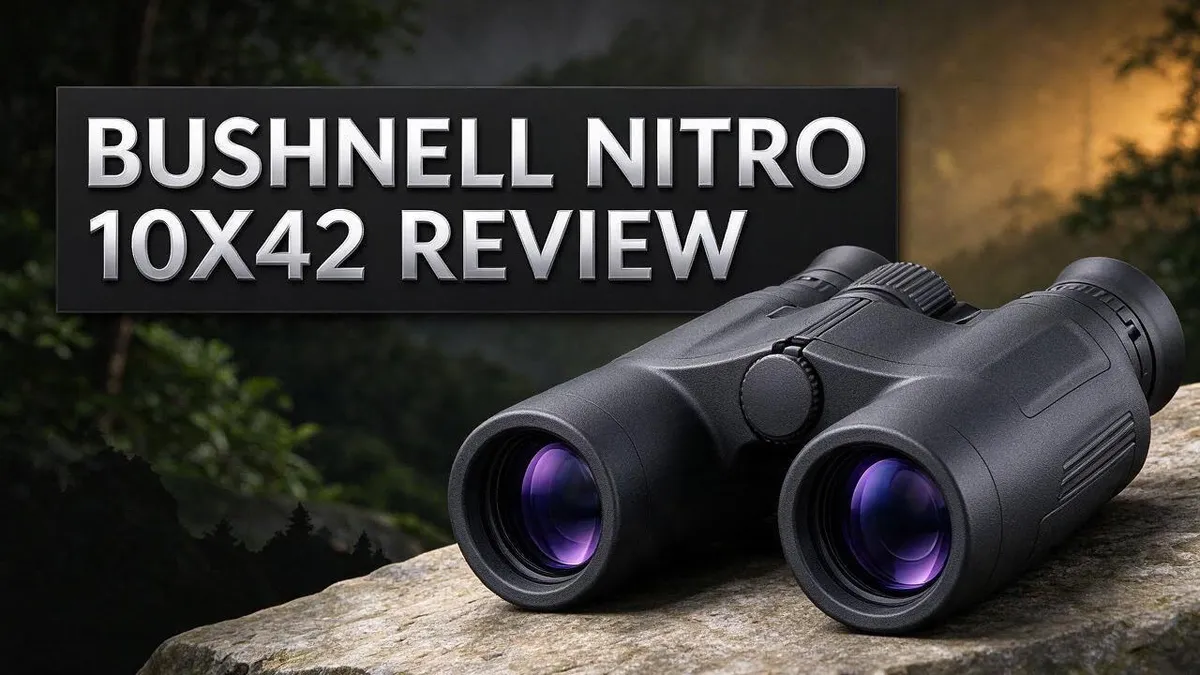
Bushnell Nitro 10×42 Review: Top Tier or Trash?
Do you want binoculars that look great and perform well outdoors? The Bushnell Nitro 10×42 aims to do exactly that.
This roof prism model offers 10x magnification and a 42 mm objective lens. It suits adult users, and it even mounts on a tripod.
Bushnell adds ED Prime glass and extra prism coatings. The casing feels solid and looks stylish. The glass is also free of lead.
The wide field of view helps you scan landscapes with ease. One flaw stands out, though. Sharpness drops noticeably at the edge of the view.
In a Nutshell
- Solid build: The casing feels sturdy and stylish. The binoculars look sharp and handle outdoor trips with confidence. You can carry them on hikes without worry.
- Tripod ready: A tripod mount feature lets you steady the view. This helps during long sessions of birding, stargazing, or scanning hillsides. Less hand shake means more detail.
- Lead free design: Bushnell builds these optics without lead. Many buyers value that choice. It adds a small but welcome plus.
- Main weakness: Sharpness drops noticeably near the edge of the view. The center stays clear. The outer area looks softer, so keep your subject in the middle.
- Best for: These binoculars suit adult users such as hikers, hunters, and wildlife fans. The model number is BN1042B. Younger kids may find them too big.
- Other options: The Nitro 10×36 is more compact and lighter. The Engage DX 10×42 also earns praise for good image quality. The Engage 10×42 ED is another Bushnell model worth a look.
Optical Quality and ED Prime Glass

Last update on 2026-11-24 / Affiliate links / Images from Amazon Product Advertising API Some of the links on this website are affiliate links, which means that at no additional cost to you, I earn a commission if you click through and make a purchase. I only recommend products and services that I believe will add value to my readers. Thank you for your support!
Clear views start with the glass inside. Good optics show more detail on distant ridges and songbirds. This model uses ED Prime glass for better color.
Color accuracy matters a lot for nature watchers. Leaves look green and bark looks brown, not washed out.
Color fringing shows up as thin purple or blue halos. Good glass reduces these halos around bright edges.
Light gathering matters too. Early mornings and late evenings often bring dim scenes. The large front lens helps you spot animals in shade near the tree line.
A simple trick helps. Move your head slightly so your subject stays in the middle of the frame.
Good optics also make long sessions more comfortable. Clear, balanced views can reduce strain on your eyes during long hikes.
Lighting affects how colors appear. Bright sun can wash out details, so try shade when you scan.
Image brightness is another key factor. Brighter views help you pick out shapes in shadows and dusk light.
Contrast also shapes how a scene feels. Higher contrast makes branches and feathers stand out from the background.
Fine details reward patient viewing. Take time to scan slowly and let your eyes adjust to the view. Slow scanning reveals small movements in the brush.
Hunters and hikers often notice these traits first. Crisp, natural images help them judge distance and movement.
Dusk and dawn tests reveal a lot. Watch a bird perch at dusk and notice how well the feathers show.
Compare the view with another pair if you can. Side by side checks show differences in color and clarity.
Test before you decide. Look at a sign or a tree line in daylight. Check for color shifts and crisp centers.
A short backyard test gives useful clues about sharpness and color.
Your own eyes give the best answer, so trust what you see.
Field of View and Edge Sharpness
Edge sharpness shapes how you use these binoculars day to day. Most of your best views will come from the center of the image. Keep your subject near the middle whenever you can. Center the target first, then study the details.
Think about tracking movement. A bird that flies across the frame may look soft near the sides. Stop the motion and bring the bird to the middle. Then you can enjoy a sharp look.
Try this simple test at home. Find a fence post or a window frame with straight lines. Slowly pan so the line moves from the center to the edge. Watch where it starts to blur.
Your panning speed matters too. Many people sweep fast across a landscape. Slow down your movement. Your eyes then settle on the sharper zone and pick up more detail.
Edge softness rarely ruins a scan. You can search for movement or landmarks quickly. The wide view helps you spot targets, and the center sharpens them once you lock on.
Hunters and wildlife watchers often use this two part habit. They scan wide, then bring the target to the center. This method gives you speed and clarity in one pass.
Light conditions shift the experience as well. Bright daylight often shows edge detail better than dim forest shade. Plan your viewing sessions for good light when you can.
Your eyes play a role too. Some people notice edge softness faster than others. Relax your gaze and avoid squinting. A calm eye gives a more honest read on the optics.
Take notes after each outing. Record which zones looked sharp to you. Over time, you will know exactly where to place your subject for the best view. Every pair has limits, and the soft edges are a fair tradeoff for the wide view.
Design, Build and Handling
Handling starts the moment you pick up the binoculars. Let your hands settle naturally on the body. A relaxed grip makes long scans feel much easier.
Good handling also depends on how you hold them. Use both hands and rest your elbows against your chest. This simple habit reduces shake and keeps the image steady.
Check the focus wheel next. Turn it slowly with your index finger. Smooth movement helps you lock onto a bird or a deer quickly.
The hinge area shows how well the parts fit together. Open and close the hinge several times. Smooth movement with no wobble suggests solid assembly.
Eyecups matter more than many people expect. Fold them down if you wear glasses, or raise them for a full view. Try both positions before your first outing.
The neck strap deserves attention too. A comfortable strap spreads the weight across your shoulders. Adjust the length so the binoculars sit near your chest.
Controls should feel easy to reach. Test them while wearing gloves, since cold weather often calls for them. You want quick adjustments without fumbling.
Think about where you will carry the binoculars. A case or harness keeps the body safe during walks. Lens caps also matter. Choose caps that fit snugly so they stay on during travel.
Your daily routine shapes the handling test. Carry them for an hour around the house or yard. Notice any tired spots in your neck, wrists, or shoulders.
Cleaning belongs in this check as well. Wipe the lenses with a soft cloth after each trip. Dust and fingerprints can soften the view over time.
Overall, handling feels natural when the parts work together. Grip, focus, eyecups, and strap all play a role. Spend a few minutes testing each part before you decide.
Top 3 Alternatives
Nikon Monarch 7


Last update on 2026-10-26 / Affiliate links / Images from Amazon Product Advertising API Some of the links on this website are affiliate links, which means that at no additional cost to you, I earn a commission if you click through and make a purchase. I only recommend products and services that I believe will add value to my readers. Thank you for your support!
Looking for sharp views and bright images? The Nikon Monarch 7 is a strong pick. Its ED glass reduces color fringing and keeps edges crisp. The body is waterproof and fog proof, so it handles rain and cold mornings well.
Hikers and bird watchers often praise the wide field of view. The light weight also makes it easy to carry all day on a trail.
Vortex Diamondback HD

Last update on 2026-07-01 / Affiliate links / Images from Amazon Product Advertising API Some of the links on this website are affiliate links, which means that at no additional cost to you, I earn a commission if you click through and make a purchase. I only recommend products and services that I believe will add value to my readers. Thank you for your support!
Want clear optics that feel comfortable for long sessions? The Vortex Diamondback HD fits that need. Its HD lenses show fine detail across the entire view. Vortex also backs every pair with a lifetime warranty, so owners can enjoy them with confidence.
The eye relief suits people who wear eyeglasses. The rubber armor grips well, even when your hands are wet or cold.
Celestron Nature DX

Last update on 2026-08-27 / Affiliate links / Images from Amazon Product Advertising API Some of the links on this website are affiliate links, which means that at no additional cost to you, I earn a commission if you click through and make a purchase. I only recommend products and services that I believe will add value to my readers. Thank you for your support!
Need a lightweight pair for long walks? The Celestron Nature DX brings plenty of performance to the table. Its ED glass delivers bright, natural colors, even in low light. The body is nitrogen filled and waterproof, so moisture stays out.
Many users like the compact design. It slips easily into a jacket pocket or a small daypack, which makes it ideal for quick outings and wildlife spotting on the go.
Tripod Compatibility and Practical Use
The Nitro 10×42 includes a tripod mount feature. This gives you a second way to hold the binoculars steady.
Ten power magnification shows every small shake. Even a steady hand can tremble at 10x. A tripod keeps the view calm during longer sessions.
Tripods suit fixed spots best. Examples include a nest, a water hole, or a ridge where animals often pass. You can rest your arms and simply observe.
Mount the binoculars on a tripod with a compatible adapter. Check the fitting before you head outdoors. Some tripods need a separate plate for a secure hold.
Setup takes only a few minutes. Place the tripod on firm ground. Level the head so the horizon stays straight. Then lock the pan and tilt controls before you look.
Practice the setup at home first. Mount the binoculars, adjust the height, and look at a distant sign. This quick run shows you how the tripod feels before a real trip.
Tripods work less well for fast scanning. Hunters often sweep quickly across open fields. In that case, hand holding gives you more speed and freedom.
Weight matters on long trails. A tripod adds bulk to your pack. Decide whether the extra gear fits your route. A short walk to a viewing spot may suit a tripod better than a full day hike.
Wind can cause problems. A tall tripod may sway on breezy days. Lower the height and spread the legs wide for better support.
Pack the tripod in a separate bag or strap it to your backpack. Keep the head locked so the parts do not rattle during the walk.
Choose the right setup for each outing. Use a tripod for patient watching. Use your hands for quick movement and changing scenes.
Overall, the tripod mount adds stability when you sit still. It works as a helpful extra rather than a must.
Value for Money and Pricing
Think about what you get from these binoculars over time. The Nitro 10×42 uses a solid, stylish casing that looks sharp and feels sturdy. Many buyers notice this trait first.
The optics also deserve a close look. ED Prime glass helps keep colors natural and details clear. An additional prism coating helps more light reach your eyes.
A wide field of view shows more of the scene at once. You can follow a bird across a meadow without losing it. This helps people who scan large areas often.
Lead free construction matters too. It removes a material many people prefer to avoid. This choice reflects care for both users and the environment.
The reviewer called the Nitro 10×42 right on par with its mid-level quality. That verdict fits a pair built for regular outdoor trips. It performs well across many everyday settings.
The roof prism design gives the body a straight, streamlined shape. The casing holds up to frequent outings. Its look and feel make it easy to recognize in a crowded gear bag.
Compare this model with its Bushnell siblings. The Engage DX 10×42 earned praise for good image quality. The Nitro 10×36 offers a more compact and lighter frame for those who prefer less bulk.
Ask yourself a simple question. Do you need one pair for mixed outings? If so, this model fits well. Adults who want solid optics in a stylish body will find plenty to like.
Many people want a pair that stays useful for years. The Nitro 10×42 offers a balanced mix of features that supports that goal. You gain a solid base for birding, hiking, and sports viewing.
Long term satisfaction grows from the features you use most. Fine details, wide views, and a sturdy casing all add up over seasons of use. Choose the pair that matches your habits.
Pros and Cons
Pros
-
- Solid casing with a stylish look
-
- ED Prime glass helps deliver clear views
-
- An extra prism coating adds brightness to the image
-
- The wide view makes it easy to follow moving birds
Cons
-
- Sharpness drops at the edges of the view
-
- Edge detail may disappoint during fast scanning
-
- It is larger than the Nitro 10×36 sibling
-
- The 10×36 suits buyers who want a lighter pair
Who Should Buy It
This pair suits adults who want one reliable set for many hobbies. It works best as a steady companion rather than a quick toy.
Bird watchers who sit in one spot gain the most. A person who scans a backyard feeder or a quiet lake each morning learns local species over time.
Sports fans who sit far from the field may also enjoy this model. Upper rows and wide stadiums put players far away. A steady view helps you follow the action without moving your seat.
Gift shoppers looking for a nature lover can find a thoughtful choice here. The careful build feels like a gift that lasts.
Do not choose this pair for young children. It fits adults best, so look for a smaller model made for kids.
People who wear glasses should test the eyepieces in person. Eye comfort varies from one face to another, so a short trial helps.
Outdoor explorers who camp near water might enjoy this model. Early mornings bring wildlife to the shore, and a clear view helps you spot ducks and herons across the water.
Travelers who visit national parks often mix city walks with wildlife trails. One pair can cover both, so you carry less gear.
Beginners who want to learn can grow into this pair. They can build their skills without changing gear soon.
Each buyer should picture a real outing before deciding. Think about the place, the light, and the hours you plan to spend looking.
Choose it when you want a steady tool for regular outings. Skip it when you only need a pair for occasional glances.
Final Verdict
The Bushnell Nitro 10×42 earns a confident recommendation from us. It gives you dependable performance without extra fuss.
This pair feels ready to use right out of the case. You lift it, focus, and enjoy the view. That simple routine makes it a pleasure on busy trips.
Image quality leaves a strong first impression. Colors look natural and the scene stays bright. Most users will smile at their first look through the lenses.
One flaw deserves an honest mention. The picture loses some crispness near the outer edge. Most buyers will adjust by keeping the subject near the center.
Our Rating
We give the Nitro 10×42 4 out of 5 stars. It performs well where it matters most. It asks for only one small compromise.
Who Should Buy It
Pick this model if you want clear, bright images and a sturdy build. It rewards people who value everyday reliability.
Look elsewhere if you demand perfect sharpness across the whole frame. That goal calls for a higher tier model.
Before You Order
Take a few simple steps to feel sure about your choice:
- Check the return policy of the seller.
- Test the focus wheel with your own hands.
- Look at the product page for the latest buyer feedback.
The Bottom Line
The Nitro 10×42 does what a good pair of binoculars should do. It shows you the scene clearly and holds up on every outing. Its strengths outweigh its single weakness by a wide margin.
We think most adult users will feel happy with this purchase. If the points above match your needs, you can order with confidence.
Frequently Asked Questions
What does 10×42 mean?
The first number shows the magnification. Objects look ten times closer than they do to the naked eye. The second number, 42, is the objective lens diameter in millimeters. A larger lens gathers more light, so the view stays bright in dim conditions like early mornings or shady forest trails.
Is the Nitro 10×42 a roof prism model?
Yes, it uses a roof prism design. This layout gives the binoculars a straight body that many people find easy to hold. It also helps keep the overall shape compact for everyday carrying.
Can I attach this pair to a tripod?
Yes. The Nitro 10×42 includes a tripod mount. A tripod keeps the image steady, so long watching sessions feel more relaxed and your arms get a break. This feature is useful for birders who sit in one spot for hours.
How does it compare with the Engage DX 10×42?
Reviewers describe the Engage DX 10×42 as a model with good image quality. The Nitro 10×42 stands out with its solid casing and wide field of view. Try both in person if you can to see which one feels more comfortable in your hands.
Is this model lead-free?
Yes, the glass is lead-free. Many eco-minded buyers appreciate this choice. It also means you can enjoy your outdoor adventures with one less concern about materials.

Hello, I’m Emily Price, the founder of Birds Affection. As a passionate bird enthusiast and spiritual seeker, I’ve always been fascinated by the symbolic meanings and mystical connections between birds and our lives. On this website, I share my knowledge and insights on the spiritual significance of various bird species, exploring their roles as messengers, guides, and teachers. Through my writing, I aim to inspire and educate others on the profound wisdom and beauty that birds bring to our world. Join me on this journey as we delve into the enchanting realm of bird symbolism and discover the hidden meanings behind these magnificent creatures.