Alpen 20-60×80 Spotting Scope Review 2026: Still Worth It?
Long range glass has a funny way of humbling people. You buy an 80mm scope, you dream of counting antler tines at a mile, and then reality arrives. So where does the Alpen 20-60×80 land in 2026?
This scope has been around for years under the Shasta Ridge name, model 786 for the straight version and model 788 for the angled version. It sits in that awkward middle price zone where budget glass ends and serious glass begins.
I spent time behind one at the range, on a marsh edge, and on a cold ridge at first light. Here is the honest breakdown, including the parts Alpen would rather you skipped.
In a Nutshell:
- The 80mm objective is the real selling point. It pulls in far more light than a 60mm scope, so dawn and dusk sessions stay usable longer. Brightness at 20x through about 40x is genuinely good for the money.
- Image quality falls apart at the top of the zoom range. Pushing past 50x on a warm day gives you a soft, washed image. That is normal for non ED glass, but you should know it before you buy.
- Purple fringing is the biggest optical flaw. Bright water, snow, or a pale sky behind a dark bird produces visible color edges. Experienced birders notice it immediately and some find it distracting.
- Build quality punches above the price. Nitrogen purged, O ring sealed, rubber armored, and backed by a lifetime warranty. It shrugs off rain, dust, and rough truck rides.
- The bundled table top tripod is not adequate. Budget another $80 to $150 for a proper tripod with a fluid head. Without one, the scope simply cannot show what it is capable of.
- Best fit: target shooters, casual wildlife watchers, and hunters who want an affordable 80mm option. Serious birders chasing color accuracy should spend more.
What Is the Alpen 20-60×80 Spotting Scope?

Last update on 2026-09-28 / Affiliate links / Images from Amazon Product Advertising API Some of the links on this website are affiliate links, which means that at no additional cost to you, I earn a commission if you click through and make a purchase. I only recommend products and services that I believe will add value to my readers. Thank you for your support!
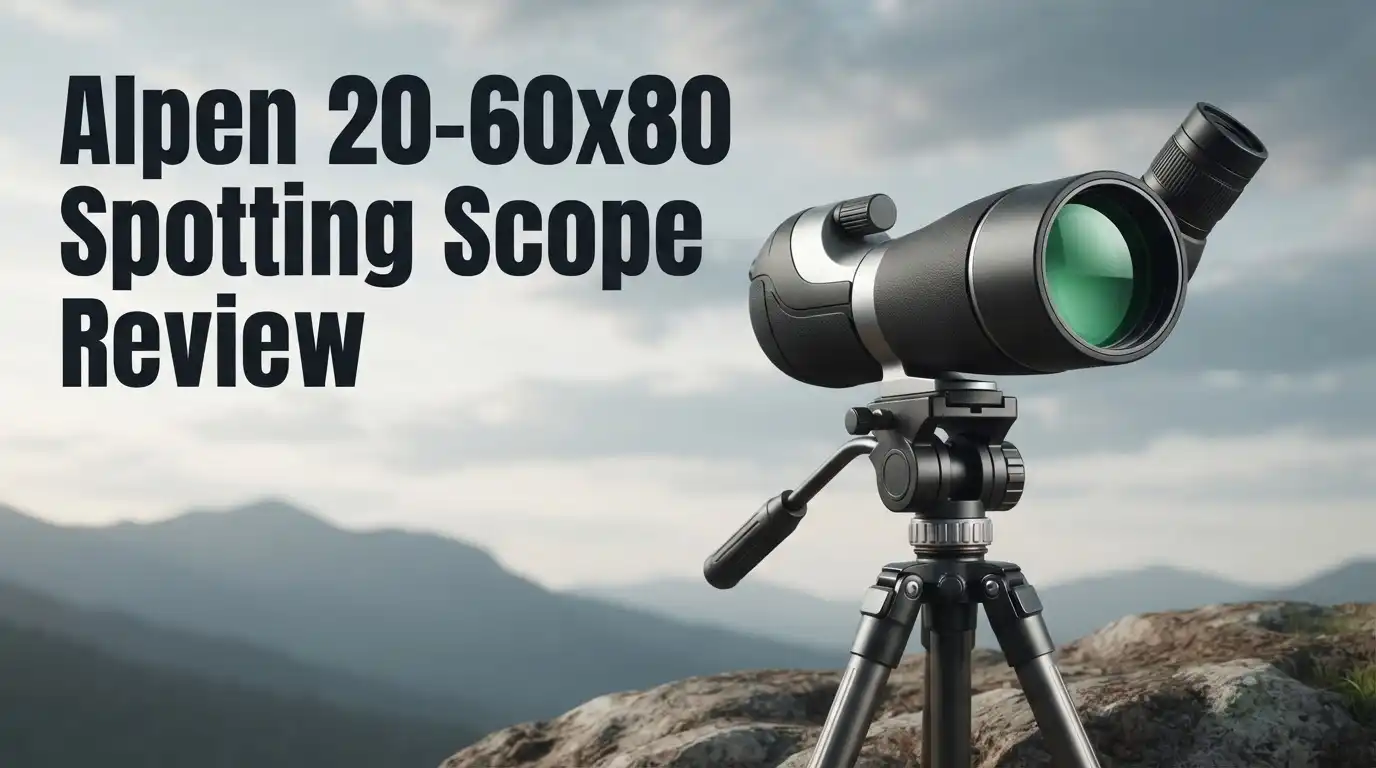
The Alpen 20-60×80 is a full size spotting scope built around an 80mm objective lens and a 20x to 60x zoom eyepiece. Alpen Optics sells it under the Shasta Ridge line, with model 786 as the straight body and model 788 as the 45 degree angled body. The company has operated in the sport optics space since 1997 and now works alongside Explore Scientific.
Core specs are straightforward. Field of view runs 113 feet at 20x and 55 feet at 60x, measured at 1000 yards. Eye relief measures 19mm at the low end and 18mm at the high end.
Close focus sits around 24 feet. The body is nitrogen filled, waterproof, dustproof, and shock resistant. It is a conventional design with no exotic glass, and the price reflects that honestly.
Unboxing the Alpen 20-60×80
The box arrives heavier than expected. Inside you get the scope wrapped in foam, a soft padded field case, a small table top tripod, lens caps, and a short instruction card. The first thing you notice is heft. The scope weighs a little over three pounds, and with the rubber armor it feels dense and serious in your hands.
The armor has a pleasant grip texture. The top mounted focus knob turns with a firm, slightly stiff action straight out of the box, which loosens after a week of use. The zoom collar rotates smoothly.
The included tripod, however, deflates the mood instantly. It is small, plastic heavy, and wobbles under the weight of the scope. My honest advice: leave it in the box and mount the scope on something real.
Build Quality and Weatherproofing
Durability is where this scope earns genuine respect. The body carries thick rubber armor over a metal chassis, so impacts get absorbed instead of transferred. The nitrogen purge does its job. I moved the scope from a heated cab into 28 degree morning air repeatedly and never saw internal fogging.
Rain is a non issue. The O ring seals held through a steady two hour drizzle with no moisture intrusion. Dust resistance is equally solid, which matters on prairie hunts and dry range days. The sunshade slides out smoothly and stays put.
One small complaint: the eyepiece rubber cup can pull loose if you tug it while removing the cap. It presses back on easily, but it feels like a five cent part on an otherwise well built scope. The lifetime warranty offsets most durability worries.
Optical Performance in Daylight
At 20x through roughly 35x, this scope looks very good. Images appear bright, contrast is respectable, and the center of the field stays sharp. Reading a range flag at 500 yards or picking out a mule deer bedded in sage is comfortable work. The fully multi coated lenses handle glare better than I expected at this price.
Edge sharpness softens noticeably in the outer 20 percent of the field. That is common in zoom spotters and most users stop noticing after a few sessions because you naturally center your subject.
Color rendition leans slightly warm. Greens look a touch muted and whites carry a faint yellow cast. It is not objectionable, but side by side with ED glass the difference shows up fast. For general daylight use, the Alpen delivers.
Top 3 Alternative for Alpen 20-60×80 Spotting Scope


Last update on 2026-07-01 / Affiliate links / Images from Amazon Product Advertising API Some of the links on this website are affiliate links, which means that at no additional cost to you, I earn a commission if you click through and make a purchase. I only recommend products and services that I believe will add value to my readers. Thank you for your support!
Celestron Ultima 80 Angled Spotting Scope

Last update on 2026-09-13 / Affiliate links / Images from Amazon Product Advertising API Some of the links on this website are affiliate links, which means that at no additional cost to you, I earn a commission if you click through and make a purchase. I only recommend products and services that I believe will add value to my readers. Thank you for your support!
Athlon Optics Talos 20-60×80 Spotting Scope

Last update on 2026-09-13 / Affiliate links / Images from Amazon Product Advertising API Some of the links on this website are affiliate links, which means that at no additional cost to you, I earn a commission if you click through and make a purchase. I only recommend products and services that I believe will add value to my readers. Thank you for your support!
Gosky Updated 20-60×80 Spotting Scope
Low Light and Dawn Dusk Viewing
This is the argument for buying an 80mm scope instead of a 60mm scope. The exit pupil at 20x measures 4mm, which is large enough to feed your eye plenty of light during that grey half hour before sunrise. I could identify a coyote at 400 yards roughly fifteen minutes earlier than with a 60mm spotter sitting beside it.
The advantage shrinks as you zoom. At 60x the exit pupil drops to about 1.33mm, and the image dims considerably. In poor light, staying between 20x and 30x gives you the best results by a wide margin.
Practical takeaway: treat this as a bright 20x to 40x scope that happens to zoom higher. Used that way, it performs well above its price bracket during legal shooting light.
Zoom Range and Image Quality at 60x
Every budget zoom spotter makes promises at the top end that it cannot keep, and this one is no exception. At 60x the image loses noticeable brightness, contrast drops, and fine detail smears. Heat shimmer makes it worse. On a sunny afternoon at the range, 60x becomes almost unusable past 300 yards.
The sweet spot sits between 30x and 45x. In that window you keep useful magnification without giving up too much clarity. Most experienced users settle there naturally.
Focus also gets fussy at high power. The depth of field narrows to almost nothing, so small knob movements swing you past the sharp point. A stable tripod fixes half of this problem, but only half. Do not buy this scope expecting crisp 60x views.
The Purple Fringing Problem
Here is the flaw that honest reviews have to mention. The Alpen 20-60×80 uses standard glass rather than ED or HD glass, so chromatic aberration shows up clearly in high contrast scenes. Point it at a dark duck floating on bright overcast water and you will see purple and green edges outlining the bird.
Birders notice this most. Seasoned users on birding forums have flagged it for years, and one longtime owner replaced his Alpen with an ED equipped Celestron for exactly this reason. Target shooters and casual wildlife watchers care far less, because black paper targets on white backers show only mild fringing.
If color purity matters to your hobby, this is the deal breaker. If you mostly judge shape, size, and movement, the fringing stays in the background of your experience.
Eye Relief and Comfort for Glasses Wearers
Alpen lists 19mm of eye relief at 20x and 18mm at 60x. On paper that sounds friendly to eyeglass wearers, and at low power it mostly is. With the rubber cup folded down, I saw nearly the full field while wearing glasses at 20x and 25x.
Reality gets tighter as you zoom. Several owners report that eye relief feels shorter than the spec at high magnification, and my experience matched. Above 45x, I had to press in close and still lost some field edge.
The angled 788 model helps enormously with neck comfort. Sitting behind it for an hour feels relaxed instead of punishing. If you plan long glassing sessions, choose the angled version. The straight 786 suits truck window and bench use better.
The Included Tripod and Case
The soft field case is decent. It is padded, has a shoulder strap, and includes cutouts so you can operate the focus knob without removing the scope. It protects against scratches and light rain, and it survives being tossed in a pack.
The table top tripod is the weak link in the whole package. It is short, plastic dominated, and simply not rigid enough for a three pound 80mm scope at high magnification. Every heartbeat and breeze translates into image shake. Owners have complained about this for years.
Plan on buying a full size tripod with a pan head or fluid head rated for at least five pounds. That upgrade transforms the scope more than any accessory you can add. Budget it into the purchase price from day one.
Field Use for Hunters and Target Shooters
At the rifle range, this scope does exactly what most shooters need. Spotting .30 caliber holes at 200 yards is easy at 30x. At 300 yards it takes good light and patience. Past 400 yards, .22 caliber holes become guesswork.
For hunting, the 80mm objective earns its bulk during first and last light. Judging a bull elk across a basin at 800 yards works well at 35x. The rubber armor handles pack straps and rock scrapes without damage.
The weight is the trade off. Three plus pounds of scope, plus a real tripod, adds up fast on a steep pack in. This is a truck scope and a short hike scope, not a backcountry scope. Serious mountain hunters should look at lighter 65mm options.
Birding Performance
Birders get a mixed result. The brightness helps in shaded woodlots and at dusk on marsh edges, and the 113 foot field at 20x makes finding a bird reasonably quick. Shorebird scanning at moderate power is pleasant.
The chromatic aberration is the sticking point. Warbler identification depends on subtle plumage color, and purple fringing muddies exactly those fine details. Waterfowl watching on bright water is the worst case scenario.
Close focus at roughly 24 feet is adequate but not impressive. Butterfly and dragonfly watchers will want something that focuses nearer.
My honest position: this scope works for beginning birders and for people who mostly watch raptors, waterfowl at distance, and larger species. Dedicated listers chasing rarities will outgrow it within a season.
What the Alpen 20-60×80 Does Not Do Well
Fair reviews name the failures plainly. First, high magnification performance disappoints. Anything above 50x is a compromise rather than a feature. Second, chromatic aberration is visible and persistent in high contrast light.
Third, the included tripod is functionally useless for the intended purpose. Fourth, eye relief at high power feels shorter than the published number, which frustrates glasses wearers.
Fifth, the scope is heavy relative to modern compact competitors. Sixth, edge sharpness falls off more than premium glass. Seventh, sample variation exists. Some owners report noticeably better units than others, so check yours carefully during the return window.
None of these issues are unusual at this price. They only become problems when marketing copy convinces you that you bought premium glass.
Pros and Cons
Pros
- Large 80mm objective gathers impressive light for dawn and dusk viewing
- Fully sealed, nitrogen purged, and genuinely weatherproof in real rain
- Thick rubber armor survives field abuse and pack transport
- Lifetime warranty from Alpen adds long term peace of mind
- Smooth top mounted focus knob works well with gloves
- Angled 45 degree option is comfortable for long glassing sessions
- Strong brightness and clarity in the 20x to 40x range
- Priced well below ED glass competitors with similar apertures
Cons
- Visible purple fringing on high contrast subjects like water and sky
- Image quality degrades sharply above 50x magnification
- Included table top tripod is too flimsy for serious use
- Eye relief feels tight at high power for eyeglass wearers
- Heavier than modern 65mm and 80mm competitors
- Edge of field softness is noticeable
- No ED or HD glass at a price where some rivals now include it
- Reported sample variation between units
Price and Value in 2026
Street pricing has moved around considerably over the years. The scope once carried a $499 list price and now commonly sells in the $250 to $350 range depending on the model and bundle. At that lower figure, value looks reasonable. At anything approaching $450, it does not.
The competitive picture has changed. Athlon, Celestron, and Vortex now offer 80mm scopes with better glass at prices that were premium territory five years ago. The Alpen survives on build quality, warranty, and brightness rather than optical refinement.
My value verdict: buy it on sale, pair it with a real tripod, and keep expectations realistic. If your budget stretches another $150, ED glass will give you a visibly better image and you will not regret the upgrade.
Who Should Buy It and Who Should Skip It
Buy this scope if you are a target shooter who needs bright, stable views at moderate power. Buy it if you hunt from vehicles, blinds, or short hikes and want maximum light gathering for the money. Buy it if durability and warranty support rank above optical perfection.
Skip it if you are a serious birder who identifies species by subtle color. Skip it if you backpack and count ounces. Skip it if you expect usable 60x images, because no scope in this price class delivers that.
The Alpen 20-60×80 is an honest, rugged, bright, imperfect tool. It does the basics well and asks little from your wallet, and that combination still has a place in 2026.
Frequently Asked Questions
Is the Alpen 788 the same as the Alpen 20-60×80 sold on Amazon?
Yes, in most listings. Model 788 is the 45 degree angled version of the Shasta Ridge 20-60×80, and model 786 is the straight version. Retailers often list it simply as the Alpen 20-60×80, so check the eyepiece angle in the product photos before ordering.
Does the Alpen 20-60×80 have ED glass?
No. It uses fully multi coated standard glass with BAK4 or BK7 prisms depending on the variant. That is the main reason you see purple fringing on high contrast subjects. ED equipped scopes in the same size class cost more but control color noticeably better.
Can I see bullet holes at 300 yards with this scope?
Sometimes. In good light with .30 caliber holes and minimal mirage, yes at 40x to 50x. Smaller .22 caliber holes at that distance are unreliable. Heat shimmer on warm afternoons will defeat the scope long before magnification becomes the limiting factor.
What tripod should I use with it?
Choose a full size tripod rated for at least five pounds, ideally with a fluid pan head. Aluminum models in the $80 to $150 range work well. The included table top tripod is too small and too soft to hold an 80mm scope steady at high magnification.
Is the angled or straight model better?
The angled 788 is more comfortable for long sessions, easier to share among people of different heights, and better for uphill viewing. The straight 786 is faster to aim, better from a vehicle window, and easier for shooting bench use. Most wildlife watchers prefer angled.
Is the Alpen 20-60×80 good for astronomy?
It works for casual viewing of the moon, bright planets, and large star clusters. The 80mm aperture gathers decent light. Expect chromatic aberration around bright objects and limited detail at high power. A dedicated telescope serves astronomy far better for similar money.

Hello, I’m Emily Price, the founder of Birds Affection. As a passionate bird enthusiast and spiritual seeker, I’ve always been fascinated by the symbolic meanings and mystical connections between birds and our lives. On this website, I share my knowledge and insights on the spiritual significance of various bird species, exploring their roles as messengers, guides, and teachers. Through my writing, I aim to inspire and educate others on the profound wisdom and beauty that birds bring to our world. Join me on this journey as we delve into the enchanting realm of bird symbolism and discover the hidden meanings behind these magnificent creatures.