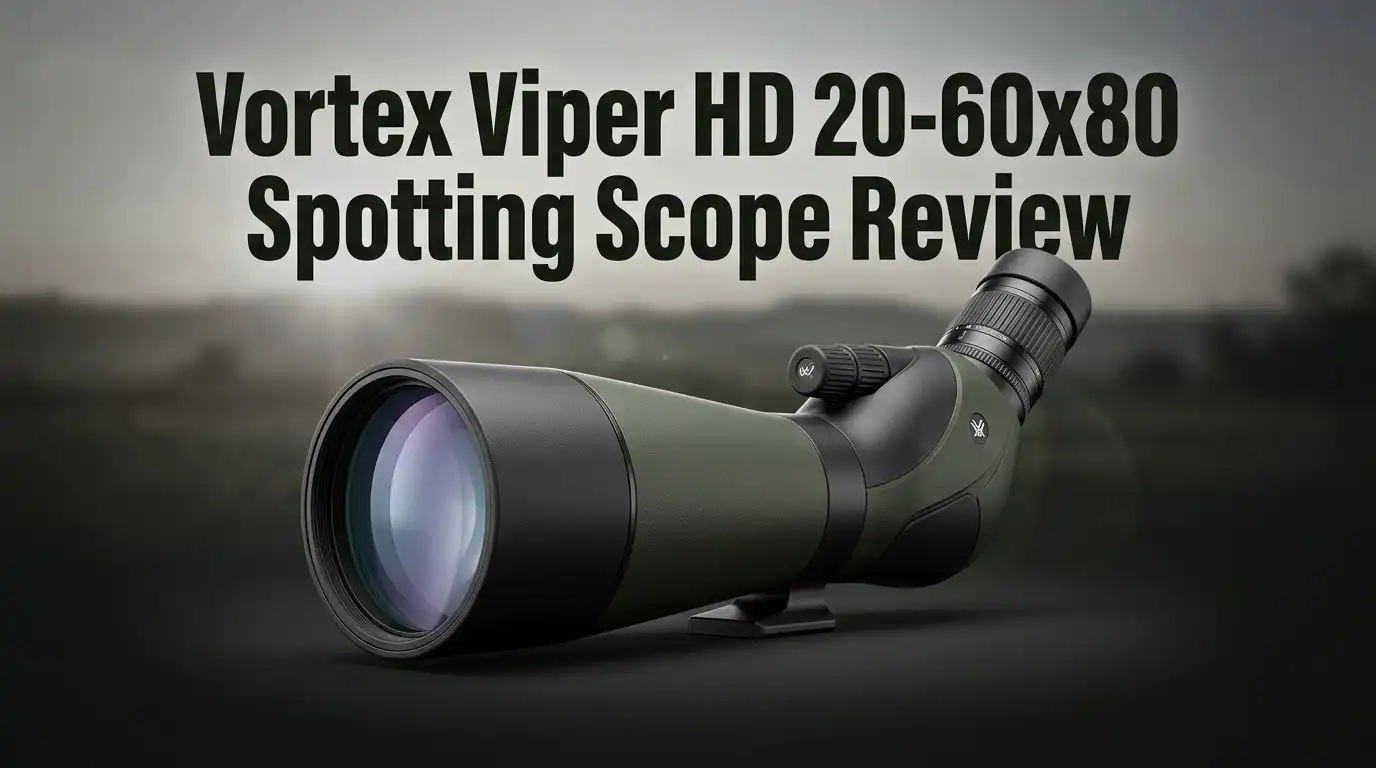
Vortex Viper HD 20-60×80 Spotting Scope Review 2026: Still Worth It?
Spotting scopes promise a lot. Most deliver far less once you set them on a tripod and look at something a mile away. The Vortex Viper HD 20-60×80 sits in an interesting spot.
It costs real money, yet it undercuts alpha glass by thousands. Hunters praise it. Birders argue about it. Target shooters swear by it at 1000 yards.
This review covers what the glass actually resolves, where the build shines, and the three things that genuinely annoyed me. No marketing fluff, just field notes.
Key Takeaways
- Optical quality punches above its price. The HD extra low dispersion glass with XR fully multi coated lenses produces sharp, color accurate images through roughly 80 percent of the zoom range. Resolution at 20x to 40x is excellent. Color fringing stays faint on high contrast edges like dark antlers against bright sky.
- The 80mm objective gathers serious light. Exit pupil measures 4mm at 20x. That means usable, bright images at dawn and dusk when game and birds actually move. Low light capability is this scope’s strongest selling point.
- It is heavy and long. Weight sits at 67 ounces, or about 4.2 pounds, and length reaches 17.5 inches. This is a truck scope, blind scope, or short hike scope, not a backcountry ultralight option.
- You need a real tripod. At 60x, a flimsy tripod turns a great image into shaking mush. Budget 200 dollars or more for support, or the scope cannot perform.
- The 60x end softens noticeably. Contrast drops and fine detail fades at maximum power. Most useful glassing happens between 20x and 45x.
- The VIP warranty is unlimited, unconditional, and transferable. Vortex repairs or replaces regardless of fault. That coverage adds real long term value.
What Is the Vortex Viper HD 20-60×80 Spotting Scope?

Last update on 2026-10-07 / Affiliate links / Images from Amazon Product Advertising API Some of the links on this website are affiliate links, which means that at no additional cost to you, I earn a commission if you click through and make a purchase. I only recommend products and services that I believe will add value to my readers. Thank you for your support!
The Viper HD 20-60×80 is a full size angled spotting scope built for long distance observation. Vortex positions the Viper line as its midrange tier, sitting above the Diamondback HD and below the premium Razor HD. The optical system uses HD extra low dispersion glass paired with XR fully multi coated lenses.
The body is argon purged and O ring sealed. That delivers true waterproof and fogproof performance across temperature swings. Rubber armor wraps the chassis for grip and impact protection. ArmorTek coating shields the exterior lens surfaces from oil, dirt, and scratches.
The scope includes a built in sunshade that slides forward, a rotating tripod collar, an adjustable twist up eyecup, and a built in Picatinny accessory rail. Vortex ships it with a custom fitted case, an eyepiece cap, and an objective cover. Retail pricing sits around 1,099 dollars at Vortex, though street prices often land considerably lower.
The Unboxing Experience
The box arrives heavier than you expect. Vortex does not waste money on fancy packaging, which I appreciate. Inside you get the scope wrapped in foam, nestled in its fitted neoprene case, plus caps and the warranty card.
The first thing I noticed was density. This thing feels solid in a way budget scopes never do. The rubber armor has a slightly tacky texture that grips well even with damp hands. Nothing rattles. Nothing feels hollow.
The case deserves a mention. It has zippered flaps for the objective, the eyepiece, and the focus wheel. You can leave the case on while glassing, which saves the body from dings and dust. Many premium scopes charge extra for this.
The eyepiece cap is a tethered rubber cup. Mine stayed put. The objective cover is a simple push on design that occasionally pops loose in a pack.
Full Specifications Breakdown
Here are the numbers that matter, straight from Vortex and confirmed by measurement.
Magnification runs 20x to 60x. The objective lens measures 80mm. Eye relief spans 20mm at low power down to 15mm at full zoom. Angular field of view covers 2.1 degrees to 1 degree. Linear field of view gives you 110 feet at 1000 yards at 20x, narrowing to 50 feet at 60x.
Close focus sits at 22 feet. That is adequate for wildlife but limiting for butterfly or dragonfly watchers who want 10 foot focus. Length measures 17.5 inches with the sunshade retracted. Weight comes in at 67 ounces.
Exit pupil runs 4mm to 1.3mm. That 4mm figure at 20x explains the low light performance. Once you climb past 50x, the 1.5mm exit pupil forces your pupil to work hard, and the image dims.
Top 3 Alternatives for Vortex Viper HD 20-60×80 Spotting Scope

Last update on 2026-09-13 / Affiliate links / Images from Amazon Product Advertising API Some of the links on this website are affiliate links, which means that at no additional cost to you, I earn a commission if you click through and make a purchase. I only recommend products and services that I believe will add value to my readers. Thank you for your support!
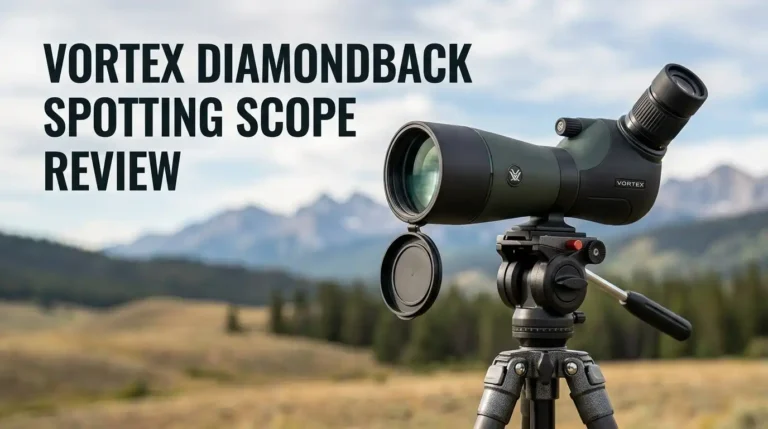
Vortex Diamondback HD Spotting Scope 20-60×85 Angled

Last update on 2026-09-17 / Affiliate links / Images from Amazon Product Advertising API Some of the links on this website are affiliate links, which means that at no additional cost to you, I earn a commission if you click through and make a purchase. I only recommend products and services that I believe will add value to my readers. Thank you for your support!
Athlon Optics Ares G2 20-60×85 UHD Spotting Scope

Last update on 2026-07-25 / Affiliate links / Images from Amazon Product Advertising API Some of the links on this website are affiliate links, which means that at no additional cost to you, I earn a commission if you click through and make a purchase. I only recommend products and services that I believe will add value to my readers. Thank you for your support!
Vortex Razor HD 27-60×85 Angled Spotting Scope
Optical Performance in Daylight
Set the Viper at 20x on a clear morning and the view is genuinely impressive. The image is bright, flat, and sharp from center to roughly 85 percent of the way to the edge. The outer rim softens slightly, which is normal for zoom eyepieces at this price.
Color rendition leans neutral. Greens look like greens. Browns separate into distinct shades rather than blurring into one mass. I could count individual pine needles on a tree 400 yards away at 30x.
Chromatic aberration exists but stays controlled. Look at a dark fence post against white sky and you will spot a faint purple edge. In normal glassing you simply do not notice it.
Push to 60x and the picture changes. Contrast flattens. Fine texture smears. Atmospheric heat shimmer compounds the problem on warm days. I kept the zoom between 25x and 45x for most serious observation.
Low Light and Dusk Performance
This is where the 80mm objective earns its weight penalty. During the last 20 minutes of legal shooting light, the Viper HD kept producing a usable image when my 65mm scope had already given up.
At 20x the view stays bright and open. I could identify deer body shape and antler mass well into deep dusk. Pushing above 35x in that light collapses brightness fast, so I learned to stay low on the zoom ring.
Light transmission feels strong, though not alpha level. Side by side against a Swarovski or Zeiss, the European glass holds detail a few minutes longer and renders shadows with more depth. The gap is real but small compared to the price gap.
Dawn performance mirrors dusk. The scope comes alive before sunrise, which matters for anyone hunting or birding at first light.
Build Quality and Weatherproofing
The Viper HD feels built to be abused. I carried mine in a truck bed, bounced it down gravel roads, and left it out in a cold drizzle. Nothing fogged. Nothing loosened.
Argon purging prevents internal condensation across temperature changes. I moved the scope from a 20 degree morning into a heated cab repeatedly with zero fogging. The O ring seals handled steady rain without issue.
The rubber armor absorbs knocks well. Mine picked up scuffs but no cracks or peeling. The tripod collar rotates smoothly with a firm locking ring that holds position reliably.
One small complaint. The built in sunshade slides a little too freely. It sometimes creeps inward when you are repositioning the scope. Not a defect, just mildly irritating.
The Picatinny rail is a nice touch for mounting a small accessory, though most users will never use it.
Focus and Zoom Controls
The Viper HD 80mm uses a large single focus wheel positioned on the top of the body. It turns with pleasant resistance, firm enough to hold position, smooth enough for fine adjustment.
Focus throw is moderate. Going from close focus to infinity takes roughly one and a half turns. Snapping onto a target at mid range takes about a second, which is quick enough for moving wildlife.
The zoom ring sits on the eyepiece with aggressive rubber texturing. It rotates smoothly with no gritty spots or sudden jumps. You can operate it with gloves on, which matters in cold weather.
One honest drawback. You must refocus slightly every time you change magnification. This is normal for most zoom spotters, but it does break your rhythm when you are tracking something that moves.
The twist up eyecup clicks into position and stays there.
Weight, Size and Tripod Requirements
At 67 ounces and 17.5 inches, this scope demands planning. It is comfortable to carry 500 yards from a truck. It is miserable to carry five miles up a mountain.
I would call it a vehicle based or short approach scope. Western hunters doing serious backcountry miles should look at a 65mm option instead. Range shooters and backyard birders will never care about the weight.
Tripod choice makes or breaks this scope. A lightweight photo tripod will vibrate at high power and ruin the image. You need a sturdy aluminum or carbon fiber tripod with a fluid head rated well above the scope weight.
The Arca Swiss compatible foot mounts quickly onto quality heads. The rotating collar lets you switch between upright and tilted viewing for comfortable glassing uphill or from a prone position.
Window mounts work well too for road scouting.
Digiscoping and Phone Photography
Plenty of buyers want to shoot photos through the eyepiece. The Viper HD handles digiscoping reasonably well, with caveats.
Image quality through the scope is good enough to produce shareable photos of distant wildlife. Keep magnification between 20x and 35x for the cleanest results. Beyond that, vignetting and softness increase quickly.
You will need a separate phone adapter. Vortex sells one, and third party universal clamps work fine. Alignment takes patience. Getting the phone camera perfectly centered over the exit pupil is the whole game.
The 20mm eye relief at low power helps enormously here. Shorter eye relief scopes make phone alignment far more frustrating.
Honest assessment: this is a viewing instrument first. If photography is your main goal, a camera with a long telephoto lens will outperform digiscoping every single time. Treat phone photos as a bonus feature rather than a core reason to buy.
What This Scope Does Not Do Well
Authentic reviews name the weaknesses. Here are mine.
The 60x end disappoints. Image quality degrades enough that I rarely used it. If you bought this scope specifically for 60x viewing, you will feel let down.
Close focus at 22 feet is poor. Insect watchers and anyone observing a nearby feeder will find this restrictive. Many competing scopes focus at 15 feet or closer.
Eye relief shrinks to 15mm at full zoom. Eyeglass wearers will lose field of view or need to remove their glasses at high magnification.
No included tripod or phone adapter. Factor another 200 to 400 dollars into your real cost.
Edge sharpness falls off. The outer ring of the field softens. Alpha scopes do better here.
It is bulky. Seventeen and a half inches is awkward inside a truck cab or a blind.
Pros and Cons
Pros
- Bright, sharp HD glass that resolves fine detail impressively well from 20x to 45x
- Excellent low light performance thanks to the 80mm objective and 4mm exit pupil
- Fully waterproof, fogproof, and argon purged with proven field durability
- Smooth, well weighted focus wheel and a grippy zoom ring that works with gloves
- Generous 20mm eye relief at low power for relaxed, comfortable viewing
- Rotating tripod collar and Arca Swiss compatible foot for fast mounting
- Fitted case with zippered access flaps included at no extra cost
- Unlimited, unconditional, transferable VIP lifetime warranty from Vortex
- Strong value compared to alpha European spotters costing three times more
Cons
- Heavy at 67 ounces and long at 17.5 inches, limiting backcountry use
- Visible softness and contrast loss at 60x magnification
- Close focus of 22 feet restricts nearby subject viewing
- Eye relief drops to 15mm at full zoom, which challenges eyeglass wearers
- Requires a sturdy tripod purchased separately, adding real cost
- Minor edge softness and faint color fringing on high contrast subjects
- Sunshade slides too easily during handling
Viper HD vs Razor HD vs Diamondback HD
Choosing between Vortex tiers confuses a lot of buyers, so here is the practical difference.
The Diamondback HD 20-60×85 saves you several hundred dollars. It uses HD glass but simpler coatings. Images look slightly flatter with more visible color fringing. It is a fine first spotting scope for casual use.
The Viper HD adds XR Plus coatings and better glass selection. You gain noticeable contrast, color fidelity, and low light reach. This is the sweet spot for most serious users.
The Razor HD 27-60×85 costs roughly 700 dollars more. You get sharper acutance, better high power usability, a shorter and more balanced body, and assembly in the United States. Resolution gains are modest, but the image simply looks cleaner.
My take: the Viper HD delivers about 85 percent of Razor performance for roughly 60 percent of the price.
Price and Warranty Value in 2026
Vortex lists the Viper HD 20-60×80 near 1,099 dollars. Real street prices vary considerably because this 80mm configuration is now a legacy model, with the 20-60×85 version carrying the line forward. Deal hunters sometimes find it dramatically discounted.
That discount changes the value equation completely. At full price, the Viper competes hard against Athlon and Celestron alternatives. At a discount, it becomes one of the better optical bargains available.
The VIP warranty deserves weight in your decision. Vortex repairs or replaces the scope regardless of how the damage happened. No receipt required. No registration needed. The coverage transfers if you sell it.
That policy protects your money in a way specifications cannot. A scope you can hand down or resell holds value. Many buyers cite the warranty as the deciding factor, and I understand why.
Who Should Buy the Vortex Viper HD 20-60×80?
Last update on 2026-10-07 / Affiliate links / Images from Amazon Product Advertising API Some of the links on this website are affiliate links, which means that at no additional cost to you, I earn a commission if you click through and make a purchase. I only recommend products and services that I believe will add value to my readers. Thank you for your support!
Buy this scope if you glass from a vehicle, a blind, a shooting bench, or a spot within a reasonable walk. Range shooters verifying hits at 600 to 1000 yards will love it. Deer and elk hunters scouting open country will love it more.
Backyard and reserve birders get excellent value here, provided they accept the 22 foot close focus limitation.
Skip it if you hike long distances with gear on your back. A 65mm spotter saves two pounds and most of the bulk. Skip it also if you need pristine images at maximum magnification, because that is alpha glass territory.
My verdict: a durable, bright, genuinely capable spotting scope that rewards patient users and a solid tripod. It is not perfect. It is honest, tough, and backed for life.
Frequently Asked Questions
Is the Vortex Viper HD 20-60×80 good for bird watching?
Yes, with one caveat. The optics resolve plumage detail beautifully at 25x to 40x, and the 80mm objective helps in forest shade. The 22 foot close focus limits viewing of nearby feeder birds though. Dedicated birders who watch close subjects may prefer a scope with shorter minimum focus.
Do I need a tripod for this spotting scope?
Absolutely. A tripod is mandatory, not optional. At 67 ounces and 60x maximum magnification, handheld use is impossible and a weak tripod will shake badly. Choose a sturdy tripod with a fluid head rated for at least twice the scope weight.
Is the angled or straight version better?
Angled suits most users. It allows comfortable viewing while seated, makes uphill glassing easier, and lets multiple people share the scope without adjusting height. Straight versions work better for window mounts and quick target acquisition from a bench.
How does it compare to Swarovski or Zeiss spotters?
Alpha European scopes deliver better edge sharpness, cleaner high power images, and slightly longer low light performance. They also cost three to four times more. The Viper HD closes most of the practical gap for a fraction of the money.
Does the Vortex VIP warranty really cover everything?
It covers damage and defects without requiring proof of purchase or registration, and it transfers to new owners. It does not cover theft, loss, deliberate damage, or purely cosmetic marks that do not affect performance.
Can I attach my phone for photos?
Yes, but you must buy a phone adapter separately. Results look best between 20x and 35x magnification. Expect vignetting and softness at higher powers, and plan on spending time aligning the camera properly.

Hello, I’m Emily Price, the founder of Birds Affection. As a passionate bird enthusiast and spiritual seeker, I’ve always been fascinated by the symbolic meanings and mystical connections between birds and our lives. On this website, I share my knowledge and insights on the spiritual significance of various bird species, exploring their roles as messengers, guides, and teachers. Through my writing, I aim to inspire and educate others on the profound wisdom and beauty that birds bring to our world. Join me on this journey as we delve into the enchanting realm of bird symbolism and discover the hidden meanings behind these magnificent creatures.