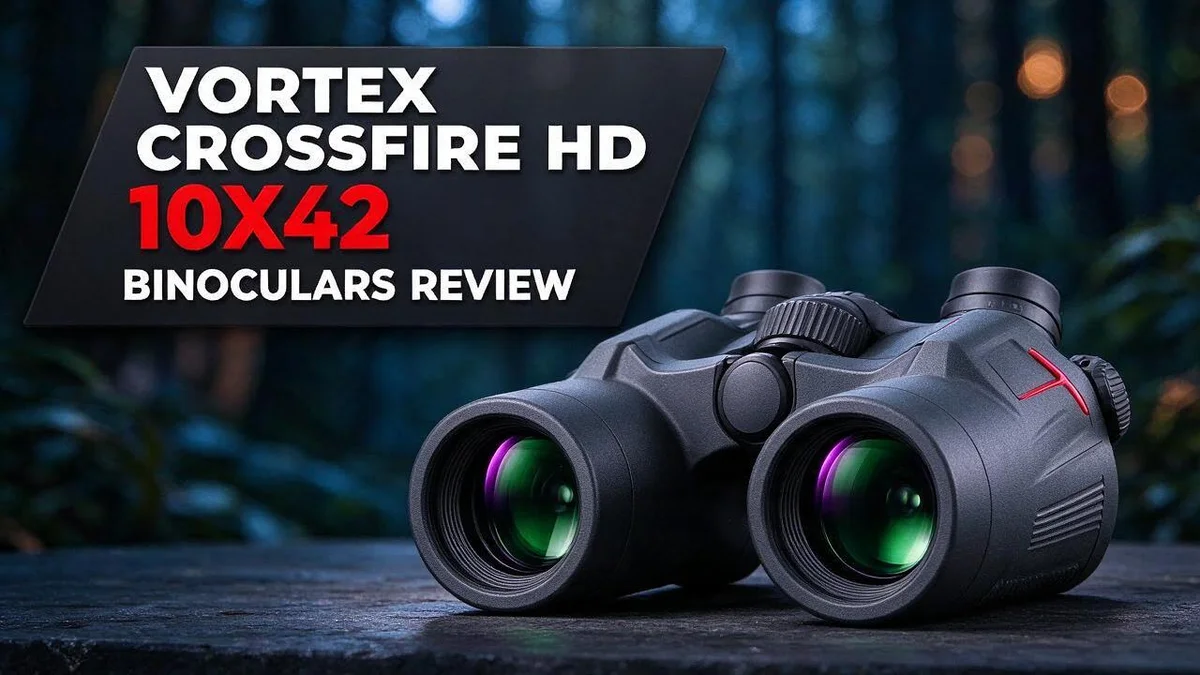
Vortex Crossfire HD 10×42 Binoculars Review: Value for Money?
Do you want a pair of binoculars that shows sharp detail without a fuss? The Vortex Crossfire HD 10×42 aims to do exactly that.
This model is Vortex’s entry level HD binocular. It offers 10x magnification and 42 mm objective lenses. The fully multicoated glass delivers a sharp image and handles low light well.
The rugged body also holds up outdoors. You get 15 mm of eye relief and a 325 ft field of view at 1000 yards. This review looks at how the Crossfire performs, so you can decide if it fits your needs.
In a Nutshell
- Sharp image quality: The Crossfire HD produces clear, detailed views. Its fully multi coated lenses help more light reach your eyes.
- Good low light results: The 42 mm objective lenses gather plenty of light. You can keep watching at dawn and dusk.
- Comfortable viewing: The 15 mm eye relief suits people who wear glasses. The 4.2 mm exit pupil gives a steady, easy to use image.
- Wide view: The field of view measures 325 feet at 1000 yards, or 6.2 degrees. This helps you follow moving subjects and scan open landscapes.
- Best fit: Hikers, casual birders, and weekend nature fans will enjoy it most. Heavy daily users may want to look at other models.
- Main rival: Reviewers more often recommend the Vortex Diamondback HD 10×42. Compare the two models before you decide.
Optical Quality and Image Sharpness

Last update on 2026-11-19 / Affiliate links / Images from Amazon Product Advertising API Some of the links on this website are affiliate links, which means that at no additional cost to you, I earn a commission if you click through and make a purchase. I only recommend products and services that I believe will add value to my readers. Thank you for your support!
Sharpness starts with the glass. The Crossfire uses fully coated lenses. These coatings cut glare and let more light reach your eyes.
Clean light means better contrast. Edges of trees, branches, and rooftops look crisp. Fine lines stand out more clearly against the sky.
The exit pupil shapes your view. At 4.2 mm, the beam of light reaching your eye is generous. This size suits most daylight and dusk viewing.
Your pupil opens wider as light fades. A larger exit pupil matches that change. So you keep detail even when evening arrives.
Focus control affects sharpness too. Turn the center wheel slowly until a distant object looks clean. Small adjustments often make a big difference.
Glasses wearers should also check the diopter. This ring sets focus for one eyepiece. Once it is set, both eyes see the same crisp image.
Test edge sharpness yourself. Aim at a sign or fence near the edge of the view. Notice whether the lines stay clear or drift softly.
Lighting changes everything. Bright sun shows the most detail. Overcast skies can flatten colors and reduce crispness a little.
For most hikers and birders, the sharpness feels strong. Try the Crossfire in a shop or outdoors. Your own eyes make the final call.
Low-Light Performance and Lens Coatings
Low light viewing tests every pair of binoculars. Dusk, forest shade, and early mornings all dim the view. The Crossfire HD holds its own in these moments.
Lens coatings do real work here. Light bounces off every glass surface, and some of it gets lost along the way. Coatings reduce those losses, so more light reaches your eye. Less light lost means a brighter, calmer picture. Coatings also help colors look more natural.
Stray light is another challenge. Bright reflections bouncing around inside the barrels can wash out contrast. Good coatings help limit glare. Shade your eyes with a hand or hat when light glares.
Try this test at dusk. Pick a tree line or rooftop while light still falls. Note how many branches or details you can spot. Then check again once shadows deepen. You will see how well the lenses hold detail.
Clean lenses matter more in dim light. Smudges scatter light and soften the view. Use a soft cloth and lens cleaner on both lens faces. A clean surface keeps contrast high when the sun drops.
Eye fatigue plays a role too. Dim views force your eyes to work harder. A clear image with good contrast feels easier on the eyes over time. Short breaks still help during long watches.
Keep expectations realistic. Even strong lenses cannot turn night into day. Most users notice the biggest gains at dawn and dusk. Those moments show how well the glass handles fading light.
Test the Crossfire in your own yard before a long trip. Real conditions tell you more than any chart. Try it at both dawn and dusk. Bring a friend to compare views side by side. Your eyes will give the final verdict.
Build Quality and Ruggedness
Build quality matters more than many buyers expect. Binoculars spend time in backpacks, car trunks, and damp grass. The Crossfire HD earns its reputation for rugged construction.
This matters most on the trail. Hikes bring bumps, drops, and sudden weather. A sturdy body keeps the optics aligned, so your view stays steady after each knock.
Rugged design also protects your investment over time. A strong housing shields the inner parts from everyday wear. You can carry the Crossfire on long walks without worrying about every bump.
Check the grip first. Hold the binoculars with both hands. Your fingers should rest on the barrels with ease. A comfortable grip reduces shake and helps you stay steady.
Next, test the hinge. The central hinge should feel firm, not loose. A firm hinge keeps the barrels set at the right width for your eyes. Move the barrels gently and listen for rattles.
Look at the eyecups too. If they twist or fold, they should click into place. Loose eyecups can shift during a long morning of birding, so test each setting.
Inspect the strap and attachments. A strong strap matters when you carry the binoculars all day. Pull on each anchor point gently. It should hold without creaking or shifting.
Lens caps deserve attention too. Caps should fit snugly and stay attached. A loose cap can fall off in the field and leave the front lens open to dust and scratches.
Ruggedness does not mean you can stop caring for the binoculars. Store them in a padded case after each outing. Wipe the body with a soft cloth when dust builds up.
Overall, the Crossfire HD feels built for active outdoor use. Hikers and birders can trust it on trails and in the field. Give it a careful hands-on check before your first trip.
Top 3 Alternatives
Nikon Monarch 5


Last update on 2026-07-11 / Affiliate links / Images from Amazon Product Advertising API Some of the links on this website are affiliate links, which means that at no additional cost to you, I earn a commission if you click through and make a purchase. I only recommend products and services that I believe will add value to my readers. Thank you for your support!
Looking for a strong alternative? The Nikon Monarch 5 suits many outdoor fans.
It uses extra-low dispersion glass to deliver sharp, bright images. The body is waterproof and fog proof, so it handles rain and cold mornings with ease. Birders often praise its wide field of view and comfortable grip.
Celestron Nature DX

Last update on 2026-08-27 / Affiliate links / Images from Amazon Product Advertising API Some of the links on this website are affiliate links, which means that at no additional cost to you, I earn a commission if you click through and make a purchase. I only recommend products and services that I believe will add value to my readers. Thank you for your support!
The Celestron Nature DX offers solid performance for everyday viewing.
Its fully multicoated lenses help light pass through clearly, so colors look natural. You get a sturdy, waterproof build that stands up to outdoor use. It is a dependable pick for backyard birding and hiking.
Athlon Midas

Last update on 2026-09-13 / Affiliate links / Images from Amazon Product Advertising API Some of the links on this website are affiliate links, which means that at no additional cost to you, I earn a commission if you click through and make a purchase. I only recommend products and services that I believe will add value to my readers. Thank you for your support!
The Athlon Midas brings advanced features to a 10×42 frame.
It includes ED glass and nitrogen purging, which keeps the lenses clear in changing weather. Hunters and wildlife watchers often choose it for its crisp view across the whole image. Its balanced design also makes long sessions less tiring.
Magnification, Field of View and Eye Relief
Magnification is the first thing you notice. The Crossfire offers 10x power, so objects look ten times closer than they do to your bare eyes. A bird at 100 yards appears to sit about 10 yards away.
Higher power is not always better. Ten power strikes a good balance for most outdoor trips. At this strength, your hands may shake a little, so a steady stance helps. Lean against a tree or rest your elbows against your chest.
Field of view shows how much you see at once. The Crossfire lists a linear field of view of 325 feet at 1,000 yards. This means you see a strip about 325 feet wide when you look at something 1,000 yards away.
An angular view of 6.2 degrees adds another clue. Wide views help you track birds in flight or follow a moving deer. Narrower views can feel tighter, so scan slowly. Most people find this view comfortable for steady scanning across open fields.
Eye relief decides how close your eyes can sit. The Crossfire provides 15 mm of eye relief. This gives you room to see the full image while your eyes rest at a comfortable distance.
Glasses wearers should pay special attention here. Eyeglasses need extra space between the eye and the eyepiece. A 15 mm measurement suits many eyeglass wearers. You can often see the entire view without removing your glasses, which saves time on a busy trail.
Try a quick test before your trip. Pick a wide target like a parking lot or a long fence line. Slowly pan across it and count how many fence posts you can track at once. This simple check shows the real field of view you get in your own hands.
Handling, Comfort and Ease of Use
Handling decides how often you pick up your binoculars. A good pair feels natural in your hands. The Crossfire follows that simple idea.
The focus wheel sits where your fingers rest. You can adjust it quickly when a bird lands or a deer steps into view.
The focus wheel should turn smoothly without much play. Stiff wheels slow you down. Smooth ones help you find sharp detail fast.
Next, think about the diopter. This small ring corrects differences between your two eyes. Set it once, then leave it alone for most trips. Mark the setting if you share the binoculars with a friend.
A balanced pair sits steady against your face. Binoculars that lean forward tire your neck over a long walk. Hold them for a few minutes and notice how they settle.
Weight matters too. Pick up the Crossfire in a shop to judge how it feels.
Using them with one hand is a good test. Can you raise them, focus, and lower them while holding a map? Practice this at home before your first outing.
The Crossfire is Vortex’s entry level HD model. Expect simple controls rather than extra features. One reviewer called it fine for occasional use, which suits casual viewers.
Cold weather changes handling too. Thick gloves make the wheels harder to turn. Test the focus wheel with gloves on if you hike in winter.
Long sessions can tire your arms. A tripod adapter can help, if the model supports one. Check the product details before you commit.
Good handling makes every outing more enjoyable.
Value Compared with the Diamondback HD
When shoppers compare the Crossfire with the Diamondback HD, they often ask one simple question. Which pair fits how they plan to use it?
The Diamondback HD 10×42 is the model reviewers more often recommend. That gives it a strong reputation in this size class.
The Crossfire earns praise for sharp image quality. It also performs well in low light, which helps at dawn and dusk.
Sharpness often matters more than the brand name. A crisp image helps you spot small details, such as a distant trail marker or a bird’s markings.
Its fully multi coated lenses help keep views bright. Coatings cut glare and light loss, so the picture stays clear.
Brightness also counts during early mornings. Good low light performance can decide whether you spot an animal clearly or only see a shadow.
Vortex calls the Crossfire its entry level HD model. That label tells you it works well as a starting point in the HD line.
One reviewer described the Crossfire as fine for occasional use. This comment matters if you plan trips every weekend.
Frequent users may want to look closely at the Diamondback HD. Its reputation suggests it suits regular outings well.
Ask yourself what matters most on each trip. Some people want maximum sharpness, while others prioritize a light pack.
Compare the two on paper first. Line up the specs, then read recent user reviews. Focus on the features you will use most.
Your own habits should guide the final choice. Think about how often you hike, watch wildlife, or attend outdoor events.
A short side by side test helps too. Look through each pair at the same target. Notice sharpness, brightness, and comfort.
Pros and Cons
Pros
– Built to handle bumps on rough trails
– Good match for nature walks and sightseeing trips
– A simple starting point for people new to binoculars
– Works well for casual wildlife watching
– Feels sturdy enough for regular outdoor use
Cons
– At 10x, hand shake shows up more clearly
– Steady stance or a tripod helps on longer observations
– Not the top pick for people who watch every day
Who Should Buy It
Families who share gear often find this model useful. One pair can pass between parents, teens, and grandparents on a weekend outing. Everyone gets a clear look at the same scene. Each person can enjoy the view without a long wait for a turn.
Group leaders can also consider this choice. A teacher or scout leader can hand out a pair without worrying about every scratch. Groups often need gear that passes through many hands and many trips.
Gift shoppers have a good option here. Someone who talks about birds or hiking may enjoy a pair of their own. A gift like this shows that you listen to their interests. It also makes a memorable present for a birthday or holiday.
People who want a backup pair should take a look too. Many birders leave their main binoculars at home for short trips. A second pair can stay in the car or day pack, ready for a quick stop at a lake or park. Having it close by means fewer missed moments.
Sports fans can use it as well. At 10x, players on a field feel closer from the stands. Watching a game this way makes the day feel more personal.
Curious beginners can test the hobby first. Someone who wants to see if birding fits their life can start with a simple setup. Trying a hobby before making a big commitment makes sense for many people.
Think about where and how you plan to use them. Pick this pair for relaxed trips, shared outings, and thoughtful gifts. Choose another model if you need gear for daily use or long hours in the field.
Final Verdict
The Vortex Crossfire HD 10×42 is a dependable pair of binoculars. It does the basics well. You get a clear view and a body that is ready for the outdoors.
Our overall verdict is simple. We recommend it for readers who want a capable pair for relaxed outings. It rewards people who head outside now and then.
Choose the Crossfire if you want an easy first step into the hobby. It also fits shared gear bags and travel packs. You will spend more time looking and less time fussing.
Look elsewhere if you plan to watch for hours every week. Heavy users should compare the Diamondback HD 10×42 before they decide. Reviewers recommend that model more often.
Our rating reflects this balance. We score it high for clarity and durability. We score it average for daily, long session use.
We suggest a quick test before you commit. Hold the binoculars to your eyes and check comfort. Look at a distant sign and see how fast you find focus.
Care matters too. Wipe the lenses gently after each trip. Store the pair in a dry spot, and it will last for years.
The Crossfire earns a place on your shortlist. It will not wow expert observers, but it will please most everyday users. Take it outside, learn what you enjoy, and let your habits guide any future upgrade.
Bottom line: this is a friendly, capable choice for casual viewing and a smart way to start.
Frequently Asked Questions
Can people who wear glasses use the Crossfire HD?
The Crossfire HD offers 15 mm of eye relief. This gives glasses wearers room to see the full view. Keep your glasses on and move your eye close to the eyepiece until the image looks clear.
How wide is the view through these binoculars?
The field of view covers 325 feet at 1,000 yards. That equals about 6.2 degrees. A wide view makes it easier to find a bird or track a moving animal.
Will the Crossfire HD work in dim light?
Yes, the 4.2 mm exit pupil and fully coated lenses help in low light. Images stay bright at dawn and dusk. This makes early morning walks and evening outings more enjoyable.
How does the Crossfire HD compare with the Diamondback HD?
Both models come from Vortex and share the same 10×42 size. The Diamondback HD is often the choice for people who watch more often. Compare the two side by side to see which feels better in your hands.

Hello, I’m Emily Price, the founder of Birds Affection. As a passionate bird enthusiast and spiritual seeker, I’ve always been fascinated by the symbolic meanings and mystical connections between birds and our lives. On this website, I share my knowledge and insights on the spiritual significance of various bird species, exploring their roles as messengers, guides, and teachers. Through my writing, I aim to inspire and educate others on the profound wisdom and beauty that birds bring to our world. Join me on this journey as we delve into the enchanting realm of bird symbolism and discover the hidden meanings behind these magnificent creatures.