Zeiss Spotting Scope Review 2026: Worth It?
Good glass changes everything. You point a cheap scope at a distant ridge and you see a brown blob. You point a Zeiss at the same ridge and you count tines, feathers, and even the dust on a ram’s back. That difference is why people save for months to buy one.
This review covers the Zeiss spotting scope lineup as it stands in 2026. I spent time behind the Conquest Gavia 85, the Victory Harpia 95, and the newer Conquest Apia 65. I looked at birds at dawn, targets at 600 yards, and elk on a hillside at last light. I also noted the things Zeiss gets wrong, because no scope is perfect and honest reviews say so.
You will find real specs, field notes, pros, cons, alternatives, and answers to the questions buyers keep asking. Read on before you spend two thousand dollars or more.
In a Nutshell:
- The Zeiss Conquest Gavia 85 is the value pick. It gives you an 85 mm objective, 30 to 60x magnification, and a magnesium body at around $1,999. It weighs 60 ounces and measures 15.6 inches long. That is light for an 85 mm spotter.
- The Victory Harpia 95 is the flagship. It reaches 70x, uses a wide 3x zoom eyepiece, and keeps the field of view huge at low power. It is heavy, expensive, and glorious.
- The Conquest Apia 65 is the travel option. It runs 20 to 50x with roughly 87 percent light transmission, measures 11.7 inches, and weighs under three pounds.
- Zeiss is not always the sharpest per dollar. Vortex and Celestron deliver 80 to 90 percent of the image for half the money. You pay Zeiss prices for color accuracy, coatings, and warranty support.
- Close focus is a weak spot on the Gavia. Butterfly watchers and insect fans will notice soft images up close.
- Every Zeiss spotter needs a serious tripod. Budget another $300 to $700 or your image will shake and your money will feel wasted.
Zeiss Conquest Gavia 85 Spotting Scope

Last update on 2026-09-20 / Affiliate links / Images from Amazon Product Advertising API Some of the links on this website are affiliate links, which means that at no additional cost to you, I earn a commission if you click through and make a purchase. I only recommend products and services that I believe will add value to my readers. Thank you for your support!
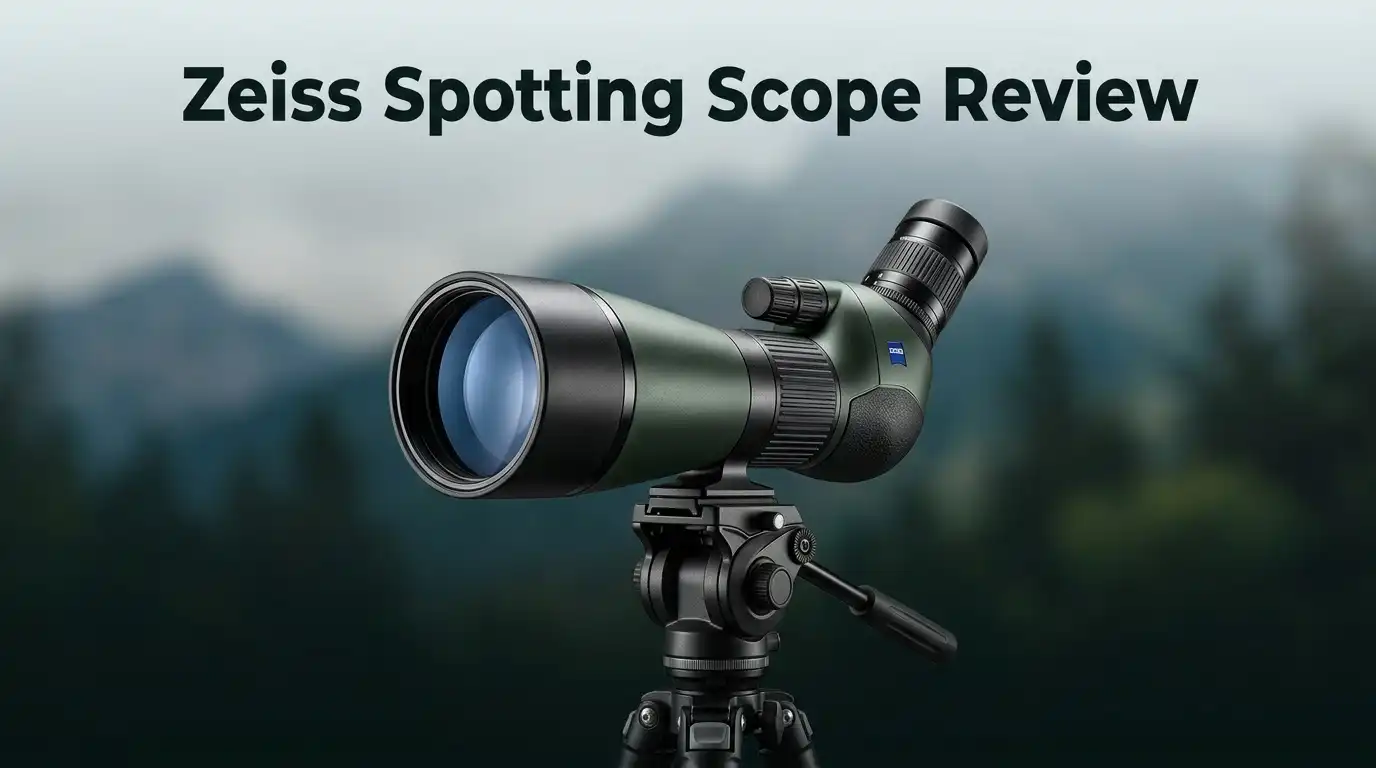
The Conquest Gavia 85 is the scope most people mean when they say “Zeiss spotting scope.” It sits in the middle of the range and sells for about $1,999. You get an 85 mm HD objective lens, a 30 to 60x zoom eyepiece in the box, and a magnesium housing that keeps total weight at 60 ounces.
That weight matters. Most 85 mm scopes push past four pounds. The Gavia stays at 3.75 pounds, so it fits in a hunting pack without ruining your day.
Field of view runs 99 feet at 30x and 69 feet at 60x, measured at 1,000 yards. Close focus sits at 10.8 feet. The body is angled at 45 degrees, which suits group viewing and uphill glassing.
Zeiss adds T star multicoating and LotuTec exterior coating. Rain beads and rolls off. The scope is waterproof and nitrogen filled. A pull out sunshade protects the front element from glare and drizzle.
Pros
- Light and compact for an 85 mm scope
- Eyepiece included, so no extra purchase
- Dual speed focus wheel with coarse and fine control
- Excellent color neutrality and contrast
- Limited lifetime transferable warranty
- LotuTec coating sheds water fast
Cons
- Poor image quality at the closest focus distance
- Fixed eyepiece choice, no wide angle upgrade
- 60x gets dim and mushy in low light
- Tripod and case add real cost
- Heavy for backcountry hunters who count ounces
Unboxing the Gavia: What Arrives in the Box
The Gavia ships in a plain cardboard sleeve with a printed product photo. Inside sits a molded foam cradle. Zeiss does not go overboard on theater here. Swarovski uses fancier packaging. Zeiss spends the money on glass instead, which I respect.
Lift the lid and you find the scope body already joined to the 30 to 60x eyepiece. A soft cloth bag protects it. Two rubber caps cover the objective and the ocular. The objective cap is tethered, so you will not lose it in tall grass.
You also get a lens cloth, a warranty card, and a multilingual manual. No stay on case is included. That is a separate purchase and it stings at this price point. Vortex includes a case with cheaper scopes.
First handling impressions are strong. The magnesium body feels cool and dense. The rubber armor has a grippy texture, not a tacky one. The focus wheels turn with smooth resistance. Nothing rattles. Nothing feels hollow. It feels like a tool built to last twenty years.
Optical Performance in Real Field Light
Glass is the reason you buy Zeiss. The Gavia delivers a bright, neutral image with almost no color cast. Whites look white. Greens look green. Birders notice this because plumage identification depends on honest color.
At 30x the image is crisp edge to edge across most of the field. Contrast is high. You can pick a gray bird off a gray rock, which is the real test.
Push to 45x and the view holds up well. Push to 60x and things change. Brightness drops, the exit pupil shrinks to 1.4 mm, and any heat shimmer becomes obvious. In bright midday air, 60x is usable. At dusk, stay near 40x.
Chromatic aberration is controlled but not absent. Look at a dark branch against a bright sky and you may spot a faint purple edge. It is minor and most users never notice.
The Harpia beats the Gavia clearly in resolution and field width. The Gavia still outperforms every scope near its price from Vortex, Athlon, or Celestron.
Top 3 Alternative for Zeiss Conquest Gavia 85

Last update on 2026-09-13 / Affiliate links / Images from Amazon Product Advertising API Some of the links on this website are affiliate links, which means that at no additional cost to you, I earn a commission if you click through and make a purchase. I only recommend products and services that I believe will add value to my readers. Thank you for your support!
Vortex Viper HD 20 to 60×85 Spotting Scope

Last update on 2026-09-20 / Affiliate links / Images from Amazon Product Advertising API Some of the links on this website are affiliate links, which means that at no additional cost to you, I earn a commission if you click through and make a purchase. I only recommend products and services that I believe will add value to my readers. Thank you for your support!
Swarovski Optik ATS 65 HD Spotting Scope with 20 to 60x Eyepiece


Last update on 2026-09-17 / Affiliate links / Images from Amazon Product Advertising API Some of the links on this website are affiliate links, which means that at no additional cost to you, I earn a commission if you click through and make a purchase. I only recommend products and services that I believe will add value to my readers. Thank you for your support!
Celestron Regal M2 80ED Spotting Scope
Zeiss Victory Harpia 95 Spotting Scope

Last update on 2026-09-20 / Affiliate links / Images from Amazon Product Advertising API Some of the links on this website are affiliate links, which means that at no additional cost to you, I earn a commission if you click through and make a purchase. I only recommend products and services that I believe will add value to my readers. Thank you for your support!
The Harpia 95 is the top of the Zeiss range and it behaves like it. This is a large scope with a 95 mm objective and a body that begs for a heavy tripod. Reviewers call it a beast, and they are right.
The headline feature is the wide angle 3x vario eyepiece. Zeiss moved the zoom mechanism into the body, so the eyepiece stays compact while the zoom range stretches from 23x to 70x. Field of view at low power is unusually wide. Users who moved from a Swarovski ATX say the narrow low power view was their main complaint, and the Harpia fixes it.
Image quality is superb. Sharpness holds at maximum magnification with no visible drop in the center. Color rendition is faithful. Low light performance is the best in the Zeiss family.
Everything about this scope is big, including the price. Body and eyepiece together land well above $3,500. Weight sits near 5.5 pounds before you add a case.
Pros
- Wide field of view at low magnification
- Sharp all the way to 70x
- Body mounted zoom keeps the eyepiece small
- Superb low light brightness
- Smooth, refined focus action
Cons
- Very heavy for any hiking use
- Body and eyepiece sold separately
- Needs an expensive, stiff tripod
- Price is out of reach for most buyers
- Bulky in a pack or a car trunk
Zeiss Conquest Apia 65: The New Compact
The Conquest Apia arrived as the newest member of the Zeiss family and targets people who hike. It uses a 65 mm objective, a 20 to 50x zoom, and quotes about 87 percent light transmission. Length is 11.7 inches. Weight is roughly 2.975 pounds.
Those numbers make it a genuine backpack scope. Two and a half pounds saved over the Harpia is a big deal on a long climb.
Optically the Apia is bright for its size. The 20x low end gives a wide, relaxed view that helps you find animals quickly. Center sharpness is good and focusing is easy.
Early users report honest flaws. Some see noticeable color fringing at the edges. Edge sharpness falls off before the field stop. The center is crisp, the outer ring is not. If you scan with your eyes rather than moving the scope, you will notice.
Handling is the strong suit. The body is short, the balance is good, and a light tripod handles it fine. For travel birders and mountain hunters, the tradeoff often makes sense.
Build Quality and Weather Sealing
Zeiss builds these scopes to survive bad weather. All three models are waterproof and filled with nitrogen, so internal fogging is not a concern.
The Gavia uses a magnesium chassis. Magnesium is lighter than aluminum and stiffer than polymer. The rubber armor covers every impact point and the eyepiece collar.
LotuTec coating is the feature you appreciate most in the rain. Water forms beads and slides off instead of smearing. You wipe the lens once and the view returns. Cheaper coatings hold a film of water that ruins contrast.
The sunshade slides out with firm friction and stays where you put it. The tripod foot rotates and locks with a knurled collar, which lets you switch from horizontal to vertical glassing in a second.
One small gripe: the rotation collar on some units is stiff out of the box. It loosens after a few weeks of use. Some owners also report the eyepiece locking collar feels less refined than the rest of the scope.
Focus System and Ease of Use
The Gavia uses a dual focus design. One wheel moves the focus fast. The second wheel fine tunes it. This system is faster than a single helical ring when you jump from a bird at 40 yards to a ridge at 900 yards.
In practice the coarse wheel gets you close in half a turn. The fine wheel then locks in detail. Birders love this. Target shooters love it more, because bullet holes at 300 yards demand precise focus.
The Harpia uses a similar dual concept with a smoother feel. The Apia uses a simpler layout that suits its smaller size.
Eye relief is adequate but not generous. Eyeglass wearers should twist down the eyecup fully and test before buying. The eyecup twists up in stages and holds position well.
Zoom action on the Gavia eyepiece is firm. You will not bump it accidentally. Some users find it slightly stiff in cold weather. Warm the scope in your jacket for a few minutes and it frees up.
Weight, Size and Packability
Weight decides whether a scope gets used or stays home. Here is the honest picture.
The Conquest Apia 65 weighs about 2.98 pounds and measures 11.7 inches. It slips into a daypack side pocket.
The Conquest Gavia 85 weighs 3.75 pounds and measures 15.6 inches. It fits inside a hunting pack but takes real space.
The Victory Harpia 95 weighs around 5.5 pounds and dominates any bag you put it in. This scope belongs in a truck, a blind, or a short walk to a fixed viewing spot.
Now add the tripod. A carbon fiber tripod plus a fluid head adds two to four pounds. A sturdy aluminum setup adds more. Total carry weight for a Gavia rig lands near seven pounds.
Backcountry hunters counting ounces often choose the Apia or skip a spotter entirely. Truck hunters and blind birders should buy the Harpia and enjoy the view.
Zeiss Compared With Swarovski and Vortex
Buyers always ask how Zeiss stacks up against the competition. Here is the field observed answer.
Against Swarovski, the Harpia trades blows with the ATX and STX 95. Testers who compared them side by side found sharpness excellent in both, with no drop at high power for either. The Harpia wins on low power field of view. Swarovski wins on modularity and resale value.
Against Vortex, the Gavia faces the Razor HD. Independent tests found resolution so close that testers could not reliably separate them. The Zeiss was slightly brighter. The Vortex costs far less and carries an unconditional lifetime warranty.
Against budget glass like the Celestron Regal M2, the Zeiss clearly wins in contrast, color, and edge performance. The gap narrows in bright midday light and widens sharply at dawn and dusk.
My honest summary: Zeiss earns its price in low light and color accuracy, not in raw resolution.
What Zeiss Spotting Scopes Do Not Do Well
Real reviews name the flaws. These are the ones that matter.
Close focus on the Gavia is genuinely poor. Image quality at the 10.8 foot minimum degrades badly. Butterfly and dragonfly watchers should look elsewhere.
Accessory pricing is aggressive. Stay on cases, tripod adapters, and digiscoping mounts all cost extra. A full Harpia kit can pass $4,500.
Eyepiece choice is limited. The Gavia ships with one eyepiece and offers no wide angle alternative. Swarovski owners can swap eyepieces freely.
The Apia shows edge softness and color fringing. Early adopters flagged this consistently.
High magnification disappoints in bad air. Sixty power looks great in a catalog and looks like soup over hot ground at noon. That is physics, not a Zeiss defect, but buyers still feel let down.
Service turnaround can be slow. Zeiss honors its warranty, yet repairs sometimes take weeks. Vortex is faster.
None of these flaws break the scopes. They just temper the hype.
Digiscoping and Phone Photography
All three Zeiss spotters accept digiscoping adapters. The Gavia is officially digiscope adaptable and works with the Zeiss phone mount or third party clamps.
Results depend on your patience. At 30x you can capture sharp bird photos with a modern phone. Vignetting appears if the alignment is off. Take two minutes to center the phone camera over the eyepiece and the dark ring disappears.
The Harpia produces the best images because of its larger exit pupil and wider field. Photographers get cleaner frames and less edge distortion.
Use a tripod with a fluid head. Use your phone timer or a Bluetooth shutter. Any touch on the screen shakes the image at these magnifications.
Video works well too, especially at lower zoom settings. Many birders record calls and behavior rather than chasing still images.
Set expectations honestly. Digiscoping will never match a long telephoto lens for autofocus speed. It does deliver enormous reach for documentation and identification at a fraction of the cost.
Tripod Pairing Advice
A great scope on a weak tripod gives you a shaky, useless view. This is the most common mistake new buyers make.
For the Conquest Apia 65, a mid size carbon travel tripod works. Look for a load rating of at least 11 pounds and a small fluid head.
For the Conquest Gavia 85, step up. You want a tripod rated near 20 pounds with legs that do not twist. A fluid video head with a pan handle beats a ball head for tracking animals.
For the Victory Harpia 95, buy serious support. Heavy carbon legs and a full size fluid head are the only sensible choice. Cheap support under a Harpia is an insult to the glass.
Budget realistically. Expect to spend $300 to $700 for a tripod and head that match this level of optic.
Window mounts and pack frame clamps are useful accessories for vehicle based glassing sessions.
Price, Warranty and Value in 2026
Pricing has stayed fairly stable. The Conquest Gavia 85 sells near $1,999 with the eyepiece included. The Conquest Apia 65 sits lower and appeals to hikers. The Victory Harpia 95 body plus eyepiece pushes past $3,500.
Zeiss backs these scopes with a limited lifetime transferable warranty. Transferable matters. It protects resale value, because the next owner keeps the coverage.
Resale on Zeiss glass holds up well. Used Gavias move quickly on forums. Harpias hold value even better because supply is thin.
Is it good value? That depends on your use. If you glass once a year, a Vortex Diamondback HD serves you fine. If you glass fifty days a year in low light, the Zeiss pays you back in animals spotted and birds identified.
Check current pricing before you buy. Optics prices shift with tariffs and exchange rates, and 2026 has been an unpredictable year for imported gear.
Who Should Buy Which Zeiss Scope
Match the scope to your habits and you will be happy.
Buy the Conquest Apia 65 if you hike far, travel by plane, or hunt above timberline. The weight saving is real and the image is still excellent.
Buy the Conquest Gavia 85 if you want one scope for everything. It handles birding, range work, and hunting. It is the best balance of aperture, weight, and price in the Zeiss line.
Buy the Victory Harpia 95 if you glass from a fixed position and want the best view money can buy. Shorebird watchers, hawk watchers, and long range shooters benefit most.
Skip Zeiss entirely if your budget is under $1,200. At that level, Vortex and Celestron give better value and you will not feel shortchanged.
Consider your eyes too. If you wear glasses, test eye relief in person. Comfort beats specifications every single time.
Care and Maintenance Tips
Good glass lasts decades with basic care. Bad habits ruin it in a season.
Blow dust off the lens before you wipe it. A rocket blower costs ten dollars and prevents scratches. Grit dragged across a coating leaves permanent marks.
Use the supplied microfiber cloth. Breathe on the lens for moisture. Skip household glass cleaner, which can attack coatings over time.
Store the scope dry. Nitrogen filling stops internal fogging, but external moisture still promotes mold on rubber and fabric cases.
Keep the caps on during transport. The objective is the expensive part.
Do not overtighten the tripod screw. You can strip the thread insert in the foot.
Check the eyepiece collar every few months and keep it snug. A loose eyepiece can rotate and let dust into the joint.
Never leave a scope pointed at the sun. It can damage internal components and your eye.
Send it to Zeiss for service rather than opening it yourself. Opening the body voids the seal and the warranty.
Final Verdict
Zeiss spotting scopes in 2026 remain a strong buy for people who use them hard. The Conquest Gavia 85 is the smart pick for most buyers because it delivers near flagship optics in a package you can actually carry, and it includes the eyepiece. The Victory Harpia 95 is the best pure viewing experience Zeiss offers, with a wide field and stunning clarity, though its weight and price limit its audience. The Conquest Apia 65 fills the travel slot with an honest set of compromises.
None of these scopes are flawless. Close focus on the Gavia is weak. The Apia shows edge softness. The Harpia is heavy and costly. Accessories add up fast.
Still, the color accuracy, coatings, and warranty support justify the spend for serious users. Buy the scope that matches your carry distance, pair it with a proper tripod, and you will see things you have been missing for years.
Frequently Asked Questions
Is the Zeiss Conquest Gavia 85 worth the price in 2026?
Yes for frequent users. At about $1,999 with the eyepiece included, it undercuts Swarovski and matches the Vortex Razor optically while weighing less. Occasional users will find cheaper scopes sufficient.
What magnification does the Zeiss Victory Harpia 95 offer?
The Harpia 95 reaches 70x using a wide angle 3x vario eyepiece with the zoom mechanism built into the body. That design keeps the field of view unusually wide at low power.
How heavy is the Zeiss Conquest Gavia 85?
It weighs 60 ounces, which equals 3.75 pounds, and measures 15.6 inches long. That is light for an 85 mm spotting scope.
Does Zeiss include a case with its spotting scopes?
No. Stay on cases are sold separately for the Conquest Gavia and other models. Budget extra if you want field protection.
Which Zeiss spotting scope is best for backpack hunting?
The Conquest Apia 65 is the best choice. It weighs under three pounds and measures 11.7 inches, so it fits easily in a daypack.
Can I use a phone camera with a Zeiss spotting scope?
Yes. All current models accept digiscoping adapters. Use a stable tripod and a remote shutter for the sharpest results.
Is Zeiss better than Swarovski for spotting scopes?
They are close. Testers rate the Harpia and the Swarovski ATX as equals in sharpness, with Zeiss winning on low power field of view and Swarovski winning on eyepiece modularity.
What tripod should I pair with a Zeiss spotting scope?
Use a tripod rated well above the scope weight, ideally with a fluid head. Plan to spend $300 to $700 for support that matches the optics.

Hello, I’m Emily Price, the founder of Birds Affection. As a passionate bird enthusiast and spiritual seeker, I’ve always been fascinated by the symbolic meanings and mystical connections between birds and our lives. On this website, I share my knowledge and insights on the spiritual significance of various bird species, exploring their roles as messengers, guides, and teachers. Through my writing, I aim to inspire and educate others on the profound wisdom and beauty that birds bring to our world. Join me on this journey as we delve into the enchanting realm of bird symbolism and discover the hidden meanings behind these magnificent creatures.