Pentax Spotting Scope Review 2026: Still Worth It?
Pentax has quietly built spotting scopes for decades while other brands chased headlines. The company never pushed loud marketing campaigns. Instead it kept refining glass, prisms, and eyepieces. The result is a small lineup that birders and target shooters still recommend in 2026.
You might wonder if a scope design from the 2000s can compete today. That question deserves an honest answer. This review covers real optical performance, the unboxing moment, the build, and the flaws nobody mentions in product listings. I looked at owner feedback, field tests, and manufacturer data before writing a single line.
Pentax sits in an unusual spot. It costs less than Swarovski or Zeiss, yet it delivers image quality that embarrasses many mid range scopes. That value gap is the whole story. Read on and you will know whether a Pentax belongs on your tripod this season.
Key Takeaways
- Optical quality punches above the price. Pentax uses ED glass elements, BaK4 porro prisms, and SMC multi coating. The result is sharp resolution, strong contrast, and very little color fringing. Owners regularly compare the 80mm model favorably against scopes costing twice as much.
- The eyepiece system is the real advantage. Pentax scopes accept 1.25 inch eyepieces, the American astronomy standard. You can fit Pentax XW and XF eyepieces, the 20×60 zoom, or third party astronomy eyepieces. No other spotting scope brand gives you this much freedom.
- Build quality holds up in bad weather. The bodies use magnesium alloy with rubber armor. They carry JIS Class 6 waterproof ratings and nitrogen filling. Rain, fog, and temperature swings do not stop them.
- The focus system feels dated. Most Pentax scopes use a single focus knob instead of dual speed focusing. Fine focusing at 60x takes patience. This is the most common complaint from owners.
- Availability has become a problem. Stock comes and goes. Prices swing. Some models appear only through specialty dealers or the used market, which frustrates buyers who want next day shipping.
- Best fit: patient birders, digiscopers, astronomy crossover users, and range shooters who value glass over gadgets.
Pentax PF-80ED Spotting Scope Review

Last update on 2026-09-20 / Affiliate links / Images from Amazon Product Advertising API Some of the links on this website are affiliate links, which means that at no additional cost to you, I earn a commission if you click through and make a purchase. I only recommend products and services that I believe will add value to my readers. Thank you for your support!
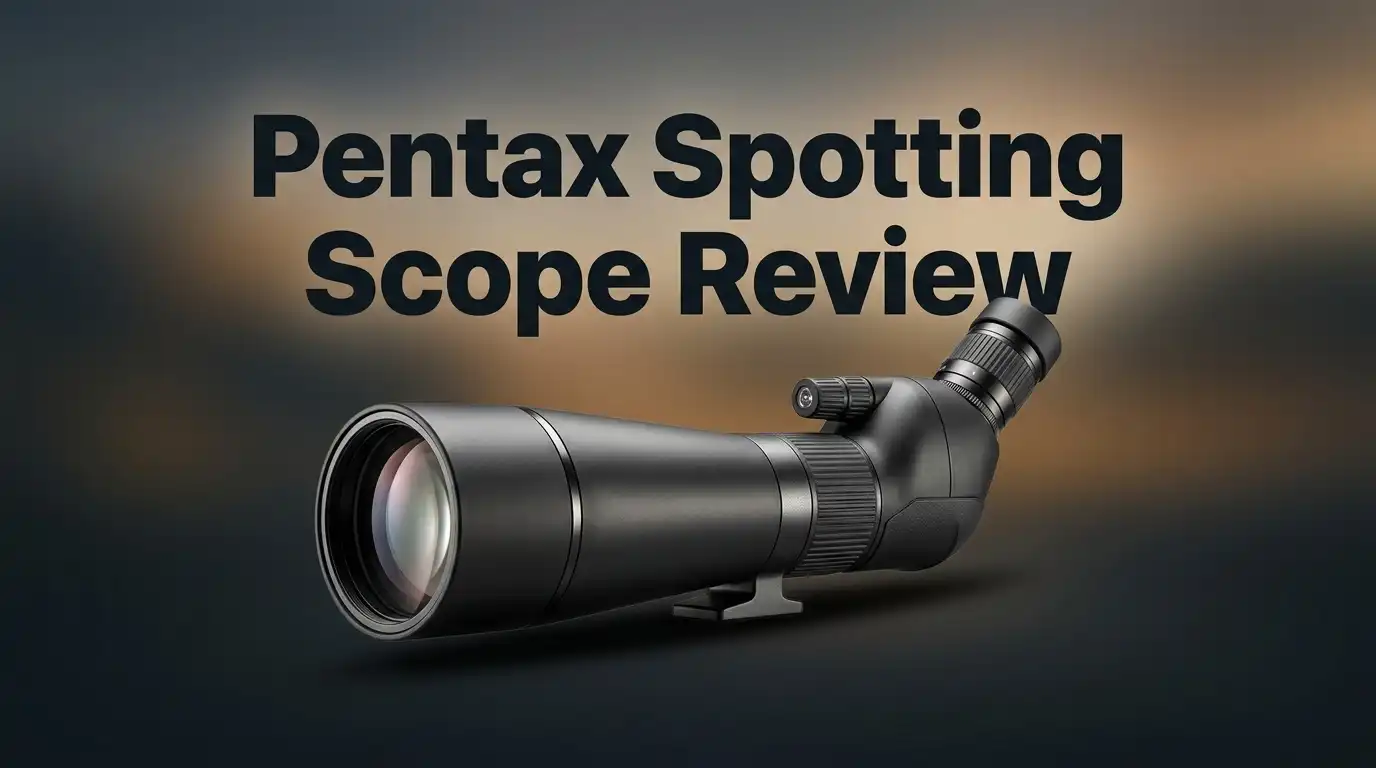
The PF-80ED is the model that made the reputation. It pairs an 80mm ED objective with a straight line porro prism body. The lens uses three elements in three groups, including lanthanum glass. Pentax adds SMC multi layer coating to cut reflections.
Magnification runs 20x to 60x with the zoom eyepiece. Field of view measures 108 feet at 20x and 56 feet at 60x, both at 1000 yards. Close focus sits near 19 feet. Eye relief reaches 20mm, which eyeglass wearers appreciate.
The angled version, the PF-80ED-A, weighs 56.4 ounces. The straight version drops to 49 ounces. Both feel light for full size 80mm scopes.
Pros
- Excellent sharpness and color fidelity for the price
- ED glass controls chromatic aberration well
- Accepts standard 1.25 inch eyepieces
- Lighter than most 80mm rivals
- Waterproof, nitrogen filled, magnesium alloy body
- Retractable sunshade and sight line on the barrel
Cons
- Single speed focus knob slows fine adjustments
- Eyepiece sold separately on some listings
- Stock availability changes often
- No arca swiss foot on the mounting plate
Unboxing the Pentax PF-80ED
The box arrives plain. Pentax spends nothing on packaging theater. You open a brown carton and find a molded insert holding the scope body. There is no glossy tray and no ribbon.
Lift the scope out and the weight surprises you. It feels dense but not heavy. The rubber armor grips your hand immediately. It has a slightly tacky texture that stays secure in cold or wet conditions.
The soft Cordura style case sits underneath. This case is a genuine highlight. It uses velcro fastenings with fold back flaps, so you can leave it on the scope while glassing. Two carry handles are attached and one extends into a shoulder strap.
Inside the case you find lens caps for both ends. The eyepiece, if your bundle includes one, comes in its own small box.
The first look through the glass is the moment that sells it. Point at a distant tree line, twist the focus, and the detail snaps into place. That is when the plain packaging stops mattering.
Optical Performance in Real Daylight
Good light is where the PF-80ED shines hardest. The 80mm aperture pulls in plenty of light, and the ED elements keep edges clean. Feather barbs on a distant heron stay defined at 40x.
Color rendition leans neutral. Some scopes push warm or cool tints. Pentax stays close to true, which matters if you photograph or paint what you see.
Chromatic aberration exists, but it hides well. You may spot a faint purple edge on a black bird against bright sky at 60x. Below 45x it disappears for most eyes.
Contrast is the standout trait. Shadow detail under a bush stays readable instead of collapsing into mush. That comes from the SMC coating and the quality porro prism design.
Sharpness holds across roughly 80 percent of the field. The outer edge softens slightly at full zoom. That is normal behavior and no reason to worry.
Range shooters report seeing bullet holes past 500 yards in good air. Mirage cuts that in half on hot days.
Top 3 Alternative for Pentax PF-80ED

Last update on 2026-09-13 / Affiliate links / Images from Amazon Product Advertising API Some of the links on this website are affiliate links, which means that at no additional cost to you, I earn a commission if you click through and make a purchase. I only recommend products and services that I believe will add value to my readers. Thank you for your support!
Vortex Optics Diamondback HD 20-60×85 Spotting Scope


Last update on 2026-09-17 / Affiliate links / Images from Amazon Product Advertising API Some of the links on this website are affiliate links, which means that at no additional cost to you, I earn a commission if you click through and make a purchase. I only recommend products and services that I believe will add value to my readers. Thank you for your support!
Celestron Regal M2 80ED Spotting Scope

Last update on 2026-09-17 / Affiliate links / Images from Amazon Product Advertising API Some of the links on this website are affiliate links, which means that at no additional cost to you, I earn a commission if you click through and make a purchase. I only recommend products and services that I believe will add value to my readers. Thank you for your support!
Athlon Optics Argos HD 20-60×85 Spotting Scope
Pentax PF-65ED II Spotting Scope Review

Last update on 2026-09-20 / Affiliate links / Images from Amazon Product Advertising API Some of the links on this website are affiliate links, which means that at no additional cost to you, I earn a commission if you click through and make a purchase. I only recommend products and services that I believe will add value to my readers. Thank you for your support!
The PF-65ED II is the travel friendly option. It uses a 65mm ED objective inside a compact body. Weight drops to roughly 1050 grams, so it rides in a daypack without complaint.
Pentax offers it in straight and angled versions. The angled model carries the A designation. Most bundles include the 20×60 zoom eyepiece, which makes the total cost easier to swallow.
Image quality stays impressively close to the 80mm model in bright light. You lose brightness at dusk and dawn because the smaller aperture gathers less light. Maximum useful magnification also drops.
This is the scope I would recommend to a hiking birder or anyone under a strict weight budget.
Pros
- Compact and genuinely packable
- Same ED glass quality in a smaller body
- Zoom eyepiece often included
- Waterproof and nitrogen filled
- Comfortable slanted barrel option
Cons
- Dimmer than 80mm scopes in low light
- Detail softens above 45x
- Small exit pupil at high zoom
- Field case feels thinner than the 80mm case
Build Quality and Weather Sealing
Pentax builds these scopes like tools, not like showpieces. The magnesium alloy shell keeps weight down while protecting internal mechanisms. Rubber armor wraps the vulnerable sections.
The waterproof rating is JIS Class 6. That means protected against powerful water jets from any direction. A dust shielding glass element sits in the eyepiece receptacle, so swapping eyepieces does not break the seal.
Nitrogen filling prevents internal fogging. Move the scope from a cold truck into humid morning air and the inside stays clear.
The focus knob turns smoothly with even resistance. It does not develop slop quickly. Owners with twenty year old units report the same feel today.
The rotating tripod collar loosens and locks with a single ring. Rotation is smooth but not buttery. You will notice a slight grind compared to premium European scopes.
The built in sunshade slides out and stays put. It blocks side glare and shields the objective from light rain.
Eyepiece Options and Compatibility
This section explains why Pentax fans stay loyal. The eyepiece receptacle measures 31.7mm, the same as 1.25 inch astronomy eyepieces.
Pentax offers four XW series wide angle eyepieces, three cheaper XF series eyepieces, and the 20×60 zoom. Every one of them delivers long eye relief for glasses wearers.
You can also fit eyepieces from astronomy brands. That opens up a huge catalog. A quality fixed focal eyepiece at 30x often outperforms any zoom in sharpness and field width.
The zoom eyepiece covers 6.5mm to 19.5mm focal length. Apparent field runs 42 to 60 degrees. Eye relief sits between 11mm and 15mm on that unit, which is tighter than the body specification suggests.
My honest advice: buy the body and pair it with a fixed XW eyepiece if you mostly watch at one distance. You get a wider, sharper, more relaxing view.
Most competing scopes lock you into proprietary eyepieces. Pentax does not.
Low Light and Long Range Performance
Twilight separates good scopes from great ones. The PF-80ED performs well here but does not reach alpha class territory.
At 20x the exit pupil measures 4mm, which is bright and comfortable. At 60x it shrinks to 1.3mm. That narrow exit pupil makes dusk viewing at maximum zoom difficult. Drop to 30x or 40x and the image brightens noticeably.
The 65mm model struggles more in these conditions. Its smaller aperture simply cannot collect the same light.
For long range spotting, atmospheric conditions matter more than glass quality. Heat shimmer destroys detail regardless of what you paid. On a cool, still morning the 80mm resolves remarkable detail past 800 yards.
A common mistake is cranking magnification to 60x and blaming the scope for a soft image. Air quality caused it, not the optics. Learn to back off the zoom and your satisfaction jumps.
Digiscoping with a Pentax Scope
Digiscoping means shooting photos through the spotting scope. Pentax scopes are popular for this task, and there are solid reasons why.
The long focal length and flat field produce clean images with minimal edge distortion. ED glass keeps color fringing low, which matters enormously in photographs where fringing is obvious.
The 1.25 inch eyepiece thread accepts many third party adapters. Smartphone brackets clamp onto the eyepiece barrel easily. Camera adapters connect through standard T mount rings.
The straight body version works better for digiscoping in some setups because alignment feels natural. The angled version offers more comfort for long sessions.
Vibration is your enemy. Use a heavy tripod and a remote shutter or timer. Even a light breeze at 50x will ruin a photo.
Results will not match a dedicated telephoto lens. They will, however, reach subjects no affordable lens can touch.
What Pentax Scopes Do Not Do Well
Honest reviews list weaknesses, so here they are plainly.
Focusing is the biggest flaw. The single speed knob means every adjustment uses the same ratio. Competitors now offer dual focus or helical focus systems that make fine tuning at 60x far quicker. Pentax owners learn to nudge the knob gently.
The mounting foot lacks arca swiss compatibility. You need an adapter plate for modern tripod heads.
Edge sharpness falls off at maximum zoom. It is acceptable, not excellent.
Availability frustrates buyers. Stock disappears for months. Prices fluctuate hard between sellers.
The included zoom eyepiece is good but not the equal of the fixed eyepieces. Some owners feel the bundle undersells the body.
Finally, the design is old. You get no image stabilization, no smart features, and no modern coatings marketing. Pentax sells optics, nothing else.
If those limits bother you, look at newer competitors instead.
Pentax Against the Competition in 2026
The market has changed since the PF series launched. Vortex, Athlon, Celestron, and Maven all compete hard in the mid price segment.
Vortex Diamondback HD offers helical focus, an arca swiss compatible foot, and an unconditional warranty. Its image quality sits slightly behind Pentax, but its handling feels more modern.
Celestron Regal M2 80ED brings dual focus knobs and ED glass at a similar price. It is a strong rival on paper.
Athlon Argos HD undercuts everyone on cost while delivering decent performance.
Where does Pentax win? Pure optical character and eyepiece freedom. Put a Pentax XW eyepiece on a PF-80ED and the view rivals scopes priced near three thousand dollars.
Where does Pentax lose? Convenience, warranty terms in some regions, and dealer support.
Choose Pentax if image quality leads your priority list. Choose the others if service and features matter more.
Who Should Buy a Pentax Spotting Scope
Certain users will love these scopes. Others should walk away.
Buy a Pentax if you are a serious birder who spends hours at a wetland and cares about resolving fine plumage detail. The contrast and neutral color will reward you.
Buy one if you enjoy astronomy too. The 1.25 inch eyepiece system makes these scopes genuinely dual purpose. Lunar and planetary views are excellent.
Buy one if you digiscope. The flat field and low fringing produce cleaner files.
Buy one if you shoot at a range and want to see groups past 400 yards without spending alpha money.
Skip Pentax if you need fast focus changes while tracking moving game. Skip it if you want next day replacement service. Skip it if you dislike hunting for stock.
Patience is part of ownership here. Buyers who accept that rarely regret the purchase.
Price and Value in 2026
Pricing varies by model and seller. The 65mm models generally sit under one thousand dollars with the zoom eyepiece included. The 80mm body lands higher, and eyepieces add to the total.
The 100mm PF-100ED carries a premium price and targets specialists who need maximum aperture.
Value is the strongest argument for Pentax. You are buying glass quality that historically competed with scopes costing far more.
Used prices deserve attention. These scopes last decades, and the secondhand market holds well maintained units at attractive numbers. Check the focus feel and inspect for internal dust before buying.
Budget for the eyepiece separately. That single choice affects your experience more than anything else.
Compare total cost against a Vortex or Celestron bundle before deciding. Sometimes the competitor wins on convenience. Often Pentax wins on the view itself.
Final Verdict
Pentax spotting scopes remain excellent in 2026. The design is old, yet the optics still deliver a view that satisfies demanding users.
The PF-80ED is the pick for most serious buyers. It balances aperture, weight, and price beautifully. Pair it with a good eyepiece and you own a scope for life.
The PF-65ED II suits travelers and hikers who count every ounce.
Neither model offers modern focus systems or arca swiss mounts. Both reward patience with outstanding image quality.
My honest summary: Pentax sells great glass in a plain wrapper. If you want features and flash, look elsewhere. If you want to see the bird clearly, look through a Pentax first.
Frequently Asked Questions
Is the Pentax PF-80ED still available in 2026?
Yes, though availability varies. Stock appears through specialty optics dealers and major retailers in cycles. The used market is active and reliable.
Does the Pentax scope include an eyepiece?
It depends on the listing. Some bundles include the 20×60 zoom eyepiece. Body only versions cost less but require a separate eyepiece purchase.
Can I use astronomy eyepieces on a Pentax spotting scope?
Yes. The receptacle accepts standard 1.25 inch eyepieces. This is one of the biggest advantages of the Pentax design.
Is the angled or straight model better?
Angled models suit long observation sessions and group sharing. Straight models help you locate subjects faster and work better from vehicles.
What tripod should I use?
Choose a sturdy tripod rated well above the scope weight. A fluid video head gives the smoothest tracking at high magnification.
Is Pentax better than Vortex?
Pentax generally wins on optical quality. Vortex wins on warranty, handling features, and availability. Your priorities decide the answer.

Hello, I’m Emily Price, the founder of Birds Affection. As a passionate bird enthusiast and spiritual seeker, I’ve always been fascinated by the symbolic meanings and mystical connections between birds and our lives. On this website, I share my knowledge and insights on the spiritual significance of various bird species, exploring their roles as messengers, guides, and teachers. Through my writing, I aim to inspire and educate others on the profound wisdom and beauty that birds bring to our world. Join me on this journey as we delve into the enchanting realm of bird symbolism and discover the hidden meanings behind these magnificent creatures.